Shopping for food with allergies or sensitivities? Here’s what you need to know:
- Food labels are your first line of defense when managing allergies. Always check them, even for familiar products, as ingredients can change without notice.
- The nine major allergens in the U.S. (milk, eggs, fish, crustacean shellfish, tree nuts, peanuts, wheat, soybeans, and sesame) account for 90% of severe allergic reactions. However, over 160 other foods can trigger allergies, and labeling for these is less strict.
- Key updates as of January 2025**:** The FDA now includes milk from goats and sheep and eggs from ducks, geese, and quail in allergen labeling. Coconut and certain nuts are no longer classified as major allergens but must still appear in ingredient lists if used.
- Hidden allergens can appear under less obvious names, like "casein" for milk or "lecithin" for soy. Be cautious of vague terms like "natural flavors" or "spices."
- Precautionary labels like "may contain" are voluntary and not regulated. Their absence doesn’t guarantee a product is free from cross-contact risks.
- Keep track of any allergic reactions by saving packaging, documenting symptoms, and reporting unclear labeling to the FDA or USDA.
Bottom line: Carefully read every label, understand allergen disclosure rules, and stay updated on labeling changes to avoid accidental exposures. When in doubt, contact manufacturers directly for clarification.
U.S. Food Allergen Labeling Laws
FALCPA Requirements
The Food Allergen Labeling and Consumer Protection Act (FALCPA), enacted in August 2004, brought significant changes to how food allergens are disclosed on packaging. Before this law, ingredient lists often included technical terms like "whey" or "casein", which many people didn’t recognize as dairy. This lack of clarity left parents and individuals managing allergies with limited tools to identify hidden allergens.
FALCPA tackled this issue by requiring manufacturers to clearly label major allergens using simple, recognizable terms. These rules apply to all FDA-regulated packaged foods, including dietary supplements. However, they exclude meat, poultry, and egg products regulated by the USDA, as well as most alcoholic beverages.
Products that fail to disclose major allergens are considered misbranded and can face serious consequences, such as recalls, seizures, or import refusals. Between September 2009 and September 2014, around one-third of foods reported as serious health risks involved undeclared allergens, with milk being the leading cause of recalls [1].
These regulations form the basis for the labeling requirements surrounding the nine major allergens.
The 9 Major Allergens
U.S. laws currently mandate strict labeling for nine allergens, as they are responsible for about 90% of severe allergic reactions. The most recent addition to this list is sesame, included under the FASTER Act of 2021.
Manufacturers can disclose allergens using one of two methods:
- Listing the allergen in parentheses immediately after the ingredient (e.g., "lecithin (soy)" or "whey (milk)").
- Providing a "Contains" statement following the ingredient list (e.g., "Contains wheat, milk, and soy").
If a "Contains" statement is used, it must include every major allergen present in the product.
In January 2025, the FDA updated its allergen definitions. For example:
- "Milk" now includes milk from all domesticated ruminants, such as goats and sheep.
- "Eggs" now cover eggs from all domesticated birds, including ducks, geese, and quail.
Additionally, the FDA removed certain items – including coconut, chestnuts, pine nuts, and hickory nuts – from the tree nut allergen list. While coconut must still appear in the ingredient list if used, it no longer needs to be included in "Contains" statements, a significant update for families managing coconut allergies.
For some allergens, manufacturers are required to provide specific details. Fish labels must identify the species (e.g., bass, cod, tilapia), crustacean shellfish labels must specify the type (e.g., crab, lobster, shrimp), and tree nut labels must name the exact nut (e.g., almonds, walnuts, pecans). This level of detail helps individuals avoid only the allergens that affect them, rather than steering clear of entire food categories.
Understanding Food Allergy Labels
How to Read Food Labels and Spot Hidden Allergens
Common Terms and Hidden Allergen Sources
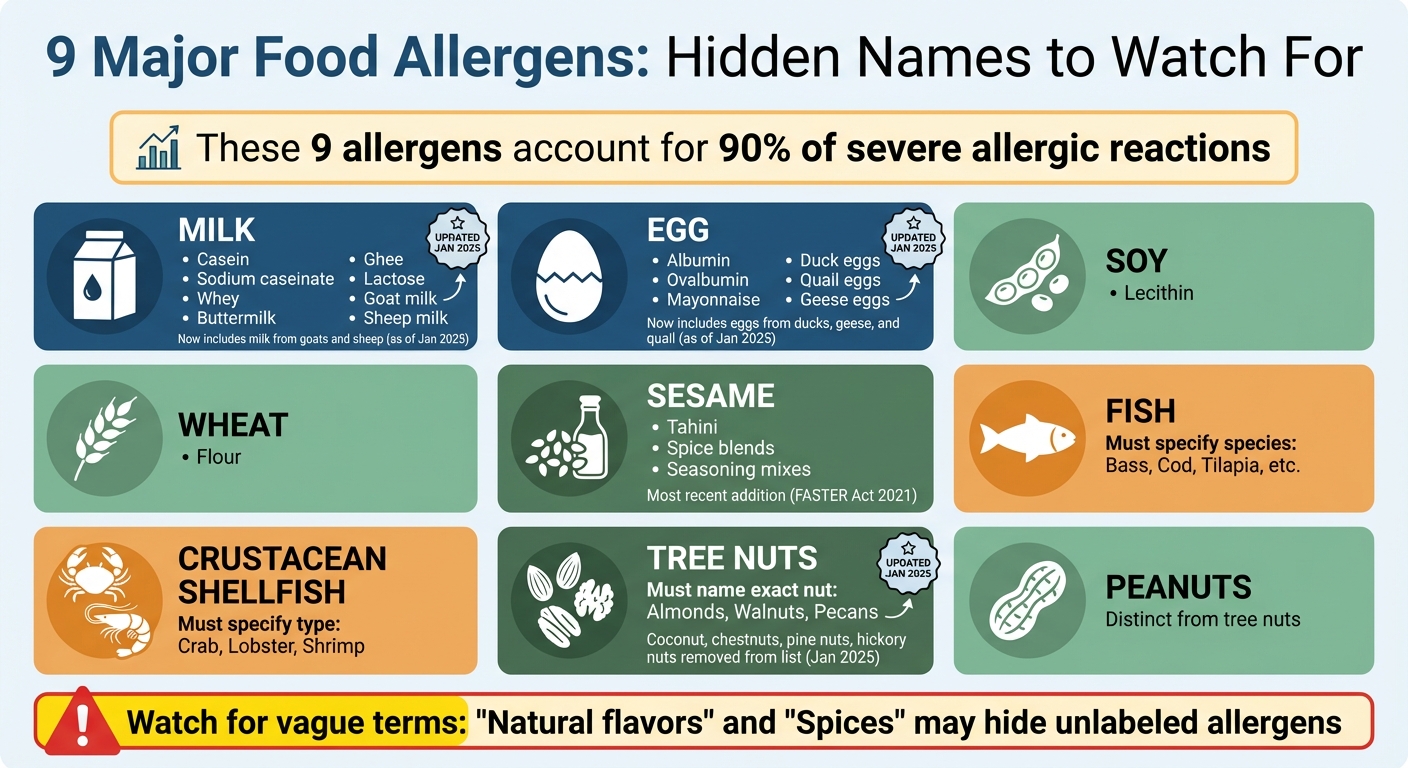
Even with FALCPA regulations, allergens can sometimes be hidden under less obvious names. For example, milk might appear as "casein", "sodium caseinate", "whey", or "lactose." Egg proteins could be labeled as "albumin" or "ovalbumin", while soy might show up as "lecithin", and wheat as "flour”. [2]
In January 2025, the FDA broadened the list of major allergens. Now, milk from goats and sheep and eggs from ducks, geese, and quail must be labeled just like cow’s milk and chicken eggs [3]. This means items like "goat cheese" or "duck egg" fall under the same allergen disclosure rules.
| Major Allergen | Common Hidden Terms |
|---|---|
| Milk | Casein, sodium caseinate, whey, buttermilk, ghee, lactose, goat milk, sheep milk |
| Egg | Albumin, ovalbumin, mayonnaise, duck eggs, quail eggs, geese eggs |
| Soy | Lecithin |
| Wheat | Flour |
| Sesame | Tahini, spice blends, seasoning mixes |
Watch out for vague terms like "natural flavors" or "spices." While major allergens must still be disclosed (e.g., "spices (sesame)"), lesser-known allergens, such as mustard, might not be specifically mentioned [4].
Precautionary Allergen Statements
Beyond hidden ingredient terms, understanding voluntary precautionary statements is key to assessing allergen risks.
Labels with phrases like "may contain", "produced in a facility with", or "processed on shared equipment" are entirely voluntary. No federal law mandates or regulates these warnings. They aim to address "cross-contact", where allergens might unintentionally end up in a product during manufacturing.
However, the absence of such a statement doesn’t guarantee a product is free from cross-contact. Some manufacturers choose not to include these warnings even when cross-contact risks exist. Similarly, terms like "peanut-free" or "dairy-free" aren’t strictly regulated, so these products could still be made in facilities handling those allergens.
If a label includes both a "Contains" statement and a "may contain" warning for the same allergen, it can create confusion. The same issue arises when a product claims to be "allergen-free" but includes a precautionary statement for that allergen. In these cases, it’s safer to avoid the product or contact the manufacturer to ask about their cleaning methods and allergen control practices.
sbb-itb-d549f5b
Practical Tips for Parents
How to Read Labels Effectively
Reading food labels is a habit worth mastering, especially for families managing food allergies. A smart approach is to check labels at three key moments: before buying, after unpacking at home, and right before serving. This helps catch any last-minute ingredient changes that might otherwise go unnoticed.
Make it a point to read the entire ingredient list. While the "Contains" statement can be helpful, not all products include one. Look out for allergens listed in parentheses, such as "lecithin (soy)" or "whey (milk)." This extra step can save you from accidental exposures.
Be especially cautious with imported foods, as they may not fully comply with U.S. labeling standards. For children with allergies to less common ingredients like mustard or poppy seeds, vague terms like "natural flavors" or "spices" can be concerning. In such cases, it’s better to err on the side of caution.
When to Contact Manufacturers
If a food label leaves you with unanswered questions, don’t hesitate to contact the manufacturer directly. This is especially important when you encounter unclear terms like "natural flavors" or conflicting allergen information. For instance, if a product has both a "Contains" statement and a "may contain" warning for the same allergen, or if it claims to be allergen-free but includes a precautionary statement, it’s worth asking about their cleaning protocols and allergen management practices.
Manufacturers can often provide insights about their production processes that aren’t detailed on the label. A quick phone call or email can help clear up doubts and give you peace of mind.
Tracking Food Reactions
If your child experiences a reaction, documenting it thoroughly is crucial. Keeping detailed records not only helps you identify potential triggers but also provides valuable information for healthcare providers and regulatory agencies.
Here’s how to track reactions effectively:
- Save the product packaging and note key details like the product name, manufacturer, lot number, UPC code, and expiration date.
- Record the date of the reaction, what your child ate, and how long it took for symptoms to appear (this could range from minutes to hours).
- Describe the symptoms in detail (such as hives, swelling, vomiting, or wheezing) and any treatment given, like epinephrine.
- Take photos of the product, ingredient list, and lot codes to support medical evaluations or FDA reports.
For parents managing multiple caregiving responsibilities, tools like the Guiding Growth app can simplify this process. The app lets you log food reactions alongside daily health and nutrition data, helping you spot patterns and share actionable insights with healthcare providers.
"It is important to understand that a mild allergic reaction does not always mean the allergy is mild. Any allergic reaction has potential to lead to anaphylaxis." – U.S. Food and Drug Administration
If a reaction occurs due to unclear or missing allergen labels, report it to your state’s FDA Consumer Complaint Coordinator or the USDA for meat and poultry products. Your report could help identify problematic batches and prevent similar incidents for other families.
Conclusion
This guide has provided practical steps to help manage food allergies effectively. While it requires constant vigilance, learning to interpret food labels accurately equips you with the tools needed to protect your child. In the U.S., the nine major allergens cause 90% of serious allergic reactions, with undeclared allergens (especially milk) being a primary reason for food recalls [5].
Food labeling laws continue to change. By January 2025, the FDA will update definitions for milk and eggs and remove coconut and certain nuts from the major allergen list. These updates emphasize the importance of staying informed about new regulations.
Always read the full ingredient list every time you shop. Manufacturers often change their formulations without notice. The FDA advises, "If you see its name even once, it’s back to the shelf for that food product too". If a label isn’t clear, reach out to the manufacturer or avoid the product altogether.
For parents managing both autism and food allergies, tracking reactions can be particularly tricky. Tools like Guiding Growth can help consolidate nutrition and reaction data, making it easier to identify patterns and share insights with healthcare providers. Taking this proactive approach can be a critical step in protecting your child’s well-being.
While there’s no cure for food allergies, recognizing triggers early and avoiding them can prevent serious reactions [6]. Staying informed, carefully reading labels, and leveraging available resources can make a significant difference in safeguarding your child’s health.
FAQs
What should I do if a food label doesn’t clearly list allergens?
If a food label doesn’t clearly state whether it contains allergens, it’s essential to be cautious. By law, manufacturers must list all major allergens (like milk, eggs, peanuts, tree nuts, fish, shellfish, wheat, and soy) on their packaging. This information should appear either in the ingredient list or in a "contains" statement, so take the time to examine the label closely.
If you still can’t find a clear answer, it’s worth contacting the manufacturer directly for clarification. When uncertainty remains, it’s best to avoid the product entirely, especially if severe allergies are involved. Taking these precautions can help prevent serious allergic reactions and provide peace of mind.
How can I trust precautionary allergen labels on food products?
Precautionary allergen labels, such as "may contain" statements, are optional and not as tightly regulated as mandatory allergen labels. While these warnings can be useful, they shouldn’t take the place of making thoughtful food choices, especially for people with severe allergies.
To make these labels more dependable, manufacturers are urged to follow FDA guidance and adopt proper manufacturing practices to reduce the risk of cross-contact. Always take the time to read labels carefully, and if you’re uncertain about a product’s safety, reach out to the manufacturer directly for more information.
What should I do if my child has an allergic reaction to a mislabeled food product?
If your child has an allergic reaction to a mislabeled food product, quick action is crucial. If they show severe symptoms (like trouble breathing, swelling, or losing consciousness) call 911 or head straight to the emergency room. Remove the product to stop further exposure, and if your child has an epinephrine auto-injector, use it as directed.
After ensuring your child’s safety, reach out to your healthcare provider for further advice. You should also report the incident to the product’s manufacturer or the retailer. This step can help address the labeling issue and reduce risks for others.