An autistic student joins your class mid-semester. You receive a two-line summary, a timetable, and an invitation to a meeting in ten days. You need to understand how the student communicates, what makes the classroom difficult, and which supports are already working. You don't need another awareness presentation that leaves those questions unanswered.
The best autism training teachers can use immediately depends on the time available, the age group taught, and what the district accepts as proof of learning. A completion certificate, continuing education unit, and graduate credit aren't interchangeable. Before enrolling, separate the need to improve tomorrow's lesson from the need to satisfy a formal credential requirement.
That distinction matters because classroom experience doesn't guarantee structured preparation. In a United Kingdom study, more than 65% of teachers received fewer than three hours of autism-specific instruction during initial teacher education, while 36% reported no autism-related initial education or continuing professional development, according to the research on teachers' autism preparation.
- Start free when you need a focused, self-paced introduction.
- Consider paid, supported learning when feedback and scheduled participation will help you apply the content.
- Choose graduate study when you need sustained specialization and academic credit.
The options below are grouped by commitment and credential rather than popularity, with a short, New York-specific route included for educators whose immediate priority is certification. Credit acceptance varies by state and district.
Table of Contents
- 1. Autism Internet Modules (AIM), OCALI
- 2. AFIRM, Autism Focused Intervention Resources & Modules
- 3. IRIS Center, Vanderbilt University
- 4. ASD Strategies in Action, Autism Certification Center / OCALI
- 5. Autism Navigator, Autism Navigator for Classroom Success
- 6. NASET, Teaching Students With Autism Spectrum Disorder
- 7. University of Alabama Online, Graduate Certificate in Autism
- 8. University of Central Florida Online, Autism Spectrum Disorders Certificate
- 9. Lebanon Valley College, Graduate Certificate in Autism
- 10. NYSUT Education & Learning Trust, Autism Training
- Autism Training Options for Teachers at a Glance
- Turning Training Into Better Days for Your Students
1. Autism Internet Modules (AIM), OCALI
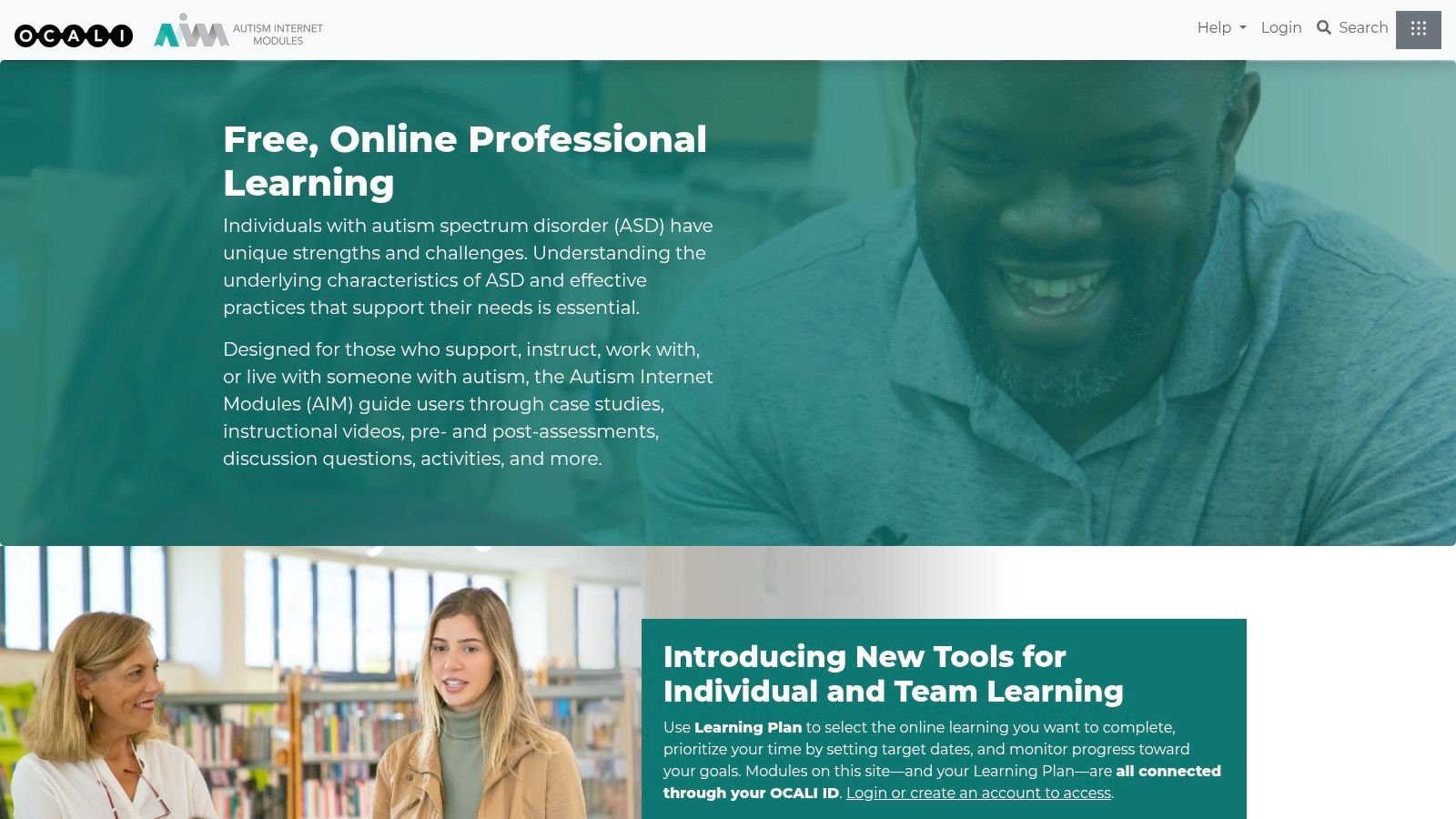
Best for targeted learning without a course purchase. AIM suits a teacher who can identify a particular gap, such as communication support or transition planning, and wants to work through relevant material independently.
The OCALI Autism Internet Modules library offers approximately 50 free, self-paced modules, with pre- and post-assessments, discussion questions, activities, completion certificates for many modules, and some graduate-credit pathways that may involve a fee. Topics include autism characteristics, instruction, behavioral strategies, communication, and transition.
Where AIM fits best
Choose an individual module when you need a focused starting point. For team professional development, a shared topic sequence gives colleagues something specific to discuss instead of collecting unrelated certificates.
- Time commitment: Select modules around the learning need rather than treating the entire library as required coursework.
- Role and age fit: Teachers and other supporters can select relevant topics, but should check each module's examples against their students' ages.
- Main limitation: Independent study doesn't give you an observer who can help adjust a strategy in your classroom.
AIM's strongest advantage is flexibility. Its weakness is the same: teachers must create their own implementation follow-through. Bring a concrete question to the module, then record what you'll change and how you'll judge whether it helped.
Check certificate acceptance locally. A useful learning record isn't automatically approved professional-development credit.
2. AFIRM, Autism Focused Intervention Resources & Modules
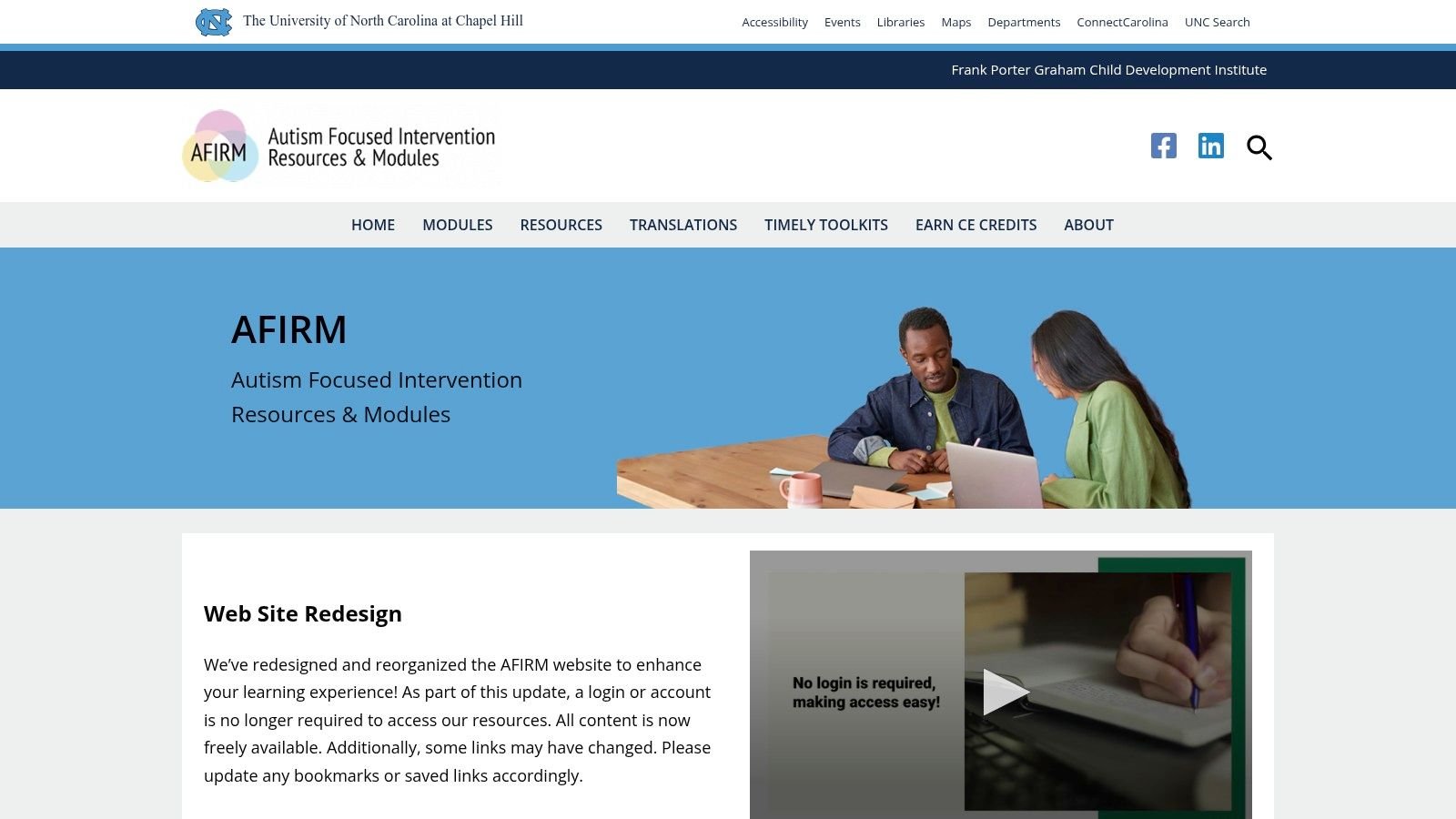
AFIRM is a practical choice when the question is which practice to use for a particular instructional goal, rather than what autism means generally. Developed through the National Professional Development Center on Autism Spectrum Disorder at the University of North Carolina at Chapel Hill, its modules are organized around individual evidence-based practices.
The AFIRM training platform provides practice-focused learning, free completion certificates through its certificate track, and optional CEUs through UNC's Friday Center at $35 per module. Confirm local acceptance before paying for the CEU option.
Practical rule: Choose a practice because it addresses the student's learning or access needs, not because it's the next module in the catalog.
For a special educator coordinating an instructional plan, that organization is useful. It encourages a tighter connection between professional learning, the support selected, and the observations brought back to the team.
- Best fit: Educators who already have a defined student goal and want practice-specific guidance.
- Age consideration: Check the practice's intended application and examples rather than assuming every module fits every learner.
- Trade-off: The module format offers less extended live coaching than a facilitated program.
A completion certificate documents participation. It doesn't demonstrate that staff can implement the practice consistently, so pair the module with a colleague's feedback and a review of the student's response.
3. IRIS Center, Vanderbilt University
IRIS is a sensible school-centered starting point for a general educator who needs both autism content and an explanation of how school support works. Its autism series connects classroom learning with services, multidisciplinary teams, families, and the learning environment.
The Vanderbilt IRIS Center offers a two-part autism series taking approximately two and three hours, respectively, with free professional-development certificates available after the required pretests, modules, and posttests. The introductory content addresses autism and school support; the subsequent content focuses on evidence-based practices for teaching skills and supporting behavior.
Choose IRIS for the school context
This is especially useful when a teacher needs to participate more effectively in support-team conversations. Understanding who contributes to a plan can be as important as learning an instructional technique.
- Cost and credential: Free learning with a no-cost certificate option, subject to completing the requirements.
- Role fit: General educators and school staff seeking an accessible introduction.
- Depth limit: A concise series isn't a thorough specialist qualification.
Related IRIS modules can extend learning into broader instructional topics. That makes it possible to connect autism-specific content with an existing classroom need rather than starting an unrelated professional-development project.
For an upcoming IEP meeting, use the training to prepare better questions about communication, access, and family priorities. Confirm separately whether your district accepts the certificate toward required hours.
4. ASD Strategies in Action, Autism Certification Center / OCALI
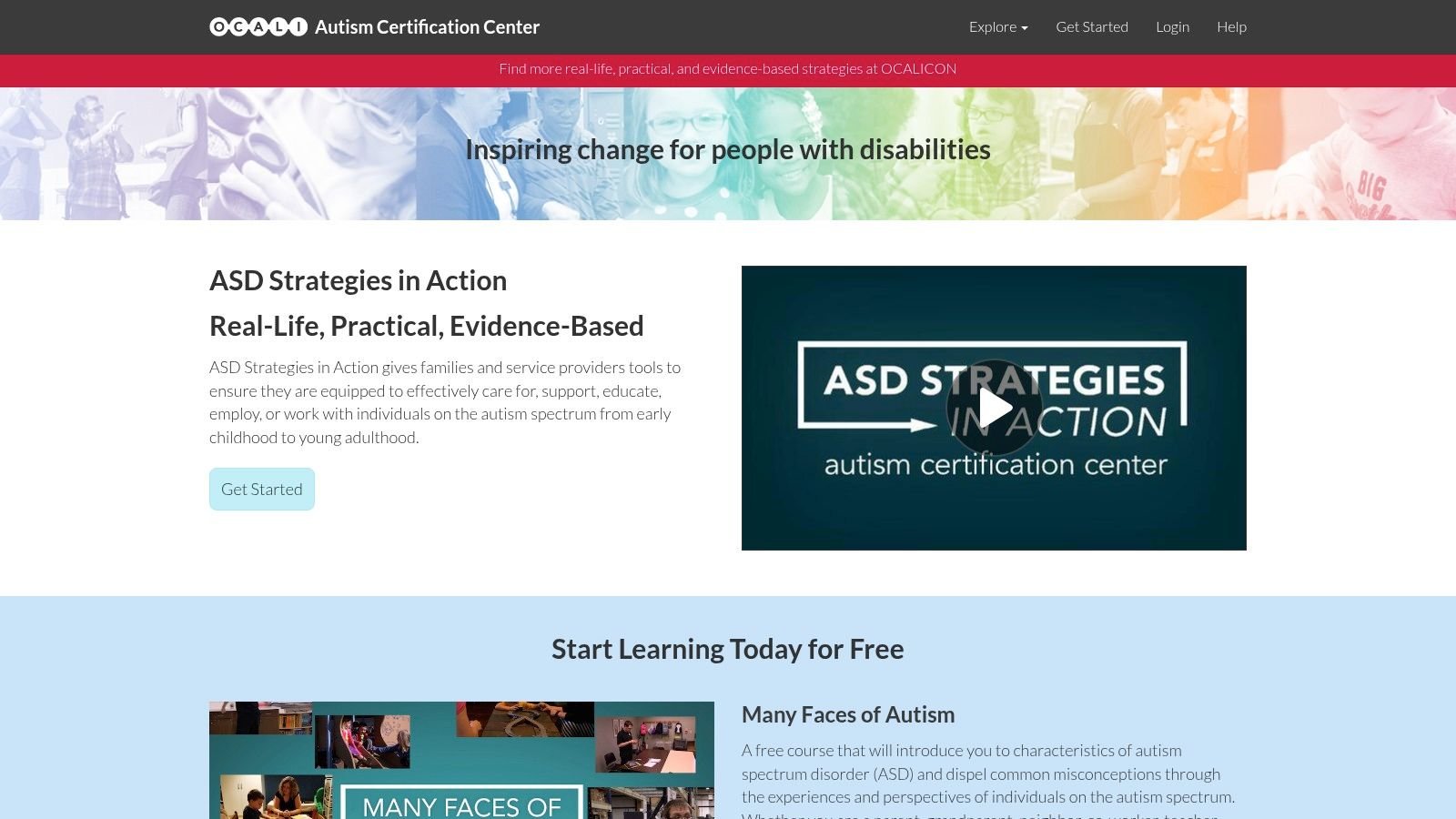
Seeing a strategy demonstrated can be more useful than reading another accommodation list. ASD Strategies in Action uses video examples from school, home, work, and community settings, with perspectives from autistic people, families, and practitioners.
The Autism Certification Center course collection includes the free Many Faces of Autism introduction at about 1.5 hours, plus Foundations courses for toddler/preschool, school-age, and transition-age learners, including a school-age course of about 10.5 hours. Courses include interactive questions, assessments, and completion certificates; check current Foundations access terms before enrolling.
- Strongest feature: Age-specific demonstrations help educators choose material relevant to their setting.
- Best audience: Staff who learn well by watching an approach in context.
- Main caution: The free introduction isn't a substitute for deeper strategy training.
Watch for the adult decisions
During a video, pay attention to what the adult changes: the task, materials, timing, communication, or environment. That gives a team something concrete to discuss and rehearse.
Don't copy a demonstration without considering the individual learner. A useful follow-up question is whether the student has an accessible way to understand the task and express discomfort or request help.
Also separate course completion from continuing-education approval. Access arrangements and credit acceptance can vary, so confirm both before committing school funds or protected learning time.
5. Autism Navigator, Autism Navigator for Classroom Success
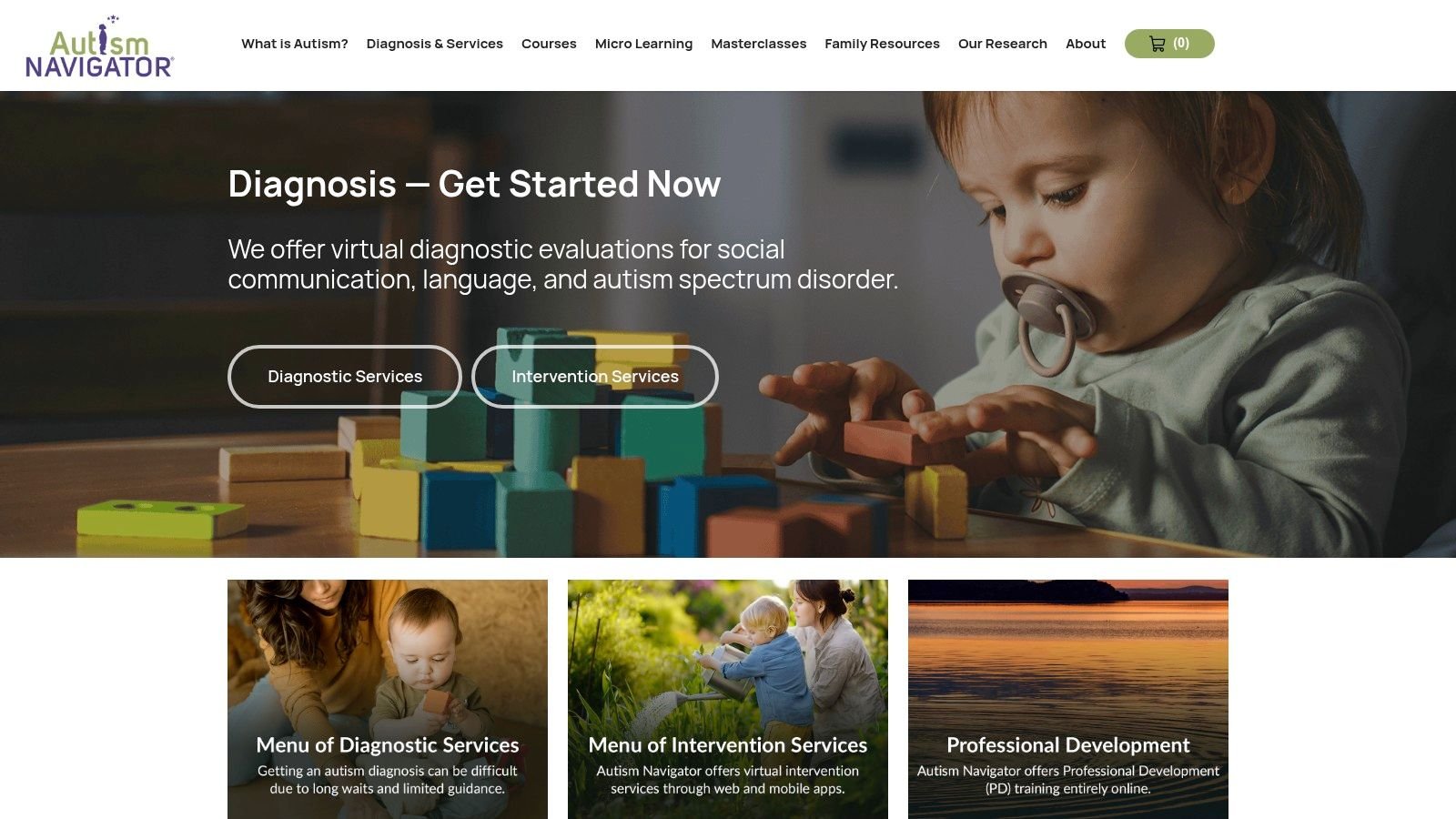
A preschool classroom and a secondary subject class call for different examples and teaching priorities. Autism Navigator for Classroom Success is designed for PreK through grade 2, making its age range the main consideration for school teams choosing training.
The program offers web-based professional development focused on classroom practice. Group pricing is available for large purchases, but the provider's public information does not confirm individual pricing, course duration, or the credential awarded. I could not confirm whether completion qualifies for district or state professional-development credit, so check local rules before using school funds or staff learning hours.
A stronger fit for early-years teams
This course may suit early-years staff who need a shared approach for supporting young children in class. Its age range makes it a less direct fit for secondary educators. Group purchasing could work for a team, but value depends on the access and pricing terms the provider confirms.
- Role fit: PreK through grade 2 teachers and staff seeking classroom-focused learning.
- Credential check: Confirm what completion documentation is provided and whether local credit rules accept it.
- Practical use: Apply the learning to a current classroom situation, then carry specific observations into IEP meetings and home-school communication.
For a focused team discussion, use this guide to supporting autistic students in the classroom. Share observable details with families, such as the activity, support offered, and how the child participated, then invite their perspective.
6. NASET, Teaching Students With Autism Spectrum Disorder
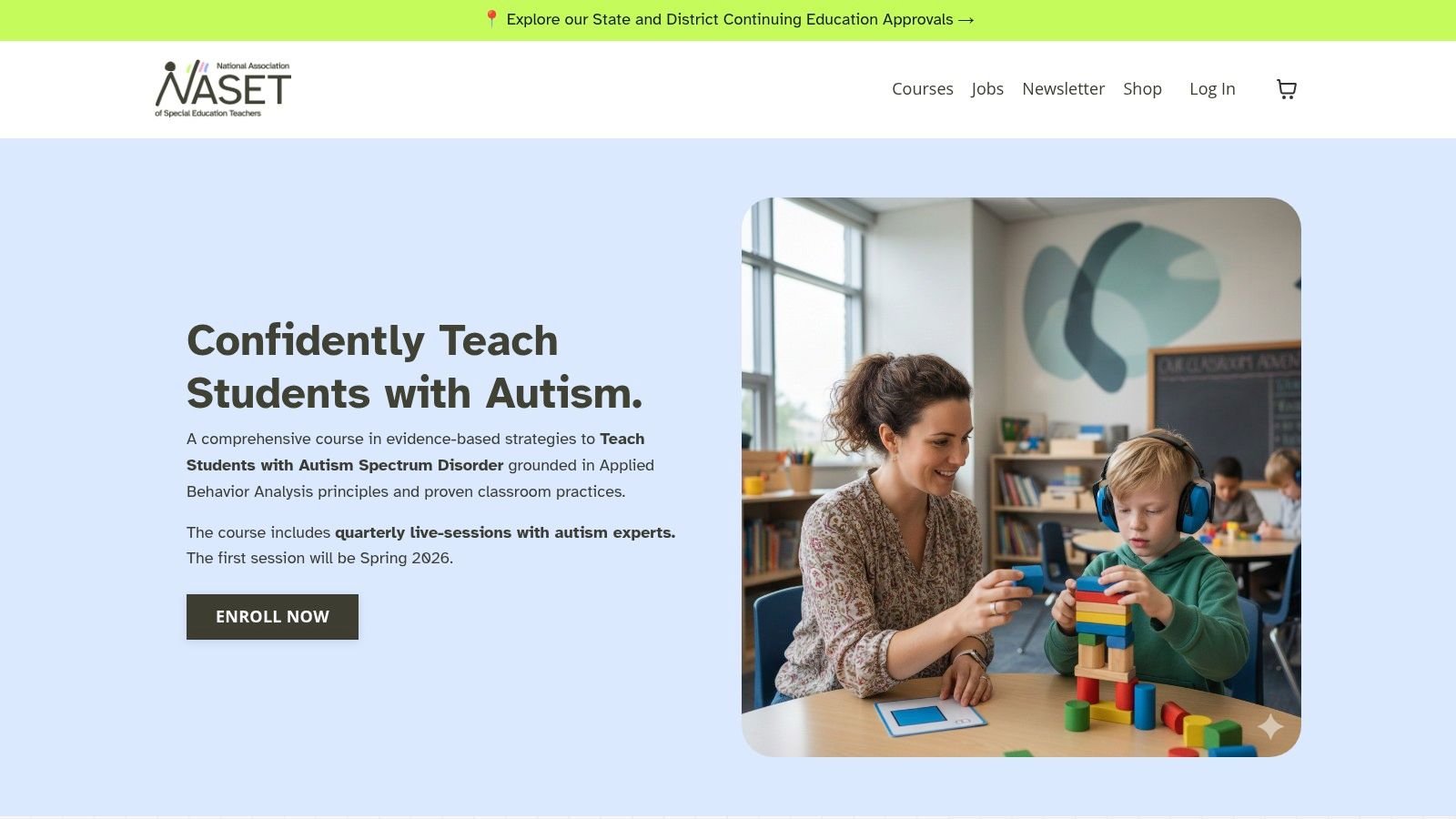
NASET offers a more structured route for staff who want coursework, assessments, and opportunities to hear from autism experts. It's worth considering when independent modules are available but staff need a defined program to follow.
The NASET Teaching Students With Autism Spectrum Disorder course is listed at $475, advertises 30 study-hour credits, and combines around-the-clock online coursework and examinations with quarterly live sessions and recordings.
Study-hour credits shouldn't be treated as state-approved clock hours unless the relevant authority confirms that equivalence.
The course is designed for school roles including special educators, general educators, and paraprofessionals. Its live component distinguishes it from a purely self-paced library, although scheduled expert sessions aren't the same as individualized classroom coaching.
- Why pay: A defined learning sequence and access to live expert sessions may help staff stay engaged.
- Why hesitate: Free introductory options may be sufficient if the immediate need is narrow.
- Before enrolling: Check the session calendar, certificate wording, and local credit rules.
Use a real classroom question to make the coursework practical. For example, staff reviewing sensory strategies for the classroom could identify an environmental adjustment, agree how to offer it, and compare observations afterward.
Avoid presenting a sensory explanation as a confirmed clinical conclusion. Document the context and the response, then involve the appropriate support-team members.
7. University of Alabama Online, Graduate Certificate in Autism
Choose graduate study for sustained specialization, not an immediate classroom deadline. Alabama's certificate is a different commitment from completing a short professional-development module before a school meeting.
The University of Alabama Online Graduate Certificate in Autism is fully online and requires 12 graduate credit hours, with listed tuition of $480 per credit hour, approximately $5,760 before additional fees. Its interdisciplinary coursework draws on special education, applied behavior analysis, communication and development, and educational psychology.
When the larger commitment makes sense
The program is intended for teachers, counselors, and related professionals. Its appeal is the opportunity to connect research and practice across disciplines rather than study classroom accommodations in isolation.
- Credential advantage: A formal university graduate certificate rather than a short-course completion record.
- Practical trade-off: Admissions, tuition, and academic workload require more planning than standalone modules.
- Licensure caution: The certificate doesn't automatically confer teacher licensure or a state autism endorsement.
For educators who coordinate support across professionals, the interdisciplinary focus may suit their responsibilities. Still, don't assume the credential fits a particular age band or state role without reviewing the curriculum and requirements.
Before applying, ask your employer what academic credit it recognizes and whether reimbursement is available. Ask the university about the expected study schedule and opportunities to connect assignments with your professional setting.
8. University of Central Florida Online, Autism Spectrum Disorders Certificate
A teacher supporting students who use communication tools may need training that addresses both educational practice and assistive technology. UCF's certificate includes these areas in a graduate program, making it a potential fit for educators seeking focused coursework rather than short, standalone training.
The University of Central Florida Online Autism Spectrum Disorders Certificate is a 12-credit online graduate program covering autism, educational practices, communication techniques, and assistive technology. UCF lists a program rate of $327.32 per credit hour. The page also refers to a higher standard rate, but does not show its amount, so the program-rate figure alone is not enough to determine your total tuition.
Who the 12-credit format suits
This certificate may suit teachers and other school professionals who can apply graduate-level study to current work with autistic learners. Its combination of communication and assistive technology with educational practices can inform classroom planning, discussions about access in IEP meetings, and home-school communication about supports. Check that the curriculum aligns with your students' age group and your role before enrolling.
- Coursework fit: Review how the program treats communication and assistive technology, and whether assignments can connect to your teaching responsibilities.
- Cost and credit: Confirm your applicable tuition rate, fees, and whether your district accepts the credits for salary advancement or professional development.
- Credential limits: Ask your district or state whether this certificate meets any specific endorsement or role requirement. A graduate certificate does not by itself establish that it does.
The 12-credit commitment calls for more time and tuition than short professional development. Get written confirmation of the full cost and how the credential will count before you enroll.
9. Lebanon Valley College, Graduate Certificate in Autism
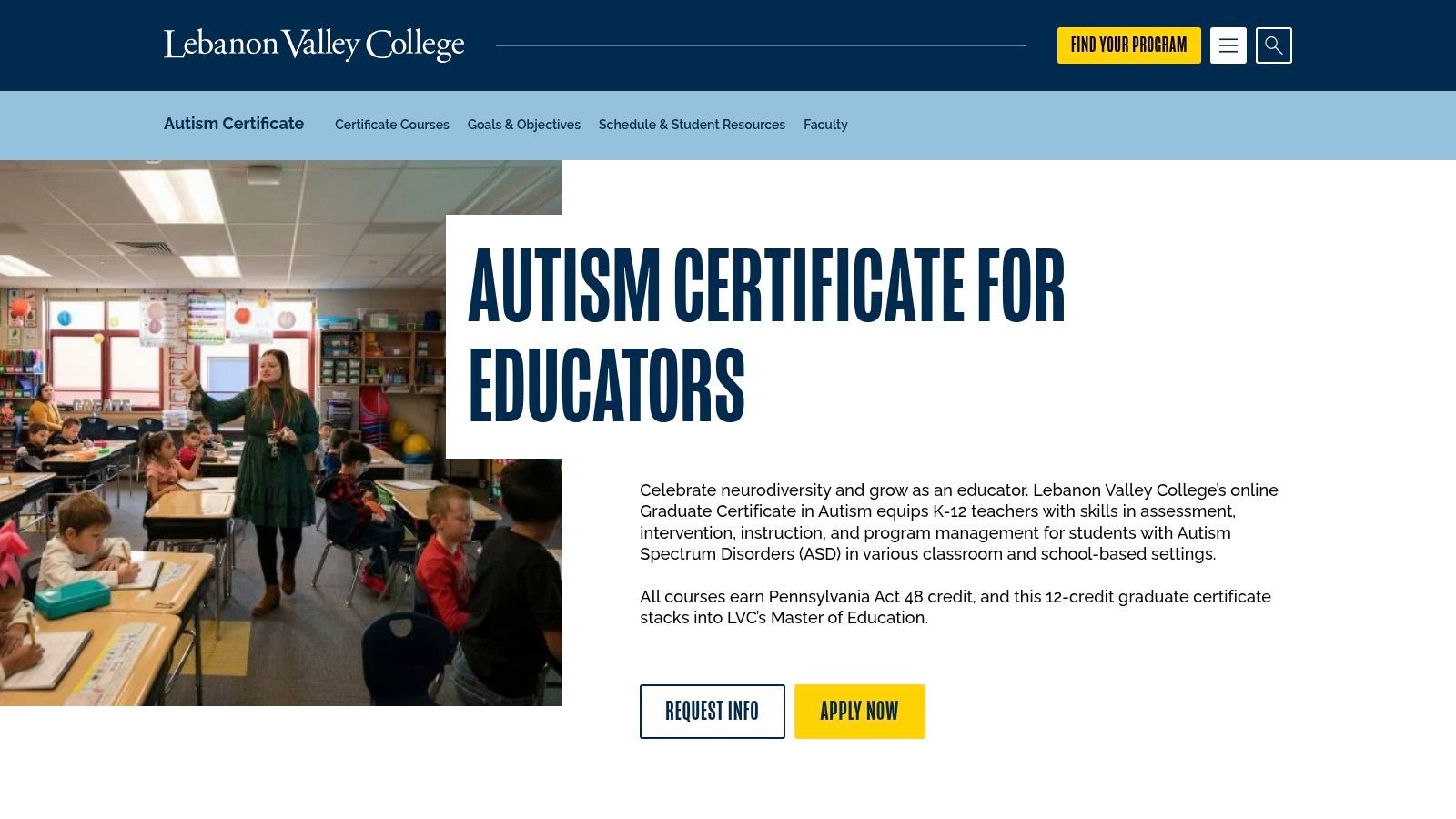
For Pennsylvania educators, endorsement alignment may matter more than a general certificate title. Lebanon Valley College explicitly connects its program with Pennsylvania's Autism Program Endorsement Guidelines and states that it has PDE endorsement approval.
The Lebanon Valley College Graduate Certificate in Autism is designed for K–12 educators, with four online courses in accelerated seven-week terms, totaling 12 graduate credits at $748 per credit, approximately $8,976; it includes Pennsylvania Act 48 continuing-education credit, and credits can stack toward the college's Master of Education.
Best evaluated against your state pathway
Coursework addresses autism foundations, assessment for instructional planning, individualized interventions, inclusive classroom design, and collaboration with families and communities. That combination suits educators seeking a sustained education-focused program rather than a general introduction.
- Pennsylvania advantage: Explicit state-related endorsement and continuing-education information.
- Longer-term value: Stackable credits may fit an existing graduate-degree plan.
- Out-of-state caution: Pennsylvania approval doesn't establish acceptance elsewhere.
Accelerated study still requires room in the workweek. Ask about assignment demands, enrollment sequencing, and how the endorsement process applies to your existing qualifications.
The family-collaboration content is especially relevant to IEP work. Use that learning to make meetings more specific: identify what staff observed, what the family observed, and which question the team still needs to answer. Graduate terminology shouldn't replace a clear explanation of the student's needs.
10. NYSUT Education & Learning Trust, Autism Training
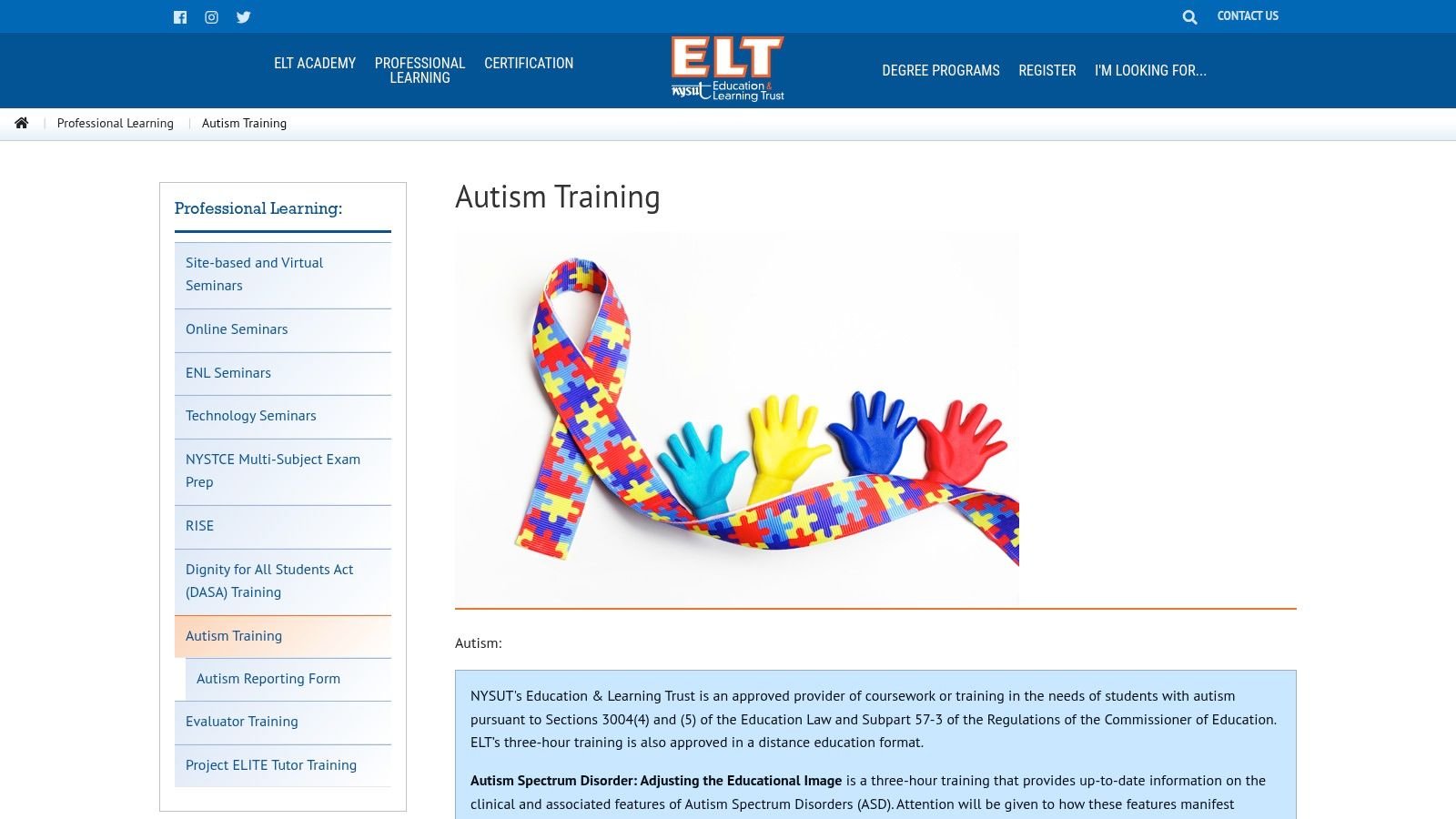
For New York educators, the three-hour online course and the school-based seminar serve different purposes. The online course is the offering identified for New York's autism certification requirement. It has self-paced assignments, instructor feedback, regularly starting sessions, and up to 30 days to finish. It cannot be claimed for CTLE hours.
NYSUT Education & Learning Trust autism training also describes a separate school-based seminar on supportive environments and practical strategies. It is delivered at a school, but the available description does not give its length or specify who may attend. NYSUT indicates that this seminar may count toward CTLE, so confirm its credit eligibility and details before scheduling it.
The online course covers autism characteristics and instructional challenges in schools. The fee is not stated; check current pricing before enrolling. The certification course is intended for educators who need to meet the New York autism-training requirement, while the school-based seminar is an option for schools seeking practical staff learning. Neither approval should be assumed to apply to another state or requirement.
Use the course's school-based strategies in IEP discussions and home-school communication: describe the instructional challenge, identify supportive approaches, and share practical information with families. For learning options without a certification requirement, compare the offerings in this guide to free autism training. Before registering, check the intended audience and examples against the students' age band and your district's credit rules.
Autism Training Options for Teachers at a Glance
| Item | Cost | Format and Length | Credential | Best Fit |
|---|---|---|---|---|
| Autism Internet Modules (AIM), OCALI | Free; some graduate-credit pathways cost extra | Online, self-paced library of about 50 modules | Completion certificates for many modules | Teachers seeking flexible, topic-specific learning |
| AFIRM, Autism Focused Intervention Resources & Modules | Free; optional CEUs are $35 per module | Online, self-paced modules focused on individual evidence-based practices | Free completion certificates; optional CEUs | Educators targeting a specific evidence-based practice |
| IRIS Center, Vanderbilt University | Free | Two self-paced autism modules, about 2 and 3 hours | Free professional-development certificate after required assessments | Educators seeking a brief, school-centered introduction |
| ASD Strategies in Action, Autism Certification Center / OCALI | Introductory course is free; other access pricing varies | Video-based courses; intro is about 1.5 hours, school-age course about 10.5 hours | Completion certificates | Teachers wanting practical, age-specific video examples |
| Autism Navigator, Autism Navigator for Classroom Success | Pricing not specified; group pricing available | Web-based classroom course for PreK–2 educators | Not specified | Early-years teachers and school teams |
| NASET, Teaching Students With Autism Spectrum Disorder | $475 | Online modules, assessments, and quarterly live sessions; 30 advertised study hours | Certificate-oriented course; 30 study-hour credits | School staff seeking structured training with expert sessions |
| University of Alabama Online, Graduate Certificate in Autism | $480 per credit; about $5,760 for 12 credits before fees | Fully online, 12 graduate credits | Graduate certificate | Educators seeking interdisciplinary graduate-level study |
| University of Central Florida Online, Autism Spectrum Disorders Certificate | Published rate is $327.32 per credit; tuition varies | Online, 12 graduate credits | Graduate certificate | Educators seeking formal study in classroom support and assistive technology |
| Lebanon Valley College, Graduate Certificate in Autism | $748 per credit; about $8,976 total | Four online courses, 12 credits, accelerated seven-week terms | Graduate certificate; Pennsylvania Act 48 credit | K–12 educators seeking autism-focused graduate study |
| NYSUT Education & Learning Trust, Autism Training | Pricing not specified | Three-hour online course; self-paced assignments with instructor feedback | One seminar meets a New York autism-training requirement for eligible applicants; other seminar may count for CTLE | New York educators needing focused training or applicable state-specific credit |
Turning Training Into Better Days for Your Students
Choose a free module this month that matches the age group you teach and a current classroom question. Keep the question narrow: helping a student understand a transition, access an assignment, or communicate a need. You're more likely to learn something usable when you know what you're trying to improve.
Before paying for training, send the course details to your district professional-development lead or state licensing office. Ask whether the specific certificate, CEU, study-hour credit, or graduate credit meets the requirement you have in mind. Get that answer before enrollment, not after submitting the completion record.
Implementation matters: A certificate shows that you completed learning. Classroom observations help you decide what to retain, adapt, or stop.
Apply a strategy in class and track its effect over two weeks. Record the activity, the support offered, whether staff used it as planned, and how the student responded. Treat this as a practical review period, not proof that a strategy caused a change.
That distinction is important. In a randomized field trial, average implementation fidelity was 57% for STAR classrooms and 48% for Structured Teaching classrooms despite substantial training and coaching, illustrating why teams need to examine implementation rather than course completion alone, as described in the classroom intervention implementation trial.
Bring school and home observations together
Families may already keep daily logs that contain useful context. Teachers who share specific observations can help create a more complete picture without assuming that school and home should look identical. Ask what the child communicates about the support, too, rather than judging success only by quieter behavior.
For parents, the Guiding Growth mobile app provides a place to log a child's day by voice, track behavior patterns, and invite a classroom educator as a collaborator. The parent controls collaborator permissions, including who can view or add information.
Guiding Growth also generates data-backed summaries for IEP and 504 meetings. A parent can bring organized home information alongside the teacher's classroom observations, helping the team discuss what happened, what support was offered, and what needs further attention.
Use those records to ask better questions, not to assign diagnoses or blame. Guiding Growth doesn't provide medical advice, and teachers should continue to rely on the child's care team for clinical decisions.
Guiding Growth helps parents turn voice logs and daily observations into behavior patterns and meeting-ready summaries, with parent-controlled collaboration for educators. Visit Guiding Growth to connect what teachers learn in autism training with the child-specific information families bring to school conversations.