Receptive vocabulary often isn't significantly different between autistic and typically developing children, yet reading comprehension can still be substantially weaker. The bigger barriers are often sentence-level syntax, figurative language, and making inferences, not knowing the meaning of individual words.
That finding changes how adults should respond when a child reads every word accurately but can't explain what a passage means. The child may recognize vocabulary, decode fluently, and still struggle to connect ideas, interpret a character's motives, understand an implied message, or follow a sentence with complex grammar. Those are teachable skills, but they require more precise instruction than assigning easier books or drilling definitions.
Table of Contents
- Rethinking What Holds Autistic Readers Back
- What the Research Actually Shows
- Assessment Approaches That Reveal the Full Profile
- Evidence-Informed Strategies for Home and Classroom
- Case Vignette When Decoding Is Not the Problem
- Monitoring Progress and Adjusting Support
- Resources and Next Steps for Families
Rethinking What Holds Autistic Readers Back
A vocabulary-first explanation sounds logical. If a child doesn't understand a passage, adults often assume the child needs more word meanings. Sometimes that's true. But it doesn't explain every autistic reader, particularly children who know many words and still miss the central idea.
A 2025 study found that autistic participants scored lower than typically developing peers in reading comprehension, morphosyntactic skills, and figurative-language comprehension, while receptive vocabulary wasn't significantly different between groups. The same study found that reading comprehension was better explained by chronological age, nonverbal cognitive ability, and receptive vocabulary together than by vocabulary alone. The full study in Autism Research supports a more detailed view of the comprehension profile.
Word knowledge is only one part of meaning
Consider the sentence, “Although Maya was tired, she finished the project because her team was counting on her.” A child might understand tired, finished, project, and team, yet miss the relationships among the clauses. The words are familiar. The problem may involve the connective although, the pronoun her, or the reason introduced by because.
That's morphosyntax, the way grammar and word forms organize meaning. Children may need direct teaching for:
- Complex sentences: Identify which information is the main point and which information explains, contrasts, or qualifies it.
- Pronouns and references: Match words such as he, they, this, and it to the correct person, object, or idea.
- Verb tense and endings: Notice how walked, is walking, and will walk change when an event happens.
- Figurative language: Explain why “spill the beans” doesn't involve literal spilling.
- Inference: Combine what the text says with what the reader already knows.
Practical rule: If a child can define the words but can't explain how the sentence works, teach the sentence structure rather than assigning more vocabulary practice.
This reframing is hopeful because it turns a broad label into a teachable map. A parent who understands the difference between vocabulary, syntax, figurative language, and inference can ask for targeted support instead of accepting the conclusion that a child is “poor at comprehension.” Families may also find it useful to distinguish reading challenges from related learning profiles through resources such as this comparison of nonverbal learning disorder and autism.
What the Research Actually Shows
Research presents reading comprehension in autism as a multi-dimensional skill, not a vocabulary problem alone. A 2013 meta-analysis of 36 ASD reading-comprehension studies found an overall standardized mean difference of g = -0.7 standard deviations compared with control groups, indicating weaker comprehension on average. The authors also reported that autism diagnosis alone did not determine the size of a child's difficulty. Individual language abilities mattered more. The PubMed record for that meta-analysis provides the study details.
A later 2021 meta-analysis of 26 studies involving children with ASD ages 6 through 18 found similar links between comprehension and word reading, with a mean correlation of r = 0.65, and oral language, with a mean correlation of r = 0.61. The PubMed summary of that analysis shows why both areas deserve attention. A child may decode accurately yet struggle with oral language, or experience difficulty in both areas. Strong performance in one does not guarantee strong comprehension.
Several systems contribute at once
A 2022 meta-analysis of 26 studies found modest associations between reading comprehension and intelligence, theory of mind, and executive function. The reported correlations were r = .41 for intelligence, r = .46 for theory of mind, and r = .39 for executive function. Phonological awareness, semantic skills, and syntax skills were also modestly related, at approximately r = .50 to .53. The research article in Reading and Writing concluded that cognitive and linguistic skills contribute comparably across orthographies.
These findings help explain why receptive vocabulary is often not the main barrier. A child may know the words in a passage but miss how a complex sentence is organized, what a figurative phrase implies, or which unstated idea connects two events. Comprehension works more like assembling a model than collecting individual pieces. Word knowledge supplies pieces, while syntax and inference show how they fit.
| Factor | Association with reading comprehension |
|---|---|
| Word reading | Mean r = 0.65, 2021 meta-analysis |
| Oral language | Mean r = 0.61, 2021 meta-analysis |
| Intelligence | r = .41, 2022 meta-analysis |
| Theory of mind | r = .46, 2022 meta-analysis |
| Executive function | r = .39, 2022 meta-analysis |
| Syntax and related linguistic skills | Approximately r = .50 to .53, 2022 meta-analysis |
The intervention evidence adds a practical caution. A 2025 narrative intervention found gains in both listening and reading retells, but children needed extended use of icon-based strategy support to gain the most benefit. A short lesson may introduce a strategy without making it usable independently. Support should remain available while the child practices applying it across texts.
Older reviews identified inference and main idea as common intervention targets, with direct instruction as the dominant method. The evidence base remained small and fragmented. A later synthesis focused on students with autism and intensive support needs found only 11 experimental studies met its criteria, showing how limited the research remains for learners who also have intellectual disability or require substantial support. Families should treat “evidence-informed” as guidance for careful matching and monitoring, not as a promise that one program will suit every child.
Assessment Approaches That Reveal the Full Profile
A reading score shows that a child had difficulty, but it rarely identifies the cause. Effective assessment separates the skills that work together during reading. A child may decode accurately while struggling to build meaning from sentence structure, implied ideas, or figurative language. Receptive vocabulary may be adequate, yet morphosyntax and inference can still limit comprehension.
Screeners can flag a concern, but they do not provide a full profile. An evaluation should examine word reading, fluency, oral language, syntax, vocabulary, figurative language, inference, retelling, and response to questions. Listening comprehension belongs in the comparison too. If the same passage causes difficulty when an adult reads it aloud, decoding does not fully explain the problem.
Ask for evidence, not just labels
Parents can ask the school team questions that connect assessment results to instruction:
- Can my child retell the passage in sequence? Look for the setting, problem, important events, resolution, and relevant details.
- Can my child answer “why” and “how” questions? These often require inference rather than locating a sentence.
- Does my child understand pronouns and complex sentences? Ask for examples from classroom work.
- Does figurative language cause confusion? Check idioms, sarcasm, metaphors, and nonliteral descriptions.
- Does comprehension change when text is read aloud? Compare oral and independent reading conditions.
- What support helps? Note whether visuals, sentence frames, rereading, or explicit modeling improves responses.
At home, compare retelling with question answering. A child may recall isolated details without explaining the main idea. Another may produce a coherent retell yet miss a character's intention. Record the exact response, including the prompt and support provided. “Did well” or “struggled” hides the pattern adults need to teach.
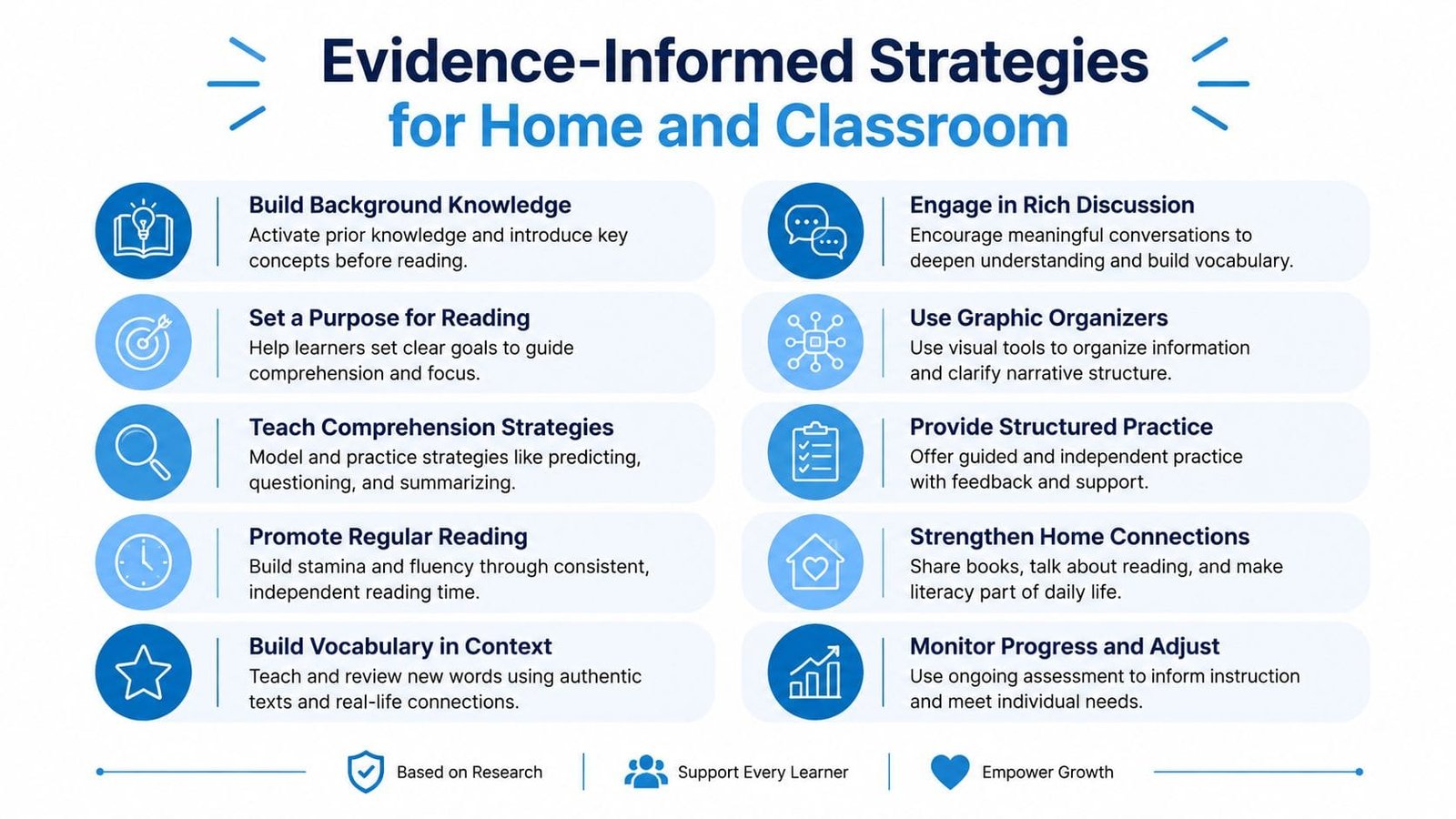
A shared profile strengthens collaboration among speech-language pathologists, special educators, and classroom teachers. “Comprehension is weak” gives little direction. “The student answers literal questions independently but needs a visual prompt to infer a character's feelings” identifies a teachable goal and a way to monitor it.
Here's a practical explanation of how reading comprehension can be supported across settings:
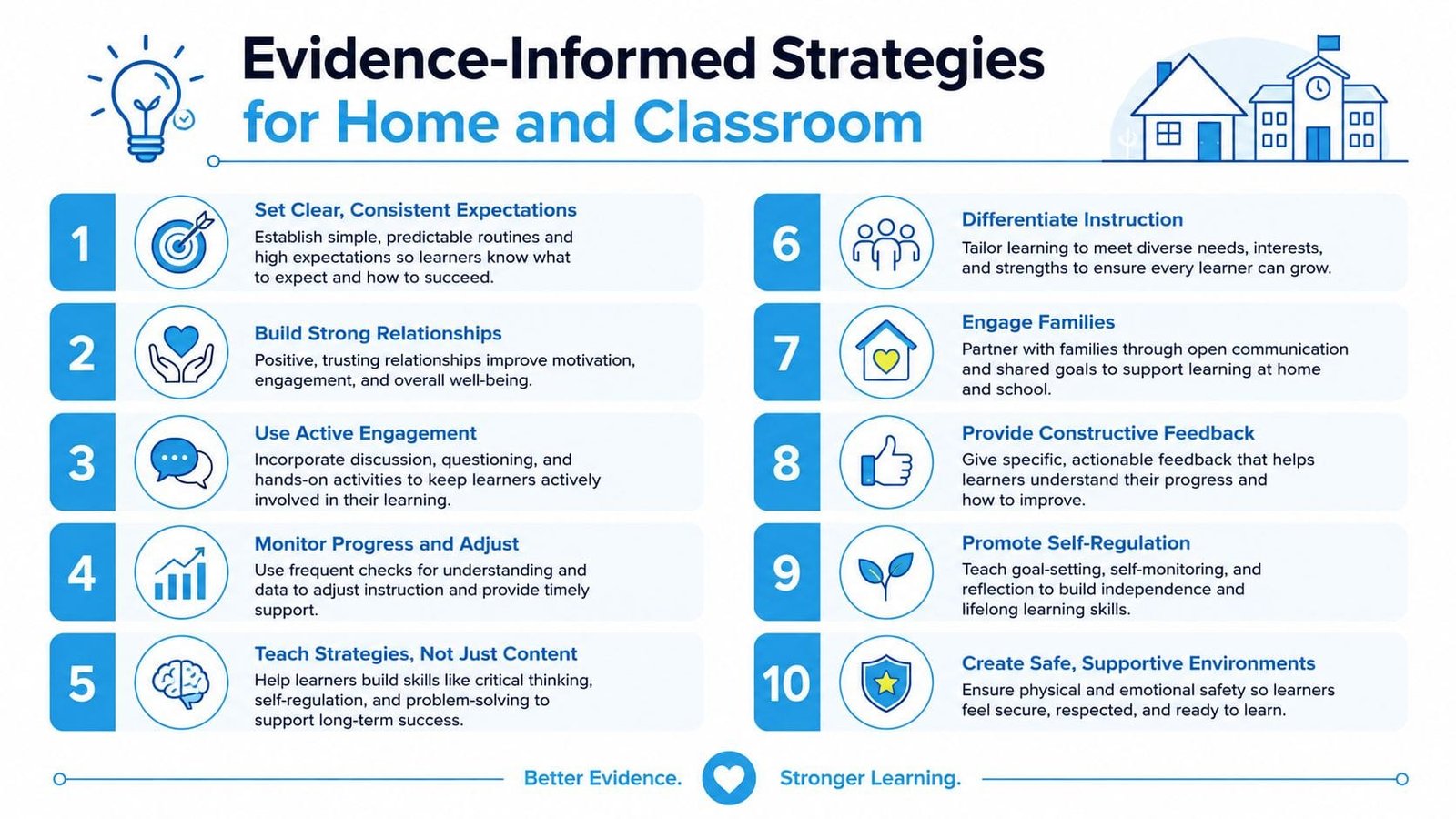
Evidence-Informed Strategies for Home and Classroom
Effective instruction begins with the child's specific comprehension barrier. Accurate decoding and adequate receptive vocabulary do not guarantee understanding. Reading instruction should also address sentence relationships, figurative language, and the reasoning that connects clues to meaning.
Teach inference as a visible routine
Inference is automatic for experienced readers, but many children need the reasoning shown clearly. Use a three-part prompt:
- Text clue: “What does the passage tell us?”
- Background knowledge: “What do you know that connects to that clue?”
- Inference: “What can we figure out?”
For a story that says, “Jordan looked at the dark clouds and carried an umbrella,” ask the child to identify both clues and infer that rain may be coming. Follow the answer with, “Which words helped you decide?” and “How do those clues connect?” The goal is a supported explanation, not a guess.
A classroom dialogue might sound like this:
Teacher: “Maya shut the window and pulled her jacket close. What do we know?”
Student: “She shut the window.”
Teacher: “That is one action. What might the jacket and window tell us about the weather?”
Student: “It is cold.”
Teacher: “Which clues support that idea?”
Make figurative language concrete
Teach idioms in pairs. Place the literal meaning beside the intended meaning. For “hit the books,” explain the literal image, then connect it to studying. Draw the phrase, act it out, and provide short situations where it fits and does not fit.
Practice separating what the words say from what the speaker means. This distinction supports sarcasm, indirect requests, and characters whose feelings remain unstated. A simple two-column chart can label “words” and “intended message,” giving the child a stable place to compare them.
Explain sentence structure
When a sentence causes confusion, mark its parts. Circle conjunctions such as because, although, and unless. Draw arrows from pronouns to their referents. Break a long sentence into shorter statements, then rebuild it.
For example:
- “The dog barked.”
- “The mail carrier approached.”
- “The dog barked because the mail carrier approached.”
The final clause explains why the first event happened. Later, remove the visual marks gradually while asking the child to identify the relationship independently.
Combine fluency, prosody, and comprehension
A 2025 report on students in grades 4 through 8 described 1:1 tutoring with 50 half-hour lessons emphasizing vocabulary, main-idea summarization, prosody, fluency, and sentence-level comprehension. The multi-component design matters because expressive reading can carry meaning. Practice punctuation, phrasing, and emphasis, then ask how the reading affects interpretation.
Sustain support and record what helps
Keep icons, graphic organizers, and sentence frames available while the child learns the routine. Reduce them gradually when the child can explain the process without them. Record the prompt, response, and support used so progress reflects changing independence rather than a vague impression.
Alternate direct instruction, guided practice, shared reading, and enjoyable discussion. Families coordinating speech and language support can use this guide to speech therapy for autism parents to organize questions for a provider.
Case Vignette When Decoding Is Not the Problem
Leo is a composite example, not a real student. He reads unfamiliar words accurately and understands many academic terms. During independent reading, he appears capable because he moves across the page without hesitation.
Discussion revealed a different profile. Leo could name details but struggled to explain the central point. Asked why a character hid a note, he repeated, “Because the note was hidden.” He interpreted “she had butterflies in her stomach” at face value and called a worried character “happy” because the character smiled.
The profile changed the intervention
Adults first offered more vocabulary practice. Leo learned the new words, yet his retells remained disconnected. The team compared his responses across tasks and identified two more precise needs: figurative-language comprehension and inference-making. His receptive vocabulary was giving him access to the words, while sentence relationships and implied meaning were still out of reach.
The teacher marked clues in different colors. One color showed what the character said, another showed what the character did, and a third showed what the character might feel. Leo then used a three-question organizer: “What happened?”, “What clue shows this?”, and “What does it mean?” The routine made the reasoning visible, like laying stepping stones across a stream.
At home, his parent practiced one idiom at a time with brief everyday examples. They also asked Leo to explain how a character's action could reveal a feeling, rather than asking only what happened next.
A fluent reading voice can hide a comprehension gap. Listen to the explanation, not just the accuracy.
After sustained practice, Leo began connecting evidence to meaning. He still needed visual prompts for unfamiliar figurative expressions, but adults no longer treated his difficulty as a general vocabulary problem. Direct teaching of syntax, figurative language, and inference gave him a clearer route from sentence details to the author's intended meaning.
Technology can support access during these tasks. Families may review real-world voice typing examples when deciding whether speech-to-text could reduce the writing demand in reading responses. Voice input will not teach inference, but it may let a child demonstrate understanding without handwriting or typing becoming the main barrier.
Monitoring Progress and Adjusting Support
Instruction improves when adults can answer one practical question: What changed after we introduced the support? One successful retell may reflect a familiar topic, a good day, or extra prompting. One difficult session may reflect fatigue, anxiety, or a dense passage. Progress monitoring therefore looks for patterns across time, settings, and texts.
Choose measures that match the skill being taught. For inference, record whether the child identifies a clue, states an inference, and explains the connection. For syntax, sample the sentence structures causing difficulty. For retelling, note whether the child includes the central problem, key events, and outcome. These measures keep adults from treating adequate vocabulary as proof that comprehension should be easy.
Use a simple observation cycle
- Set one target: Select a skill such as interpreting pronouns or explaining character motivation.
- Record the starting response: Write the child's words and note the prompt used.
- Teach consistently: Use the same visual or verbal routine across several reading opportunities.
- Review trends: Compare responses across passages and settings rather than judging one attempt.
- Adjust the support: Increase modeling, change the organizer, shorten the text, or involve the school team.
An anecdotal log can be enough when it is specific. “Needed a verbal prompt to explain why the character left” gives useful information. “Poor comprehension” does not. A reading-response journal may show stronger performance with personal narratives, predictable nonfiction, or visual supports. Retell samples can reveal growth even when formal scores change slowly.
Track context alongside literacy
Sleep, transitions, sensory load, motivation, and task length can affect participation. Record these factors beside reading responses to help distinguish a language difficulty from a regulation or access problem. The Guiding Growth special education progress-monitoring resource provides a framework for organizing observations and sharing them with the educational team.
Measure independence as well as accuracy. A child who moves from needing a full model to using a visual cue has made meaningful progress. If the same support produces no improvement across varied passages, reconsider the target, the task's accessibility, and the intensity of instruction. The next adjustment might involve direct teaching of morphosyntax, figurative language, or inference, rather than more vocabulary practice.
Resources and Next Steps for Families
Autism and reading comprehension involve more than vocabulary. A child may understand many spoken words while still struggling with syntax, figurative language, inference, oral language, executive function, or background knowledge. A careful profile helps adults choose instruction that matches the learner instead of applying the same reading program to every child.
Families can start with the school team and speech-language pathologist. Ask for work samples, comparisons between oral and independent reading, retells, and examples of prompts that help. Share observations from home, especially if your child discusses a story successfully but has difficulty showing that understanding in writing. Those contrasts can reveal whether the missing link is vocabulary, sentence structure, perspective-taking, or the demands of written expression.
Build a support network that respects the child
Choose resources that bring together research, practical teaching guidance, and autistic perspectives. University-based developmental disability centers, speech-language professionals, special educators, local parent networks, and research databases can help families evaluate recommendations. Providers should listen to the child and family, explain an intervention's purpose, and revise support when daily evidence does not fit the original assumption.
Research still leaves gaps, particularly for older learners and children with intensive support needs. Families do not need to wait for a perfect study before asking whether a strategy helps their child access stories, textbooks, conversations, and everyday information. Keep questions specific: Does direct teaching of inference help? Does sentence-level support improve understanding? Which prompts can the child use independently?
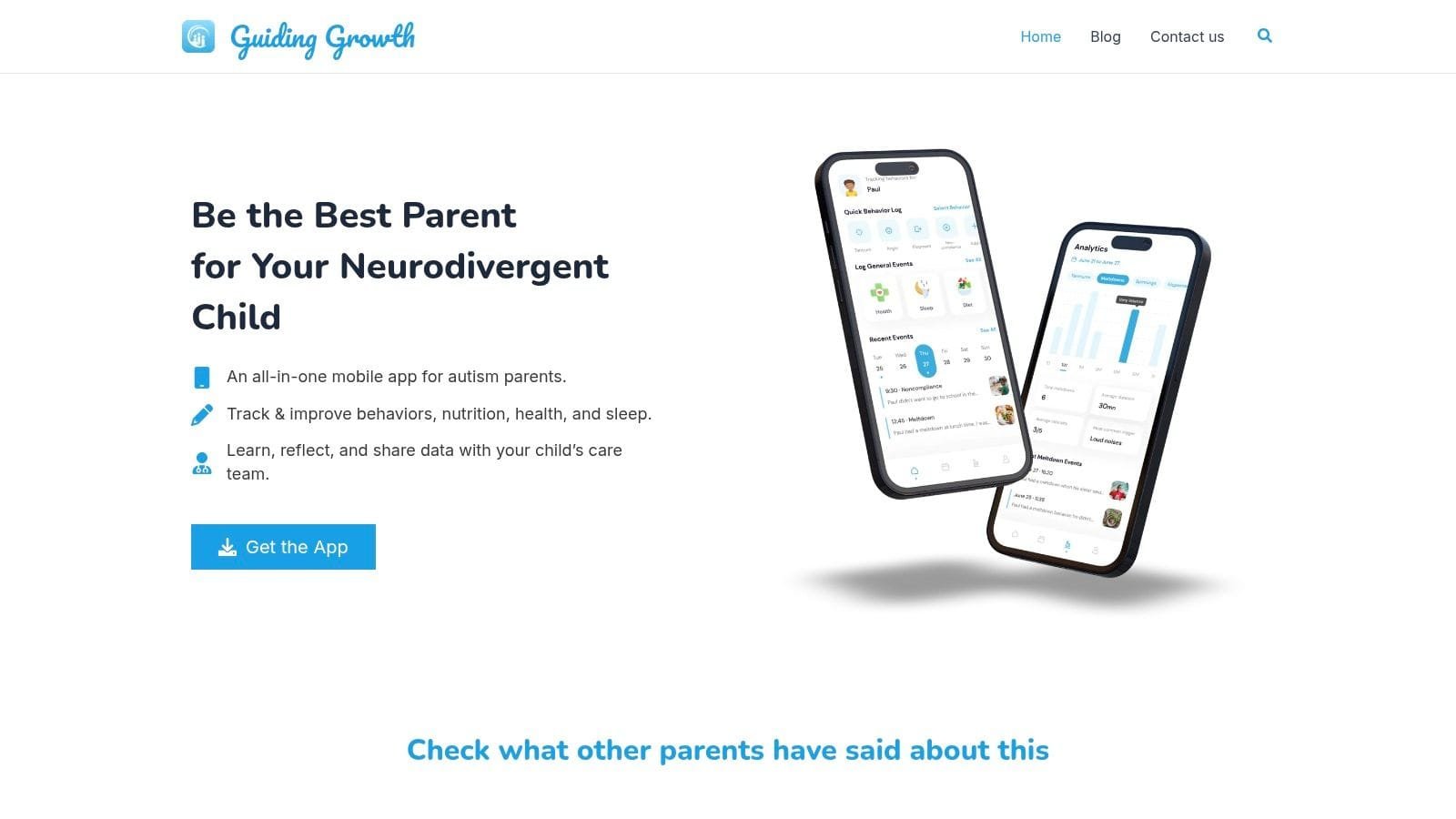
A mobile tool can keep reading observations alongside other daily information. Guiding Growth lets parents log patterns, routines, behaviors, appointments, and therapy details, then share relevant observations with caregivers and professionals. Quick voice logging reduces typing, while Alma AI provides an AI parenting companion for questions and reflection. Used thoughtfully, the app can turn scattered notes into clearer questions about the support a child needs for comprehension.
Every child's reading profile is different. Fluent decoding does not show that comprehension instruction is complete, and lowering expectations does not address the missing skill. Identify the gap, teach it directly, allow time for practice, and adjust support according to the child's responses.
Guiding Growth helps families log reading observations, notice patterns across routines and behaviors, and share useful information with educators and therapists. Visit Guiding Growth to organize autism and reading-comprehension support around your child's needs.