When bedtime feels like a guessing game, a structured routine can make all the difference for nonverbal children. Sleep challenges, especially common in kids with autism, are often tied to sensory sensitivities and irregular sleep-wake cycles. Here’s how to establish a calming, predictable bedtime routine that works:
- Understand sensory needs: Address triggers like rough fabrics, noise, or light. Use soft pajamas, blackout curtains, or white noise machines.
- Spot nonverbal cues: Look for signs of tiredness like irritability, fidgeting, or hyperactivity.
- Stick to a routine: Follow the same calming steps every night – like changing into pajamas, brushing teeth, and reading a book.
- Use visual aids: Create a picture schedule or social story to guide your child through each step.
- Set consistent sleep times: Keep regular bed and wake times, even on weekends.
- Track progress: Keep a sleep diary to identify patterns and refine the routine.
Sleep Challenges with Children with Autism: Setting a Bedtime Routine (3/7) | Autism at Home
Establishing a predictable routine can also help reduce the frequency of autism meltdowns during the transition to sleep.
Sleep Challenges in Nonverbal Autistic Children
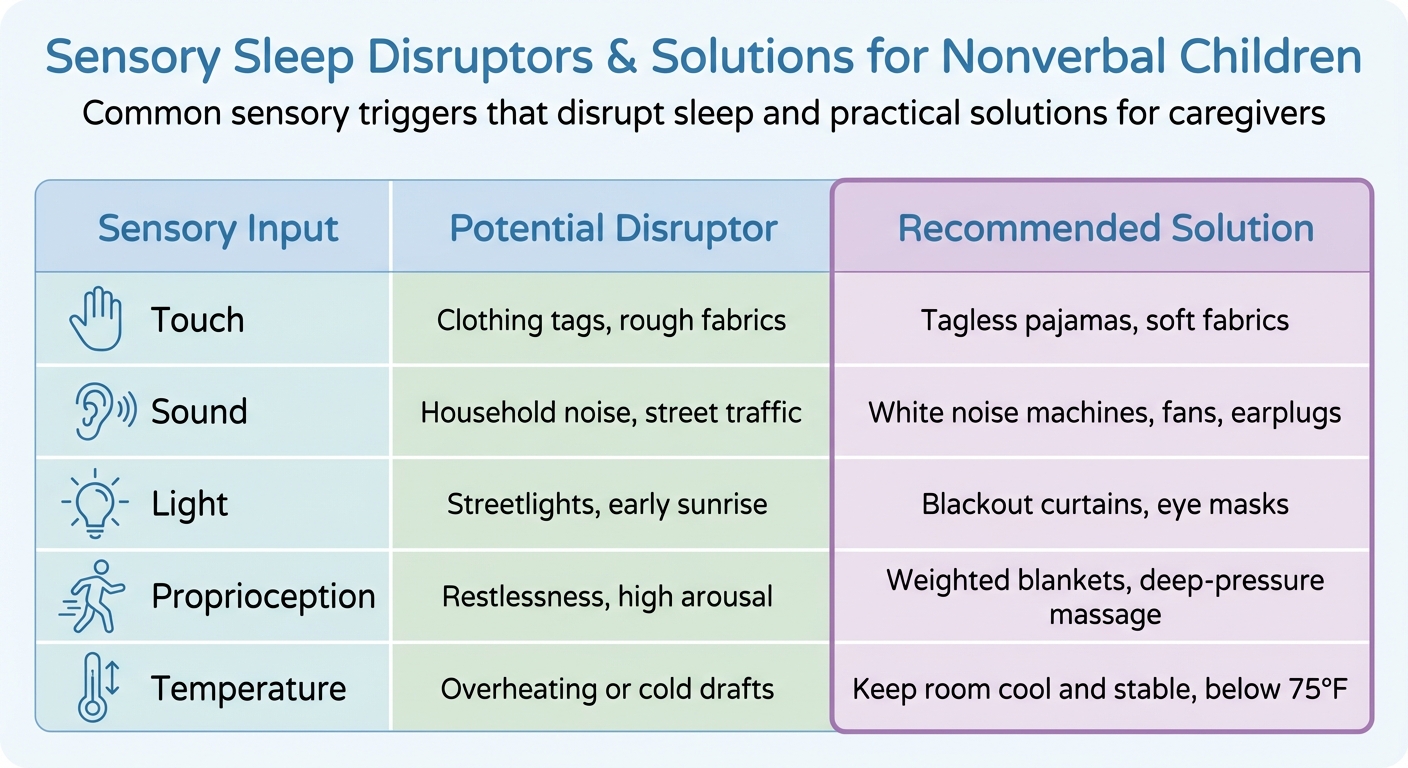
Sensory Sleep Disruptors and Solutions for Nonverbal Children
Sleep difficulties affect a significant number of children with autism – estimates range from 40% to 80%, compared to just 20% to 40% of typically developing children [9]. These challenges often stem from biological differences, sensory processing issues, and the inability to verbally express discomfort or needs.
Many children with autism have irregular melatonin levels and disrupted circadian rhythms, making it harder for their bodies to follow natural sleep-wake cycles [3][4]. On top of that, heightened sensitivity to environmental factors – like the faint glow of a streetlight or the feel of a bedsheet – can keep them awake. Because they can’t always communicate their discomfort, it falls on caregivers to identify and address the issues. Understanding these hurdles is the first step toward tackling how sensory sensitivities impact their sleep.
How Sensory Sensitivities Disrupt Sleep
Sensory sensitivities are a major reason sleep gets disrupted. For example, children who are hypersensitive to touch might struggle with clothing tags, scratchy zippers, or rough bed linens. Similarly, those sensitive to sound could be disturbed by everyday noises, like distant conversations, a humming TV, or even wind brushing against a window [3][8]. Light sensitivity can turn something as simple as an early sunrise or passing headlights into a major obstacle to restful sleep [7][8].
Temperature and smell are also common culprits. A room that’s too warm or too cold – or strong scents from laundry products or air fresheners – can lead to nighttime restlessness [7][10]. Since these children often can’t articulate their discomfort, caregivers need to watch for signs like tugging at pajamas, avoiding certain bedding, or displaying irritability, which might indicate sensory distress [4][10].
| Sensory Input | Potential Disruptor | Recommended Solution |
|---|---|---|
| Touch | Clothing tags, rough fabrics | Tagless pajamas, soft fabrics |
| Sound | Household noise, street traffic | White noise machines, fans, earplugs |
| Light | Streetlights, early sunrise | Blackout curtains, eye masks |
| Proprioception | Restlessness, high arousal | Weighted blankets, deep-pressure massage |
| Temperature | Overheating or cold drafts | Keep room cool and stable, below 75°F |
Addressing these sensory triggers is only part of the solution. Caregivers also need to recognize subtle, nonverbal signs of tiredness for effective intervention.
Reading Nonverbal Sleep Cues
For nonverbal children, signs of tiredness aren’t always obvious. Instead of yawning or rubbing their eyes, they might become more irritable, have sudden mood changes, or struggle to focus [3][11]. Some children even respond to exhaustion in unexpected ways – becoming hyperactive or engaging in what Dr. Keren Sagiv-Friedgut describes as "rampage" behavior, like running or jumping, instead of winding down [8].
Spotting these early signs of fatigue can help prevent more severe behaviors later. Evening meltdowns, aggressive outbursts, or self-injurious actions might actually stem from extreme tiredness rather than defiance [3]. Physical cues like fidgeting with clothing, pulling at tags, or reacting strongly to certain textures can also signal sensory discomfort that’s keeping the child from relaxing [4][11]. Recognizing these patterns is key to creating a structured bedtime routine tailored to the child’s needs.
Building a Consistent Bedtime Routine
Establishing a steady bedtime routine can make a world of difference for children with sensory sensitivities, paving the way to better sleep. According to research from the American Academy of Sleep Medicine, children who follow consistent bedtime routines not only fall asleep faster but also wake up less during the night [13]. The trick lies in creating a predictable series of calming activities that occur in the same order every evening, signaling to your child’s brain that it’s time to wind down.
Dr. Keren Sagiv-Friedgut, a pediatrician with expertise in autism, puts it this way:
"A sleep-routine is an order of actions that we perform with our children, repeated predictably and regularly every evening." [8]
This type of routine not only helps with sensory sensitivities but also reinforces the nonverbal cues discussed earlier. If your child’s current bedtime is 10:00 PM and you’d prefer an earlier time, don’t rush the process. Begin where they naturally fall asleep and gradually adjust by 10 to 15 minutes every few days [8].
Once the routine is in place, the next step is to establish consistent sleep and wake times.
Choose Fixed Sleep and Wake Times
Keeping a regular bedtime and wake-up schedule – even on weekends – helps regulate your child’s internal clock. For children with autism, who often experience irregular circadian rhythms, this consistency is especially important [3].
Plan for a 30-minute wind-down period before the target bedtime. For instance, if you aim for an 8:30 PM bedtime, start winding down at 8:00 PM. Anya Froelich, a psychologist at Nationwide Children’s Hospital, also emphasizes the importance of consistent meal times, as this can help signal the brain when it’s time to be awake or asleep [12].
Morning routines are equally vital. As soon as your child wakes up, open the blinds or turn on bright lights to cue their brain that the day has begun. If your child still naps, ensure they’re awake by 3:00 PM so it doesn’t interfere with nighttime sleep.
Physical activity plays a role too. Encourage exercise that gets your child moving and sweating, but make sure it’s done before 5:00 PM to avoid impacting their ability to wind down later [8][12].
With sleep and wake times set, the focus shifts to reducing stimulation before bed.
Reduce Stimulation Before Bed
Creating a calming environment is key to helping your child transition to sleep. Start by eliminating stimulating factors like screens at least one hour before bedtime, as the blue light from devices can interfere with melatonin production [1][2].
Dim the lights to signal that it’s time to wind down [8][2]. Blackout curtains can block out external light, and using a white noise machine, ceiling fan, or air filter can help mask disruptive sounds [1][3][8].
Replace high-energy activities with calming ones. Instead of running or jumping, encourage gentle stretching, quiet storytime, or listening to soothing music or podcasts [13][8]. For nonverbal children, visual timers or countdowns can help ease the transition from playtime to bedtime, reducing anxiety [2].
If sensory sensitivities make certain activities, like a bath, more stimulating than calming, consider moving them to earlier in the day. Additionally, choosing soft and comfortable fabrics for pajamas and bedding can make a big difference.
A bedtime routine doesn’t need to be complicated. Something as simple as changing into pajamas, brushing teeth, reading a short book, and turning on white noise can work wonders. The most important part? Doing it in the same order every night. This predictability helps children feel secure and ready for sleep.
Using Visual Supports for Bedtime
Visual tools offer a clear, step-by-step guide that makes bedtime routines easier to follow and less stressful for children [10][2]. Instead of relying solely on verbal instructions, which can sometimes be overwhelming, visual aids give children the chance to process each step at their own pace.
Halee Royal, BCBA at Propel Autism, explains that visual schedules help children by making routines more predictable and easier to grasp [2].
The goal is to break the bedtime routine into manageable steps that your child can follow independently. Instead of abstract directions, a visual schedule uses images to outline each task: putting on pajamas, brushing teeth, and settling in for a bedtime story.
Let’s look at how to create and use a visual schedule tailored to your child.
Make a Visual Schedule
Start by listing the steps in your child’s bedtime routine and matching each one with a corresponding image. For some children, real photographs work best – especially if the photos show your child performing the activity or feature familiar objects, like their toothbrush or favorite pajamas [1][2]. Others may respond well to simple drawings or symbols.
Place the schedule somewhere your child can easily see it, like on their bedroom wall or bathroom mirror [1][6]. Some families use Velcro-backed pictures that children can move to a "done" column after completing each task. This interactive element not only encourages independence but also reduces the need for constant reminders from parents [8].
Visual schedules can also introduce choice and autism social skills activities into the routine. For example, you could show pictures of two different sets of pajamas or bedtime books, letting your child pick their favorite. This small decision-making opportunity promotes independence while keeping the routine on track [2].
Use Social Stories for Bedtime
Once you’ve established a visual schedule, social stories can add another layer of support by providing context and narrative for each step. These stories explain what to expect during bedtime and why sleep is important [14][6]. They’re short, relatable, and often feature the child as the main character, helping them connect with the routine on a personal level.
Victoria Cooksley, who holds a BA Hons Degree, PGCE, and QTLS, emphasizes:
"Visual aids and social stories can be really beneficial for allowing our children to process the bedtime routines in their own time, avoiding any pressure or demand on them." [6]
Keep the story simple and focused on the child. For instance: "After I brush my teeth, I put on my soft pajamas. Then I get into my cozy bed. My body needs sleep to feel good." You can also use a visual calendar with photos to show which caregiver will handle bedtime that evening, helping your child prepare for transitions in advance [6].
sbb-itb-d549f5b
Add Sensory-Friendly Calming Activities
Incorporating sensory activities into your child’s bedtime routine can help ease their energy into a calmer state. Since sensory preferences differ, it’s important to adjust these activities based on whether your child seeks or avoids sensory input [18]. As Victoria Cooksley, BA Hons Degree, PGCE, QTLS, explains:
"For many autistic children, a bath actually overstimulates them and keeps them awake for longer" [6].
If a bath tends to overstimulate your child, consider scheduling it earlier in the day instead of right before bed [8].
Sensory Activities That Promote Relaxation
Deep pressure techniques are often highly effective for relaxation. For example, weighted blankets can provide a comforting sense of security. While studies suggest they improve comfort more than total sleep duration, many children still find them soothing [3][16]. Just make sure the blanket weighs no more than 10% of your child’s body weight and that they can remove it on their own for safety [5]. If a weighted blanket feels too warm, try compression bed sheets for a similar calming effect with better airflow [17]. Gentle bedtime massages, applying calming lotions, or offering soft toys to cuddle can also provide soothing tactile input [6][8].
For auditory relaxation, white noise from a fan or machine can create a steady, calming environment. Keep the white noise running throughout the night, as sudden silence might disturb your child’s sleep [8][12]. Adjust the lighting by using dim, warm-toned lights, and keep the room temperature below 75°F to encourage melatonin production and better sleep quality [6][12].
Activities like gentle stretching, deep breathing exercises, or progressive muscle relaxation can also help your child wind down. Pair these with quiet activities such as reading picture books, solving simple puzzles, or drawing to shift their focus away from the day’s stimulation [1][3][8]. However, steer clear of discussions or activities related to your child’s special interests right before bed, as these can spark excitement and make it harder for them to relax [15].
Track Sleep Patterns and Make Changes
Building an effective sleep routine for your child doesn’t stop at establishing a bedtime ritual – it’s an ongoing process of observation and adjustment. By tracking sleep patterns, you can uncover what’s working, pinpoint potential issues, and fine-tune your approach to better meet your child’s needs.
Keeping tabs on your child’s sleep habits can reveal patterns that might otherwise go unnoticed. For instance, consistent tracking can help explain why your child has trouble falling asleep or wakes up frequently during the night. As John Hookway, CEO of MedicSignal, puts it:
"Keep a sleep diary to track patterns and issues. This can be invaluable information for healthcare providers in assessing the situation" [19].
To get started, log key details like when your child falls asleep, any awakenings during the night, and environmental factors such as room temperature, lighting, or calming tools used. Don’t forget to include daytime activities – like the timing of their last nap (ideally no later than 3:00 p.m.) – and note any behavioral or nonverbal cues during sleep transitions [19] [12]. These observations can help you refine the routine over time.
Give your new routine about three weeks to show results, making gradual adjustments as needed. For example, if your child takes too long to fall asleep, try moving bedtime earlier by 10–15 minutes every few days until you find the sweet spot [1] [8].
Monitor Sleep with Guiding Growth

To make tracking easier, tools like the Guiding Growth app can simplify the process. This app allows you to log sleep times, night wakings, and environmental details all in one place. Instead of juggling paper notes or relying on memory, you can quickly record observations as they happen. Over time, the app turns your entries into visual patterns, helping you uncover insights – like how high-energy activities affect sleep latency or which room conditions lead to better rest.
When it’s time to consult with your child’s doctor or therapist, Guiding Growth can generate detailed reports based on your data. These reports offer clear, objective insights that can guide recommendations for specific interventions or further evaluation [19]. By turning daily observations into actionable steps, you’ll be better equipped to refine your child’s sleep routine and help them get the rest they need.
Handle Night Wakings and Sleep Transitions
Between 44% and 83% of nonverbal autistic children experience night wakings [16]. To encourage self-soothing and independent sleep, it’s important to respond in a way that minimizes stimulation.
When your child wakes up during the night, keep interactions as low-key as possible. Use dim lighting, avoid eye contact, and speak sparingly – this helps signal that it’s still time to sleep. Delaying your response and keeping visits brief can also discourage night wakings by avoiding unintentional reinforcement [16].
Consistency is key. Maintain familiar environmental cues, such as white noise or a nightlight, throughout the night to prevent confusion [6].
Reward Desired Sleep Behaviors
Reinforcing positive sleep habits can make a big difference. Nonverbal children often respond well to visual aids, so consider using tools like a sticker chart. Pair this with morning praise or a simple reward – something comforting, like a warm blanket fresh from the dryer – to encourage staying in bed [14][17]. Keep the rewards straightforward and celebrate small milestones as your child progresses.
Use Gradual Fading Techniques
In addition to rewards, gradual fading is an effective way to help your child transition to independent sleep. This method involves slowly increasing the physical distance between you and your child over time, giving them the confidence to fall asleep without your immediate presence [20]. Visual schedules can also help outline each step of the process, making the transition easier to understand.
Here’s a 12-night plan to guide the process:
| Phase | Nights | Your Location | Interaction Level |
|---|---|---|---|
| Phase 1 | 1–3 | Sitting on the bed | Low (brief story or quiet presence) |
| Phase 2 | 4–6 | Chair beside the bed | Minimal (no contact, stay quiet) |
| Phase 3 | 7–9 | Chair moved to door | None (no contact or eye contact) |
| Phase 4 | 10–12 | Outside the bedroom | Brief check-ins only if necessary |
This phased approach aligns with earlier strategies, creating a consistent and supportive sleep routine for your child.
As education specialist Victoria Cooksley says:
"Predictability is good! If your child sees a routine they can predict and feel safe with, the anxiety is heavily reduced" [6].
Progress at your child’s pace – only move to the next phase after several successful nights. If your child struggles, stay at the current phase a bit longer before advancing. Adjustments may take a few weeks or even several months, depending on your child’s needs [20].
To further ease the transition, introduce comfort items like a favorite stuffed animal or a weighted blanket. These objects can provide a sense of security and serve as a reassuring substitute for your presence during the night [6][14]. Combined with sensory-friendly cues, these strategies can help your child feel more confident and secure as they work toward independent sleep.
Conclusion
Creating a sleep routine for your nonverbal child demands consistency and patience. A strong starting point is establishing fixed daily sleep and wake times, which helps regulate their internal circadian rhythm. Research shows that sticking to a routine can lead to noticeable sleep improvements in as little as three weeks [8].
Equally important is sensory customization. Aim to keep the bedroom environment dark, quiet, and cool – ideally between 60–67°F [19]. Pair this with visual aids like picture schedules or social stories to outline the daily steps. These personalized strategies can be especially helpful for children facing significant sleep challenges.
Once the routine is in place, monitoring progress becomes essential. Tools like Guiding Growth or a simple sleep diary can help you track patterns and refine the routine. As John Hookway, CEO of MedicSignal, suggests:
"Keep a sleep diary to track patterns and issues. This can be invaluable information for healthcare providers in assessing the situation" [19].
This information not only helps identify triggers and track improvements but also ensures clear communication with your child’s healthcare team.
FAQs
How can I identify which sensory issues are keeping my child awake?
Pay close attention to how your child reacts to things like light, noise, different textures, or temperature. Notice if they seem uncomfortable or overly stimulated, especially around bedtime. Keeping track of their sleep habits and reactions over time – whether through a journal or a sleep-tracking app – can help you identify specific sensory triggers that might be interfering with their sleep. Regular observation can uncover patterns and highlight what’s making it harder for them to fall asleep.
What should I do if my child gets hyperactive right before bed?
If your child tends to get hyperactive before bedtime, try focusing on soothing techniques to help them wind down. Start by creating a calming atmosphere – dim the lights and minimize background noise to set the mood for relaxation. Gentle routines, such as reading a book or engaging in quiet sensory activities, can also make a big difference. Sticking to a consistent bedtime routine can ease feelings of anxiety and help prevent sensory overwhelm. If the hyperactivity persists, you might explore sensory tools like weighted blankets or compression sheets, which can provide a comforting sense of security and promote relaxation.
When should I ask a doctor about my child’s sleep problems?
If your child continues to struggle with sleep despite maintaining consistent routines, practicing good sleep habits, and making adjustments to their surroundings, it’s time to consult a doctor. Poor sleep that begins to affect their behavior, emotions, or physical health shouldn’t be ignored, as ongoing sleep problems can take a toll on their overall well-being. Experts suggest seeking medical advice when calming techniques and behavioral strategies don’t lead to noticeable improvements in their sleep patterns.