It's 7:12 a.m. One child is refusing breakfast because the texture is wrong today. The school bag still isn't packed. A therapist changed the afternoon slot. You're trying to remember whether the morning medication was already given, whether it was half a dose or full, and whether yesterday's rough bedtime was a side effect, a bad sensory day, or both.
That's not forgetfulness. That's a care coordination problem.
For parents of neurodivergent children, a medication reminder app shouldn't act like a louder alarm clock. It should help you keep home, school, appointments, and everyone else in sync without forcing you to hold the entire system in your head. The right app lowers stress because it captures what happened, who gave it, and what changed after.
Table of Contents
- The Daily Juggle of Neurodivergent Family Care
- Why a Simple Phone Alarm Is Not Enough
- Essential Features for a Neurodivergent-Friendly App
- How to Choose the Right App for Your Family
- Setting Up for Success with Family and Caregivers
- From Medication Logs to a Holistic Care Picture
The Daily Juggle of Neurodivergent Family Care
Common medication app guidance overlooks the actual challenge. It talks about reminders as if your only job is to hear a ping and hand over a pill. That's not how family care works.
For many parents, the harder question is who gave the dose, when they gave it, whether it was late, and what happened afterward. That coordination gap matters even more when a child's routine shifts between home, school, appointments, and other caregivers, as noted in the Journal of Managed Care & Specialty Pharmacy discussion of medication app coordination gaps.
One parent handles weekdays. A grandparent covers pickup. A respite worker steps in on Thursday. School administers something at lunch. Then Friday falls apart because nobody is fully sure what happened on Thursday. That's how stress builds. Not from one missed alarm, but from scattered responsibility.
When the system lives in your head, everything feels fragile
If you're carrying all of that mentally, you're already doing too much. Families using respite support often need tools that make handoffs cleaner, which is one reason practical resources on home care respite solutions can be helpful alongside better medication tracking.
And if you've been feeling stretched thin, read this piece on caregiver burnout causes and solutions. It names the exhaustion many parents normalize for far too long.
You don't need another task. You need one reliable record that everyone can trust.
A good medication reminder app becomes that record. It doesn't just fire alerts. It keeps the care team aligned. It helps you answer basic but critical questions quickly: Was the dose taken? Was it delayed? Did appetite crash at lunch? Did sleep get worse after a schedule change?
Medication management is really family coordination
For neurodivergent kids, medication decisions rarely stand alone. You're often weighing behavior, focus, sleep, appetite, sensory tolerance, therapy timing, and school demands all at once.
That's why I recommend treating a medication reminder app as a care coordination tool first and a reminder tool second. If it can't support real-life handoffs, it won't reduce your stress for long.
Why a Simple Phone Alarm Is Not Enough
A standard phone alarm is fine for one adult taking one medication on a stable routine. It falls apart fast in family care.
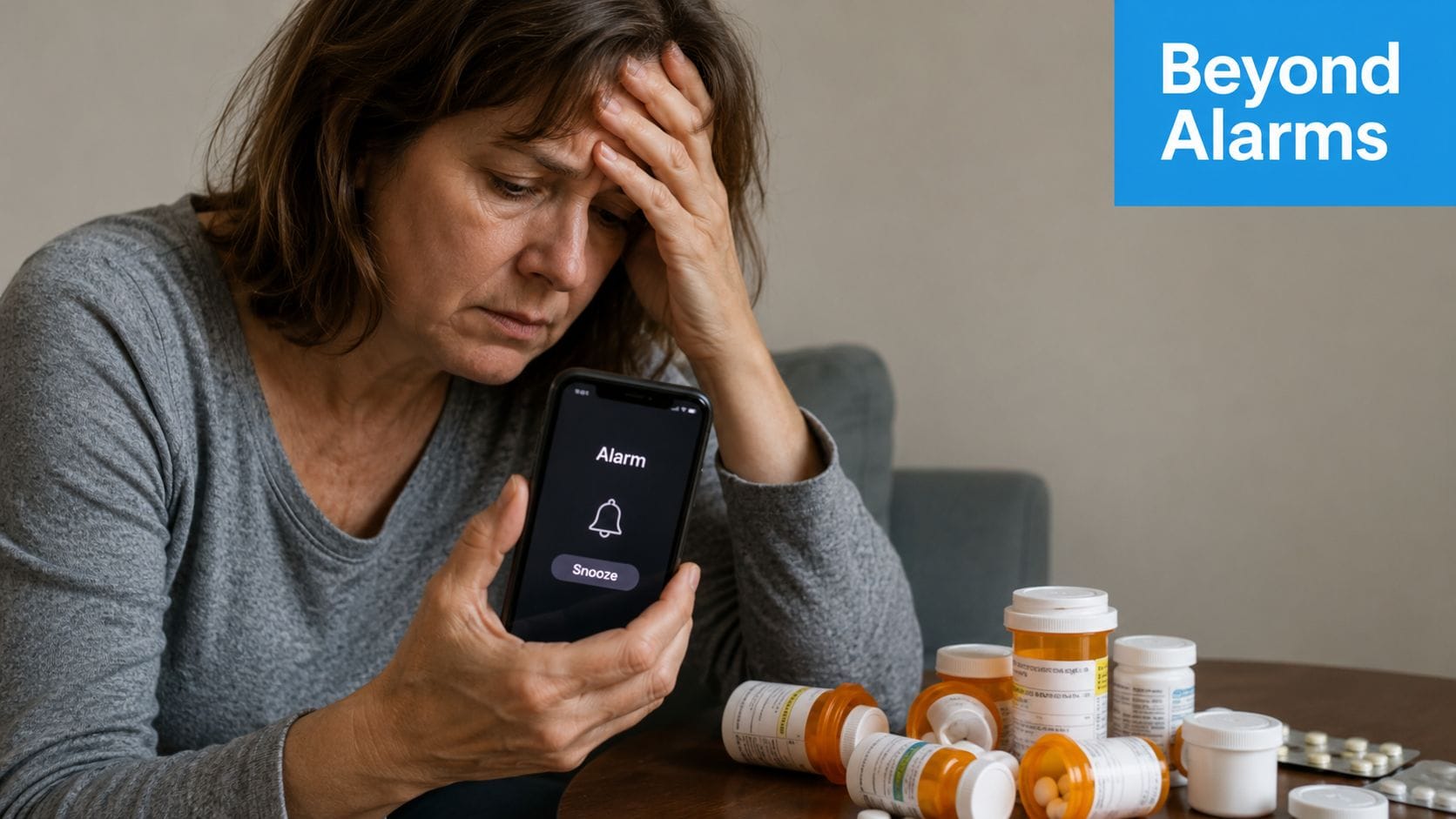
An alarm can tell you a time. It can't tell you whether the dose was given, who logged it, what was missed last week, or whether you're about to run out. It has no memory beyond the next beep.
That's the core mistake I see parents make. They try to manage a dynamic medication routine with a tool built for waking up in the morning.
An alarm reminds. An app manages.
A dedicated medication reminder app does something very different. It creates a usable history. That matters because adherence isn't just about intention. It's about whether the system supports follow-through when the day gets messy.
A 2025 JMIR systematic review of medication reminder apps analyzed 14 randomized controlled trials, and 10 of the 14 reported statistically significant improvements in medication adherence. That's enough evidence to stop treating these apps like a minor convenience feature. Used well, they change behavior.
For parents of neurodivergent children, that matters even more because the goal isn't just dose completion. You're tracking patterns. Did the child become more irritable after a timing change? Did sleep shift when a weekend dose moved later? Did refusal increase when the alert sound itself became aversive?
What a phone alarm can't capture
Here's what a basic alarm misses:
- Dose confirmation: It can ring, but it can't create a reliable medication log.
- Missed-dose visibility: It won't show you patterns across days and caregivers.
- Refill planning: It won't warn you before the bottle becomes a problem.
- Context: It can't connect medication timing to behavior, sleep, or diet.
- Team communication: It doesn't help grandparents, school staff, or therapists stay aligned.
Practical rule: If a tool can't answer “What actually happened this week?” it's not enough for pediatric medication management.
For a neurodivergent child, the difference between “alarm” and “app” is the difference between guessing and knowing. And when you're speaking with a prescriber, guessing isn't good enough.
Essential Features for a Neurodivergent-Friendly App
At 7:10 a.m., one child is refusing breakfast, another caregiver is asking whether the morning dose was already given, and you are trying to remember if yesterday's sleep was worse because medication ran late. That is the true test. A good app needs to hold up in that moment.
Parents of neurodivergent children need more than a generic reminder tool. You need one place to track medication, adjust cues that will not overwhelm your child, and keep everyone involved in care working from the same record.
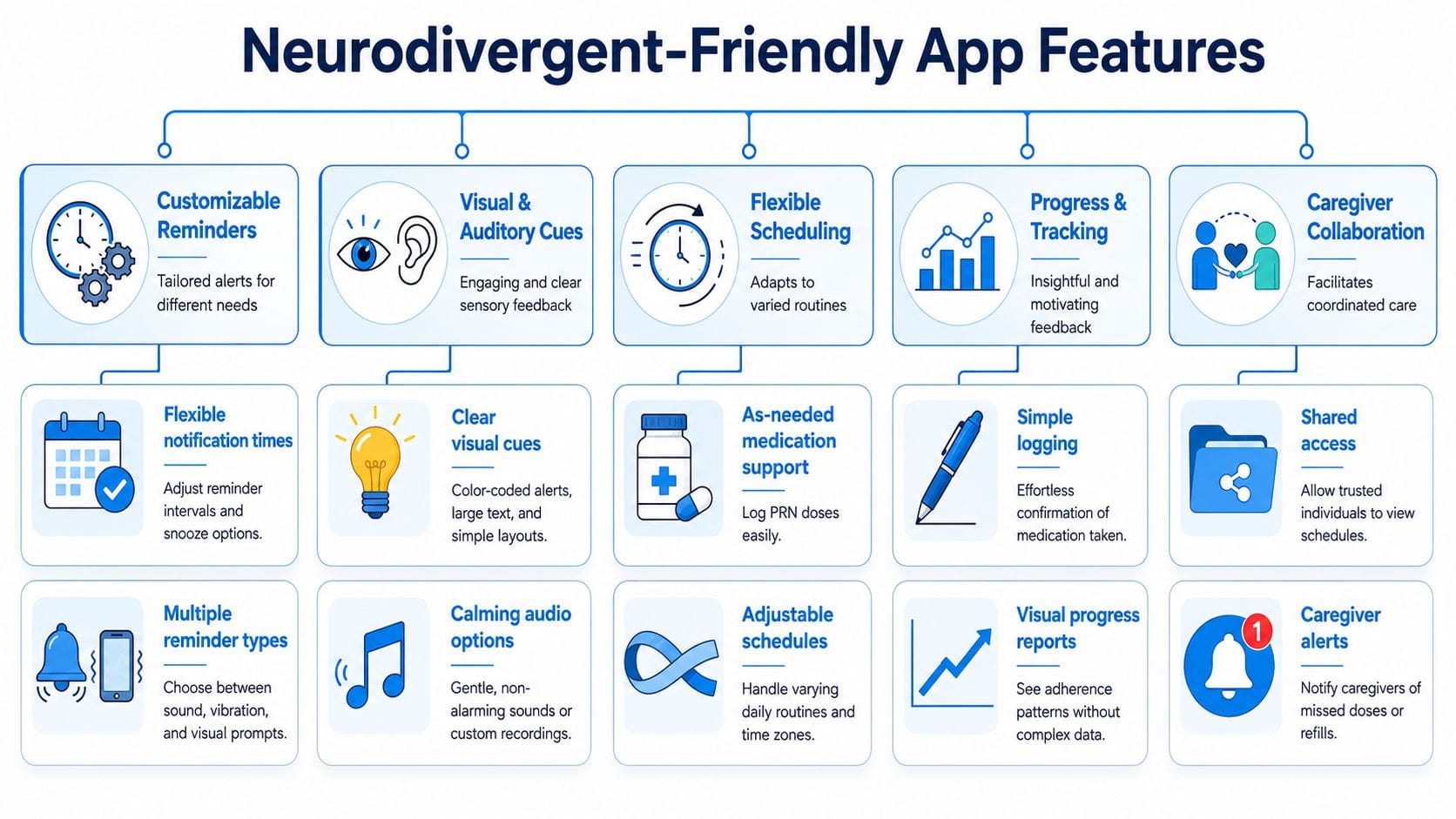
What the app must track
Start with the record itself. If the app cannot clearly store the medication name, dose, timing, schedule, and whether the dose was taken, skipped, or delayed, it will fail you when you need to look back and spot patterns.
That record should be easy to scan, not buried in menus. You want to answer basic questions fast. Was the noon dose late all week? Did the weekend schedule drift? Did a new medication line up with appetite changes or rougher evenings?
Look for these basics:
- Clear medication details: Drug name, dose, timing, and intake status in one place.
- Flexible scheduling: Daily routines matter, but so do school-day changes, weekends, travel, and PRN use.
- Visible history: You should be able to review past doses quickly without piecing the story together from texts, paper notes, and memory.
- Time-stamped logs: A vague checkmark is not enough. You need to know when the dose happened.
Skip any app that treats dose logging like an extra feature. For pediatric medication management, the log is the point.
What matters for sensory comfort
Reminder design matters more in neurodivergent households than many app reviews admit. An alert that is too loud, too abrupt, or too visually busy can trigger refusal, stress, or complete avoidance.
Choose an app that lets you control the cue:
- Gentler sounds, vibration, or visual-only reminders: Some children do better with quieter prompts.
- Simple screens: Large text, low clutter, and one-tap confirmation reduce friction during rushed transitions.
- Flexible snooze options: You may need a short delay for toileting, regulation, food, or getting through a hard transition.
- Predictable reminder behavior: Alerts should be consistent, not erratic or confusing.
Calm beats aggressive. A reminder your family can tolerate every day will outperform a louder one that everybody starts dreading.
What reduces caregiver miscommunication
Medication management often involves more than one adult. Parents, grandparents, school staff, babysitters, and therapists may all affect the routine, even if they are not the ones handing over the pill or liquid. That is why shared visibility matters.
Apps with caregiver sharing and refill support can help keep schedules aligned across home and school, as described on the Medisafe Google Play listing.
Use this checklist:
- Shared access: Another caregiver should be able to check the current schedule without asking you to resend instructions.
- Missed-dose alerts: If a dose is missed or delayed, the right adult should know fast.
- Refill reminders: Running out creates panic you can prevent.
- Notes on each entry: "Taken late after snack" or "refused until preferred cup was available" gives useful context.
- Support for multiple routines: School days, therapy days, weekends, and travel should not require rebuilding the entire schedule.
The best apps also let you track what happened around the dose. That matters for neurodivergent kids because medication does not exist in isolation. You may need to notice whether a timing change affected behavior after school, whether sleep got worse, or whether appetite dipped on certain days. If your app cannot connect medication with those day-to-day observations, it is leaving out the part your prescriber will ask about later.
How to Choose the Right App for Your Family
It's 7:10 a.m. One child is refusing breakfast because the texture is wrong, someone else is looking for a shoe, and you are trying to remember whether the morning dose was given before the school bus comes. That is the moment your app has to work. If it only works when the house is calm, it is the wrong app.
Pick the app your family can use under stress. It should be clear, fast, and easy to hand off between adults. If a grandparent, respite worker, or co-parent needs a full tutorial, the system will break the first busy week.
Use a fit test
Reminder apps work better when the prompt style matches the person using it. A clinical study on medication reminders found better adherence outcomes with app-based audible and visual reminders than usual care. For neurodivergent families, that matters in a very specific way. You need alerts your child can tolerate, and a logging system adults will consistently use.
Use these questions to decide:
| Question | Why it matters |
|---|---|
| Will the main caregiver use it half-awake and in a rush? | That is the real test, not the demo. |
| Can reminders be adjusted for sound, vibration, and visual load? | Harsh alerts can trigger distress or get turned off. |
| Can you log what changed after the dose? | You may need to connect medication timing with sleep, appetite, behavior, or therapy participation. |
| Can your wider support team stay on the same page? | Parents often need one system that works across home, school, and appointments. |
| Can you pull up the record quickly during a visit? | Prescribers need specifics, not your best guess from a long week. |
Choose based on your real care system
Some apps are built for one adult managing one prescription. That is fine if your needs are simple.
A lot of neurodivergent families do not have simple needs. You may be tracking a stimulant, a supplement, after-school behavior, bedtime struggles, and notes from OT in the same week. In that situation, a medication-only tool can create more work because the context lives somewhere else.
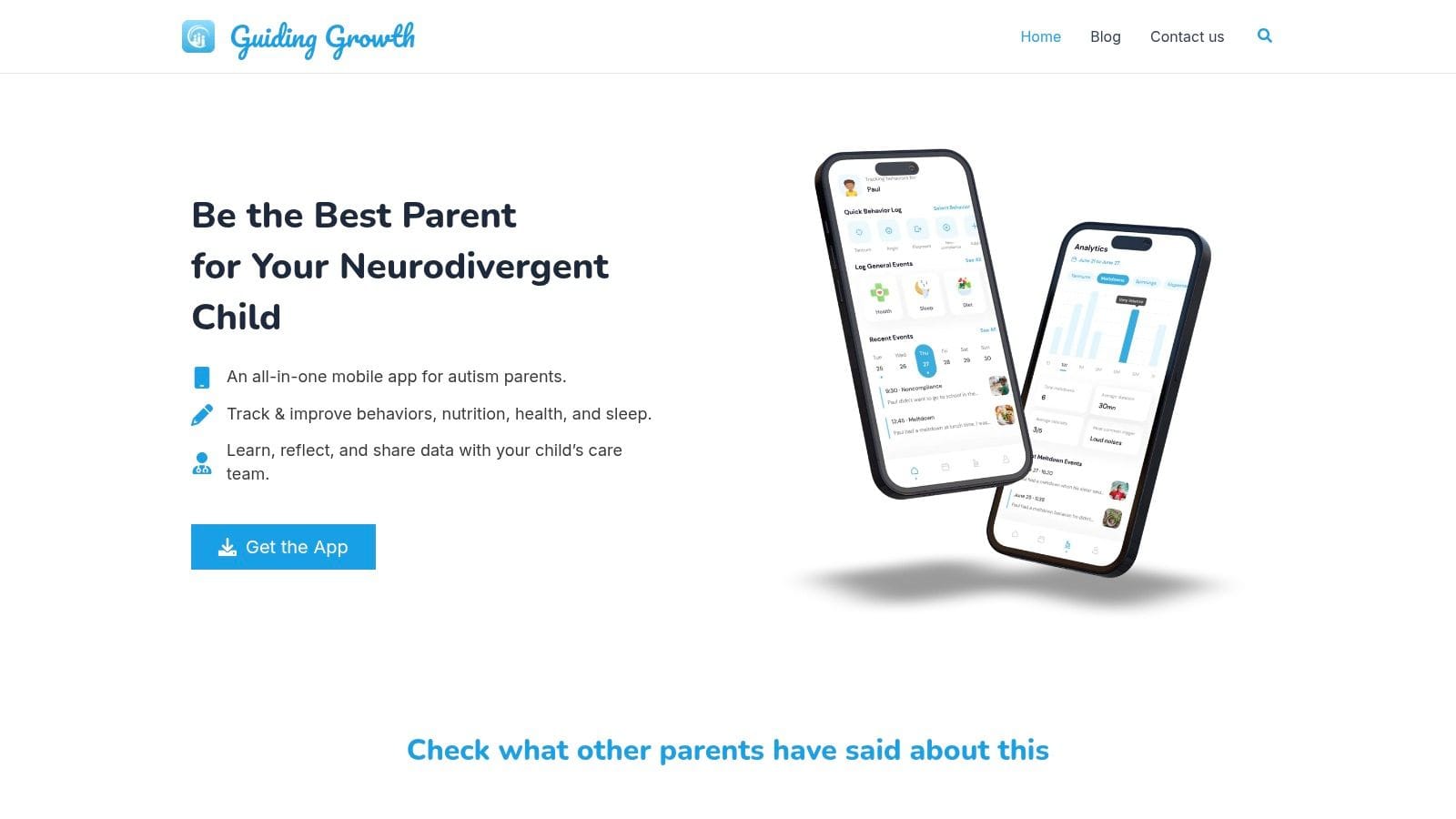
If your family is coordinating across several adults and providers, it helps to use a system that supports a collaborative autism care team instead of treating medication as a separate task. Guiding Growth is one example. It includes medication and supplement reminders alongside behavior, sleep, diet, appointments, and therapy tracking in one place.
My recommendation is simple. Choose the app that matches the messiness of your actual life. The best choice is usually the one that reduces switching between tools, lowers sensory friction, and gives you one clear record when someone asks, “What happened before things got hard?”
Setting Up for Success with Family and Caregivers
Monday morning. One adult gave the dose but forgot to log it. Another sends a text asking if it was done. School pickup is handled by a grandparent. Bedtime falls apart, and now nobody is fully sure what happened or what to write down for the prescriber.
That kind of confusion is common in families caring for neurodivergent kids. It also creates avoidable stress. A medication reminder app only helps if your whole care team uses it the same way, every time.

Your setup needs to be boringly clear. Every caregiver should know where to check, when to log a dose, what to do if a child refuses, and how to note what happened after. For neurodivergent children, that record often needs more than “taken” or “missed.” You may need to capture whether the alarm upset your child, whether the dose went down better with food, or whether behavior, appetite, or sleep changed later in the day.
Build one medication workflow everyone follows
Write the rules down. Do not rely on memory, group texts, or “we usually do it this way.”
A simple system works best:
Assign medication jobs clearly
Name who handles school mornings, after-school doses, bedtime, and weekends. If therapists, grandparents, or respite caregivers are involved, define their role too.Log after the dose is given
Logging intent causes mistakes. The record should reflect what happened, not what someone planned to do.Set one rule for delays, refusals, and uncertainty
Decide who gets notified, where that note goes, and when to stop guessing and follow the prescriber's instructions.Keep all updates in one shared place
Splitting information across texts, paper notes, and memory leads to duplicate doses and missed follow-up.
Families with several adults involved often do better with a shared autism care team plan so responsibilities stay clear across home, school, and appointments.
Use notes the same way every time
Good notes are short, specific, and repeatable. “Rough day” is not useful later. “Dose given late after OT, ate very little dinner, harder bedtime” is useful.
Ask every caregiver to log the same details:
- Timing: On time, late, skipped, or refused
- How it was given: With food, after prompting, after sensory resistance, or as prescribed in a split dose
- Immediate response: Calmer, sleepy, more agitated, reduced appetite, stomach complaint
- Daily context: School day, therapy day, poor sleep, illness, major routine change
If your child is sensitive to sounds, include one note about the reminder itself. A harsh alarm can trigger distress before the medication even starts to help. That matters. So does noting whether a quieter cue, vibration, or visual reminder worked better.
A brief team walkthrough can keep the system from falling apart after the first busy week. Use the app together once, answer the obvious “what if” questions, and agree on the exact language you want people to use.
One shared standard prevents confusion. It gives parents, caregivers, and clinicians a record they can actually use.
From Medication Logs to a Holistic Care Picture
Medication tracking becomes much more useful when it stops living alone.
A dose record tells you what was given. A broader care record helps you understand what changed after. That's the difference between a list of events and a pattern you can act on.
For many families, the biggest benefit comes when medication logs sit beside sleep notes, meal patterns, behaviors, appointments, and daily observations. Then you can walk into a clinician visit and say something more useful than “I think things were a bit worse last month.”
The pattern matters more than the single day
You might notice that appetite drops on therapy days after a specific medication timing. Or that bedtime becomes harder when a dose shifts later. Or that a school-day refusal pattern happens only after poor sleep.
Those insights are easier to see when everything is logged in one place. Families trying to connect those dots may also find this article on tracking sleep and health for autistic kids helpful.
The point isn't to collect endless data. It's to reduce guesswork. A medication reminder app should help you make calmer, clearer decisions with the people supporting your child.
If your family needs one place to manage medications, daily routines, and the bigger picture around behavior, sleep, diet, and appointments, Guiding Growth is worth trying. It can help you replace scattered notes with a shared record that supports better handoffs, better pattern spotting, and less daily stress.