Meltdowns are not tantrums – they’re involuntary responses to overwhelming stress. For parents, especially those with autistic children, understanding this distinction is key to managing these moments with empathy and rebuilding trust. Meltdowns stem from triggers like sensory overload, sudden changes, or emotional overwhelm, and they follow a predictable cycle. Misinterpreting them as bad behavior can harm your relationship with your child.
Here’s what you need to know:
- Stay calm: Your child mirrors your emotional state.
- Ensure safety: Create a quiet, secure space.
- Validate emotions: Use short, soothing phrases like “You’re safe.”
- Avoid blame or demands: Wait until your child is fully calm before discussing what happened.
Learning how to prevent autism meltdowns by tracking triggers like hunger or fatigue can help reduce their frequency. Tools like the Guiding Growth app can simplify this process. Remember, the goal isn’t to stop meltdowns completely but to respond with patience and repair trust afterward.
Tantrum VS Meltdown: Tips for handling an Autistic Meltdowns.
sbb-itb-d549f5b
Understanding Meltdowns and Their Impact on Trust
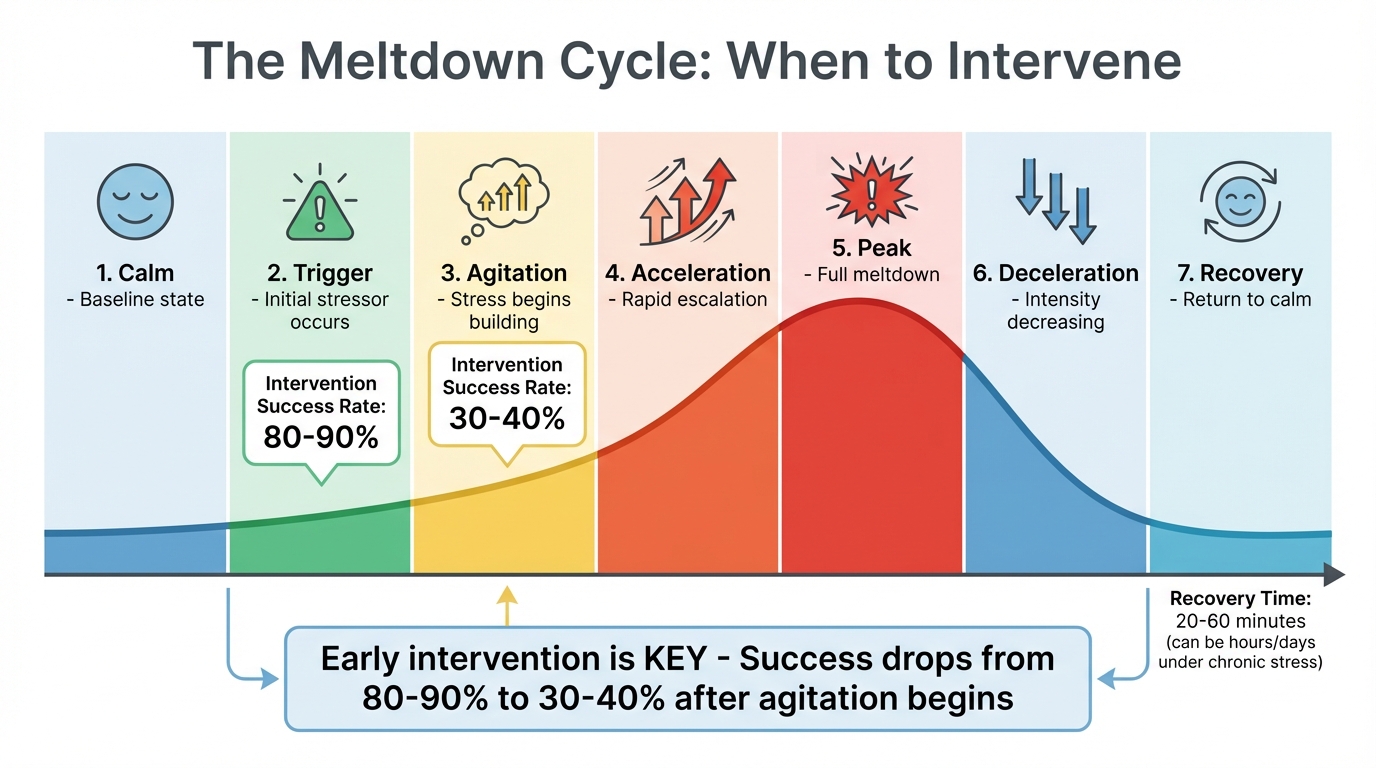
The 7-Stage Meltdown Cycle and Intervention Success Rates
To repair trust after a meltdown, it’s crucial to first grasp how to help autism meltdowns by understanding what’s happening in your child’s brain. A meltdown is not the same as a tantrum. This isn’t just splitting hairs – it’s the key to responding effectively.
A meltdown is an involuntary neurological event. During this time, the prefrontal cortex – the part of the brain responsible for logic, language, and emotional regulation – essentially goes offline [2][3]. Your child enters survival mode, experiencing what experts describe as overwhelming neurological stress [1][3].
"Meltdowns are not tantrums. Your child isn’t trying to manipulate you. They’re experiencing genuine nervous system overwhelm, their brain has hit overload and temporarily shut down the parts that control reasoning, language, and emotional regulation." – Chris Topham, M.Ed., BCBA, Celeration ABA [3]
When you respond to a meltdown as if it’s a tantrum – using discipline, threats, or demanding immediate apologies – you’re asking for something their brain simply cannot deliver in that moment. This disconnect between your expectations and their capacity undermines trust. Your child may feel unsafe and misunderstood [1][3].
What Triggers Meltdowns?
Meltdowns follow a specific cycle: Calm, Trigger, Agitation, Acceleration, Peak, Deceleration, and Recovery [2]. The earlier you can step in – ideally at the trigger stage – the better your chances of preventing a full meltdown. Intervening at this point has an 80% to 90% success rate, but once agitation sets in, that number drops to just 30% or 40% [2].
One of the most common triggers is sensory overload. Imagine a child in a toy store: the flicker of fluorescent lights, the constant beeping of checkout scanners, overlapping conversations, and the hum of air conditioning. For an autistic child, these aren’t just background stimuli – they’re overwhelming assaults on an already sensitive system [1]. Other triggers include unexpected changes in routine, transitions between activities, internal sensations like hunger or fatigue that they can’t express, and repeated frustration from tasks that are too challenging [2][3].
Here’s why early intervention is so important: as stress builds, your child’s ability to process language and communicate drops dramatically [2][3]. By the time they’re in full meltdown mode, asking them to "use their words" or explain what’s wrong is like asking someone who’s drowning to calmly describe the water.
Recognizing these triggers allows for quicker, more compassionate responses. This understanding is essential to preserving trust during and after these challenging moments.
How Meltdowns Affect Parent-Child Relationships
The ripple effects of meltdowns go beyond the event itself – they can reshape the relationship between you and your child. When a meltdown is misinterpreted as defiance or manipulation, responses like frustration, anger, or punishment send a harmful message: "When I’m at my most vulnerable, you don’t understand me." Over time, this pattern can weaken the foundation of trust that every parent-child relationship needs [1][3].
The strain isn’t one-sided. Parents of autistic children often report higher levels of stress, anxiety, and depression compared to other parents [4]. When you’re overwhelmed, it’s harder to provide the calm, steady presence your child needs. And here’s the kicker: your child’s nervous system mirrors your emotional state [3]. If you’re anxious or upset, they’ll stay dysregulated longer, creating a cycle where both of you feel stuck and disconnected.
After a meltdown, many children feel guilt, shame, or remorse – and they often have little to no memory of their actions during the peak [1]. If your response during the recovery phase involves nagging, blaming, or demanding apologies, it can deepen their emotional insecurity. Instead of learning that you’re a source of support, they may associate their hardest moments with rejection.
"Trust is the cornerstone of safe relationships. When an Autistic person feels safe and comfortable with you, the more easily they will be able to communicate distress, anxiety and incoming meltdowns." – Reframing Autism [1]
Building trust means creating an environment where your child feels safe enough to signal distress before things spiral out of control. That might look like a tug on your sleeve, a quiet “too loud,” or a request to leave the room. These small moments of early communication are only possible when your child believes you’ll respond with understanding rather than frustration. Trust isn’t just the goal – it’s the key to navigating meltdowns with more compassion and less conflict.
Responding to Meltdowns: Strategies for the Moment
When a meltdown happens, it’s important to remember that it’s a result of neurological overwhelm. How you respond in the moment can either help rebuild trust or prolong the distress. The goal isn’t to stop the meltdown quickly – it’s about creating a calm environment that allows their nervous system to reset.
Staying Calm and Ensuring Safety
The first step? Stay calm yourself. If you’re upset, angry, or overwhelmed, your child will pick up on it, making it harder for them to regulate. Their nervous system mirrors yours, so focus on calming your own state. Take slow, deep breaths, relax your shoulders, and soften your facial expressions to signal safety.
"Co-regulation only works if you’re regulated first."
- Chris Topham, M.Ed., BCBA [3]
Next, do a quick safety check. Remove anything that could be a hazard, dim the lights, turn off any loud sounds like the TV, and clear extra people from the room. If you’re in public, find a quieter spot – like a car or bathroom – to reduce external stressors [2][3].
Give your child some physical space, ideally 3 to 6 feet. Hovering too close or trying to hold them (unless they’re in immediate danger) can feel threatening, especially when they’re already in fight-or-flight mode [3]. Once the environment feels safe and calm, you can focus on soothing their emotions.
Validating Emotions Without Escalating
During a meltdown, skip the questions and explanations. Your child isn’t in a state where they can process reasoning or detailed conversations [2][3]. Adding demands or trying to “talk it out” only increases their stress.
"At this point, your child cannot process what you are saying. There is no reasoning with them or explaining right now, and they will not be receptive to anything you say."
- Raising an Extraordinary Person [2]
Instead, use the two-word rule: stick to short, calming phrases like “You’re safe,” “I’m here,” or “It’s okay” [3]. When emotions are running high, even silence can be comforting – your calm presence may be all they need.
It’s also crucial not to give in to the original demand that sparked the meltdown. For example, if the meltdown started because you said no to screen time, handing over the iPad now sends the message that meltdowns are an effective way to get what they want [3]. Wait until they’re calm before addressing the issue again.
Recovery can take anywhere from 20 to 60 minutes, but for children under chronic stress, it might take hours or even days to fully settle [2]. Your role isn’t to speed up the process but to provide steady, compassionate support while their system resets.
Rebuilding Trust After a Meltdown
Once your child has settled down, the next step is rebuilding trust. This isn’t about revisiting or "fixing" what happened during the meltdown – it’s about showing your child that your bond is still strong and secure, even after tough moments. Wait at least 30 minutes after your child appears calm before initiating any discussion.[5] This pause gives their prefrontal cortex – the part of the brain that temporarily shuts down during a meltdown – time to recover, reducing the risk of reigniting stress.
From here, understanding how to offer a heartfelt apology can go a long way in strengthening your connection.
Offering a Genuine Apology
If you lost your temper during the meltdown, owning up to it is essential. A straightforward, honest apology can demonstrate to your child that everyone makes mistakes and that accountability is important. You could say something like, "I’m sorry I yelled. That wasn’t okay. Next time I’ll take a deep breath first."[2]
"Do not nag, blame, punish, or force apologies. Your child is recovering from an extremely stressful event."
- He’s Extraordinary[2]
It’s crucial to avoid pressuring your child to apologize in return. Their emotional reserves are likely still drained, and imposing social expectations too soon can disrupt the trust you’re trying to rebuild. Instead, focus on reassurance. A simple statement like, "That was really hard. You’re okay now. I love you", can be far more effective.[3]
Creating Opportunities for Co-Regulation
After a meltdown, both you and your child need time to decompress. Co-regulation is a process where you help each other return to a calm state through shared, soothing activities. Offer choices rather than directives, such as, "Would you like a hug?" or "Should we go to your calm space?"[3]
Short sensory activities can also help restore your connection. Spend 5–10 minutes together engaging in something calming, like using a sensory box, listening to gentle music, or simply sitting quietly together.[5] For children who struggle with verbal communication, your calm presence alone can be enough to rebuild that sense of security. Conversations about what triggered the meltdown or how to handle similar situations differently should wait until several hours later – or even the next day.[3]
Preventing Future Meltdowns and Strengthening Bonds
While meltdowns can’t be completely avoided, their frequency can be reduced by identifying triggers and fostering trust. The goal is to shift from reacting in the moment to recognizing patterns early. This approach not only helps manage immediate crises but also strengthens long-term relationships.
Identifying Patterns with Tools Like Guiding Growth

Meltdowns often stem from a buildup of stress over time [6]. Keeping a detailed log can help uncover what leads to these moments. Track factors such as time of day, routines, nutrition, sleep quality, and environmental elements like noise or lighting. Over time, patterns may emerge – for example, meltdowns might occur more often after a skipped breakfast or a restless night [5].
The Guiding Growth app can simplify this process by centralizing your observations. You can log events alongside details like sleep quality, meals, and daily activities. Its analytics dashboard identifies trends and triggers, offering actionable insights that you can share with your child’s care team. This data helps you make proactive changes to routines, allowing for early intervention and reinforcing trust.
"If you realize and intervene at the trigger, there’s an 80-90% chance you can prevent the situation from escalating."
- Hes-Extraordinary [2]
Spotting early signs, such as increased stimming, pacing, muscle tension, or changes in vocal tone, gives you a small but critical window to act. Waiting until your child reaches a more agitated state reduces the likelihood of preventing a full meltdown to just 30-40% [2].
Prioritizing Emotional Connection Over Correction
Creating a calm and predictable environment is key to reducing meltdowns. A strong bond with your child makes it easier to recognize subtle signs of distress before they escalate [1]. Instead of focusing on "fixing" or correcting behaviors in the moment, aim to be a steady and calming presence. Establish routines and practice coping skills during calm periods, as stress impairs learning [2]. By emphasizing connection over correction, you build trust and reduce the likelihood of future meltdowns.
Conclusion
Meltdowns can feel overwhelming for both you and your child, but they don’t have to damage your connection. When you understand that these outbursts are caused by nervous system overload – not intentional misbehavior – you can respond with the empathy and patience your child needs to feel secure.
The aim isn’t to completely prevent meltdowns but to reduce how often they occur while helping your child develop better ways to manage stress [3]. Responding with kindness and focusing on connection helps rebuild trust after these challenging moments.
Identifying patterns is a crucial step. Tools like Guiding Growth make it easier to track factors like sleep, nutrition, behaviors, and daily routines. Over time, this information can help pinpoint triggers – whether it’s a missed meal, poor sleep, or sensory overload – so you can make adjustments before a meltdown happens. These small, proactive changes create a foundation for smoother recovery.
It’s important to remember that recovery takes time. Your child’s prefrontal cortex may need anywhere from 20 minutes to several hours to fully reset [2]. During this period, avoid trying to process what happened or teaching new skills. Instead, focus on offering calm, reassuring affirmations that remind your child they are safe and loved.
FAQs
How can I tell a meltdown from a tantrum?
A meltdown happens when a child experiences sensory overload or intense stress, leaving them feeling overwhelmed and unable to regulate their behavior. It’s an involuntary reaction, not something they can control. On the other hand, a tantrum is more intentional – it’s a purposeful way for a child to express frustration or demand attention. While meltdowns call for calming strategies and support, tantrums are often best handled through redirection or addressing the underlying needs of the child.
What should I do if my child melts down in public?
If your child has a meltdown in public, the best thing you can do is stay calm and offer reassurance. Let them know you’re there for them without trying to ask questions, give directions, or explain things – these actions can often make things worse. Meltdowns happen because your child feels overwhelmed, not because they’re acting out on purpose. By staying composed and providing a steady, comforting presence, you can help them feel secure while they process their emotions.
How can Guiding Growth help me spot meltdown triggers?
Guiding Growth helps you spot what might lead to meltdowns by keeping track of your child’s behaviors, routines, and emotional reactions. By logging these daily details, you can start to notice patterns – like certain times of day, activities, or sensory experiences – that often come before a meltdown.
With this understanding, you can make proactive changes to environments or routines, helping to minimize triggers and support your child’s emotional health by addressing their specific needs.