If your child has drug-resistant epilepsy and autism, Vagus Nerve Stimulation (VNS) therapy might be an option. This therapy uses a device implanted in the chest to send electrical signals to the brain, helping reduce seizures. While it can improve seizure control and sometimes mood or alertness, it may cause side effects like voice changes, throat irritation, or coughing. Serious risks, though rare, include surgical complications or nerve damage. For less invasive options, transcutaneous VNS (tVNS) devices are available. Tracking symptoms and working closely with healthcare providers can help manage side effects and optimize results.
Common Side Effects of VNS Therapy
Mild and Temporary Side Effects
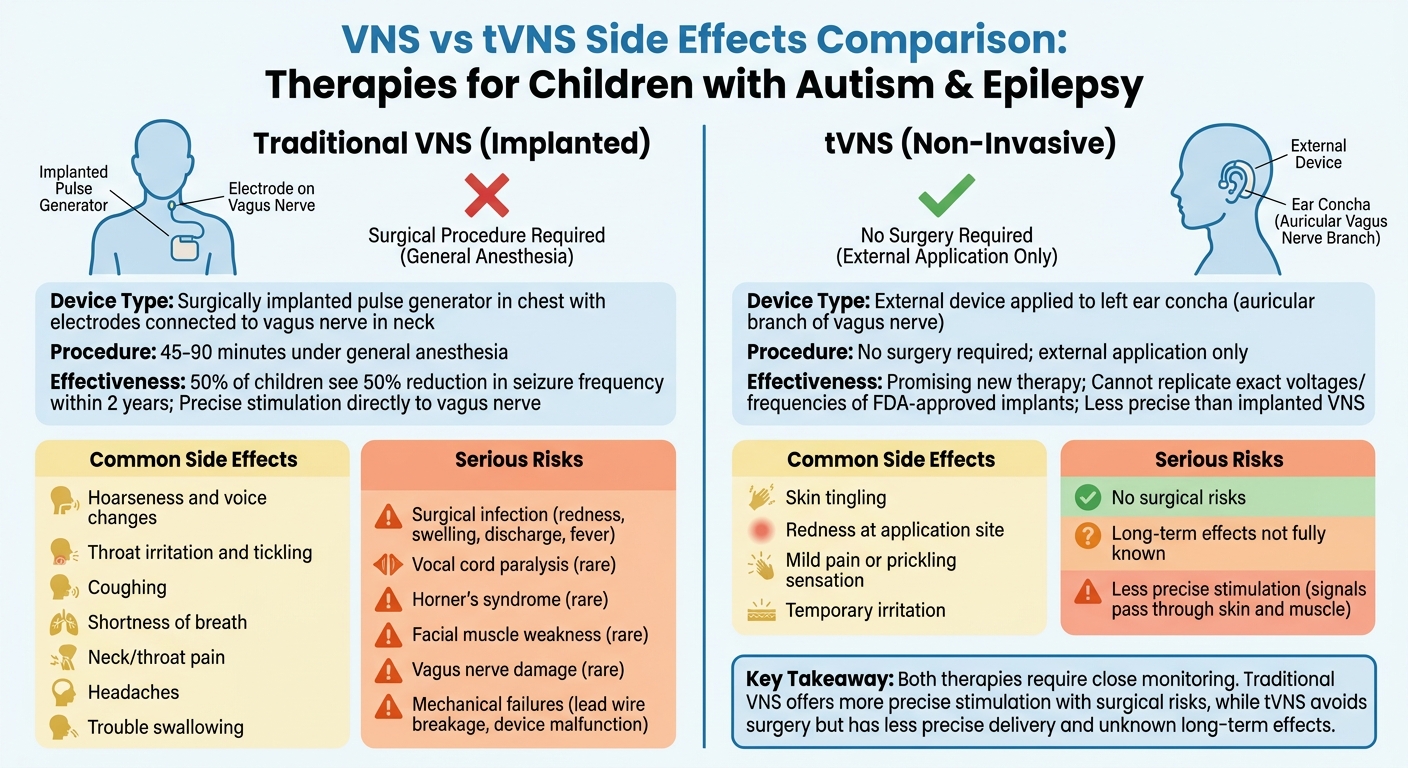
Many children experience physical sensations when the device stimulates the vagus nerve. The most frequent side effects include hoarseness, voice changes, coughing, a tickling feeling in the throat, shortness of breath, pain in the neck or throat, headaches, and trouble swallowing [2]. These symptoms are usually mild and temporary, often easing as the child gets used to the therapy. Researcher Tanushree Shivaswamy explains:
"Side-effects of VNS include voice alterations and hoarseness, which can be alleviated by adjusting VNS parameters" [5].
Parents can take several practical steps to help manage these temporary effects.
How to Manage Common Side Effects
- Work with your healthcare provider: If side effects persist, your doctor can adjust the device’s settings. Lowering the electrical current or changing the pulse frequency often helps minimize discomfort [2].
- Use the provided magnet: The device comes with a handheld magnet that can temporarily stop stimulation if your child feels uncomfortable. By holding the magnet over the chest where the device is implanted, you can deactivate it instantly. Removing the magnet will restart the programmed cycle [1]. This tool is especially useful during activities like eating or talking.
- Track symptoms carefully: Pay close attention to when side effects occur – typically during the device’s "on" phase. Symptoms like throat tickling or voice changes are often linked to stimulation. Keeping a record of these occurrences can help your neurologist fine-tune the device settings to improve your child’s comfort [2].
These small adjustments and careful monitoring can make a big difference in managing the day-to-day challenges of VNS therapy.
sbb-itb-d549f5b
Serious Risks and Complications
Surgical Risks
The VNS implantation procedure, which usually lasts between 45 and 90 minutes under general anesthesia, comes with some risks that parents should be aware of [2]. One of the most common concerns is infection. Warning signs to watch for include persistent redness, swelling, fluid discharge near the incision, unpleasant odors, pus, or if your child develops a fever or chills after the surgery [2]. To reduce the risk, preventive steps like antibiotics and overnight monitoring are often employed [2][7].
In rare cases, more serious complications can occur, such as vocal cord paralysis, Horner’s syndrome (which affects the eye and face), facial muscle weakness, or even cardiac arrest in extremely unusual circumstances [2]. There’s also a risk of damage to the vagus nerve or nearby neck structures during the placement of the lead wire [2]. Additionally, mechanical failures are possible – the lead wire might break, or the pulse generator could malfunction, which would require further surgery to fix or replace the device [2].
If your child experiences persistent hoarseness, painful stimulation, choking, or difficulty swallowing after the procedure, it’s essential to contact your healthcare provider immediately, as these symptoms could indicate nerve involvement [2][1]. Also, always inform medical professionals about the VNS device before any imaging tests, particularly MRIs, as these can interfere with the device [2].
Beyond the physical risks of surgery, VNS therapy can also lead to unexpected changes in behavior.
Unpredictable Effects on Behavior
VNS therapy doesn’t just impact seizures – it can also result in varied and sometimes unpredictable behavioral outcomes. A study conducted in June 2010 by Michael L. Levy and his team at the Children’s Hospital of San Diego examined 77 patients with Autism Spectrum Disorder (ASD) who had VNS implants. After 12 months, the only statistically significant improvement was in mood (p = 0.04) compared to patients without ASD, while other behavioral measures showed no consistent changes [4].
Some children may experience better emotional regulation or increased social engagement, while others might see no improvement – or even a worsening of symptoms [8][5]. Interestingly, behavioral changes don’t always align with seizure control. For instance, some children exhibit reduced aggression even when their seizure frequency remains unchanged [5].
Given this variability, parents should closely monitor their child’s behavioral response to VNS therapy. If negative changes occur, adjustments to the device’s programming or reevaluating the therapy might be necessary.
US: What to Expect After the VNS Therapy™ Procedure
tVNS: A Non-Invasive Alternative
VNS vs tVNS: Comparison of Side Effects and Safety Profiles
For parents looking to avoid surgery or whose children aren’t suitable candidates for implanted devices, transcutaneous Vagus Nerve Stimulation (tVNS) provides an external, non-invasive option. Unlike traditional VNS, which involves surgically implanting a pulse generator in the chest and connecting electrodes to the vagus nerve in the neck, tVNS devices are applied externally. Typically, these devices are placed on the concha of the left ear to stimulate the auricular branch of the vagus nerve [1][5].
Since tVNS works externally, the electrical signals must pass through layers of skin and muscle, which makes the stimulation less precise compared to surgically implanted devices [1][2]. Commercial tVNS devices also lack the ability to replicate the exact voltages and frequencies used in FDA-approved implants. Despite these limitations, tVNS is regarded as a "promising new therapy" for some autistic children, especially those who also experience conditions such as epilepsy or depression [9].
Side Effects of tVNS
The most commonly reported side effects of tVNS include skin tingling, redness, mild pain, or a brief prickling sensation. These effects are usually temporary and can often be resolved by adjusting the device settings or repositioning it [3].
However, the long-term effects of commercial tVNS devices remain uncertain. As noted by the Cleveland Clinic:
"The long-term side effects of commercial VNS devices are yet to be fully known" [2].
Parents should keep a close eye on the application site for any signs of irritation or discomfort, given that the electrical signals travel through skin and muscle tissue [2].
Safety Guidelines for Children
While side effects are generally mild, it’s essential to follow safety precautions when using tVNS devices with children. Start by consulting a neuromodulation specialist before beginning therapy [1][2]. These professionals can determine whether tVNS is a good fit for your child and provide instructions for safe usage.
When using tVNS, always target the left ear, as this is where the auricular branch of the vagus nerve is located [5]. Supervision is crucial while the device is in use – monitor for any signs of skin irritation or discomfort, and adjust the intensity or duration of stimulation as needed [5].
Tracking VNS Side Effects with Guiding Growth
If your child uses a VNS device – whether implanted or tVNS – keeping track of side effects and progress is crucial. VNS therapy often takes months or even up to two years to fully show its effects [7]. Detailed tracking helps your care team fine-tune the treatment and ensures better communication with healthcare providers.
Logging Symptoms in Guiding Growth
The Guiding Growth app makes it easy to log VNS-related side effects, such as hoarseness, voice changes, throat irritation, or shortness of breath, and link them to specific stimulation times [2][7]. It also tracks seizure activity by recording frequency, duration, severity, and recovery time [7].
For children with autism, behavioral and emotional changes are just as important to monitor. You can document shifts in anxiety, alertness, social interactions, and incidents of aggression or self-harm [5][10]. Additionally, the app tracks health markers like heart rate, sleep patterns, and surgical site recovery, including redness, swelling, or pain [2][5][7].
Creating Reports for Doctors
Once data is logged, the app can generate professional reports summarizing your child’s progress over any timeframe. These AI-generated summaries include behavioral patterns, health events, sleep data, and even nutrition details. Such reports are invaluable for sharing with therapists, neurologists, or school staff. About 50% of children undergoing VNS therapy see a 50% reduction in seizure frequency or duration within two years [7]. Consistent data logging helps determine if the treatment is working effectively.
Using Data to Stay Informed
Tracking your child’s therapy consistently gives you a stronger sense of control and helps refine their treatment. For example, logging whether the handheld magnet stopped or shortened a seizure provides valuable feedback for providers [10]. Similarly, noting specific side effects during stimulation intervals allows doctors to adjust the device’s settings, such as current or frequency [2][7]. By turning scattered observations into clear patterns, the app helps guide treatment decisions with confidence.
Conclusion
VNS therapy offers a treatment path for children with autism and seizure disorders, but being mindful of potential side effects is essential. The good news? Most side effects are mild, temporary, and occur only during active nerve stimulation [1][6]. Symptoms like hoarseness, throat tickling, or coughing can often be managed by working closely with your child’s neurologist to fine-tune the device’s settings [5][1].
"Most of the side effects of the pediatric vagus nerve stimulation procedure are mild." – Children’s Health [6]
While the procedure does carry some surgical risks and rare complications, partnering with healthcare providers ensures the best possible outcomes. Studies show that around 50% of children experience a 50% reduction in seizure frequency after two years of treatment [6][11]. Achieving this, however, requires consistent monitoring and adjustments to the device. Neurologists depend on accurate reporting to balance the benefits of therapy with minimizing side effects effectively.
As mentioned earlier, tools like Guiding Growth can make tracking side effects easier. By logging symptoms, linking them to stimulation times, and noting behavioral changes, parents can help create detailed reports that guide treatment decisions. For example, documenting when a handheld magnet reduces seizure duration or noting throat irritation during specific intervals provides valuable insight for fine-tuning therapy.
The process of VNS therapy is not instant – it often takes up to two years of careful adjustments to see the full benefits [11]. By staying vigilant with side effect tracking and maintaining open communication with your doctor, you can give your child the best chance for success.
FAQs
How do I know if a VNS side effect is an emergency?
If you experience difficulty breathing, severe chest pain, or sudden weakness as a side effect of VNS, treat it as an emergency. Get medical help right away.
Will VNS change my child’s behavior or mood?
Vagus Nerve Stimulation (VNS) might help improve your child’s behavior or mood by decreasing seizures and reducing anxiety. Many parents report that their child seems happier, less anxious, and more attentive with this therapy. That said, VNS is mainly designed to manage seizures, and its impact on mood or behavior can differ from one individual to another.
Is tVNS a safer option than an implanted VNS for kids?
Transcutaneous vagus nerve stimulation (tVNS) offers a less invasive and safer alternative to implanted VNS, especially for children. This method uses a handheld device to stimulate the vagus nerve through the skin, eliminating the need for surgery. On the other hand, implanted VNS involves surgically placing a device, which naturally comes with surgical risks. The right option depends on factors like the child’s specific condition, age, and overall health. It’s essential to consult a healthcare professional to determine the most appropriate approach.