When a child experiences a meltdown, their nervous system is overwhelmed, making logic and reasoning ineffective. Sensory tools offer immediate support by calming the body through physical input like deep pressure, rhythmic motion, or tactile engagement. These tools help regulate the brain’s stress response, shifting children out of fight-or-flight mode.
Key Points:
- Meltdowns are neurological, not behavioral. They occur when sensory input overwhelms the brain.
- Sensory tools address overwhelmed systems like balance, touch, or sound to restore calm.
- Common tools include weighted blankets, fidget toys, and noise-canceling headphones.
- Using tools early can prevent meltdowns or reduce their intensity.
Our Must-Have Sensory Tools for Autistic Children
sbb-itb-d549f5b
What Sensory Tools Are and How They Work
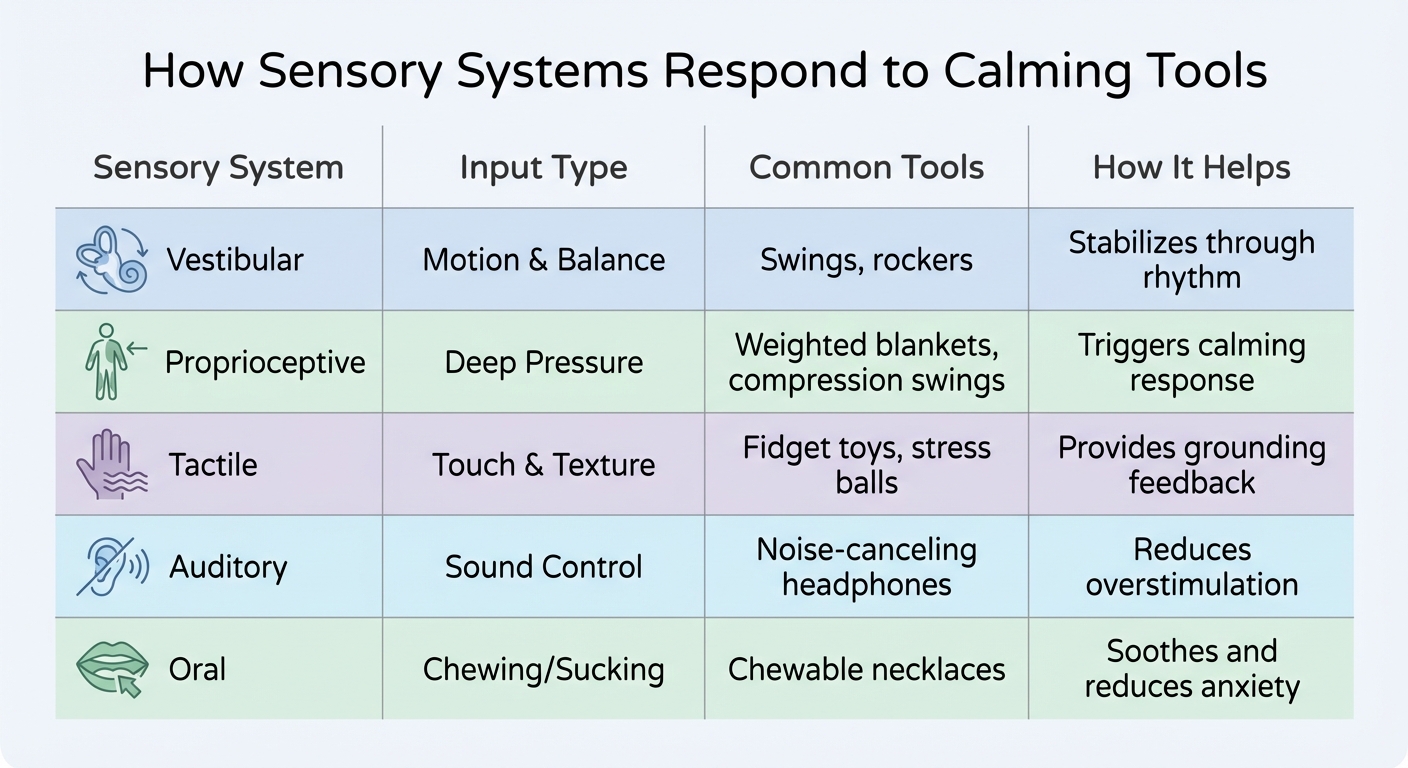
How Different Sensory Systems Respond to Calming Tools
Sensory tools are aids designed to help regulate a child’s nervous system. They work by providing sensory input – like deep pressure, rhythmic movement, or specific textures – that helps organize sensory information and manage intense emotions during meltdowns.
These tools don’t rely on logic or verbal reasoning. Instead, they work directly with the body to counteract the brain’s stress response, which can override rational thinking. By focusing on sensory regulation, we can better understand how these tools and strategies function.
How Sensory Regulation Works
A child’s brain processes the world through several sensory systems. When these systems become overwhelmed, it can lead to meltdowns. Sensory tools target key systems to restore balance and calm.
The vestibular system, located in the inner ear, is responsible for balance and motion. The proprioceptive system processes body position and pressure. Both systems play a significant role in calming the nervous system. For instance:
- Rhythmic movements, like slow swinging, engage the vestibular system and stabilize neural activity.
- Deep pressure, such as from a weighted blanket or compression swing, activates calming pathways, triggering the “rest and regulate” response.
Other activities – like chewing, fidgeting, or squeezing – provide sensory input that can lower stress hormones and promote self-regulation. Here’s a closer look at how different sensory systems respond to these tools:
| Sensory System | Input Type | Common Tools | How It Helps |
|---|---|---|---|
| Vestibular | Motion & Balance | Swings, rockers | Stabilizes through rhythm |
| Proprioceptive | Deep Pressure | Weighted blankets, compression swings | Triggers calming response |
| Tactile | Touch & Texture | Fidget toys, stress balls | Provides grounding feedback |
| Auditory | Sound Control | Noise-canceling headphones | Reduces overstimulation |
| Oral | Chewing/Sucking | Chewable necklaces | Soothes and reduces anxiety |
Benefits of Using Sensory Tools
Using sensory tools consistently can reduce the intensity and frequency of autism meltdowns. Research backs this up: a 2014 study found that sensory-based occupational therapy significantly lowers stress in children with sensory processing challenges [7]. Weighted items, in particular, have been shown to reduce stress by lowering arousal levels.
But these tools aren’t just for crisis moments. They can also improve focus and support emotional regulation throughout the day. For children with ADHD or other neurodivergent conditions, the prefrontal cortex – which handles emotional regulation and attention – may be underactive. This makes them more prone to sensory-triggered "fight or flight" responses. By providing the right sensory input early, you can help keep their nervous system balanced before it becomes overwhelmed.
For example, using a swing for 5–15 minutes at the first signs of distress – like clenched fists, pacing, or withdrawal – can help prevent a meltdown.
Sensory Tools That Help Calm Meltdowns
When it comes to sensory regulation, the right tools can make a big difference. The key lies in understanding which sensory system is overwhelmed and choosing tools that can address those specific needs. For example, deep pressure tools help calm the proprioceptive system, fidget items redirect tactile energy, and sound tools ease auditory overload. Tailoring these tools to your child’s sensory profile ensures a more effective way to manage meltdowns.
Weighted Blankets and Deep Pressure Items
Weighted blankets, lap pads, and compression swings are excellent for providing deep touch pressure (DTP). This type of pressure sends calming signals to the brain, helping to lower cortisol levels and activate the parasympathetic nervous system – essentially putting the body in "rest and regulate" mode [4][7].
When using these tools, it’s important to give your child a sense of control. For instance, you might ask whether they’d prefer a weighted blanket or a quiet space. Compression tools, like pod swings, create a cocoon-like effect, offering a full-body sense of containment that can be very grounding [4].
Safety is a top priority. Make sure your child can remove any weighted item on their own, and keep sessions short – around 5 to 15 minutes – to provide calming support without overuse [4]. The SensoryHarbor Double-Layer Pod Swing, priced at $87.99, is a popular option that has been used by over 45,000 customers [4]. After addressing proprioceptive needs, tactile tools can provide additional support by redirecting energy and reducing distress.
Fidget Toys and Tactile Objects
Fidget toys like spinners, stress balls, tangle toys, and therapy putty are great for channeling excess tactile energy. These tools work by offering repetitive motions that help release tension and redirect focus [7]. Keeping a portable sensory kit with these items can be particularly helpful in public spaces or at school [2][5].
Chewable necklaces are another option, meeting oral sensory needs in a safe way. These can help prevent anxiety-driven chewing on clothing, pencils, or other non-food items [7]. The key is to have these tools ready before a meltdown starts. Look for early signs, such as pacing, muscle tension, or increased stimming, and intervene early. Once tactile input is addressed, sound tools can help shield your child from auditory triggers.
Noise-Canceling Headphones and Sound Tools
Auditory overload from triggers like school bells or crowded spaces can escalate meltdowns quickly. Noise-canceling headphones are an effective way to filter out overwhelming sounds and prevent sensory spikes [2][4]. Using them in environments known to be challenging, like busy classrooms or supermarkets, can make a big difference. At home, white noise machines can help mask sudden sounds, promoting better sleep for children who are sensitive to noise [2].
For a comfortable and practical solution, SensoryHarbor’s Wireless Headphones Headband, available for $29.99, offers a great option for managing auditory triggers [4]. Pairing these tools with a well-prepared environment can further enhance their calming effects.
How to Build and Use a Calm-Down Kit
A calm-down kit can be a lifesaver for managing meltdowns. By creating both a fixed kit for home in a designated safe space and a portable version for on-the-go, you can provide immediate, personalized support when it’s needed most [8]. Let your child help choose the items for the kit – this not only gives them ownership but also makes it more likely they’ll use the kit when feeling upset [8]. As Jaime Friedman from Aspire CFS explains:
"The act of walking away to the kit creates the habit of taking a step back from overwhelming problems before facing them" [8].
Here’s how to stock your kit and use it effectively.
What to Include in Your Calm-Down Kit
A good calm-down kit should cater to different sensory needs. Consider including items that engage various senses:
- Tactile tools: Therapy putty ($4.99–$174.99), stress balls, or the Ultimate Fidget Set ($45.99, rated 4.8/5 stars from 126 reviews).
- Visual aids: Liquid timers ($6.99, rated 4.8/5 stars from 107 reviews) or a Mini Light Spinner ($7.99).
- Auditory items: Wireless Headphones Headband ($29.99) for soothing sounds.
- Deep pressure items: A Galaxy Gel Weighted Lap Pad ($49.99) for portability or a Hugging Peapod ($109.99–$159.99) for home use.
- Oral tools: Chewable jewelry or hard candy.
- Olfactory aids: Lavender oil for calming scents.
These items address sensory needs like touch, sound, and pressure, helping create a well-rounded kit for emotional regulation [4][6][8].
When and How to Use the Kit
Knowing when to use the kit is just as important as what’s in it. Introduce the kit during the "rumble" stage – when early signs of distress appear, such as pacing, covering ears, increased hand flapping, or muscle tension [3][4]. During a full meltdown, focus on safety first. Offering simple choices like, “Do you want your weighted blanket or your fidget spinner?” can help your child regain a sense of control [2][3]. As Christina, a parent and autism advocate, puts it:
"When the meltdown does happen, the most important thing for me is remembering that he’s not giving me a hard time – he’s having a hard time" [3].
You can also use the kit proactively during transitions, such as before school, after school, or before a doctor’s appointment, to reduce stress before it escalates [4][8]. In public spaces, a portable kit can be a game-changer, allowing your child to take a break in a quiet spot instead of cutting an outing short [8]. After a meltdown, the kit can also help with recovery, as calming tools can ease the physical and emotional exhaustion that follows [3].
Tracking Sensory Strategies with Guiding Growth
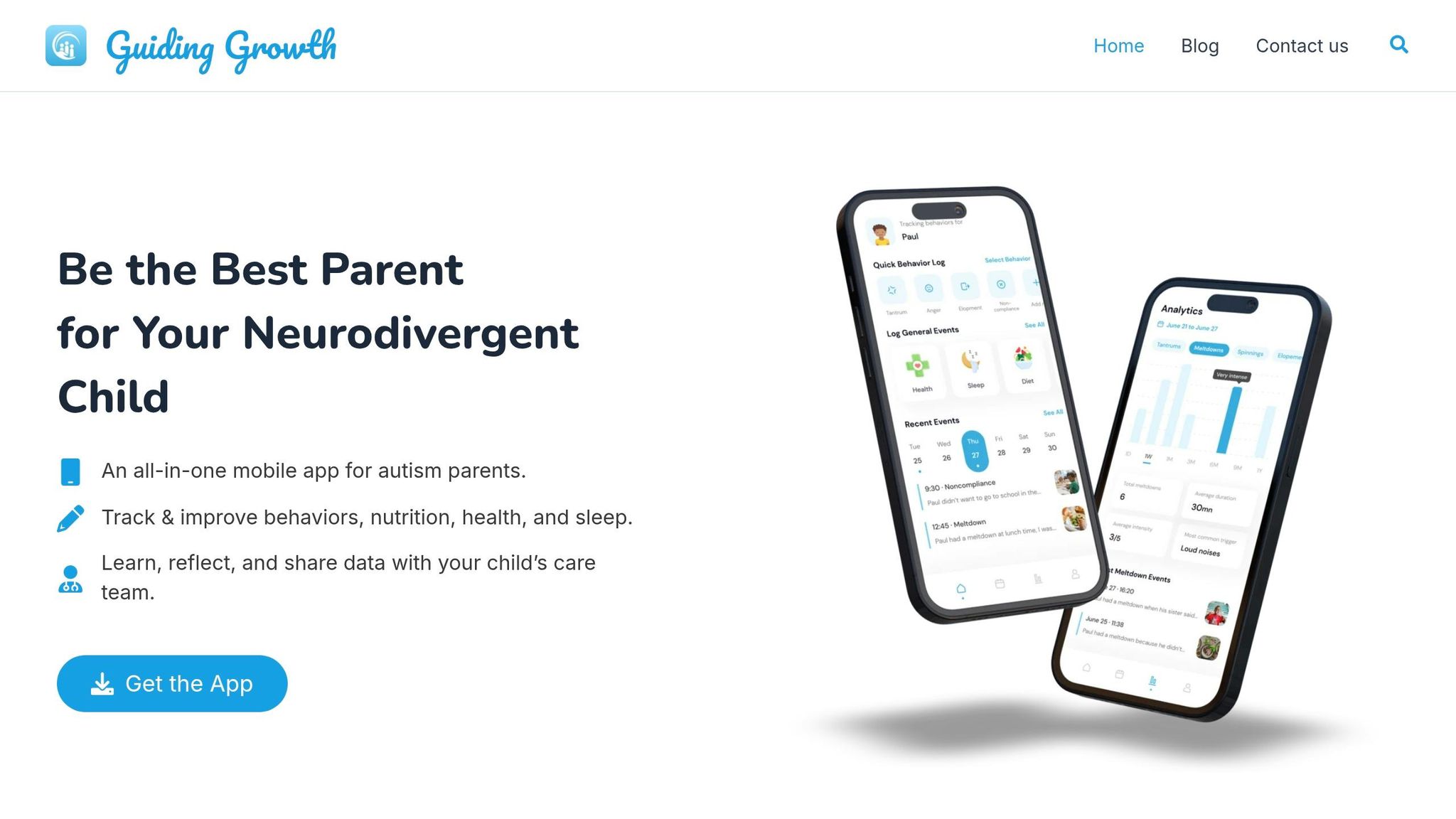
After assembling a calm-down kit and introducing sensory tools, the next step is figuring out what truly works for your child. By tracking meltdowns and the sensory strategies you use, you create a valuable record that highlights patterns you might otherwise miss. Research suggests that 80% of behavioral challenges in neurodivergent children happen in just two or three predictable scenarios [1]. The Guiding Growth app helps pinpoint these situations, allowing you to adjust your approach based on solid evidence rather than guesswork. This systematic tracking paves the way for fine-tuning sensory strategies.
Track Meltdowns and Monitor Progress
With Guiding Growth, you can log meltdowns using the ABC method: Antecedent (what happened before), Behavior (what the meltdown looked like), and Consequence (what happened after) [1]. Each entry can include details like time, location, people involved, tools used, and outcomes. Over time, this creates a clear picture of your child’s triggers and responses.
As the MeltdownGuide Team explains:
"When you walk into an IEP meeting or therapy session with clear data showing patterns over weeks or months, the conversation becomes much more productive" [1].
This detailed data equips you to share specific insights with professionals about when meltdowns occur, what sets them off, and which strategies work best. Families who consistently apply evidence-based strategies and monitor progress often notice meaningful improvements within 4 to 8 weeks [1].
Use Data to Customize Sensory Interventions
The data you collect isn’t just for tracking – it’s a tool for tailoring interventions. Give each new strategy at least two weeks of consistent effort before evaluating its effectiveness [1]. For example, if you’re trying a weighted blanket, log its use and note the outcomes. After two weeks, the app’s analytics can reveal whether meltdowns became shorter, less intense, or less frequent on days when the blanket was used.
Your logs can also uncover environmental triggers that are easier to address. For instance, if meltdowns often occur in the late afternoon when your child is hungry or tired, you could adjust snack times or schedule a sensory break before that point. The app transforms your observations into actionable insights, helping you decide which tools to keep, tweak, or replace.
Conclusion
Sensory tools provide a hands-on way to address neurological needs, offering practical help for moments of overwhelm. These tools serve as a bridge between chaos and calm, helping children de-escalate by supporting their nervous system when logic simply isn’t an option during a meltdown.
But their value goes beyond immediate relief. These strategies lay the groundwork for emotional resilience over time. By incorporating personalized tools and creating safe spaces, you’re giving your child the resources to develop self-regulation. When you involve them in selecting these tools and demonstrate their use during calm moments, you’re teaching skills that will last a lifetime. As Christina, an autism advocate and parent, wisely puts it:
"When I shifted from trying to ‘stop’ them to trying to ‘understand’ them, it made all the difference for both of us" [3].
Observing your child’s responses can also uncover meaningful patterns. Apps like Guiding Growth turn those observations into actionable insights. By consistently logging meltdowns, sensory tools, and triggers, you create a clear roadmap to identify how to help autism meltdowns and when to use specific tools. These small steps can lead to big strides in providing tailored support.
FAQs
How do I figure out which sensory tool my child needs?
Observe how your child responds to various sensory experiences and take their individual preferences and sensitivities into account. Some helpful tools might include fidget toys, weighted blankets, or noise-canceling headphones. For instance, if they seem to enjoy tactile sensations, items like stress balls or putty could be a good fit. On the other hand, if they’re easily overwhelmed by noise, noise-canceling headphones might provide relief. Try out different options and pay attention to what helps them feel calm and comfortable – this can guide you in finding the best solutions for their needs.
How heavy should a weighted blanket be for my child?
A weighted blanket for your child should typically weigh around 10% of their body weight. Depending on their comfort, you can adjust this by adding or subtracting 1–2 pounds. The key is ensuring the blanket feels safe, calming, and suitable for your child’s preferences.
How can I track what triggers meltdowns and what actually helps?
You can keep track of meltdown triggers and calming techniques by using tools like tracking apps or written logs. By consistently noting patterns – such as sensory overload, bright lights, or certain textures – and documenting which strategies work, like using weighted blankets or noise-canceling headphones, you can uncover helpful insights. Over time, this approach makes it easier to pinpoint triggers and create tailored strategies to better manage meltdowns.