Creating parks for autistic children means designing spaces that feel safe, engaging, and calming. These parks cater to diverse sensory needs by balancing active play areas with quiet retreats. Key design elements include secure fencing, smooth pathways, clear signage, sensory play equipment, shaded calm zones, and natural sound buffers. Input from families and autism specialists ensures the park meets specific needs, while features like sand tables and musical instruments encourage play without overwhelming. Thoughtful lighting and noise control further enhance comfort, making these parks a welcoming space for all children to explore and enjoy.
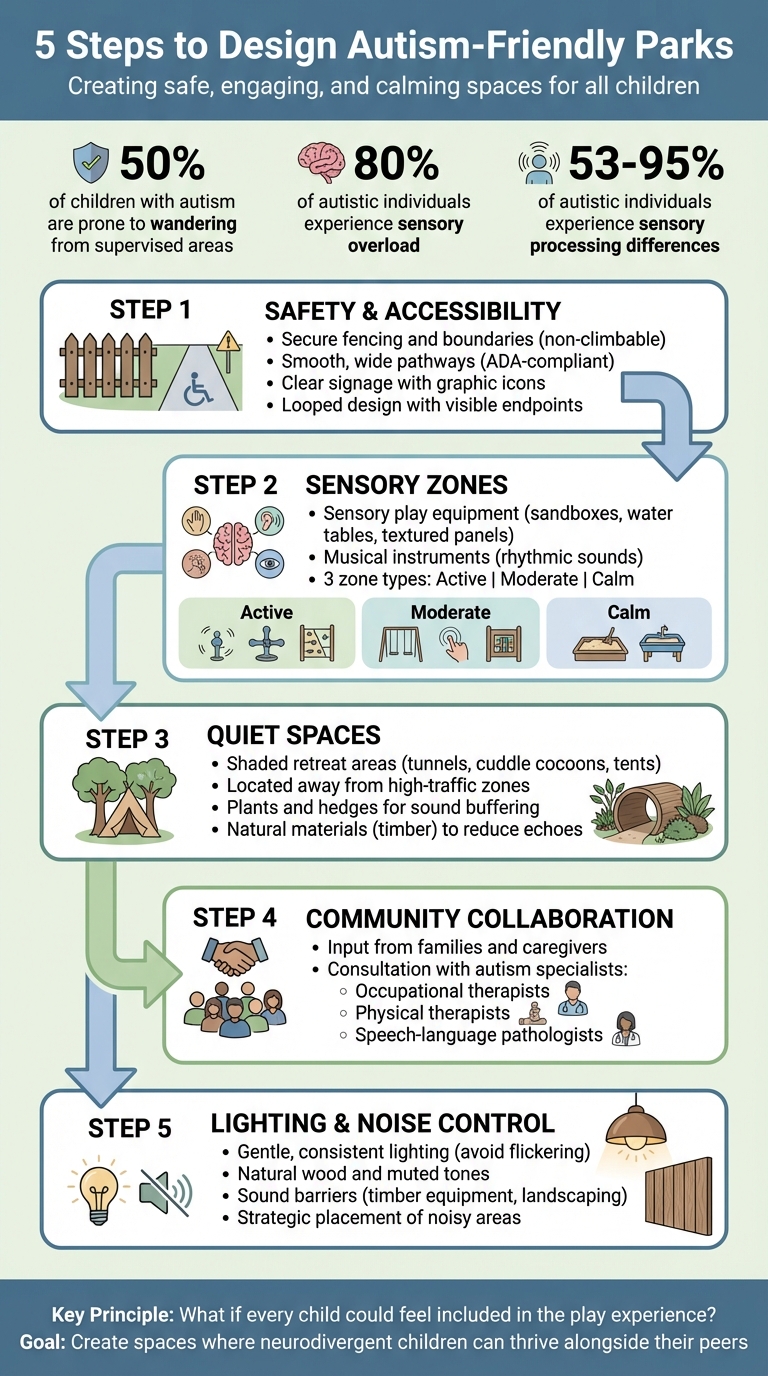
5 Steps to Design Autism-Friendly Parks: Safety, Sensory Zones, and Community Input
5 Genius Ways to Make Playgrounds More Inclusive
sbb-itb-d549f5b
Step 1: Focus on Safety and Accessibility
Creating an autism-friendly park starts with prioritizing safety and ensuring accessibility for all children. For families with autistic children, these features are non-negotiable. Since nearly 50% of children with autism are prone to wandering from supervised areas without warning [2], secure boundaries are a must. A well-designed park should balance safety with opportunities for exploration.
Add Secure Fencing and Boundaries
Perimeter fencing is a key element in creating a safe space. It allows children to explore freely while giving parents peace of mind. The fencing should be sturdy and non-climbable but still blend into the environment, avoiding a harsh or institutional look. Additionally, smaller enclosed areas within the park can provide extra layers of security without limiting a child’s access to the full play experience [1].
Install Smooth, Wide Pathways
Smooth, flat pathways are essential for children who may struggle with balance or coordination. These paths should meet ADA standards, using materials like poured-in-place rubber that can accommodate wheelchairs, crutches, and strollers while offering shock absorption. Wide pathways are also important, giving families space to walk side-by-side and allowing children more room to navigate comfortably.
A great example is the Autism Nature Trail at Letchworth State Park in New York. Here, the designers used stone dust on the main one-mile loop for wheelchair accessibility. Side paths leading to sensory stations were surfaced with wood shavings, offering a tactile contrast and visual cues to signal transitions between different zones [3].
Mark Entrances and Exits Clearly
Clear and visible signage can make a world of difference for children with autism, who may feel heightened anxiety in unfamiliar environments [3]. Simple graphic icons placed at eye level can help families navigate the park more easily. A looped design, where the endpoint is visible from the starting point, further reduces anxiety about getting lost.
"Being able to see where the trail ends increases a visitor’s sense of safety and security." – Loren Penman, Co-founder, Autism Nature Trail [3]
Providing maps and photos of the park layout on the website can also help families prepare in advance, easing the stress of a first visit. These clear markers and visual aids not only make navigation simpler but also help build confidence, creating a seamless connection between safety and thoughtful design. These foundational elements set the stage for integrating sensory and quiet spaces in the park.
Step 2: Design Sensory Zones
After addressing safety and accessibility, the next step is to create sensory zones that cater to the diverse needs of autistic children. These zones build on the safe environment by offering a variety of experiences – from energetic activities to peaceful retreats – so every child can find what suits them best. Considering that about 80% of autistic individuals experience sensory overload that may lead to escape responses[4], these zones are essential for providing comfort and engagement.
Add Sensory Play Equipment
Incorporate play elements that stimulate tactile, vestibular, and proprioceptive senses without overwhelming children. Features like sandboxes, water tables, and textured panels allow kids to explore surfaces at their own pace. Swings, steady spinners, seesaws, and roller slides can help develop balance and spatial awareness. For proprioceptive input, climbing structures, crawling tunnels, and enclosed spaces (such as "cuddle cocoons") create a sense of security.
Outdoor musical instruments, like those from the Concerto line, offer rhythmic and predictable sounds that many autistic children find soothing. Visual engagement can be encouraged with interactive panels, bubble features, and chalk areas. Using natural materials like timber helps reduce echoes and adds a sense of warmth to the environment.
Mix Active and Calm Areas
A well-balanced design includes high-energy and low-energy zones. Organize the park into three key areas: active zones for children who thrive on movement and stimulation, calm zones for those seeking low-stimulation retreats, and moderate zones that act as transitions. This layout helps children navigate the space without becoming overwhelmed.
For instance, Timberplay’s "The Thomas Playground Concept" integrates accessible sand play areas that promote parallel play, blending stimulating and calming experiences. Sand offers a naturally soothing activity, while rhythmic motion from spinners and swings supports active play. Small, enclosed spaces scattered throughout the park provide quick, quiet retreats, allowing children to recharge without needing to leave the play area entirely.
Step 3: Create Quiet Spaces
Once sensory zones are established, it’s essential to include calm, low-stimulation areas for self-regulation. Around 50% of children with autism experience elopement behaviors (wandering), making it crucial to create secure, enclosed spaces that provide both comfort and safety for caregivers of neurodivergent children[2]. These quiet retreats balance the sensory experience, offering a place for active engagement and moments of rest.
Build Shaded Retreat Areas
Design cozy, enclosed spots where children can feel secure and unwind. Options like tunnels, "cuddle cocoons", or small tents create a soothing, nest-like environment for breaks. A great example is the Autism Nature Trail at Letchworth State Park in New York. Developed with input from Temple Grandin and AccessibleUK, it features cuddle cocoons and gliders that let visitors isolate themselves and gently rock to recover from sensory overload[3].
To maximize their effectiveness, place these retreat areas away from busy, high-traffic zones. For instance, "A Place Away" in the Sensory Arts Garden at The Els Center of Excellence in Jupiter, Florida, is a secluded, lush hideaway designed for moments of calm away from more stimulating areas.
"The garden is a place of peace and tranquility. It is a space that I go to in moments when I need to stop, think, breathe and reset my intention for the day."[3]
Use Plants to Reduce Noise
Enhance these quiet spaces with greenery that naturally buffers sound. Trees, hedges, and dense landscaping can serve as sound barriers, minimizing noise from active play areas or nearby streets. Materials like timber also help absorb sound and reduce echoes[1], creating a more serene atmosphere.
Temple Grandin emphasized the importance of natural settings:
"Don’t build a strip mall nature trail, even though others are going to try to get you to move it to a city… build it in the forest."[3]
Deeply natural environments provide lower visual stimulation and calming sensory input, making them an ideal choice for helping children feel more grounded and at ease.
Step 4: Work with the Autism Community
After establishing secure, sensory, and quiet zones, the next step is engaging with the autism community to refine the park’s design. Direct collaboration with the people who will use the space ensures the features meet a wide range of needs. Since every autistic child processes sensory input differently, what works for one may not work for another. The best way to navigate these differences? Listen to the community.
Get Input from Families
Parents and caregivers often have firsthand knowledge of the challenges traditional playgrounds present. They can highlight which features would make the biggest impact – like secure fencing to prevent wandering, shaded areas for resting, or specific sensory tools. Starting with their experiences helps create a park that works well from the start, avoiding costly fixes later.
A great example of this is the SENSHOME Project in Europe. Through 25 workshops with autistic individuals and their families, designers gathered feedback on materials and layouts. This led to thoughtful additions like semi-covered refuge armchairs and sound-absorbing room dividers[3]. By prioritizing the voices of families, the project ensured the park met real-world needs.
While family feedback is invaluable, pairing it with expert input ensures the design addresses a broader range of sensory considerations.
Consult Autism Specialists
Professionals like occupational therapists, physical therapists, and speech-language pathologists bring critical insight into how autism impacts sensory processing, motor skills, and communication. Their expertise can guide decisions on everything from equipment choices to layout.
For instance, at the Autism Nature Trail, an advisory board of specialists played a key role in shaping sensory stations and navigation aids[3].
Gina Brady, Sensory Supports and Training Program Manager at Fraser, highlighted the importance of this collaboration:
"Consulting with experts such as occupational and physical therapists and speech-language pathologists during the planning process is essential. Their insights ensure that the product is truly inclusive, addressing the diverse needs of all children."[5]
Step 5: Control Lighting and Noise
When designing spaces for autistic individuals, managing lighting and sound is crucial to creating a welcoming environment. Many autistic individuals experience heightened sensitivity to these sensory inputs, and poorly managed lighting or noise can lead to sensory overload. By focusing on "visual calm" and controlled acoustics, you can transform a space from overwhelming to inviting for everyone involved [1].
Opt for Gentle, Consistent Lighting
Bright, flickering lights or harsh glares can be incredibly uncomfortable. The aim should be to create "visual calm", where lighting feels soft and non-intrusive. Materials like natural wood or muted tones can help diffuse light, reducing its visual impact [1]. For artificial lighting, choose steady and gentle illumination that avoids sudden changes in brightness or intensity. This approach helps minimize visual stress and keeps the environment soothing.
Incorporate Sound Barriers
Noise management is just as important as lighting. Thoughtful material choices and strategic layouts can significantly reduce disruptive sounds. For instance, timber playground equipment absorbs sound better than metal or plastic, making spaces quieter [1]. Landscaping also plays a big role – plants, trees, and natural barriers can help muffle noise [3].
To create peaceful zones, consider using features like tunnels or "cuddle cocoons" to block out sound. Place noisy attractions, like active play areas, farther away from these quiet spots. A great example is the Autism Nature Trail at Letchworth State Park. Established in 2014, this trail leverages its forest setting, using natural materials like wood shavings on paths and positioning sensory recovery areas away from louder zones [3]. This thoughtful design ensures that everyone can find a space to feel comfortable and at ease.
Conclusion
Creating autism-friendly parks requires a focus on safety, sensory balance, and meaningful community involvement. A well-marked and secure environment provides the foundation, while distinct zones – like active spaces for sensory seekers and quiet areas for those needing calm – help children manage their sensory needs and avoid becoming overwhelmed.
The goal is more than just meeting accessibility standards. As Timberplay puts it, "What if every child could feel included in the play experience, even if not every element was accessible to everyone?" [1]. This approach shifts the focus from mere compliance to fostering a sense of belonging, transforming public spaces into places where neurodivergent children can thrive and play alongside their peers.
Community input plays a critical role in achieving this vision. Families and autism specialists bring insights into specific sensory triggers that standard designs might miss. Considering that between 53% and 95% of autistic individuals experience sensory processing differences [6], these contributions are vital for creating spaces that truly accommodate diverse needs.
When designed thoughtfully, these principles benefit all children. For example, natural materials like timber help reduce noise, while extended sand tables encourage parallel play, fostering organic social interactions. Small enclosed spaces provide a sense of security without creating isolation. Together, these design elements form a comprehensive framework for parks that welcome everyone. By addressing sensory needs and promoting inclusion, these parks allow families to enjoy outings without the fear of sensory overload, ensuring public spaces are welcoming for every child.
FAQs
What’s the best way to prevent wandering without making the park feel fenced-in?
To keep an autism-friendly park safe without relying on fences, the key lies in smart design choices. Start with predictable layouts and clearly defined pathways to establish natural boundaries that guide movement. Add quiet zones and sensory-friendly spaces where children can retreat if they feel overwhelmed. These thoughtful elements create a secure and inviting environment while maintaining an open, barrier-free atmosphere.
How do you decide which sensory equipment is calming versus overwhelming?
To determine whether sensory equipment is soothing or too intense, pay attention to the child’s reaction. Calming tools typically offer gentle, predictable sensations – think soft fabrics or dim, steady lights. On the other hand, equipment that might overwhelm could involve loud sounds, flashing lights, or abrupt movements. Look for cues like relaxation or signs of discomfort, such as covering their ears or appearing agitated. Adjust the environment as needed to promote sensory ease and balance.
How can a park add quiet spaces if there isn’t much room?
Parks with limited space can still offer sensory-friendly areas by incorporating small, well-defined quiet zones into their layout. Features like tactile or visual cues, shaded nooks, and sensory panels can create a calming atmosphere. By using thoughtful design elements – such as predictable pathways and clearly separated zones – parks can provide a welcoming environment without needing a lot of room. With strategic planning, even compact spaces can become more inclusive for autistic children.