You're probably carrying this search in fragments right now. A text thread with one provider. A sticky note with therapy times. A school form half-filled on the kitchen counter. A reminder in your phone to ask whether a relative can cover pickup if the center closes early. If your child is neurodivergent, there's usually another layer on top of that: what happened before drop-off, what helped yesterday, what triggered distress, what medication was given, what the teacher noticed, what the therapist needs to know.
That isn't a sign that you're disorganized. It's what the system often forces parents to do. Child care support services aren't one single program. They're a patchwork of care arrangements, public benefits, referrals, therapies, school supports, family help, and daily communication systems. The hard part usually isn't knowing that help exists. It's getting different kinds of help to work together in real life.
Table of Contents
- You Are Not Alone in This Search
- Understanding the Types of Child Care Support
- Navigating Eligibility and the Application Process
- How to Evaluate the Quality of Care and Support
- Key Support Strategies for Neurodivergent Children
- Solving the Care Coordination Challenge
- Your Next Steps and Essential Resources
You Are Not Alone in This Search
A lot of parents start with one urgent question: “Who can watch my child?” Very quickly, that turns into five more. Can they handle sensory needs? Will they follow a visual routine? What happens if my child won't transition? Can I afford this option? Who updates the therapist if something changes?
That pressure is real, and it's widespread. Nearly 80% of families seeking care in 2023 reported difficulty finding or accessing their preferred child care services, and more than 1 million children's families said they were entirely unable to access the program they wanted, according to family child care research compiled by the National Association for Family Child Care.
What parents are usually trying to build
The goal usually isn't just a slot. It's a support ecosystem that holds together when your week doesn't go as planned.
For one family, that might mean a center during work hours, grandma for late pickups, speech therapy after school, and a shared routine chart for bedtime. For another, it might mean home-based care with a trusted neighbor, plus developmental services and a backup plan for rough sensory days. For families with neurodivergent children, consistency matters as much as availability.
You don't just need care. You need care that can communicate.
When parents feel like they're failing at this process, I usually tell them the same thing: the system is fragmented, and you're being asked to stitch it together by hand. That's why generic checklists often fall short. They tell you how to search, but not how to coordinate.
A better way to frame the problem
It helps to stop thinking in terms of one perfect provider. Few families have that luxury. A more useful question is this: What mix of people, programs, and routines can support my child safely and consistently?
That shift changes what you look for. You stop focusing only on location and price. You start asking whether a provider can document incidents, follow feeding preferences, notice patterns, and hand off information cleanly to the next caregiver.
If you also need people who understand the emotional side of this process, autism parenting communities can make the search less isolating. These autism parenting support groups are one place to start.
Understanding the Types of Child Care Support
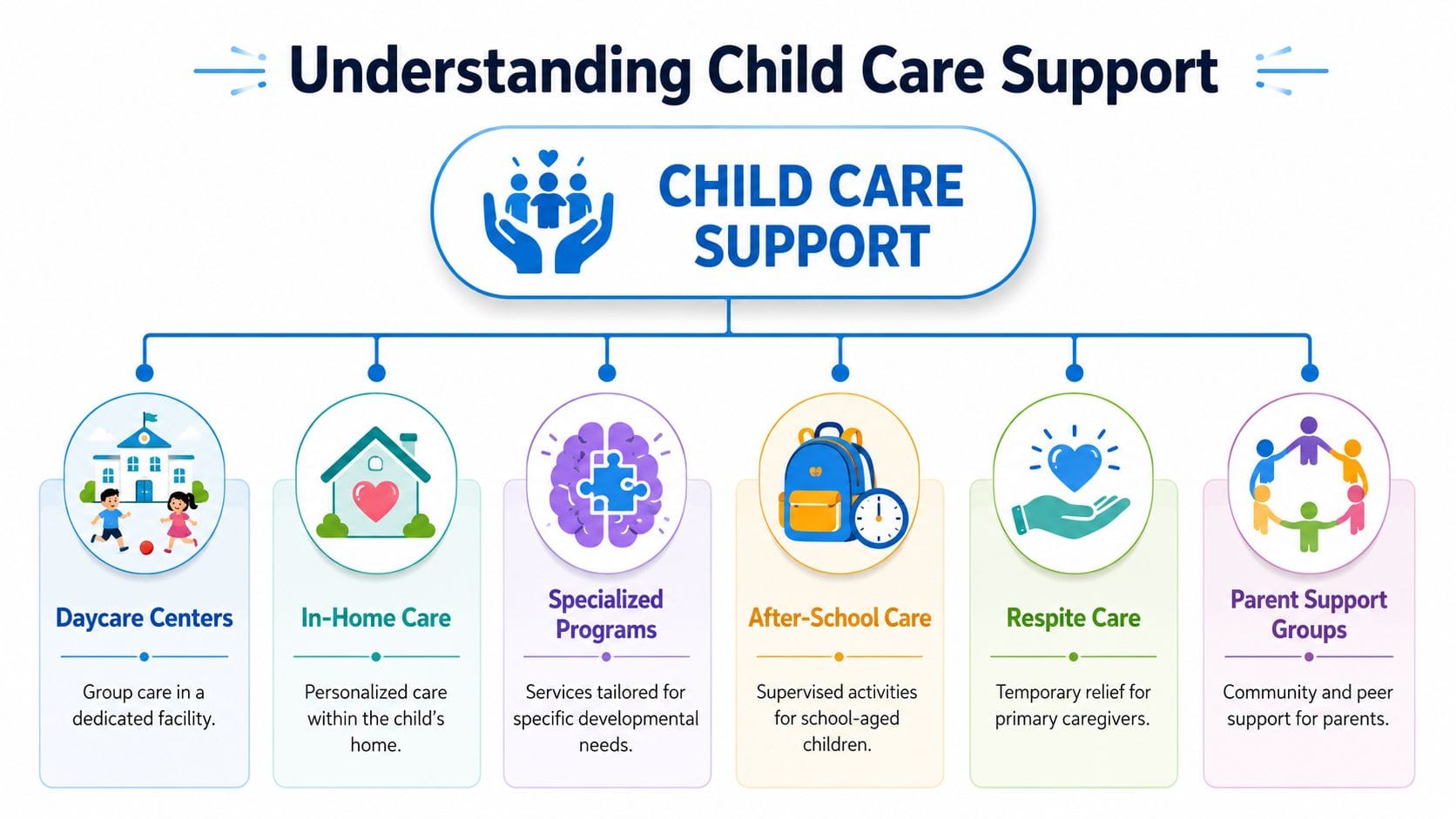
Parents often hear “child care” and think only of a center. That's too narrow. Child care support services work more like a toolkit. Different tools solve different problems, and most families end up using more than one.
Care settings are broader than most guides suggest
In the United States, federal data show that child care already happens across several settings. In 2019, about 59% of children age 5 and younger who were not enrolled in kindergarten were in at least one weekly nonparental care arrangement. Among those children, 62% attended center-based care, 38% were cared for by a relative, and 20% were cared for in a private home by a nonrelative. The same data show that the mean length of time children had been in their primary relative-care arrangement was 19 months, compared with 14 months for center-based care, and that family child care providers cared for 27% of infants under age 1 and 24% of toddlers ages 1 to 3 in CCDF-supported care, according to NCES child care fast facts.
Those details matter because they reflect how families function. Support doesn't live only in formal programs. It often lives in a rotation of center staff, relatives, and home-based caregivers who all need the same information.
The main categories parents should know
Here's a practical way to sort the options.
- Financial support includes subsidies, scholarships, state assistance, and program-based tuition help. These options matter when the right care exists but the monthly cost puts it out of reach.
- Practical care support covers center-based care, family child care homes, in-home caregivers, after-school arrangements, respite care, and backup care from relatives or trusted community members.
- Developmental support includes early intervention, therapies, school services, behavior support, and coaching that helps a child function across daily environments.
- Navigation support includes referral agencies, caseworkers, family resource centers, and public guidance that helps parents understand where to apply and what type of care fits.
- Community support often looks informal but is often very important. Parent groups, family networks, and caregiver circles often share practical information that official directories leave out.
Informal care still counts
One of the biggest mistakes I see is parents discounting home-based or family care because it doesn't look “official enough.” In practice, many families rely on those settings because they offer flexibility, trust, or cultural familiarity that a larger program can't match.
Public guidance also makes clear that support isn't limited to formal centers. Many assistance programs and referral services also apply to home-based care, relatives, or neighbors, and often prioritize children with special needs or chronic illnesses, as described in Detroit child care assistance guidance from Outlier Media.
Practical rule: Don't ask only “Is this licensed?” Ask “Can this setting meet my child's needs and communicate consistently with everyone else involved?”
A simple way to choose the right mix
Use this quick comparison:
| Need | Support type to explore |
|---|---|
| Standard workday coverage | Daycare center, family child care home |
| Flexible or irregular schedule | Relative care, neighbor care, in-home care |
| Child needs low-stimulation transitions | Smaller home-based setting, in-home support |
| Parent needs short-term relief | Respite care |
| Child has developmental or behavioral needs | Specialized programs, therapies, coaching |
| Family feels isolated or overwhelmed | Parent support groups, navigation services |
The best setup is rarely the most impressive on paper. It's the one your family can sustain, communicate around, and repeat week after week.
Navigating Eligibility and the Application Process
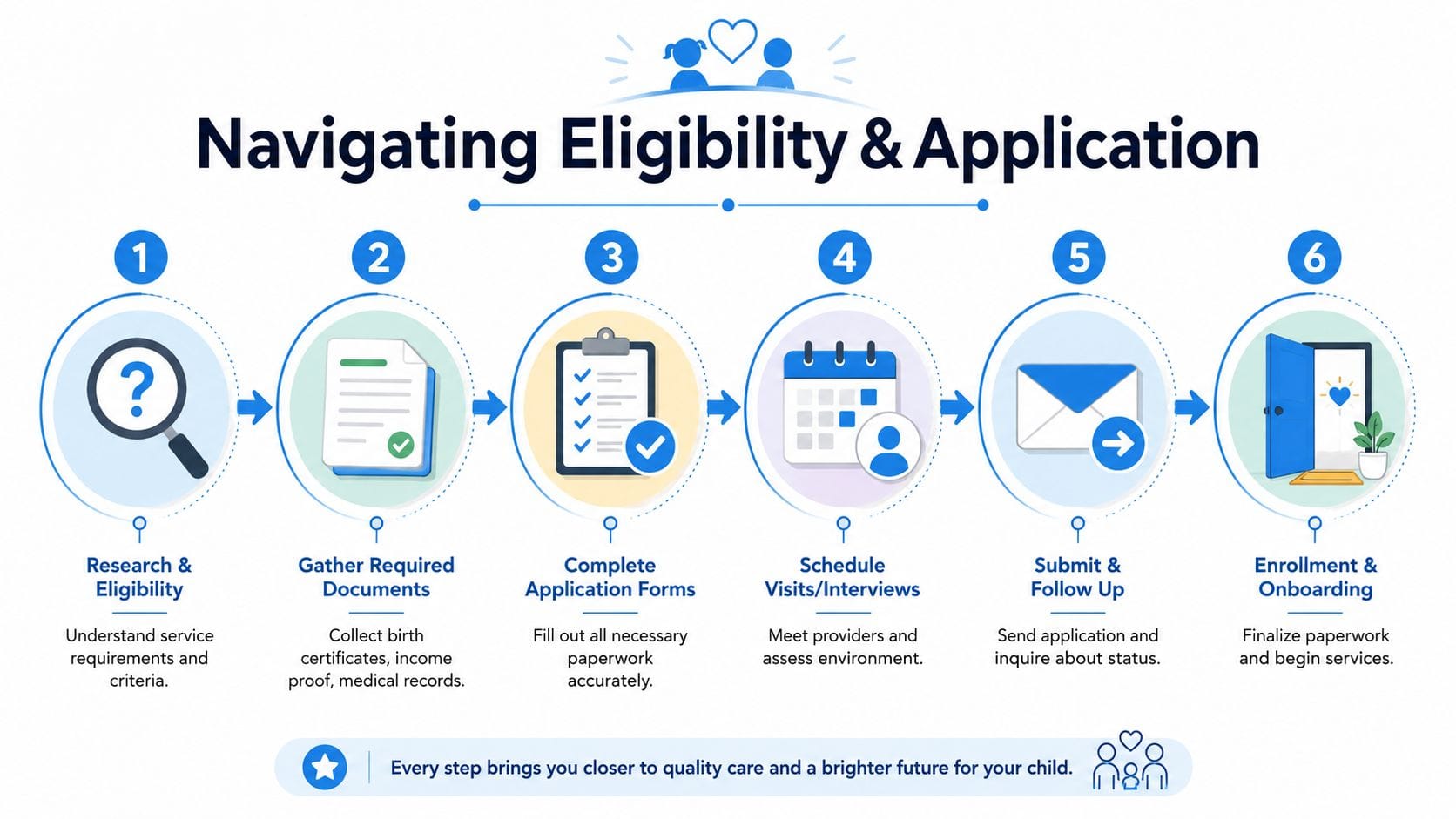
Most families don't get stuck because they can't fill out a form. They get stuck because every program asks for a slightly different version of the same story, and the paperwork arrives when they're already overloaded.
A better approach is to treat applications like a small project. You need one working file, one list of deadlines, and one record of who said what.
Start with your real-life needs
Before you apply anywhere, write down the facts of your week.
- Hours you need covered. Include commute time, shift changes, and pickup backups.
- Your child's essential care requirements. Think sensory needs, feeding supports, medication timing, communication style, toileting help, and transition challenges.
- What would break the arrangement. Some families need a provider who can manage aggressive behavior. Others need someone who can reliably handle naps, elopement risk, or specialist pickups.
That list keeps you from wasting time on services that look good online but won't work in practice.
Build one document packet
Most applications ask for overlapping information. Gather core records once and keep them together.
- Identity records such as birth-related documents and household details.
- Income and work documents if you're applying for financial assistance.
- Medical or developmental records when a program needs to understand accommodations or supports.
- Care notes that explain routines, allergies, medications, communication methods, and behavioral triggers.
If your child receives multiple services, it also helps to save the contact details for therapists, school staff, pediatric providers, and emergency backups in one place. During periods of stress, social services can become part of crisis planning for autistic children, and the families who move fastest usually have their records ready.
Follow up like an advocate
Applications rarely move on hope alone. Families often need to call back, confirm receipt, ask whether anything is missing, and document each interaction.
Try this simple follow-up log:
| Date | Contacted | Method | What they said | Next step |
|---|---|---|---|---|
| Monday | Subsidy office | Phone | Missing one form | Upload by Friday |
| Wednesday | Provider | Waitlist still open | Check again next week |
Keep a short written trail. It cuts confusion, especially when you're talking to multiple offices.
Visits matter more than brochures
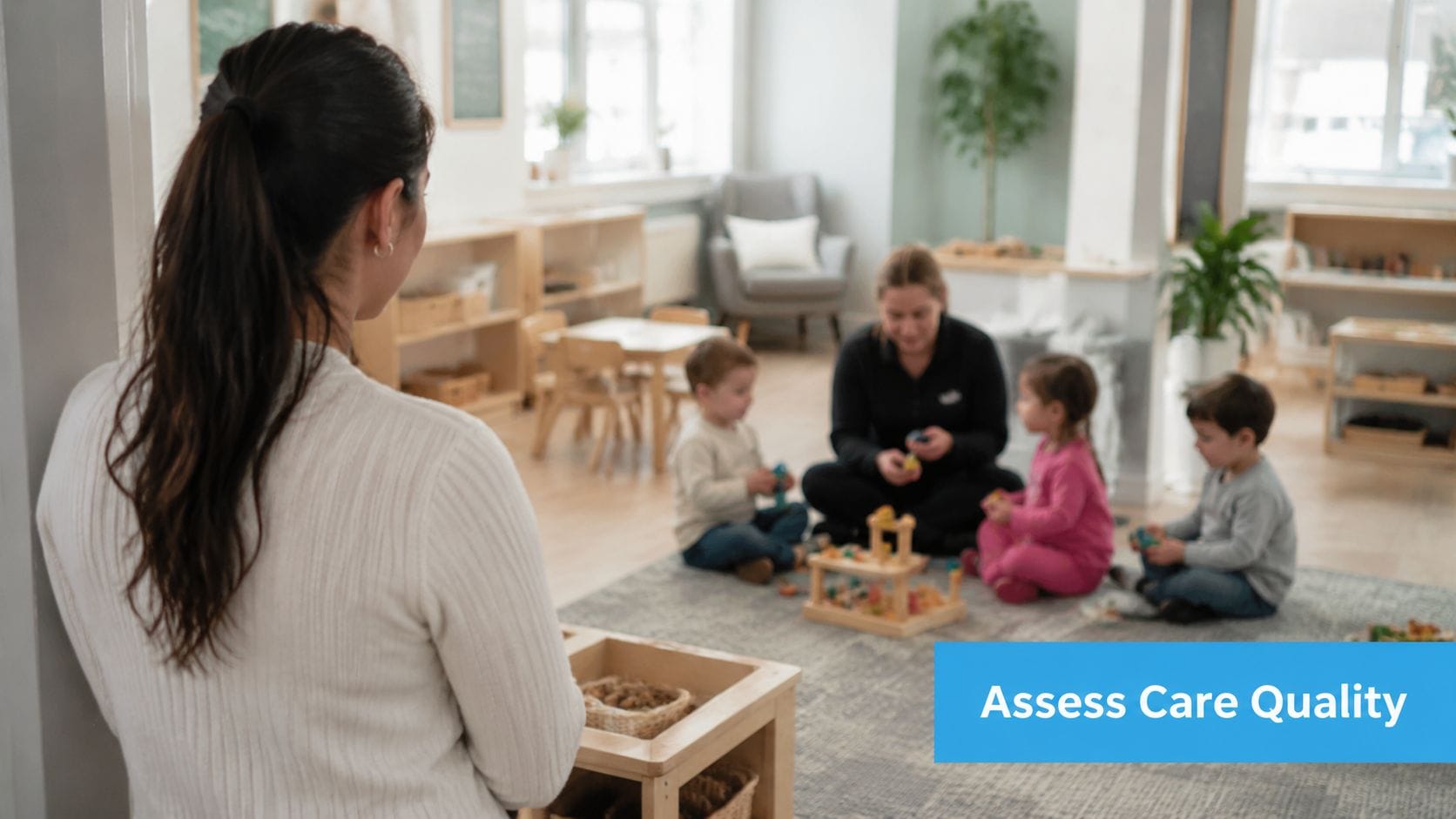
When a program moves you to the next step, visit if you can. Notice how staff respond to real children, not just how they answer polished questions. Watch transitions. Listen for tone. Ask what happens when a child has a hard day, not only what happens on a good one.
Parents sometimes feel they need to sound grateful and easygoing to secure a spot. Ask the hard questions anyway. The right provider won't be offended by a parent who wants clarity.
How to Evaluate the Quality of Care and Support
A clean room and cheerful website don't tell you much. Quality shows up in systems, not slogans. You want to know how a provider handles safety, training, communication, and the messy middle of everyday care.
What strong programs do behind the scenes
One of the clearest signs of quality is whether a program receives ongoing Technical Assistance, not just one-time troubleshooting. State child care agencies describe TA as foundational support that helps programs achieve and sustain compliance with licensing rules through advice, training, and consultation. That matters because it helps providers correct recurring process gaps before they become licensing deficiencies, as outlined by Georgia DECAL's Technical Assistance guidance.
In plain terms, good programs don't only react when something goes wrong. They build routines that prevent the same mistakes from happening again.
Questions worth asking on a tour
Use questions that reveal process, not marketing language.
- How do you document incidents? Ask who records them, when families are told, and whether patterns get reviewed.
- What training do staff receive for behavior, safety, and communication? Listen for specifics. Vague answers usually mean uneven practice.
- How do you handle handoffs between caregivers? This matters if your child has different needs at arrival, after meals, or at pickup.
- What happens when my child can't follow the group plan? A strong answer includes alternatives, not punishment.
- How do you communicate daily updates? Some programs text. Some use paper reports. Some rely on verbal pickup summaries, which are easy to forget.
Basic screening still matters
Parents sometimes assume formal settings have already checked every adult thoroughly. Don't assume. Ask about screening policies for staff, substitutes, and volunteers. If a faith-based or community program uses volunteers, VolunteerBadge's church screening tips offer a useful example of what structured screening questions can look like in practice.
A provider's willingness to answer safety questions calmly tells you almost as much as the answers themselves.
Green flags and red flags
Here's a compact review tool:
| Green flag | Why it matters | Red flag |
|---|---|---|
| Staff can explain routines clearly | Predictability supports safety and regulation | “We just play it by ear” |
| Written communication system exists | Reduces missed details | Updates depend on memory |
| They discuss prevention, not only discipline | Shows problem-solving mindset | Only talks about consequences |
| They welcome outside professionals | Helps coordination | Defensive about therapists or specialists |
| They can describe accommodations | Suggests flexibility | Expects every child to fit one model |
A quality program doesn't need to be perfect. It needs to be transparent, teachable, and consistent.
Key Support Strategies for Neurodivergent Children
Generic child care advice often assumes that all children move through the day in roughly the same way. Neurodivergent children prove, every day, that this assumption doesn't hold. The issue usually isn't whether a caregiver is kind. It's whether the setting can respond to patterns, transitions, and sensory load with enough consistency to keep the child regulated.
A major gap in standard child care guidance is how to coordinate daily routines and behavioral information across caregivers for neurodivergent children. Public family support resources increasingly recognize that parents need help with concerns like separation anxiety, non-verbal communication, and milestones, but the harder day-to-day question is often how to manage care for a child whose needs change by setting, person, or routine, as reflected in family resources highlighted by the City of Los Angeles.
What works better than generic behavior notes
“Had a hard day” isn't useful. “Cried after snack” isn't much better. Neurodivergent children often need context.
The most helpful notes track the full sequence:
- What happened before the moment. Noise, hunger, transition, denied request, unexpected change.
- What the child did in observable terms.
- What support was tried and whether it helped.
- What happened next after regulation or escalation.
- What might matter later such as poor sleep, constipation, medication timing, or sensory overload.
That kind of logging sounds clinical, but it's actually compassionate. It gives adults something concrete to respond to instead of defaulting to blame.
Routines are not a luxury
Many children can tolerate inconsistency for a while. Neurodivergent children often can't. They may need the same drop-off script, the same sequence for getting shoes off, the same snack presentation, the same visual cue before a transition, or the same quiet corner after pickup.
When families are choosing support, ask whether a caregiver can repeat a routine reliably. If they can't, they may still be loving and well-intentioned, but the arrangement may remain unstable.
For parents who want more local context on diagnosis and service demand, understanding autism prevalence in PA can help frame why so many families are seeking more coordinated support.
Structured tracking turns patterns into action
A central tracking tool is helpful. If one caregiver records that your child slept poorly, another notes food refusal, and a third reports an afternoon meltdown, those aren't three isolated events. They may be one pattern.
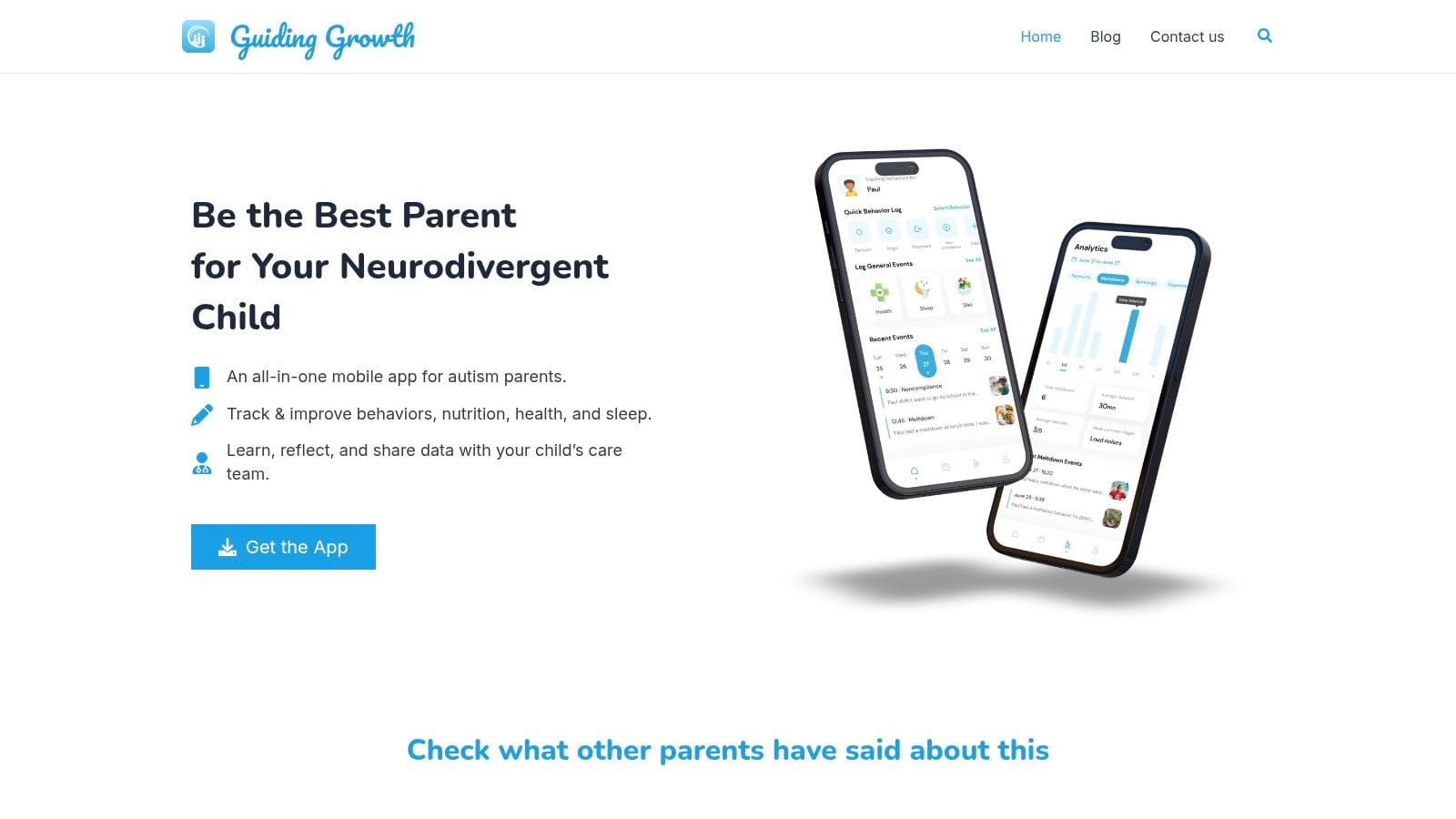
A tool such as Guiding Growth can centralize behavior logs, sleep notes, diet details, medication tracking, appointments, and cross-caregiver observations so parents and professionals are working from the same record instead of scattered messages.
Here's a short look at why that matters in practice.
What to track first: sleep, food, medication timing, transitions, and the exact conditions around distress. Those five areas usually reveal more than broad labels like “good day” or “bad day.”
When parents start tracking in a structured way, they often stop having the same circular conversations. Instead of “He always melts down at daycare,” the conversation becomes “Transitions after a short nap and delayed lunch are consistently hard, especially when pickup plans change.” That's something a care team can work with.
Solving the Care Coordination Challenge
The hardest part of child care support services isn't usually access alone. It's fragmentation. One person knows the medication schedule. Another knows the sleep problem. A teacher notices a pattern at drop-off. A therapist sees the same behavior after school. The parent becomes the only person holding the full story.
That setup is exhausting, and it creates preventable errors. Information gets lost in verbal handoffs. Families repeat the same explanation to five people. Small changes go unnoticed until they become big problems.
Why fragmented systems fail families
At a systems level, strong child care support services reduce fragmentation across access, affordability, workforce, and quality data. Early-childhood policy work also points to the value of integrating operational data from families and providers into a shared layer so people can make better decisions and support continuity of care, as described in the American Progress overview of child care and early learning data.
That same logic applies inside a family's day-to-day life. If school notes live in one place, therapy updates in another, and child care information stays in someone's memory, care becomes reactive.
What a central command system should include
Parents don't need a complicated dashboard. They need one reliable source of truth.
A practical system should let you keep:
- Daily logs for behavior, meals, sleep, and toileting
- Medication and health notes that can be checked quickly
- Appointments and reminders for therapy, school, and medical care
- Shared updates that other caregivers can read without needing a long recap
- Pattern history so recurring triggers become visible over time
For families building collaborative care teams, this kind of shared record is what turns separate helpers into an actual team. This guide to collaborative autism care teams explains the broader model well.
What works and what doesn't
What works is boring but effective: consistent entries, simple categories, and a routine for checking updates before handoffs.
What doesn't work is relying on memory, mixing urgent medical details with casual text messages, or keeping one notebook that never leaves the house.
When every caregiver has only part of the picture, the child ends up carrying the cost of adult misalignment.
A coordinated system won't eliminate waitlists, funding limits, or hard transitions. It will reduce guesswork. That alone can change how manageable the week feels.
Your Next Steps and Essential Resources
When parents feel overwhelmed, I usually bring the process back to three tasks. Not twenty. Three.
Start with this short checklist
- Define your child's daily needs clearly. Write down the routines, triggers, safety concerns, and scheduling realities that shape your week.
- Match those needs to the right care mix. That may include a center, a family child care home, a relative, respite support, therapies, and school services.
- Organize your records before you apply. Keep documents, contacts, routines, and care notes together so you're not rebuilding the same file every time.
- Evaluate providers by systems, not promises. Ask how they document, communicate, train staff, and handle difficult moments.
- Create one central record for the whole care team. Many families experience relief with this approach. When updates are structured and shared, care gets more predictable.
A practical way to move this forward this week
Pick one evening and make a single care folder. Add your child's routine, current medications, emergency contacts, recent evaluations, and a short note called “What helps when my child is struggling.” That document alone can improve handoffs.
Then choose one tracking method and stick to it. It doesn't have to be elaborate. It does have to be consistent.
A few trusted places to look locally
National and local support systems vary, but these categories tend to be the most useful starting points:
- Child care referral agencies that help families compare local options
- State subsidy and scholarship offices for affordability support
- Early intervention and school-based service teams for developmental support
- Family resource centers and parent groups for practical local knowledge
- Pediatric and therapy providers who can identify accommodation needs for caregivers
The parents who manage this system most effectively are not the ones with the most free time. They're the ones who stop trying to hold everything in their heads.
If you need one place to track routines, behaviors, sleep, food, medications, appointments, and caregiver updates, Guiding Growth offers a practical way to keep that information organized and shareable so your child's support system can work from the same record.