It's often 11:30 p.m. when this search starts.
Your child finally fell asleep after a hard evening. You're sitting with too many tabs open, reading about gluten-free diets, fish oil, probiotics, curcumin, melatonin, herbal blends, and parent stories that all sound convincing. One article says a supplement changed everything. Another says it's useless. A third warns that “natural” can still go wrong.
That confusion is real. It also makes sense that parents keep looking. Complementary and alternative medicine use is common in autism, with a median prevalence of about 54% across global studies, and in children, some surveys report that up to 95% of families have tried at least one form of CAM according to this overview of holistic support in autism.
Hope matters. So does method.
If you're exploring natural remedies for autism, the safest approach isn't chasing a cure. It's building a clean process: define the target, check safety, introduce one change at a time, and track what happens in daily life. That's how you separate a meaningful pattern from coincidence, a rough week, or a change that only felt helpful in the moment.
Table of Contents
- Navigating Hope and Hype in Autism Support
- What Are Natural Approaches for Autism
- Evaluating the Evidence Behind Natural Remedies
- A Closer Look at Common Natural Approaches
- How to Safely Introduce and Monitor a New Strategy
- Using Modern Tools to Track Patterns and Progress
- Creating Your Child's Personalized Support Plan
Navigating Hope and Hype in Autism Support
A parent usually doesn't start looking into natural remedies autism because they're careless. They start because they're attentive.
They notice their child isn't sleeping well, gets constipated, struggles after certain meals, seems more dysregulated during transitions, or has intense bedtime resistance. They want to help without adding unnecessary burden. That's a reasonable instinct. The problem is that the autism wellness space mixes thoughtful support with hype, and those two can look similar when you're exhausted.
Why families keep searching
Most natural approaches aim at support, not cure. Parents are often trying to improve sleep, digestion, regulation, comfort, mood, or attention. Those are daily quality-of-life issues, and when conventional care doesn't fully solve them, families look elsewhere.
What gets lost online is the difference between a strategy that is worth considering and a strategy that is proven, safe, and appropriate for your child. Those are not the same thing.
Practical rule: If a product or protocol promises to “reverse” autism, treat that as a warning sign, not a selling point.
What careful exploration looks like
A careful approach starts with a simpler question: What problem are we trying to solve? Not “What's the best natural remedy?” but “Are we working on sleep onset, stooling pattern, meal variety, anxiety around transitions, or evening meltdowns?”
That shift matters because broad autism claims are usually unhelpful. A child who wakes repeatedly at night may respond to a very different plan than a child who has food selectivity and bloating. If you don't define the target, every intervention becomes vague and impossible to judge.
Three habits keep families grounded:
- Name the symptom clearly: “Takes over an hour to fall asleep” is trackable. “Seems off lately” isn't.
- Tie every change to one goal: Don't start a diet, a supplement, and a new sensory routine in the same week.
- Expect trade-offs: Some changes add prep time, cost, social limitations, taste battles, or interaction risks.
Natural care can be useful. It can also waste time, strain meals, and create false confidence if nobody is measuring what changed. That's why the strongest families I work with aren't the ones who try the most. They're the ones who observe the best.
What Are Natural Approaches for Autism
“Natural” is a loose label. In practice, parents usually mean non-prescription strategies that may support health, comfort, or function alongside therapy and medical care.
That includes food-based changes, supplements, body-based calming practices, and daily routine work. It does not mean harmless, and it definitely doesn't mean one-size-fits-all.
Four categories parents usually mean
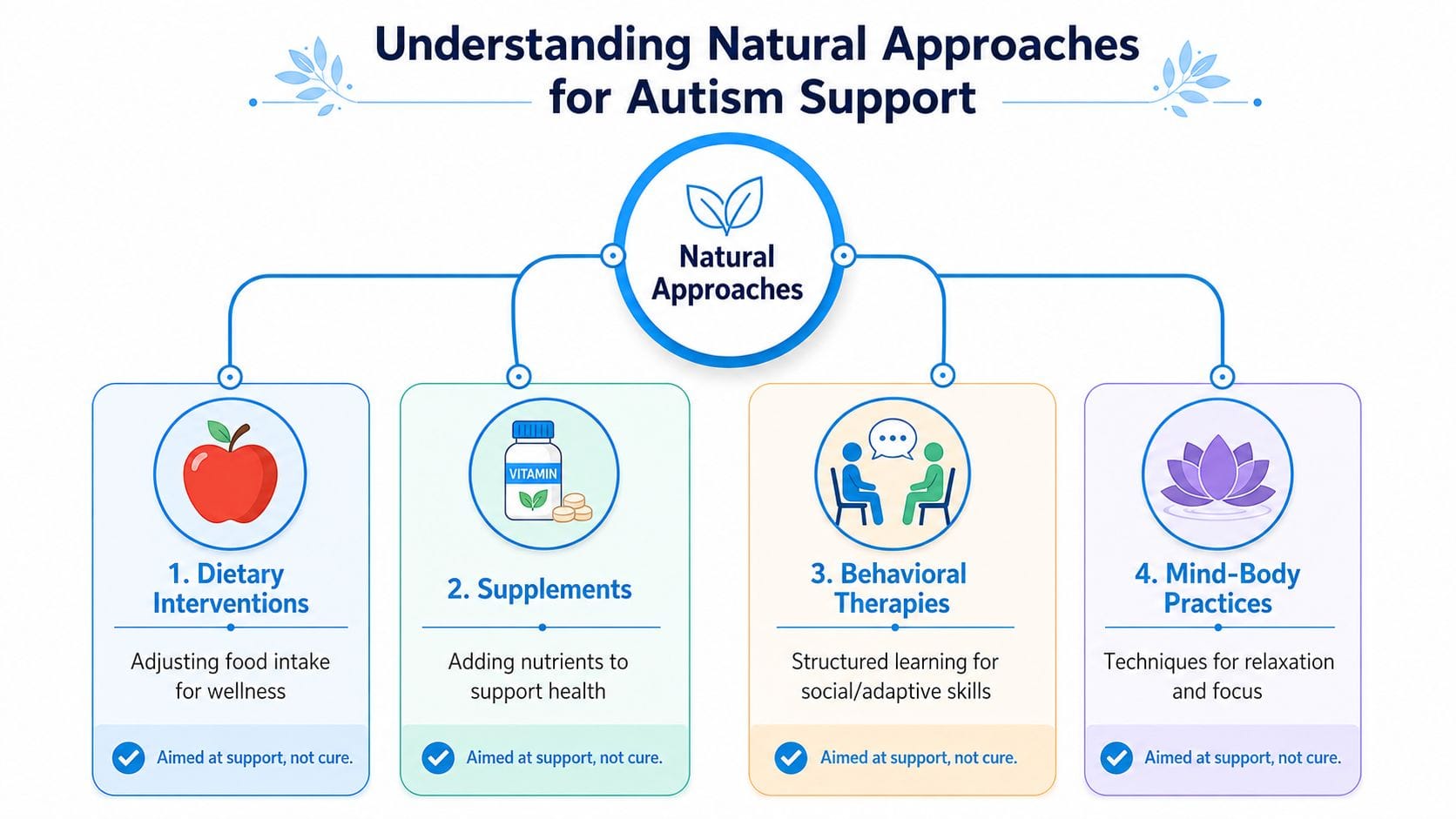
Dietary interventions
This category includes elimination diets, changes in meal structure, and food pattern adjustments. The most talked-about examples are gluten-free or casein-free approaches, although families may also focus on dyes, processed foods, or specific trigger foods they suspect are affecting sleep or digestion.
If you're sorting through food questions, it helps to read a balanced discussion of the link between wheat and autism because it frames the gut and food conversation more carefully than the usual all-or-nothing claims.
Supplements
This group covers omega-3 fatty acids, melatonin, vitamins, minerals, probiotics, and plant compounds such as curcumin or luteolin. Parents are often drawn to supplements because they feel more manageable than a full dietary overhaul.
Supplements can be useful in selected situations. They can also create confusion fast. If sleep improves after you add melatonin, but you also removed evening screens and changed dinner timing, you won't know what actually helped unless you tracked all three.
Mind-body and lifestyle support
Some families place massage, breathing exercises, yoga-inspired movement, outdoor regulation time, or sensory-friendly calming routines under the natural umbrella. These approaches usually target stress load, self-regulation, body awareness, and transitions rather than core autism traits.
Lifestyle support often gets underestimated because it isn't packaged like a product. Yet consistent sleep routines, meal timing, movement, and a predictable sensory environment can matter more than a crowded supplement shelf.
- Dietary work may help when there are clear GI concerns, food-linked behavior changes, or feeding patterns that need structure.
- Supplements are better treated like mini-medications. They need a reason, a plan, and monitoring.
- Behavioral therapies remain foundational because children still need support for communication, adaptive skill-building, and regulation.
- Mind-body practices can fit well when a child responds to predictable calming input and low-demand routines.
Natural approaches are best framed as supportive tools. They're aimed at comfort, participation, and daily functioning, not cure.
The parents who do this well build a small, organized toolkit. They don't throw ten things at once and hope one sticks.
Evaluating the Evidence Behind Natural Remedies
A testimonial can be sincere and still be misleading.
A parent may say, “My child started sleeping better after this supplement.” That might be true. It also might have happened during a school break, after an illness resolved, after bedtime changed, or after a growth phase passed. Human memory is selective, especially when everyone in the house is tired.
What stronger evidence looks like
Think of evidence like a ladder. At the bottom are anecdotes and social posts. In the middle are small uncontrolled studies. Higher up are randomized controlled trials and systematic reviews that compare groups in a structured way.
That doesn't mean family observations don't matter. They matter a lot in autism care. It means observations are the starting point, not the finish line.

Some compounds are biologically interesting but clinically unsettled. Curcumin and luteolin show anti-inflammatory and neuroprotective properties in lab studies, but human autism evidence is limited by small sizes and low methodological quality, which makes them promising experimentally but not first-line treatments according to this review of plant-derived compounds and autism mechanisms.
Why natural doesn't equal safe
Here, parents need a firmer filter.
Supplements and herbal products can vary in quality. Doses aren't always standardized. Ingredients may interact with prescription medications, and restrictive diets can make already limited eating patterns worse. A child with sensory-based food selectivity can lose nutritional variety quickly if adults remove foods too aggressively.
If your family is also comparing options used in other neurodevelopmental conditions, this guide to understanding ADHD supplement options is useful because it shows how often the same safety questions come up across categories: product quality, interaction risk, and the difference between “popular” and “supported.”
A good question to ask before trying anything is, “What outcome would tell us to stop?”
You also need to separate mechanism claims from treatment claims. “May reduce inflammation” is not the same as “improves behavior in real children living real lives.” That gap is where many families get oversold.
For a more focused review of what human studies do and don't show, see what studies show about supplements and autism. Read those findings with one hand on the brakes. The right standard isn't whether a product sounds plausible. It's whether the expected benefit is meaningful enough to justify the cost, burden, and risk.
A Closer Look at Common Natural Approaches
Parents usually hear the same shortlist repeatedly: special diets, omega-3s, probiotics, herbs, and melatonin. These options don't carry equal evidence, and they don't solve the same problem.
The practical question isn't “Which one is best?” It's “Which one fits my child's actual target, and what would make it worth continuing?”
Diets, supplements, and herbs compared
Gluten-free or casein-free diets are widely discussed. Some families report improved comfort, stooling, or behavior. The challenge is that diet changes are hard to interpret unless the target symptoms are specific and baseline eating is documented. They also carry real burden if your child already has limited accepted foods.
Omega-3 fatty acids are commonly used when families are hoping for support with attention, regulation, or overall brain health. In practice, the biggest issue isn't hype alone. It's inconsistency in formulation, dosing, taste acceptance, and the temptation to combine them with several other supplements at once.
Probiotics appeal to families focused on gut symptoms. That can make sense when constipation, stool pattern shifts, or bloating are part of the picture. But probiotic use often becomes too broad. If there's no gut-related target, it's hard to know what success should even look like.
Where melatonin and herbs fit
Melatonin has the clearest role when the problem is sleep onset or night waking. It isn't a blanket autism treatment. It's a sleep tool, and it works best when used inside a larger bedtime plan.
Herbal approaches deserve more caution than many websites give them. A systematic review of randomized controlled trials found that herbal medicines added to standard interventions led to statistically significant reductions in Childhood Autism Rating Scale scores, though most trials were small and more research is needed, according to this systematic review of herbal medicine in children with ASD. That's a reason to stay curious, not a reason to self-prescribe complex blends.
If you're shopping broadly for children's supplements, this guide on how to choose natural vitamins for kids is a useful reminder to look beyond marketing and focus on ingredient clarity, age fit, and practicality.
| Approach | Potential Target | Evidence Level | Key Safety Consideration |
|---|---|---|---|
| Gluten-free or casein-free diet | GI comfort, possible food-linked behavior shifts | Mixed and highly individual | Can reduce food variety and increase nutritional risk if poorly planned |
| Omega-3 fatty acids | Attention, regulation, general health support | Modest and situation-dependent | Product quality, taste acceptance, and overlap with other changes |
| Probiotics | Constipation, bloating, stool pattern concerns | Individual response varies | Match use to GI goals rather than broad autism claims |
| Herbal supplements | Behavior, attention, calming, associated symptoms | Preliminary and adjunctive | Interaction risk, product variability, and limited pediatric guidance |
| Melatonin | Sleep onset and night waking | Best supported for sleep-specific use | Needs timing, dose review, and tracking alongside sleep habits |
Don't judge an intervention by how often you hear about it. Judge it by whether it has a clear target and a clear stop rule.
A short list beats a long stack. Most children do better when adults test fewer variables and observe them carefully.
How to Safely Introduce and Monitor a New Strategy
This is the part many families skip, and it's the part that matters most.
There's a real lack of standardized guidance on how parents can combine natural remedies, track overlapping effects, and tell which intervention caused a change, as described in this discussion of practical gaps in natural-remedy planning for autism. That's why so many parents end up saying, “Something seemed better for a while, but I'm not sure why.”
Use a clean testing process
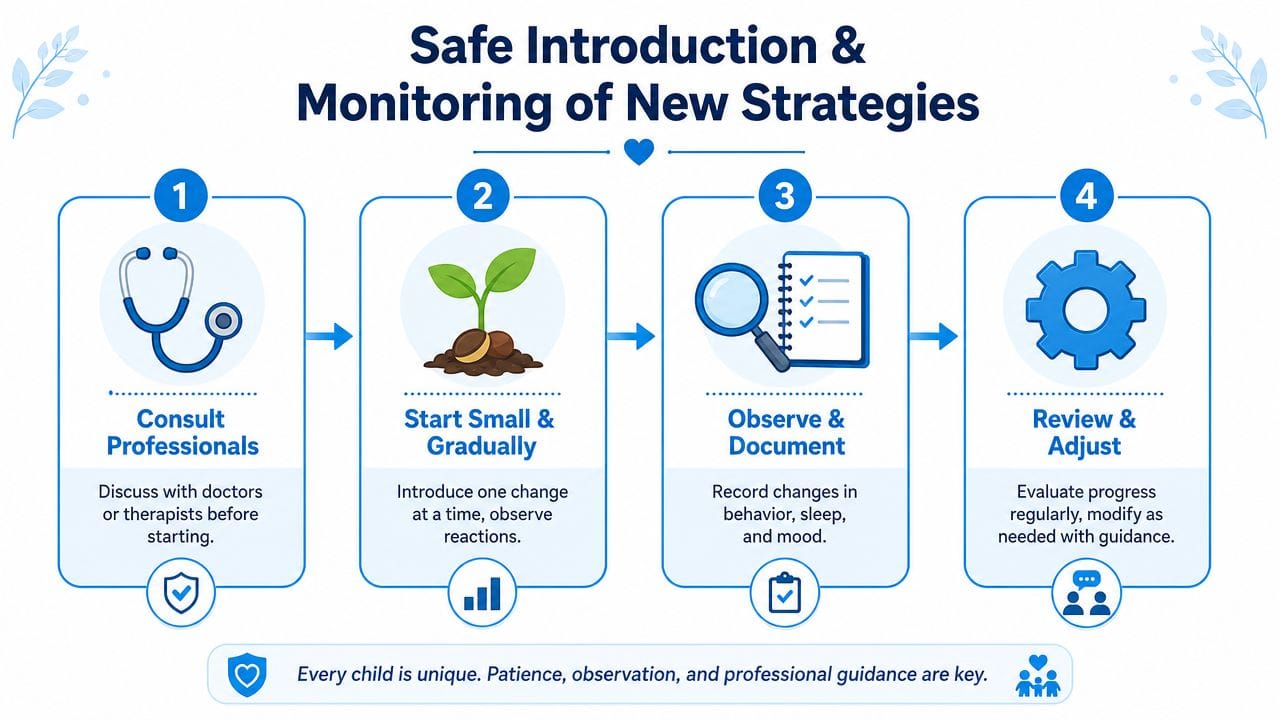
Start with your child's pediatrician or a qualified clinician who understands both autism and the proposed strategy. If your child takes medication, has a restricted diet, has GI issues, or has sleep concerns, this step is not optional.
Then set up your test like a small home study:
Choose one target symptom
Pick one main issue such as time to fall asleep, number of night wakings, constipation, stool consistency, meal refusal, after-school dysregulation, or bedtime resistance.Collect baseline notes first
Track the target before you change anything. You need a “before” picture or you'll end up comparing today to memory.Change one variable only
Don't add a supplement during the same week you start a new diet and a new sensory routine.Define success before starting
Decide what would count as a meaningful improvement and what side effects would make you stop.
A structured food and symptom log makes this much easier. Parents who are trialing food-related changes can use ideas from how to use food trackers for autism diets to avoid vague notes like “ate okay” or “seemed cranky.”
What to record every day
Before you watch the video below, keep this in mind: the best tracking is brief enough to sustain.
Use a daily record that includes:
- Timing details: When the supplement, herb, or diet change started and what time it was given.
- Context notes: Illness, poor sleep, school changes, travel, weekends, and major stressors.
- Target measures: Sleep onset, bowel pattern, appetite, meltdowns, energy, focus, or discomfort.
- Adverse effects: New irritability, stomach upset, appetite drop, headaches, or increased rigidity.
If you can't explain exactly what you're measuring, you're not ready to test a new intervention.
That sounds strict, but it saves families from months of guesswork.
Using Modern Tools to Track Patterns and Progress
Paper notes usually start with good intentions and end in fragments.
A parent writes “better sleep” on Tuesday, “rough afternoon” on Thursday, and forgets whether the probiotic started before or after the school schedule changed. That isn't a failure of effort. It's what happens when one adult is trying to remember sleep, meals, bowel habits, medication timing, sensory load, and behavior patterns all at once.
Why pattern tracking matters
Structured tracking matters most when the improvement is subtle. Sleep is the clearest example. Meta-analyses show melatonin can reduce sleep-onset latency by 30 to 60 minutes in autistic children, and the best results come when caregivers also track sleep logs, timing, and environmental factors, according to UCLA Health's summary of the evidence on alternative therapies for autism.
That point applies beyond melatonin. If a child falls asleep faster, you still need to know whether the effect holds across school nights, whether bedtime moved earlier, whether screens changed, and whether night waking improved too.
What a good tracking system should capture
A useful system should help parents log the variables that change outcomes:
- Food and drink patterns so you can compare symptoms against meals, new ingredients, or elimination trials
- Supplement and medication timing so adults don't guess whether a dose shift lined up with a behavior change
- Sleep details including bedtime, time to fall asleep, night waking, and wake time
- Behavior context such as meltdowns, shutdowns, repetitive behavior shifts, or transition-related distress
- Shared visibility for partners, caregivers, and clinicians
For sleep-specific routines, these strategies from how to track sleep and health for autistic kids can help families record patterns consistently instead of relying on memory.
The goal of tracking isn't to prove that a natural product works. The goal is to see what happens clearly enough to make a better next decision.
That mindset lowers stress. It also makes conversations with pediatricians, dietitians, occupational therapists, and prescribing clinicians much more productive because everyone can look at the same pattern instead of trading impressions.
Creating Your Child's Personalized Support Plan
The best plan is rarely the most complicated one.
A good support plan matches the child in front of you. It respects sensory needs, feeding realities, sleep patterns, co-occurring medical issues, therapy goals, family bandwidth, and safety. It also accepts that some natural remedies autism conversations lead to a useful trial, while others should end with “not worth it for us.”
What a grounded plan includes
Most strong plans share the same features:
- A defined target such as sleep onset, constipation, meal variety, or evening dysregulation
- Professional review before starting anything with interaction risk or nutritional implications
- One change at a time so cause and effect stay interpretable
- A stop rule for side effects, added stress, or no meaningful benefit
- Ongoing review based on recorded patterns rather than hope alone
This kind of planning protects children from two common problems. The first is over-restriction, where food or supplements take over family life without clear payoff. The second is false attribution, where adults continue a burdensome intervention because they never captured whether it helped.
What to hold onto
You don't need to reject every natural approach. You also don't need to say yes to all of them.
The middle path is usually the most useful. Stay open. Stay skeptical. Let evidence guide the first decision, and let careful observation guide the next one. That's how families move from frantic searching to steady problem-solving.
Your child doesn't need a perfect protocol. Your child needs adults who can notice patterns, protect safety, and keep adjusting with humility.
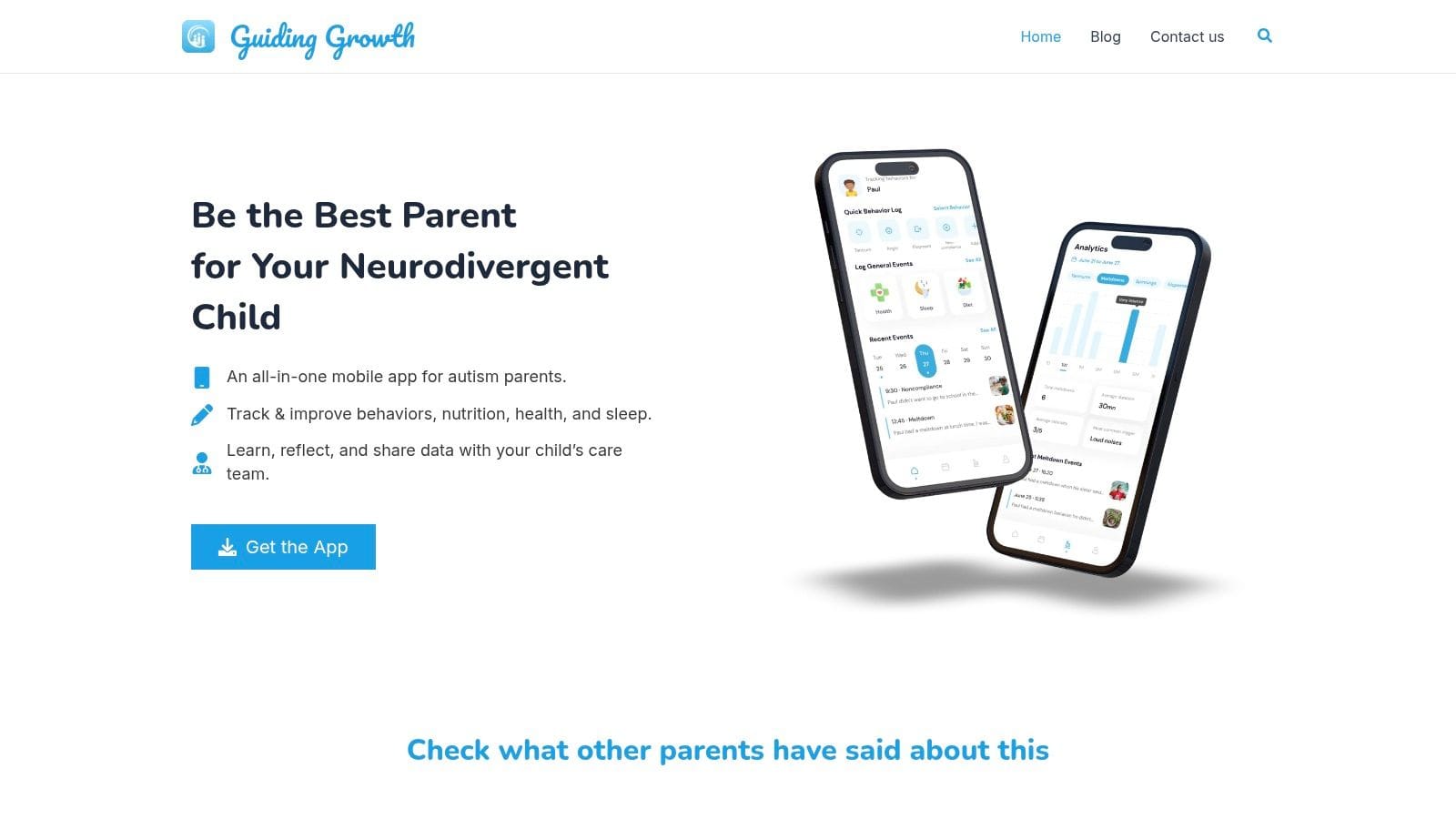
If you want one place to organize food changes, supplements, sleep, behaviors, appointments, and caregiver notes without relying on scattered paper or memory, Guiding Growth gives families a practical way to track what's changing and what's proving helpful. It's built for the essential work of autism support: noticing patterns, sharing information with your care team, and making calmer, better-informed decisions over time.