It's late. Your child is finally asleep, and you're sitting with your phone, searching phrases like vitamins and autism, best supplements for autistic children, or can low vitamin levels affect behavior. One article sounds hopeful. The next sounds dismissive. A parent in a forum swears one supplement changed everything. Another says it did nothing. After a while, it all starts to blur together.
If you're in that spot, you're not being gullible or overreactive. You're doing what caring parents do. You're trying to help your child feel better, sleep better, eat better, and have easier days. The hard part is separating useful information from hype without putting your child at risk.
There isn't a magic vitamin that “treats” autism itself. But nutrition does matter. For some children, a narrow diet, digestive problems, or an unrecognized nutrient gap can affect comfort, energy, sleep, or mood. That doesn't mean every challenge comes from a deficiency. It means nutrition is one part of the whole picture.
A calmer place to start is with a practical framework. Learn what nutrients are commonly discussed, notice patterns without jumping to conclusions, and bring clear observations to your child's clinician. If you've been exploring broader non-medication support ideas, this overview of natural approaches parents often ask about can help place vitamins within a bigger, safety-first context.
Table of Contents
- Navigating the Hope and Hype of Vitamins and Autism
- The Connection Between Nutrition and Autism Explained
- Key Nutrients Discussed for Autistic Children
- Observing Signs of Potential Nutrient Gaps
- How to Safely Explore Supplements with a Clinician
- Tracking Nutrition and Supplements for Clearer Insights
- Your Path Forward A Balanced and Informed Approach
- Frequently Asked Questions About Vitamins and Autism
Navigating the Hope and Hype of Vitamins and Autism
A lot of families arrive at this topic the same way. A child is eating only a short list of foods. Sleep is rough. Constipation keeps coming back. Energy seems up and down, or irritability appears out of nowhere. Then someone mentions vitamin D, omega-3s, B vitamins, magnesium, iron, zinc, or a multivitamin. Suddenly you're looking at labels, blog posts, and social media claims that make it sound like one purchase could reveal a completely different child.
That's where the confusion starts.
Some advice treats supplements like a shortcut. Other advice dismisses the whole subject so quickly that parents feel unheard. Neither extreme is helpful. Most children need something much more grounded. They need adults who can look carefully at diet, digestion, sleep, medications, lab work when appropriate, and day-to-day functioning.
Why parents feel pulled in so many directions
Part of the problem is that hope is powerful. When a child is struggling, even a small possibility can feel urgent. Parents also know something important that online arguments often miss. You don't need a miracle claim to wonder if your child is missing something basic. If a child eats a very limited range of foods or has ongoing gastrointestinal issues, it's reasonable to ask whether nutrition deserves a closer look.
Practical rule: Treat supplements as a health question, not a rescue fantasy.
A safer mindset
A better approach is simple. Ask, Could nutrition be affecting my child's comfort or daily functioning? That question keeps you focused on health instead of promises. It also makes room for nuance. A supplement might be helpful in one child, unnecessary in another, or even risky if taken without guidance.
When parents shift from “Which vitamin fixes autism?” to “What supports my child's overall well-being safely?”, decisions usually get clearer. That's the mindset worth bringing into every appointment, every product label, and every conversation about vitamins and autism.
The Connection Between Nutrition and Autism Explained
Nutrition comes up often in autism discussions for practical reasons, not because autism is caused by poor nutrition. Food affects every child's body and brain. If nutrition is limited or absorption is affected, the results can show up in ways families notice every day.
Why food comes up so often
The first reason is restrictive eating. Many autistic children have strong sensory preferences around texture, smell, color, temperature, or brand. A child may accept crunchy beige foods but reject anything soft or mixed. Another may eat only a few familiar items and refuse foods that look almost identical. When a diet becomes very narrow, nutrient variety can narrow too.
The second reason is digestive comfort. Some children deal with constipation, loose stools, stomach pain, reflux, bloating, or appetite changes. When the digestive system isn't working comfortably, eating can become even harder. That can reduce intake, make mealtimes stressful, and in some cases raise questions about whether nutrients are being well absorbed.
The third reason is that nutrients support many body systems. Vitamins and minerals help with energy production, red blood cell formation, bone health, nerve function, immune function, and more. If a child is low in an important nutrient, the effects may look broad and non-specific. You might notice low energy, poor concentration, sleep disruption, or a change in mood. Those signs don't prove a deficiency, but they can justify a closer look.
This visual helps organize those connections at a glance.
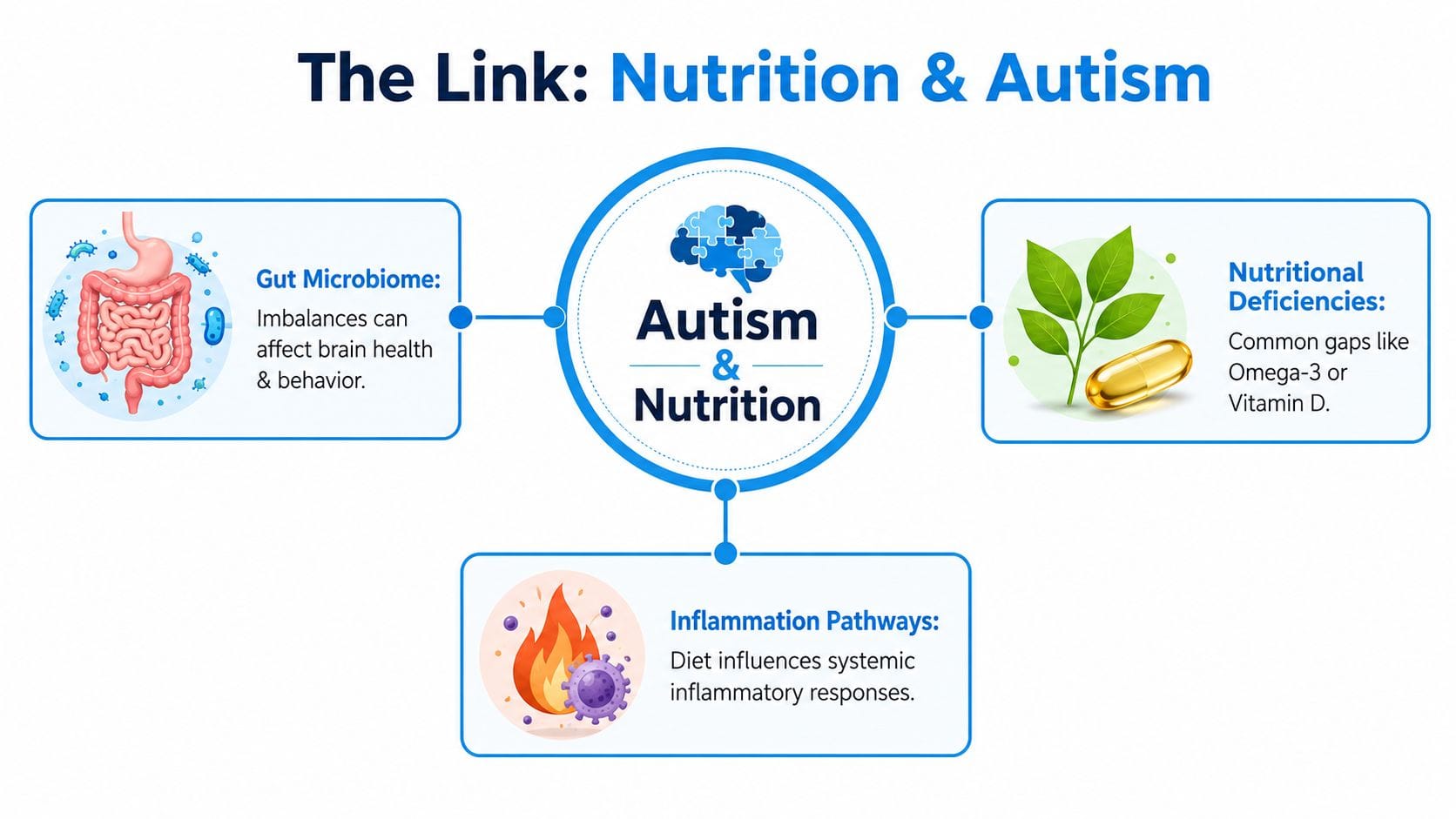
Nutrition supports the child, not a label
A helpful analogy is a house. Nutrition is part of the foundation. The foundation doesn't change what kind of house it is, but it affects how well the structure holds up day to day. If the foundation is shaky, other stresses are harder to manage. If the foundation is solid, the whole house functions better.
That's the best way to think about vitamins and autism. Nutrition doesn't erase autism, and it shouldn't be sold that way. It supports the child's body so they have the best chance at steadier energy, better comfort, and stronger overall health.
A short explainer can be useful if you want a broader overview before talking with your pediatric team.
Some families find it helpful to sort concerns into three buckets:
- What my child eats: accepted foods, skipped meals, strong sensory dislikes
- How my child digests food: constipation, stomach pain, reflux, bloating, stool changes
- How my child functions overall: sleep, mood, attention, energy, daily comfort
That structure keeps the conversation concrete. It also prevents a common mistake, which is assuming every behavior change is nutritional when many factors can overlap.
Key Nutrients Discussed for Autistic Children
When parents search vitamins and autism, the same nutrients come up again and again. That doesn't mean every child needs them. It means these are the nutrients people most often discuss when a child has a selective diet, feeding challenges, or symptoms that raise questions about nutrition.
A practical reference table
| Nutrient | Primary Role in the Body | Relevance for Discussion in Autism | Common Food Sources |
|---|---|---|---|
| Vitamin D | Supports bone health, immune function, and normal body regulation | Often discussed when children have limited diets, low intake of fortified foods, or low sunlight exposure | Fortified milk or alternatives, egg yolks, fatty fish |
| Vitamin B6 | Helps with metabolism and nervous system function | Commonly mentioned in conversations about diet quality and supplement use, especially when food intake is repetitive | Poultry, fish, potatoes, bananas, fortified cereals |
| Magnesium | Supports muscle and nerve function | Often paired with broader nutrition discussions when children have restrictive intake or constipation concerns | Nuts, seeds, beans, leafy greens, whole grains |
| Vitamin B12 | Important for red blood cell formation and nerve health | Considered when children eat very little animal-based food or have absorption concerns | Meat, fish, eggs, dairy, fortified foods |
| Folate | Needed for cell growth and red blood cell production | Discussed when diet variety is poor, especially if vegetable intake is limited | Leafy greens, beans, citrus, fortified grains |
| Omega-3 fatty acids | Support brain and eye health and are part of normal cell function | Often brought up because many children don't eat fish or other rich sources regularly | Fatty fish, walnuts, flaxseed, chia seeds |
| Iron | Helps carry oxygen in the blood and supports energy | A frequent concern in children with narrow diets, low appetite, or fatigue | Red meat, beans, lentils, fortified cereals, spinach |
| Zinc | Supports growth, immune function, and healing | Mentioned when intake is limited or picky eating is affecting overall diet quality | Meat, dairy, beans, nuts, seeds |
A few points often confuse parents, so it helps to slow down here.
Vitamin D gets attention because it plays many roles in the body. But a bottle on a store shelf can't tell you whether your child needs more. That decision belongs in a medical conversation, especially if your child already takes other supplements.
B vitamins are a broad group, not one single substance. When people talk about B6, B12, or folate, they're talking about different nutrients with different jobs. Parents sometimes hear “B vitamins” and assume any high-dose B supplement is harmless. That's not a safe assumption.
A nutrient can be important and still be the wrong choice for your child without proper evaluation.
Iron deserves special caution. Low iron can affect energy and well-being, but iron supplements shouldn't be started casually. Too much can be harmful, and stomach side effects can make feeding harder.
Omega-3s are often discussed because they're part of many families' general wellness conversations, not just autism-related ones. But even familiar supplements can vary in formulation, taste, and tolerability.
The main value of this table is perspective. These nutrients matter because they support the body in ordinary, important ways. The question isn't, “Which one helps autism?” The better question is, “Are there clues that my child's diet or symptoms justify a more careful nutritional review?”
Observing Signs of Potential Nutrient Gaps
Parents are often the first to notice when something feels off. The key is to observe without turning every symptom into a self-diagnosis. Think like a careful reporter. You're gathering information your child's clinician can interpret in context.
What to notice at home
Some signs that might be associated with a nutrient gap include:
- Persistent fatigue: A child seems worn out, less active than usual, or struggles to maintain energy through the day.
- Unusual irritability: Mood feels more fragile, especially when there isn't an obvious trigger.
- Sleep disruption: Falling asleep, staying asleep, or waking rested has become harder.
- Pale skin or looking “washed out”: This can be worth mentioning, especially alongside tiredness.
- Hair or skin changes: Dry skin, brittle hair, or slower-than-expected healing can be useful details.
- Cracks at the corners of the mouth: Parents sometimes overlook this, but it's a practical thing to note.
- Poor appetite or worsening food refusal: This can both contribute to and result from nutrition issues.
- Frequent complaints of stomach discomfort: Ongoing digestive problems can affect intake and overall comfort.
None of these signs points to one specific deficiency on its own. They're pieces of a puzzle.
When an observation is worth flagging
Pattern matters more than a single bad day. If you notice a change showing up repeatedly, bring it up. If you want a plain-language overview of symptoms often associated with low vitamin D, this pharmacist's guide to vitamin D deficiency is a useful example of the kinds of everyday signs families can learn to recognize before speaking with a clinician.
It also helps to ask whether food reactions, digestive discomfort, or a short list of accepted foods are making the picture harder to read. Parents who are sorting through that question often benefit from practical strategies for identifying possible food sensitivity patterns, especially when symptoms seem to flare around meals.
Write down what you see, when it happens, and what else was going on that day. Doctors can do much more with a pattern than with a vague memory.
Bring observations like these to appointments:
- What changed: “He's been more tired after school and not recovering after rest.”
- How long it's been going on: even an estimate helps
- What your child is eating lately: not a perfect list, just the major patterns
- Any digestive issues: constipation, pain, bloating, reflux, stool changes
- Any new medications or supplements: even gummies and fortified drinks count
That kind of detail helps your care team decide whether the next step is dietary support, lab testing, a feeding evaluation, medication review, or something else entirely.
How to Safely Explore Supplements with a Clinician
If you're considering supplements, the safest move is also the most effective one. Bring the question to a clinician who knows your child's history. That might be your pediatrician, a developmental pediatrician, a dietitian, a gastroenterology clinician, or another specialist involved in care.
Why supervision matters
Supplements can look simple because they're sold over the counter. They aren't simple. Ingredients vary. Doses vary. Some products combine many nutrients in one serving. Some interact with medications. Some can worsen stomach upset, sleep issues, or behavior changes in ways that are easy to misread.
This is especially true with B vitamins, where formulation questions and side effects can get confusing quickly. If you want a plain-language overview of why families sometimes run into issues with certain B vitamin products, Maximum Health Products on B vitamin issues gives a helpful example of the kinds of reactions parents may hear about and why professional input matters.
This is not optional. A child's age, growth, diet, medical history, prescriptions, and feeding challenges all affect what is safe and appropriate.
Questions to bring to the appointment
It helps to walk in with a short list. You don't need to sound technical. Clear beats impressive.
- Diet-based question: “Based on what my child eats, are there any deficiencies you'd be concerned about?”
- Testing question: “Would you recommend checking any nutrient levels, and if so, which ones?”
- Interpretation question: “If a lab result is low or borderline, how would that change what we do?”
- Safety question: “Are there supplements we should avoid because of medications, constipation, sleep issues, or stomach sensitivity?”
- Monitoring question: “If we try something, what effects and side effects should we watch for?”
- Follow-up question: “How long would we give it before deciding whether it's helping or not?”
A strong appointment often starts with your observations, not the product you found online.
What testing can and cannot tell you
Blood tests can sometimes help, but they aren't a magic answer either. A blood draw may reveal certain nutrient issues or help rule them out. That can be useful, especially when a child's diet is very restricted or symptoms raise a clear concern.
But testing has limits. Some symptoms are non-specific. Some nutrients are harder to interpret than parents expect. A “normal” result doesn't erase feeding problems, poor variety, or gastrointestinal distress. And one abnormal result doesn't automatically explain every behavior change.
The best care decisions usually come from three things together: history, observation, and targeted testing when it makes sense.
If your clinician suggests a trial of a supplement, ask for a plan in writing or repeat it back aloud. What product. What dose. What time of day. What to monitor. When to stop. When to follow up. That clarity protects your child and keeps everyone on the same page.
Tracking Nutrition and Supplements for Clearer Insights
Most parents can remember the big things. Almost no one can reliably remember the small details that matter most. Was the new supplement started on Tuesday or Thursday? Did sleep worsen before the dose change or after it? Was the stomachache on the same day your child refused lunch, or was that a different day?
Why memory is a weak tracking system
When families rely on memory, patterns get distorted. Hard days feel more frequent than they were. Good stretches get forgotten. A new supplement gets credit for an improvement that may have started earlier. Or a side effect gets missed because it seemed unrelated at the time.
Sticky notes, screenshots, and half-finished phone notes rarely solve this. They scatter the story.
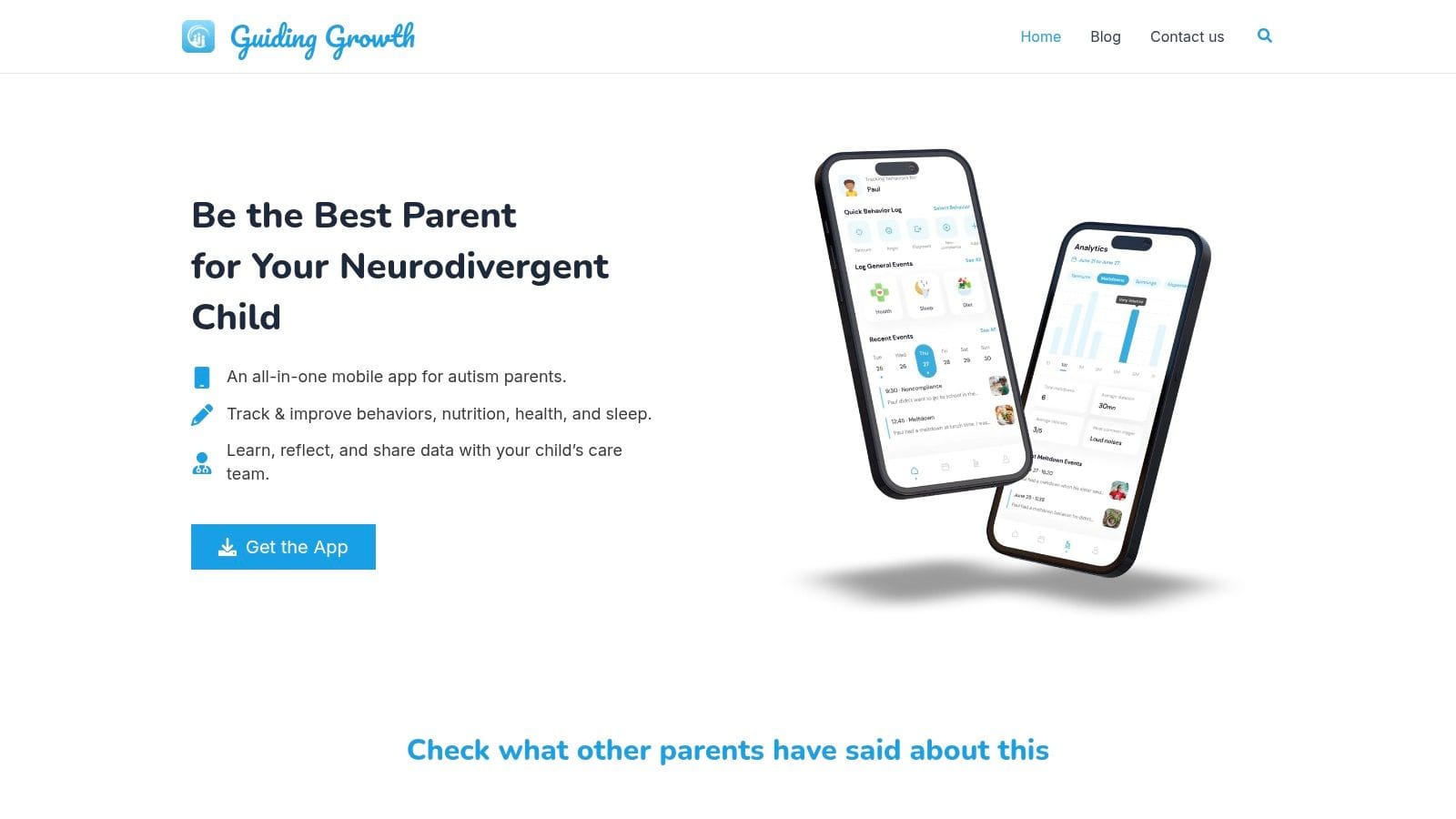
That's why systematic tracking matters. You don't need a perfect diary. You need a usable record. Families exploring digital food and symptom logs may find it helpful to evaluate AI food logging apps so they can see what features make tracking easier in real life.
What useful tracking actually looks like
The most useful tracking systems connect daily inputs with daily outcomes. For vitamins and autism questions, that means logging more than the supplement name.
Track details such as:
- Meals and drinks: accepted foods, skipped meals, new foods, appetite changes
- Supplement basics: product name, dose, timing, missed doses
- Physical symptoms: constipation, stomach pain, reflux, bloating, headaches, skin changes
- Sleep notes: bedtime, night waking, early rising, next-day tiredness
- Behavior and regulation: irritability, meltdowns, shutdowns, focus, ease of transitions
That kind of record helps you and your clinician answer better questions. Not “Did this work?” but “What changed, how often, and under what conditions?”
A structured system is especially useful when you're trying to separate nutrition effects from routine changes, illness, school stress, or sleep disruption. Families wanting a hands-on starting point can use these ideas for how to use food trackers for autism diets to make their notes more consistent and clinically useful.
Here's a simple example of what good tracking can reveal:
| What you log | What it might help you notice |
|---|---|
| Supplement given with breakfast | Easier or harder tolerance when taken with food |
| New chewable vitamin on weekdays only | Patterns tied to school mornings rather than the supplement itself |
| Poor sleep after several late doses | Timing may matter as much as the ingredient |
| Constipation worsening during a new routine | The issue may involve hydration, diet, routine change, or the product |
This kind of pattern spotting lowers guesswork. It also makes appointments more productive because you're not trying to reconstruct a month from memory while your child climbs the exam table.
Your Path Forward A Balanced and Informed Approach
Parents don't need to choose between blind hope and total skepticism. There's a steadier middle path. Nutrition matters because children's bodies matter. Comfort matters. Sleep matters. Energy matters. A child who eats a restricted diet or struggles with digestion deserves thoughtful attention to those basics.
Keep the priorities in order. Food first when possible. Medical guidance before supplements. Careful observation throughout. Vitamins can support health when they're used for the right reason, in the right form, with the right follow-up. They are not a cure for autism, and no ethical conversation about vitamins and autism should pretend otherwise.
If you're unsure where to begin, start small. Write down what your child typically eats. Note any repeated digestive or sleep concerns. Bring those patterns to a clinician you trust. That's how worried guessing turns into informed action.
You know your child better than anyone else. Your role isn't to solve everything alone. Your role is to notice, ask, document, and partner wisely. That's more than enough to move forward with confidence.
Frequently Asked Questions About Vitamins and Autism
Quick answers parents often need
Are supplements a cure for autism?
No. Supplements may support overall health, address a documented deficiency, or help with a nutrition-related issue under clinical supervision. They do not cure autism.
Should I start a vitamin just because my child is a picky eater?
Not automatically. Picky eating raises good questions, but it doesn't tell you which nutrient is low or whether a supplement is appropriate. Start with a diet review and a medical conversation.
Which vitamins do parents ask about most often?
Common discussions often include vitamin D, B vitamins, iron, zinc, folate, magnesium, and omega-3 fatty acids. The fact that they're commonly discussed doesn't mean they're right for every child.
Can a multivitamin cover everything?
Sometimes a clinician may suggest one, but multivitamins aren't one-size-fits-all. Some children need targeted evaluation instead of a broad product. Others may react poorly to taste, texture, or ingredients.
This visual sums up the most common questions parents bring to clinic visits.
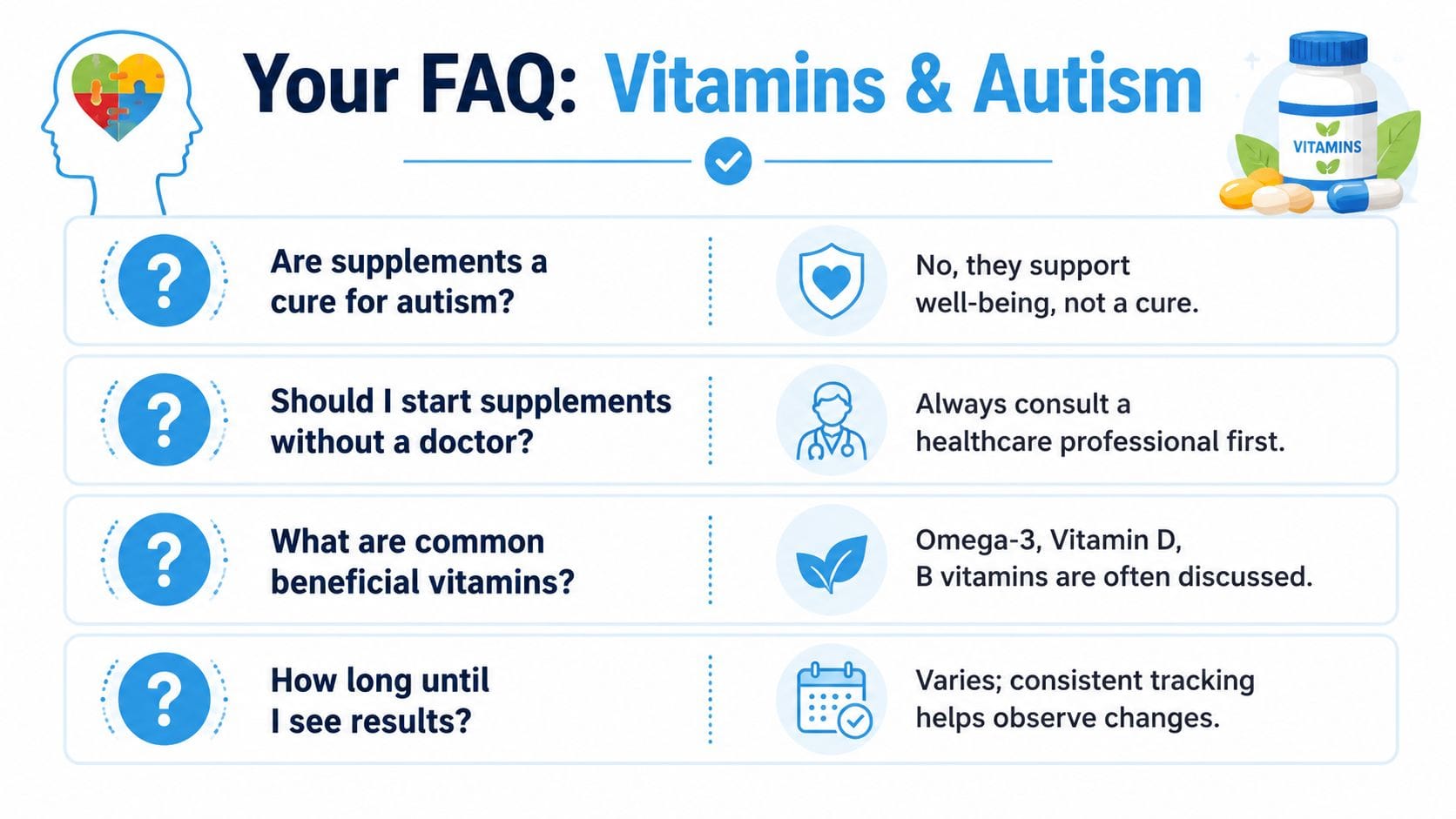
How long does it take to notice a difference?
It depends on what you're trying, why you're trying it, and what “difference” means. Some effects are subtle. Some are unrelated to the supplement at all. That's why structured tracking matters.
Can supplements cause side effects?
Yes. Some can affect sleep, appetite, digestion, or behavior. Others can interact with medications or create problems if the dose is too high. “Natural” doesn't always mean gentle or safe.
Should my child get blood work before taking supplements?
Sometimes, but not always. Testing depends on symptoms, diet, medical history, and the nutrient in question. Your clinician can tell you when labs are useful and when observation or diet support is the better first step.
What if my child refuses supplements?
That's common. Taste, smell, texture, and routine changes can all be barriers. Don't hide supplements in food without checking safety first, especially if your child is sensitive to flavor changes or eats only a small number of trusted foods.
The best question isn't “What supplement should I buy?” It's “What problem are we trying to solve, and how will we know if this is helping?”
If you want a calmer way to connect food, supplements, sleep, behavior, and symptom patterns in one place, Guiding Growth gives families a practical way to track daily care and share clearer observations with the clinicians supporting their child.