You're at the supermarket checkout. The lights hum, the queue keeps growing, and your child clamps both hands over their ears. A cry rises into yelling, then into a full-body meltdown on the floor while bags scatter and everyone turns to look.
On another day, at a family gathering, voices overlap and music plays in the background. Your child drifts toward a corner, goes silent, stares at the wall, and doesn't respond when you call their name. The room looks peaceful, but your child may be just as overwhelmed.
Parents often search for meltdown vs shutdown autism because the two responses can look completely different. One is loud and outward. The other is quiet and inward. Both are real signs of distress, and both become easier to support when you learn what to notice before, during, and after the episode.
Table of Contents
- Two Very Different Crisis Responses
- What Meltdowns and Shutdowns Are
- Meltdown vs Shutdown Side by Side
- What Triggers Each Response
- How to Respond in the Moment
- Preventing Future Episodes Through Tracking
- Why Shutdowns Are Easy to Miss
- When to Bring in Professional Support
Two Very Different Crisis Responses
A meltdown can feel impossible to miss. Your child may cry, scream, drop to the floor, push objects away, hit, kick, run, or make repetitive movements. The behavior may seem sudden, but the nervous system has usually been carrying more input than it can manage. The supermarket checkout is only the final demand in a chain that may have started with poor sleep, a busy school day, hunger, bright lighting, and the pressure of waiting.
A shutdown creates a different problem: adults may not recognize it as a crisis at all. At the family gathering, your child's silence might be interpreted as politeness, defiance, tiredness, or a decision not to participate. Yet withdrawal, unresponsiveness, reduced movement, and difficulty speaking can reflect an internal response to overwhelming sensory or emotional demands, as described in Autism Society guidance on autistic meltdowns and shutdowns.
The practical distinction: A meltdown releases distress outward. A shutdown pulls the person inward.
Neither response tells you whether your child is “being difficult.” The response tells you that the current demands have exceeded their available capacity. A child may need less noise and fewer words during a meltdown, while a child in shutdown may need space, time, and a way to communicate without speech.
What to notice first
Look beyond the most dramatic behavior. Ask yourself:
- Direction: Is energy moving outward through crying, movement, or shouting, or inward through silence and stillness?
- Communication: Is your child communicating loudly, repetitively, or physically, or has speech become difficult or unavailable?
- Access: Can your child respond to simple information, or does processing appear to have stopped?
- Recovery: What helps the child return to their usual level of functioning, and how much quiet time do they need?
The goal isn't to label your child in the middle of a crisis. It's to recognize the response accurately enough to reduce pressure and keep everyone safe.
What Meltdowns and Shutdowns Are
A meltdown is an involuntary outward response to overload. When sensory, emotional, or cognitive demands exceed the nervous system's available capacity, distress may appear as crying, yelling, flailing, dropping to the floor, running away, or lashing out. From the outside, these actions can seem purposeful. Inside, the child is losing the ability to regulate, not making a planned attempt to control the situation.
A shutdown is an involuntary inward response to the same kind of overload. The nervous system reduces activity and withdraws, so the child may become still, mute, slow to process language, unable to move, blank-faced, or fixed in one posture. Leicestershire Partnership NHS guidance describes functional changes that can include difficulty speaking, unresponsiveness, impaired decision-making, and reduced movement.
The inside-outside distinction is the starting point for real-time recognition. A meltdown sends distress outward through sound and movement. A shutdown turns distress inward through silence, stillness, or reduced access to speech and action. The visible pattern differs, but both can follow a loud environment, difficult instruction, sudden change, social pressure, or the build-up of smaller demands. A child may hold things together at school, then reach their limit on the journey home when one more request becomes impossible to process.
Neither response is a tantrum, manipulation, attention-seeking, or deliberate misbehavior. A tantrum usually includes a goal and some ability to adjust behavior in response to an adult or outcome. Meltdown and shutdown describe a loss of regulation, even when the child's actions affect other people.
Why the inside-outside distinction matters
A meltdown often receives immediate attention because it is noisy or creates a safety concern. A shutdown can be missed because the child looks quiet or compliant. Quiet does not mean comfortable, and visible intensity does not measure the whole level of distress.
Describe what you can observe without turning it into a character judgment. A topography of behaviour helps families record actions such as “covered ears,” “stopped speaking,” or “dropped to the floor” instead of writing “naughty,” “rude,” or “uncooperative.” Over several weeks, those plain observations can reveal patterns in triggers, early signs, and recovery, while Guiding Growth can serve as the family-facing logging layer.
For background on the relationship between sensory input, participation, and regulation, how sensory integration helps children provides useful context. This understanding helps parents adjust demands and surroundings before distress grows.
Meltdown vs Shutdown Side by Side
The clearest way to understand the difference is to compare the same features in both responses. The table below is a guide for observation, not a test your child has to pass. A child can show mixed signs, and the same child may have different responses on different days.
Meltdown vs Shutdown at a Glance
| Criterion | Meltdown | Shutdown |
|---|---|---|
| Outward signs | Crying, yelling, repetitive actions, abrupt movements, pushing, hitting, dropping, or attempts to escape | Silence, blank staring, withdrawal, freezing, reduced movement, or lying still |
| Direction of energy | Released outward through sound and movement | Pulled inward through conservation and withdrawal |
| Duration | May last from minutes to hours, depending on the load and environment | May last from minutes to hours, with recovery sometimes extending beyond the visible episode |
| Verbal output | Speech may become repetitive, loud, distressed, or unavailable | Speech may slow, become fragmented, or stop altogether |
| Body posture | Tense, active, restless, collapsed, or moving abruptly | Rigid, frozen, limp, slowed, or held in one position |
| Sensory processing | Input may provoke visible distress or attempts to escape | Input may be difficult to process, with the child appearing disconnected or unreachable |
| Awareness of surroundings | The child may react strongly to sounds, people, or physical demands | The child may show reduced responsiveness or limited access to the surroundings |
| Safety risk | There may be immediate risks from running, hitting, falling, throwing, or accidental injury | Risks may include wandering without responding, inability to report pain or danger, or remaining unsafe and unresponsive |
A meltdown often looks shorter and more physically intense, while a shutdown can look quiet and last longer from the caregiver's perspective. Neither pattern is a weaker version of the other. They're different directions of nervous-system overload.
A quiet child may still need urgent support. Silence isn't proof that the situation is mild.
Treat the table as a prompt for better notes. Instead of recording “bad behavior,” write down what your child's body, communication, and attention were doing. This distinction gives teachers and clinicians information they can use.
What Triggers Each Response
The same event can produce a meltdown in one child and a shutdown in another. It can also produce a meltdown in the morning and a shutdown later that day, because sleep, hunger, stress, and earlier demands change the child's available capacity.
Sensory input
Fluorescent lighting, supermarket beeps, scratchy clothing labels, strong perfume, crowded aisles, and unexpected touch can all add load. One child may cover their ears, shout, and push away from the source. Another may stop speaking, stare downward, and become unable to move toward the exit.
The noise isn't always the whole explanation. A child who handled the same shop last week may struggle today after a demanding morning or poor sleep.
Demand overload
Schoolwork beyond current capacity, multi-step instructions, rapid questioning, and pressure to hide autistic traits can overwhelm processing. A meltdown may follow when a child tears up work or shouts “no.” A shutdown may look like staring at the page, failing to begin, or appearing to ignore repeated instructions.
Reduce the question to its actual demand. “Put your shoes on, pack your bag, and get in the car” may be too much when the child can manage only one step.
Transitions
Ending a preferred activity, switching rooms, leaving school, or facing an unexpected schedule change can remove the predictability a child relies on. One child may cry, kick, or throw the visual schedule. Another may freeze at the doorway and stop responding to prompts.
A transition trigger often includes more than the change itself. It may also involve time pressure, unfinished play, an unfamiliar destination, or the sensory demands of the next environment.
Social overwhelm
Group conversations, eye contact pressure, unfamiliar relatives, teasing, and being asked to perform socially can create cumulative stress. A meltdown may involve loud protest or escape. A shutdown may involve retreating to a corner, giving no answer, or losing access to familiar words.
| Trigger Category | Typical Examples | Meltdown Presentation | Shutdown Presentation |
|---|---|---|---|
| Sensory input | Lights, beeps, labels, perfume, crowds | Covers ears, cries, pushes away, tries to escape | Becomes still, silent, or difficult to reach |
| Demand overload | Schoolwork, multi-step directions, masking | Shouts, refuses, drops, or throws materials | Stares, stops writing, cannot answer |
| Transitions | Ending an activity, schedule change, new setting | Protests loudly or moves abruptly | Freezes, pauses, or cannot move forward |
| Social overwhelm | Groups, eye contact, unfamiliar people | Cries, yells, or leaves suddenly | Withdraws, avoids speech, or stares away |
Triggers are usually layered. Track what happened earlier, not just the final event.
How to Respond in the Moment
During a meltdown, prioritize safety and reduced stimulation over teaching, reasoning, or consequences. Move other people away if possible, lower the lighting, reduce noise, and guide your child toward a quieter space without adding more verbal demands.
Use short phrases in a low, steady voice. “You're safe.” “I'm moving the bags.” “We're going somewhere quieter.” Avoid questions, negotiations, explanations, and repeated requests. Your child may not have enough processing capacity to answer, and each new sentence can add pressure.
Don't use physical restraint unless there's an immediate safety need and you're following appropriate professional guidance. Remove dangerous objects, protect siblings and bystanders, and give your child physical space. Afterward, your child may be exhausted, tearful, disoriented, or temporarily disconnected from conversation.
Supporting a shutdown
A shutdown needs less stimulation and less demand, but not necessarily more conversation. Don't keep asking “What's wrong?” or “Can you answer me?” Avoid touch unless you already know your child wants it. Offer a safe exit, a quiet room, water, a familiar comfort item, or a simple visual choice.
Speech may be temporarily unavailable. You can offer alternatives such as pointing, a written choice, a text message, a communication device, or a gesture. Wait longer than feels natural before repeating yourself.
Language to avoid: “Use your words,” “calm down,” and “you're being dramatic” all add pressure or judgment when access to speech and regulation is already reduced.
For further practical context around intense distress and regulation, this parent's guide to autism anger may help you distinguish emotional expression from intentional misconduct. You can also explore co-regulation techniques for ways adults can provide calm, predictable support without taking control of the child's body.
Recovery is part of the episode. A child recovering from a meltdown may need food, water, sleep, and quiet after intense movement. A child recovering from shutdown may need extended low-demand time before speech, eye contact, decision-making, or ordinary routines return.
Preventing Future Episodes Through Tracking
Prevention becomes more practical when you stop relying on memory alone. After each episode, record the details while they're still available, even if the note is brief:
- Basic context: Date, time, location, and what was happening immediately beforehand.
- Possible trigger: Sensory input, demand overload, transition, social overwhelm, or another factor.
- Response pattern: Meltdown, shutdown, or a mixed presentation.
- Episode details: Approximate duration, observable signs, and any safety concern.
- Recovery: How long it took to return to usual communication and participation.
- Body and routine: Sleep, food, hydration, medication changes, and earlier demands.
- Support used: Quiet space, reduced language, visual choices, movement, or another strategy.
A single entry rarely explains much. A series of entries can show that Wednesday afternoon meltdowns follow early-morning specialist appointments, or that shutdowns appear after busy weekends. The useful insight may sit several hours before the crisis, not in the final argument or refusal.
Turn notes into a shared picture
A consistent record gives parents, co-parents, teachers, therapists, and caregivers the same reference point. Instead of saying, “Things have been bad lately,” you can describe the response pattern, the likely context, what helped, and how recovery unfolded.
Keep the system fast enough to use on a difficult evening. Guiding Growth is one family-facing option that brings behavior logging, contextual information, sleep and routine notes, and collaboration into a mobile app. Its symptoms tracking app workflow is designed to help families capture observations and review patterns without maintaining scattered notebooks and messages.
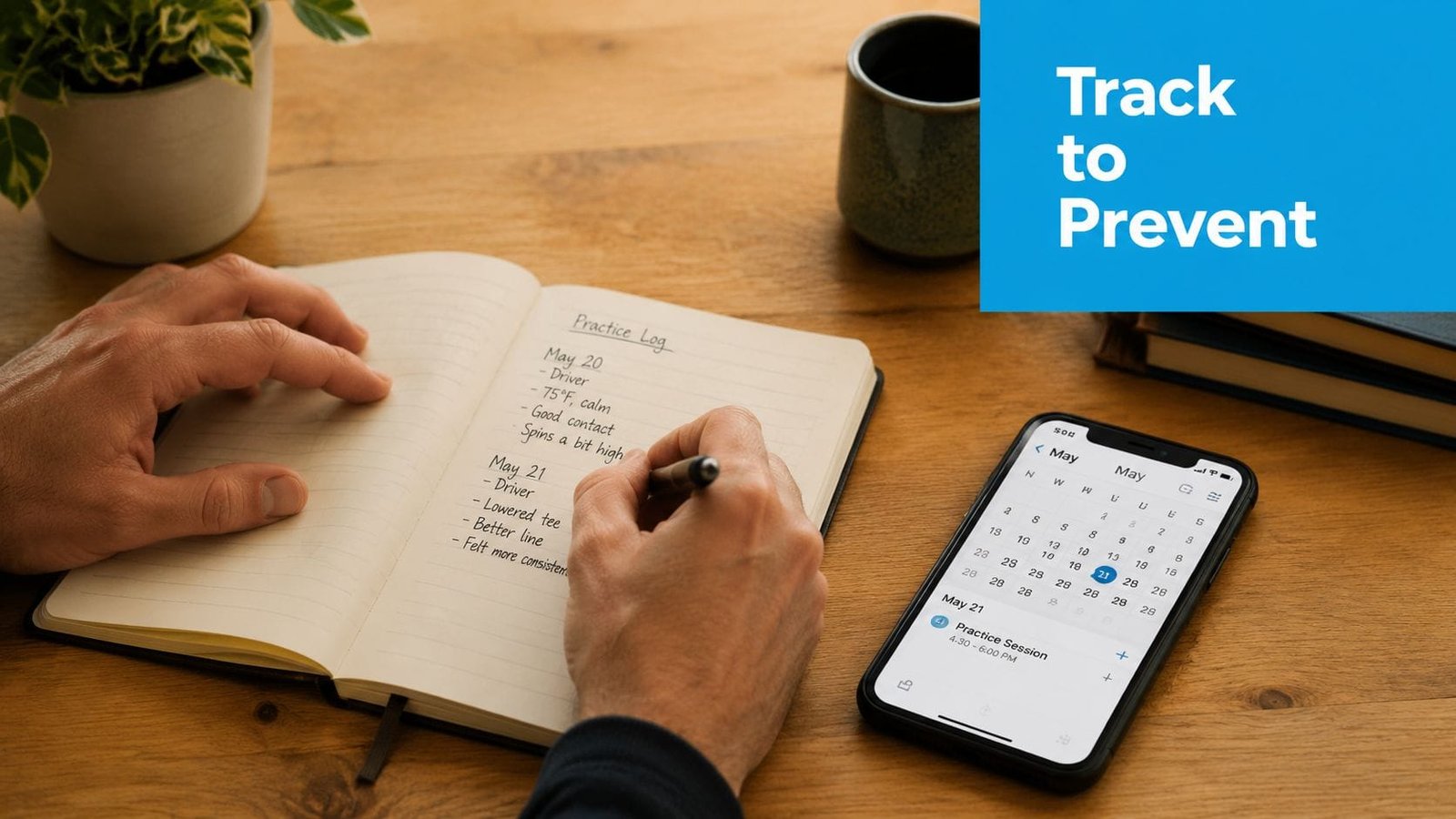
The point isn't to create a perfect record. It's to make the next decision more informed. A quick voice note or short entry can preserve details that would otherwise disappear by bedtime, then give the adults around the child a shared way to adjust demands and environments.
Why Shutdowns Are Easy to Miss
Shutdowns aren't mild meltdowns, and they aren't just “quiet behavior.” They're a distinct withdrawal-based response to overwhelm. The child may lose access to speech, movement, eye contact, decision-making, or ordinary responsiveness while the room remains quiet.
That quiet creates a dangerous misunderstanding. A teacher may see a child sitting still and assume they're complying. A parent may think the child is sulking. A clinician may receive a report that the child “doesn't react,” without knowing that the stillness follows sustained sensory or emotional load.
Quiet doesn't mean recovered
Shutdowns often follow prolonged stress or autistic burnout. Ambitious about Autism explains that increased meltdowns and shutdowns can signal autistic burnout in children and young people, which makes a change in frequency or pattern worth recording rather than dismissing.
Recovery may require quiet, reduced expectations, and time without pressure to discuss the event. Reassurance can be kind, but repeated reassurance still demands attention and a response. A child who can't speak may need you to sit nearby without expecting interaction.
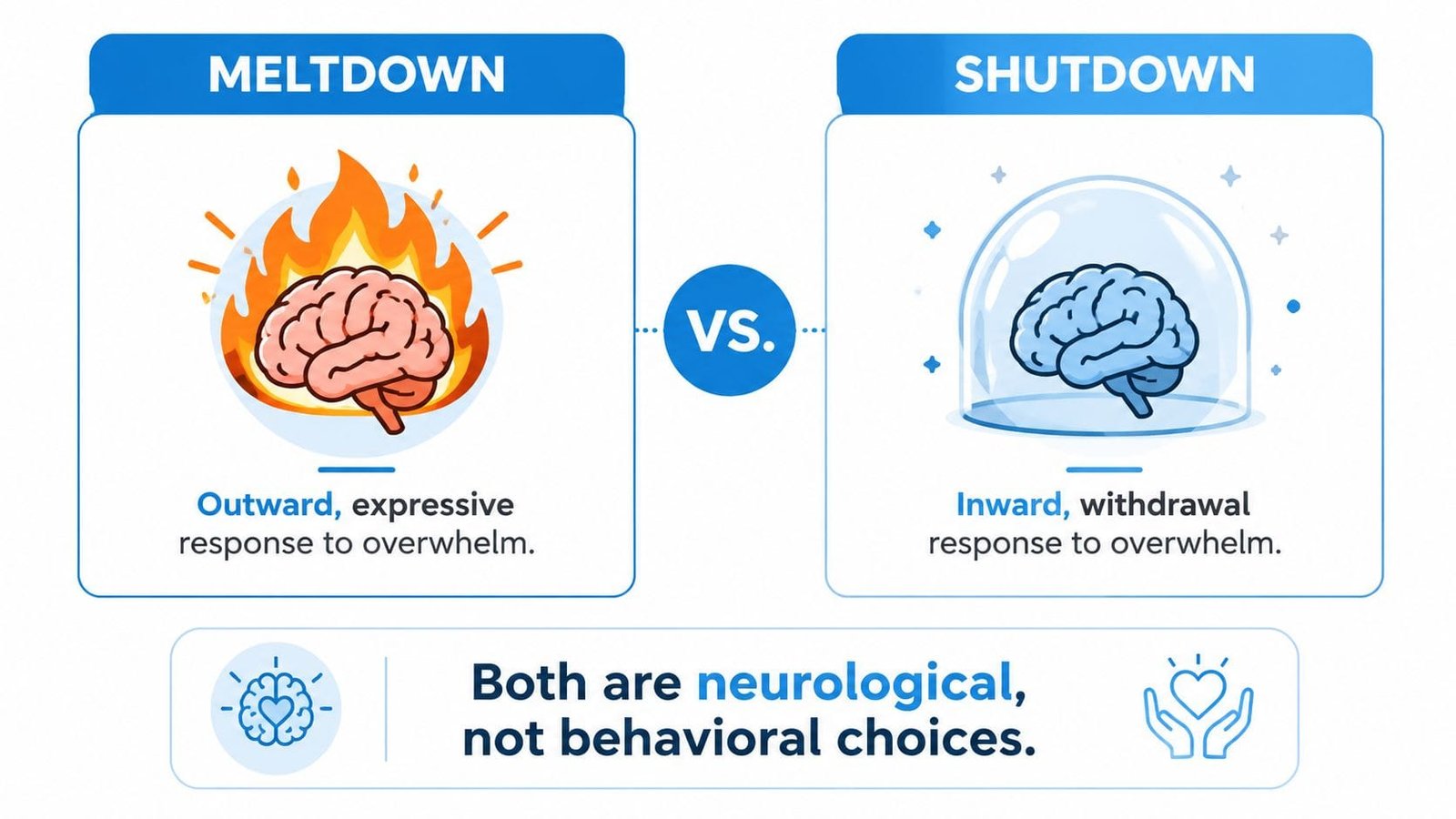
The practical risk is missed data. If adults record only loud incidents, they may conclude that the child copes well in settings where shutdowns are occurring. Note the silent episodes, the frozen posture, the delayed communication, and the recovery afterward.
A review in Autism in Adulthood formally discussed shutdowns alongside related concepts such as burnout and inertia, describing shutdown as a more internal experience involving withdrawal from surroundings (peer-reviewed review). That framing supports a more accurate question: not “Why is my child refusing?” but “What demand has made participation unavailable?”
When to Bring in Professional Support
Home strategies can reduce pressure, but some patterns call for professional input. Contact a pediatrician or relevant care professional when episodes are increasing in frequency, duration, or severity, or when shutdowns last for hours or recur several times a week.
Seek help promptly when recovery runs into the next day, self-injury appears, previously used skills regress, or your child loses interest in activities they once enjoyed. Sleep or eating disruption linked to episodes deserves attention, as does any safety concern during a meltdown or shutdown.
Match support to the question
- Pediatrician: Reviews general health, sleep, eating, pain, medication concerns, and referrals.
- Developmental pediatrician: Assesses developmental needs and coordinates recommendations across settings.
- Child psychologist: Helps with emotional regulation, anxiety, coping, and the impact of chronic stress.
- Occupational therapist: Examines sensory processing, daily tasks, environmental demands, and regulation supports.
- Speech-language pathologist: Supports communication access when speech becomes difficult or unavailable.
- Behavioral specialist: Helps define observable patterns, identify environmental triggers, and build practical prevention plans.
Bring a consistent log with the date, duration, suspected trigger, response used, and recovery length. Add a short description of what your child could and couldn't do. This turns “things have been bad” into a focused clinical conversation and gives the professional something concrete to examine.
Families can also seek support for their own stress while they coordinate care. For example, Kelowna anxiety support options may be relevant for caregivers looking for counselling resources in that area. Asking for help isn't a failure or an admission that you've done something wrong. It's a planning step that protects your child and gives your family more options.
Guiding Growth helps families log meltdowns, shutdowns, triggers, routines, sleep, and recovery details in one place, with quick voice logging for moments when typing isn't realistic. Visit Guiding Growth to start building a clearer shared record of what your child needs before the next hard evening.