You ask your child to put on shoes for school. They run to another room, negotiate about the socks, become distressed when you mention the clock, and arrive at the doorway already overwhelmed. At school, a teacher gives a simple instruction, and the same pattern appears again. By the end of the morning, everyone feels as if an ordinary request has turned into a crisis.
Pathological demand avoidance, or PDA, is a profile described by some families and professionals, not a universally accepted independent diagnosis. Elizabeth Newson first described it in the 1970s, while later work helped establish the concept as a recognizable profile. However, reviews in 2018 and 2021 found that evidence for PDA as a separate syndrome or stable autistic subtype remains limited. The useful question is therefore not, “Does this label explain everything?” It's, “What is this child communicating, and what support makes participation safer?”
The following autism PDA strategies move through a full support cycle: understand anxiety, reduce perceived demands, communicate transparently, adapt surroundings, build motivation through interests, regulate before teaching, and track patterns across settings. The aim is safety, connection, communication, and sustainable participation, not forced compliance. Guiding Growth can help organize observations, routines, appointments, and shared care notes, but it isn't a replacement for professional guidance.
Table of Contents
- 1. Collaborative Decision-Making and Minimal Adult-Initiated Demands
- 2. Indirect Language and Playful or Coded Communication
- 3. Environmental Modification and Low-Demand Spaces
- 4. Activity Embedding and Disguised Learning Within Preferred Interests
- 5. Anxiety Recognition and Nervous System Regulation Before Behavioral Intervention
- 6. Transparency, Honesty, and Advance Notice Without Pressure
- 7. Data-Driven Pattern Recognition and Collaborative Problem-Solving
- 7-Point Comparison of PDA Strategies
- Build a Support Plan That Can Adapt
1. Collaborative Decision-Making and Minimal Adult-Initiated Demands
A direct instruction can feel much bigger than the words suggest. “Put on your shoes” may carry urgency, loss of control, uncertainty, sensory discomfort, and fear of getting something wrong. If anxiety is driving avoidance, repeating the instruction more firmly usually adds pressure rather than solving the problem.
Start by turning the task into a shared problem. Instead of saying, “Get ready now,” try, “We need to get ready. Would you like to start with your shoes or your jacket?” For medication, “Your body needs this medicine. Would you like juice or water?” preserves the essential boundary while offering control over the process. During homework, “We have math and reading. Which feels easier to begin with?” may create an opening that a fixed sequence closes.
Practical rule: Offer two acceptable choices, not an open-ended menu. Too many options can become another demand.
Indirect phrasing can help, too. “I notice the dishes need washing” sounds different from “Wash the dishes.” A child might also suggest a better solution, such as getting dressed in the car or doing a short task before breakfast. Collaboration doesn't mean every request disappears. Safety-critical needs, medication instructions, and essential care still require responsible adult planning.
Use consistent language across adults. In Guiding Growth, record the activity, the wording used, the child's stress signals, and what happened next. A note such as “shoes or jacket worked better than ‘get dressed' during rushed mornings” gives teachers, relatives, and therapists something practical to apply. Share patterns with the care team rather than expecting each adult to rediscover the same approach.

2. Indirect Language and Playful or Coded Communication
Some children can manage an activity when it arrives through play, humor, or imagination, but resist the same activity when an adult states it as an instruction. The difference isn't manipulation. It may be the difference between an invitation that feels safe and a demand that signals lost autonomy.
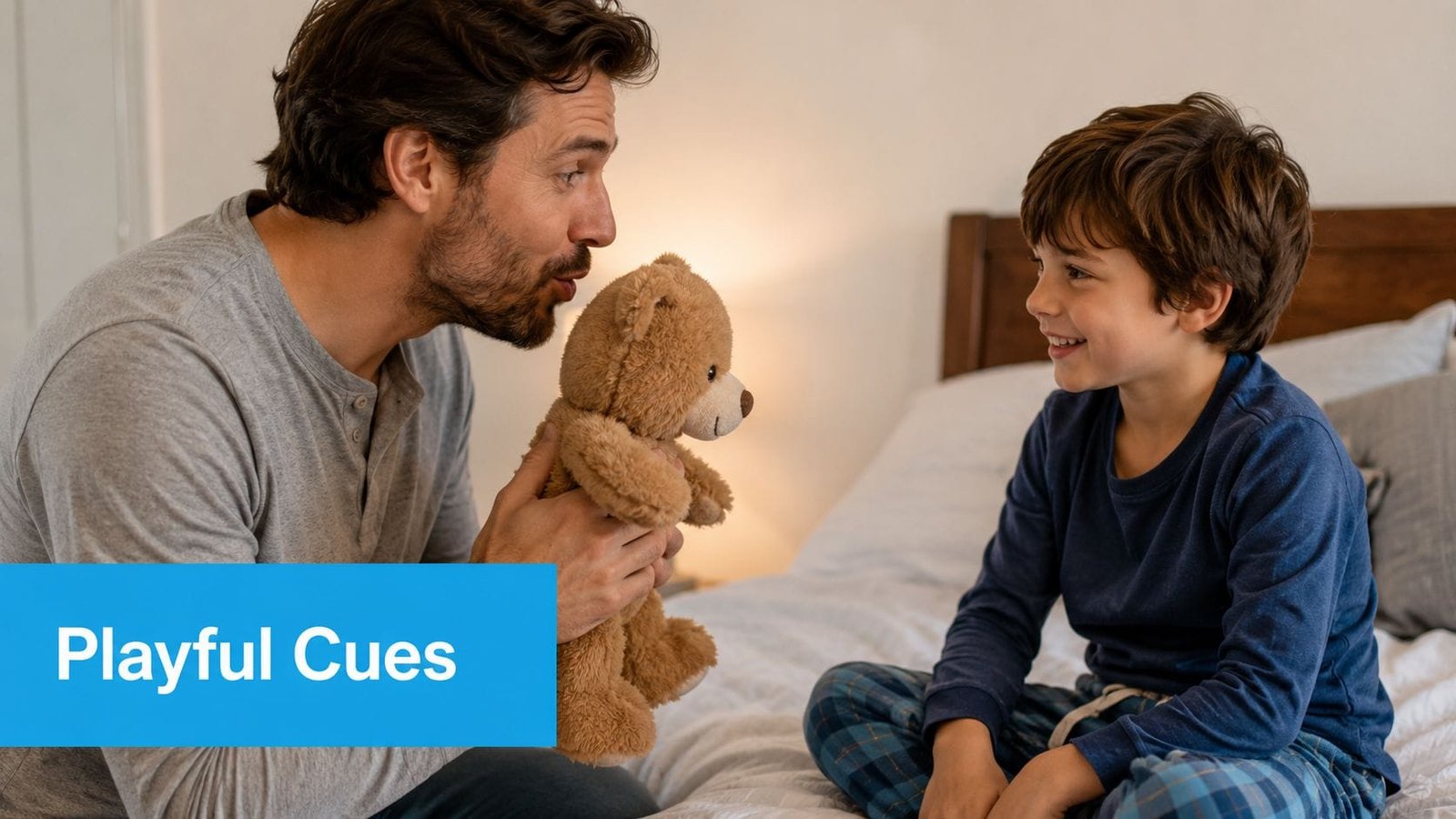
A parent might say, “The dog thinks it's bedtime,” while a stuffed animal “asks” the child to find pajamas. A family could use “the dragons are getting hungry” as a light code for preparing dinner. For a shower, a superhero story can turn the bathroom into a power-charging station. These approaches work best when they're familiar, respectful, and easy to abandon if the child finds them irritating.
Try matching the communication style to the child's interests:
- Use third-person language: “The astronaut needs a helmet before launch,” rather than “Put your hat on.”
- Build a small story: A brave knight puts on armor before an adventure.
- Use humor carefully: A lonely pillow may be waiting for company at bedtime.
- Let the child lead: If they invent the code or character, the interaction is more collaborative.
Play should never become a disguised way to force a child through distress. If the child recognizes the game as pressure, stop, acknowledge it, and offer a calmer route. Interest-led play and relationship-based approaches can provide useful context, including through DIR Floortime play therapy for emotional growth.
Record successful phrases in Guiding Growth so another caregiver can use the same language without guessing. Voice logging can capture a phrase immediately after a difficult routine, while a shared communication guide can explain what “dragons are hungry” means. The aim isn't to make every demand playful forever. It's to identify language that lowers anxiety today, then give the child more transparent control as trust develops.
3. Environmental Modification and Low-Demand Spaces
A child who melts down in the kitchen may cope better in a quiet bedroom. A student who refuses work at a crowded desk may engage on a floor cushion with headphones. Before treating avoidance as a personal behavior problem, examine what the environment is asking the nervous system to manage.
Create a low-demand space where the child can retreat without being assigned a task. Cushions, headphones, fidgets, soft lighting, and access to a preferred activity may help. Remove visual clutter, reduce unnecessary time pressure, and avoid placing a clock directly in view if countdowns increase distress. A reading corner can double as a comfortable learning space, while a visual schedule can show available options instead of presenting an inflexible chain of obligations.
South Australian education guidance recommends practical adjustments such as indirect language, positive choices, negotiation, humor or novelty, fewer transitions, retreat spaces, and demands matched to tolerance. Its school guidance also describes starting with a reduced schedule and increasing it according to tolerance. These recommendations can be adapted at home, but they shouldn't be treated as a universal template. What reduces pressure for one child may create uncertainty for another.
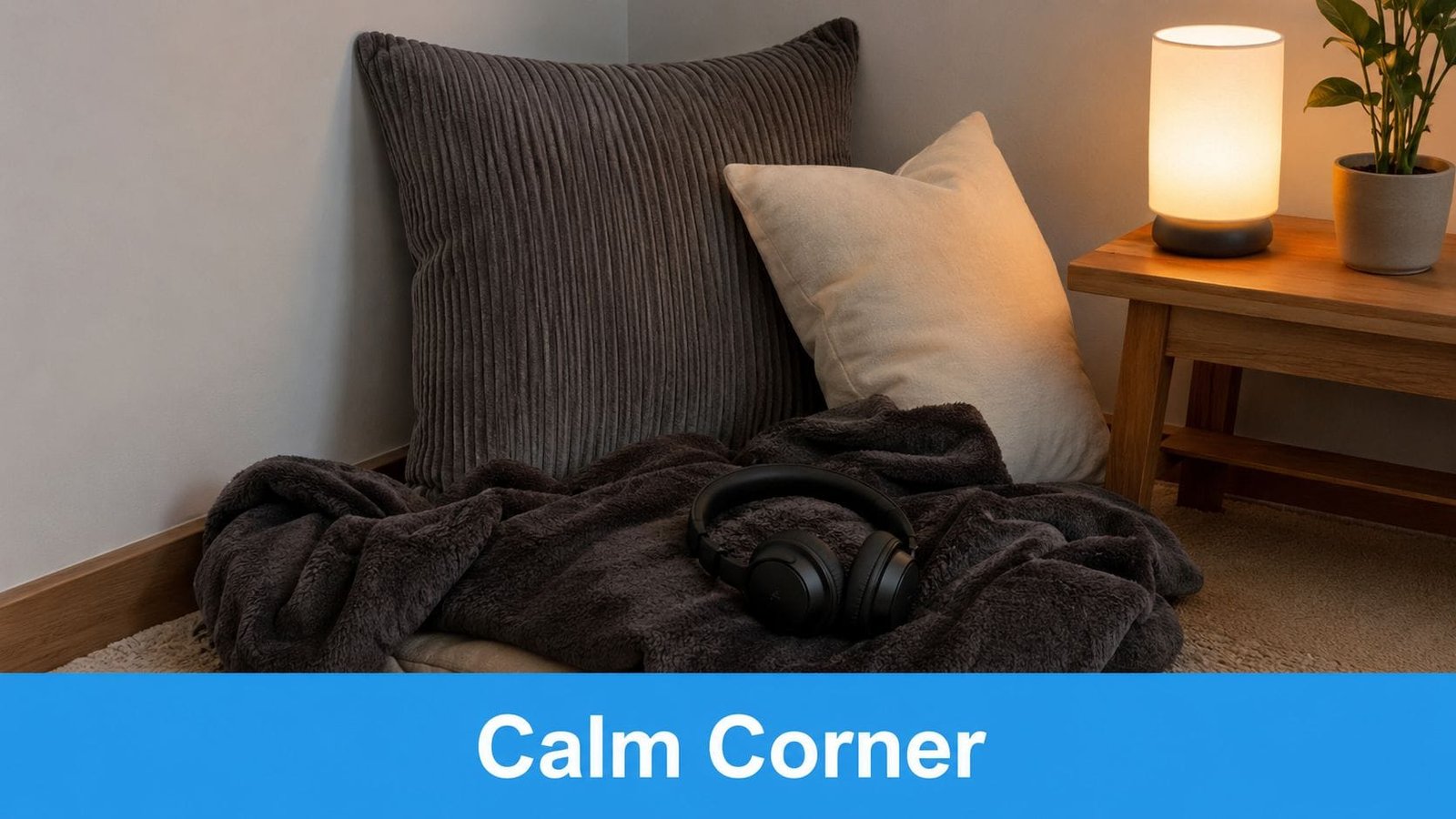
Ask the child to help design the space where possible. In Guiding Growth, log the location, sensory conditions, transition involved, and outcome. Photos or notes can help caregivers recreate a successful setup, while location-based records may reveal that the problem is concentrated around a noisy hallway or rushed bathroom routine. Families seeking broader ideas about inclusive education with Ocodile can use those principles alongside advice from the child's education team.
A quiet area shouldn't become permanent isolation. Keep checking whether it supports recovery and re-entry, or whether it unintentionally removes valued activities. Adjust the environment as sleep, sensory needs, school expectations, and stress levels change.
4. Activity Embedding and Disguised Learning Within Preferred Interests
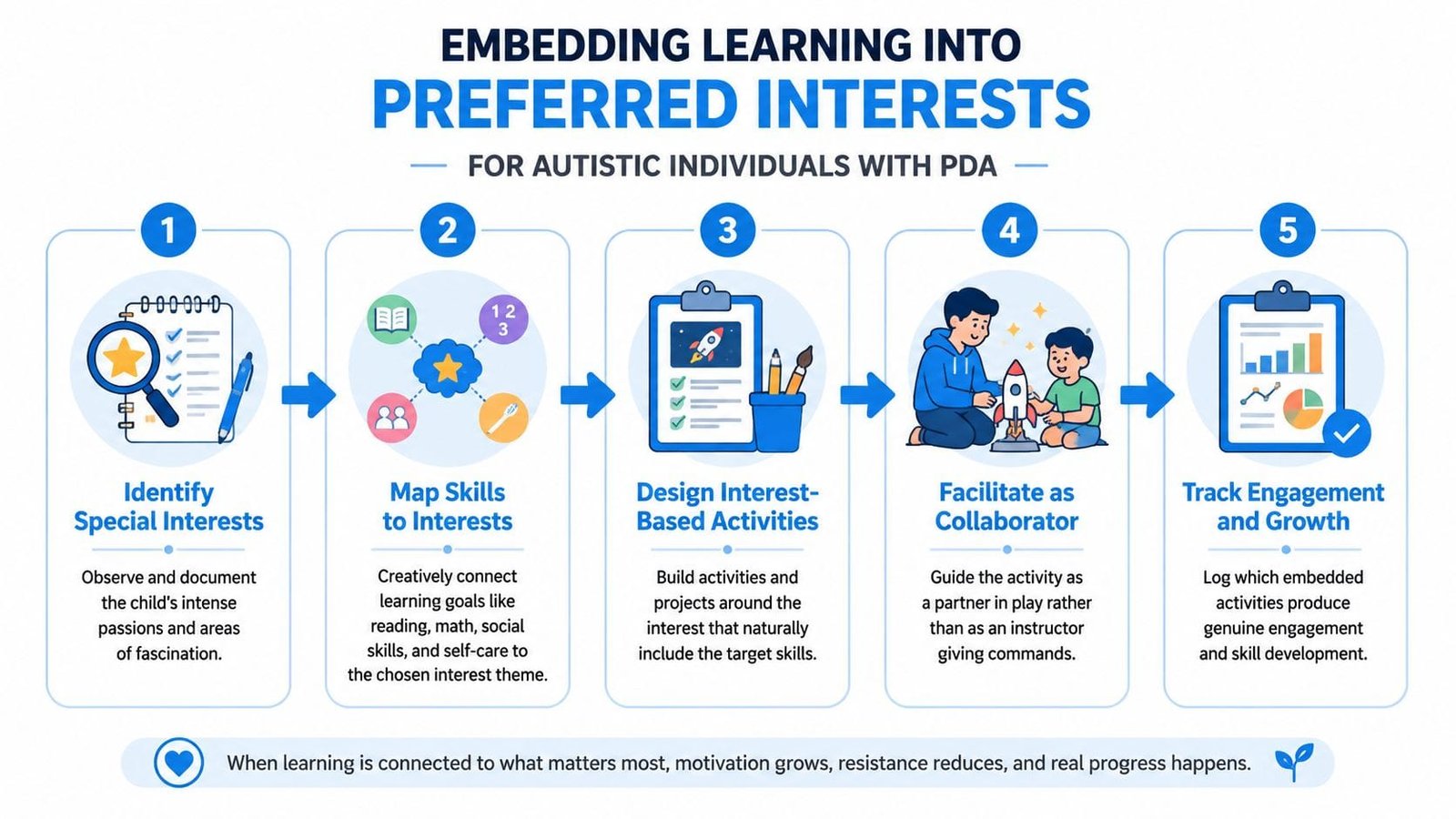
A child who rejects a worksheet may spend a long time organizing Pokémon cards. That interest isn't an obstacle to learning. It can become the route into literacy, numeracy, communication, and flexible thinking.
Embed the necessary skill inside an activity the child already values. Pokémon cards can support sorting, reading descriptions, comparing features, and negotiating trades. A train interest can lead to maps, timetables, geography, calculations, and engineering projects. A speech goal might fit into recording a podcast about a favorite subject, while fine-motor practice can happen through model building, art, or crafting.
The distinction between using an interest and taking it over matters. If every favorite activity becomes a lesson, the child may stop trusting it as a source of pleasure. Keep some interest time free from adult goals. Follow the child's lead, then add a small, relevant challenge only when the child remains regulated and engaged.
Turn motivation into a shared project
Ask, “What should this train route connect?” rather than presenting a preselected assignment. Let the child choose the topic, materials, sequence, or audience. A therapist and teacher can target the same skill through different interest-based activities, so support feels coordinated without becoming repetitive.
Guiding Growth can store special interests, engagement levels, and activities that supported participation. Record what made the session work, not just whether the child completed it. Was the activity self-chosen? Was the adult sitting nearby or directing? Did the child have an exit option? Voice notes can preserve those details while they're fresh.
This strategy supports development, but it doesn't erase every difficult demand. Children still need support with health, safety, community access, and relationships. Interests should widen opportunities, not become a condition the child must perform to earn care or attention.
5. Anxiety Recognition and Nervous System Regulation Before Behavioral Intervention
Eye-rolling, retreating, freezing, going quiet, or arguing may be early signs that a child's capacity is shrinking. At that point, adding consequences or explaining the importance of the task can push the child further from learning. Regulation comes first.
Look for each child's early signals. One child may pace and speak rapidly. Another may hide under a table, stop using speech, or become unusually rigid. A movement break, headphones, dancing, jumping, time outdoors, creative expression, or a quiet sensory activity may help the child return to a state where communication is possible. Weighted items and fidgets can be useful for some children, but they should never be forced and should be selected with attention to safety and individual preference.
“A shutdown isn't a convenient moment to teach a lesson. It's a signal to reduce stimulation and protect communication.”
A useful sequence is simple:
- Notice: Identify the first change, not only the final meltdown.
- Reduce: Remove unnecessary words, demands, noise, and audience.
- Regulate: Offer familiar movement or sensory support.
- Reconnect: Use calm, minimal language.
- Return gradually: Revisit the task only when the child has capacity.
The co-regulation techniques you use should be recorded with context. Guiding Growth can capture what happened before escalation, which support was offered, and whether the child recovered. This is more useful than a note that says only “refused school.” Share the pattern with educators and therapists, and compare whether the same early signals appear at home and in class.
The signs of dysregulation and regulation techniques can provide additional background, but professional advice is important when distress includes self-injury, unsafe movement, prolonged shutdowns, or medical concerns. Regulation isn't a reward for compliance. It's a prerequisite for safe participation.
6. Transparency, Honesty, and Advance Notice Without Pressure
Uncertainty can make an unavoidable event feel more threatening. Honest information gives the child something to process, but it must not become a countdown that increases anxiety.
For a medical appointment, you might say, “In three weeks, you have an appointment on Tuesday at 10 AM. The doctor will check your ears and heart with a stethoscope. You don't have to like it, but it's happening. What would help you feel calmer?” That statement explains what will happen without pretending the child can cancel a safety-related appointment. It also leaves room for questions, accommodations, and emotional honesty.
When plans change, name the disappointment rather than demanding acceptance. “We planned to visit the park, but heavy rain means we're staying home. I know that's disappointing. Let's choose what we'll do instead.” For a school transition, share photos, introduce the new teacher, visit the classroom, and discuss concerns well before the change. The child can receive information without being required to show enthusiasm.
Information is not the same as pressure
Some children benefit from visual supports, while others become more anxious when a schedule makes expectations feel unavoidable. Present a schedule as information and options where possible. Avoid repeated reminders that turn advance notice into an escalating demand.
Use Guiding Growth to record which transitions need more preparation, what questions the child asks, and what support reduced distress. Share this approach with school staff and other caregivers so one adult doesn't provide gentle information while another repeatedly demands reassurance or immediate acceptance. The right notice period is individual. Review outcomes rather than assuming that more warning is always better.
7. Data-Driven Pattern Recognition and Collaborative Problem-Solving
A demand avoidance log becomes useful when it captures the surrounding conditions. “Refused breakfast” tells you little. “Refused breakfast after poor sleep, while the kitchen was noisy, then ate in a quiet room” points toward a practical adjustment.
Track the request, time, setting, people present, sensory conditions, early anxiety signs, wording, choices offered, regulation support, and outcome. You don't need to record every moment. Focus on recurring pressure points and write observations without judgment.
- Morning pattern: If avoidance rises when everyone is watching the clock, remove time pressure before changing the child's expectations.
- Sensory pattern: If distress follows a particular noise, modify the space instead of relying only on coping skills.
- Adult pattern: If one communication style produces more resistance, examine wording, proximity, tone, and pace.
- Interest pattern: If preferred activities make engagement easier, embed more learning through those interests.
Behavioral data analysis can support this kind of structured reflection. Guiding Growth lets caregivers log meltdowns, shutdowns, demand avoidance, triggers, and outcomes, while shared observations can help families and professionals compare home, school, and therapy contexts. Voice logging is useful when typing would make the record less likely to happen.
Review the information at a regular team meeting, then change one variable at a time when practical. Include the child in problem-solving at an age-appropriate level. Ask, “What made mornings harder?” or “What would make this appointment feel safer?” Measure progress by reduced distress, clearer communication, recovery, and participation, not compliance alone.
No pattern is permanent. Sleep, health, sensory load, relationships, school demands, and developmental changes can alter what works. Data should keep support responsive, not turn the child into a collection of behavior scores.
7-Point Comparison of PDA Strategies
| Strategy | 🔄 Implementation complexity | ⚡ Resource / time efficiency | 📊 Expected outcomes | 💡 Ideal use cases | ⭐ Key advantages |
|---|---|---|---|---|---|
| Collaborative decision-making & minimal adult-initiated demands | 🔄 Moderate, requires mindset shift and consistent practice | ⚡ Low initially, time investment to establish patterns | 📊 Fewer avoidance incidents; increased voluntary engagement and trust | Daily routines, caregiving tasks, morning/evening transitions | ⭐ Reduces anxiety while supporting autonomy and relationship trust |
| Indirect language & playful/coded communication | 🔄 Moderate, creative skill and consistency needed | ⚡ Moderate, time to develop codes but quick in use once learned | 📊 Reduced resistance during requests and transitions | Getting dressed, bedtime, hygiene, brief transitions | ⭐ Leverages imagination to lower threat perception and preserve dignity |
| Environmental modification & low-demand spaces | 🔄 Moderate–High, planning, possible costs, ongoing adjustments | ⚡ Efficient long-term, upfront setup; low daily effort after | 📊 Lower baseline anxiety and fewer escalations across settings | Sensory overload, frequent overwhelm, classroom/home spaces | ⭐ Removes demand cues, offers safe retreat and sensory regulation |
| Activity embedding & disguised learning within interests | 🔄 High, significant planning and creative curriculum design | ⚡ Time-intensive to design but highly efficient for engagement | 📊 Strong engagement and skill development with reduced resistance | Academic/therapy goals, motivation-challenged learners | ⭐ Harnesses intrinsic motivation to make learning feel voluntary |
| Anxiety recognition & nervous system regulation first | 🔄 Moderate–High, requires observation skills and strategy matching | ⚡ Moderate, ongoing attention needed; some techniques act quickly | 📊 Prevents meltdowns, creates teachable windows, improves long-term wellbeing | Pre-escalation moments, frequent meltdowns, trauma-informed care | ⭐ Prioritizes regulation so learning/cooperation become possible |
| Transparency, honesty & advance notice without pressure | 🔄 Low–Moderate, consistent planning and clear communication | ⚡ High efficiency, low resource, needs advance scheduling | 📊 Reduced surprise-related anxiety; improved trust (may reveal resistance) | Appointments, schedule changes, school transitions | ⭐ Builds trust, supports autonomy and psychological preparation |
| Data-driven pattern recognition & collaborative problem-solving | 🔄 High, requires disciplined logging, analysis, and caregiver buy-in | ⚡ Resource-intensive upfront; yields targeted efficiency over time | 📊 Precise, individualized interventions and measurable progress | Complex or persistent avoidance across settings | ⭐ Evidence-based tailoring that reveals non-obvious triggers and solutions |
Build a Support Plan That Can Adapt
Start with one recurring pressure point, such as leaving the house, taking medication, entering school, washing, or beginning homework. Trying all seven autism PDA strategies at once makes it difficult to know what helped and can overwhelm the family. Choose a situation that matters, but don't begin with the most dangerous or complex issue without professional support.
During the first week, change the demand before judging the child's response. Rephrase “Put your shoes on” as a collaborative choice, reduce unnecessary time pressure, and offer a familiar regulation option. Tell the child what will happen without repeatedly insisting that they act immediately. If a preferred interest creates an easy bridge, use it without turning every enjoyable activity into a lesson.
Record the context and outcome in plain language. Note sleep, sensory load, setting, people present, the exact wording, early stress signals, and what helped recovery. A failed attempt is useful information. It may show that the choice came too late, the room was too loud, the task was too large, or the child needed regulation before communication.
Review the pattern with the child's support team. Home, school, and therapy plans should share the same understanding of early distress signals and the same core responses, while allowing reasonable differences between settings. If an adaptation increases stress, stop or revise it. If reducing a demand improves safety but limits participation over time, discuss how to rebuild access gradually with a qualified professional. Accommodation and skill-building shouldn't be treated as opposing camps. The right balance depends on the child's capacity, consent, health, safety, and goals.
PDA remains debated. The Ireland mixed-method study collected responses from 264 parents, 54 practitioners, 9 life partners, and 6 individuals with PDA, and emphasized flexible, informed, individualized assessment and services. A later parent-training study reported that at least 70% of participants tried all recommended accommodations, with lowering demands, novelty, and co-regulation identified as the most helpful approaches in that study's context (study details). These findings support careful adaptation, not a universal recipe.
Seek qualified clinical help when anxiety, meltdowns, shutdowns, self-injury, sleep or eating concerns, medication issues, school access, or family safety require more support. Contact emergency services when there's immediate danger. Guiding Growth can centralize routines, appointments, logs, and shared observations, while Alma AI can serve as a planning aid. Neither replaces medical advice, assessment, crisis support, or a coordinated care plan.
Guiding Growth gives families a place to log demand avoidance, meltdowns, shutdowns, triggers, routines, and outcomes, then share useful patterns with caregivers, educators, and clinicians. Use Guiding Growth to turn scattered observations into coordinated support for calmer, more collaborative daily routines.