You're in a pediatrician's office, an IEP meeting, or a therapy session, and someone asks how toilet training has been going. You remember yesterday's accident, last weekend's refusal, and the one surprising success. But can you say whether accidents happen more often after breakfast, during transitions, after a busy school day, or when constipation is affecting comfort? Exhaustion turns daily events into a blur.
A toileting data sheet gives your care team something more useful than a general impression. It turns individual bathroom trips into a record of timing, prompts, environment, body signals, and outcomes. The point isn't to create perfect paperwork. It's to find the patterns that help you make a better decision at the next opportunity.
Table of Contents
- Why Memory Fails During Toilet Training
- The Essential Columns of Your Data Sheet
- Reading Between the Lines of the Data
- From Paper Logs to Voice-First Digital Tracking
- Creating a Sustainable Daily Routine
- Troubleshooting Common Tracking Roadblocks
Why Memory Fails During Toilet Training
I've watched caregivers arrive at meetings convinced that their child is “doing better lately,” only to hesitate when asked what changed. Was the improvement linked to a new schedule? More fluids? Fewer demands before bathroom trips? A different adult giving prompts? Without a record, the answer usually becomes, “I'm not sure.”
That uncertainty doesn't reflect poor caregiving. Routine events are easy to forget, especially when the day includes meals, school communication, therapy, sibling needs, and interrupted sleep. Accidents are emotionally vivid, so they often take up more space in memory than quiet successes, brief attempts, or small changes in independence.
Practical rule: If a detail could change the plan, record it instead of trusting yourself to remember it later.
A structured log also protects families from confirmation bias. If you expect toileting to be difficult on school days, you may notice every school-day accident while overlooking the successful bathroom trip before pickup. If you believe your child refuses after snacks, you may remember the refusals and forget that the same pattern occurred after play or during a rushed transition.
Clinicians and behavior analysts have long used baseline toileting records before intervention. One widely used guideline recommends recording bowel movements daily for at least two weeks, including the exact time, location, clothing, and stool consistency, as described in this clinical guidance on bowel training. A related practitioner resource recommends a seven-day chart that separates pants from toilet outcomes and includes food and fluid intake, while broader continence guidance may ask families to continue logging for at least four days or longer.
The reason is simple. Toileting programs depend on patterns across days, not one memorable event. A record can show that a child sits successfully when the bathroom is quiet, that accidents follow long periods without a break, or that bowel movements happen at a consistent time even when urine patterns are less predictable.
Toileting also involves body awareness, communication, regulation, and context. A child who can't explain discomfort may show it through avoidance, distress, or leaving the bathroom. Understanding how interoception affects emotional regulation can help caregivers interpret those signals without treating every refusal as simple noncompliance.
For practical ideas about routines, equipment, and making the bathroom more comfortable, caregivers may also find Ocodile potty training advice useful. Use resources like that to generate options, then use your own data to decide which option fits your child.
The Essential Columns of Your Data Sheet
A calendar with wet and dry checkboxes is easy to print, but it often produces weak information. If the only question is whether pants were wet, the sheet can tell you that accidents happened without showing what came before them or what helped afterward.
A useful toileting data sheet should capture the event and enough context to support a decision. Keep the layout readable, and only include fields that someone can realistically complete during a busy day.
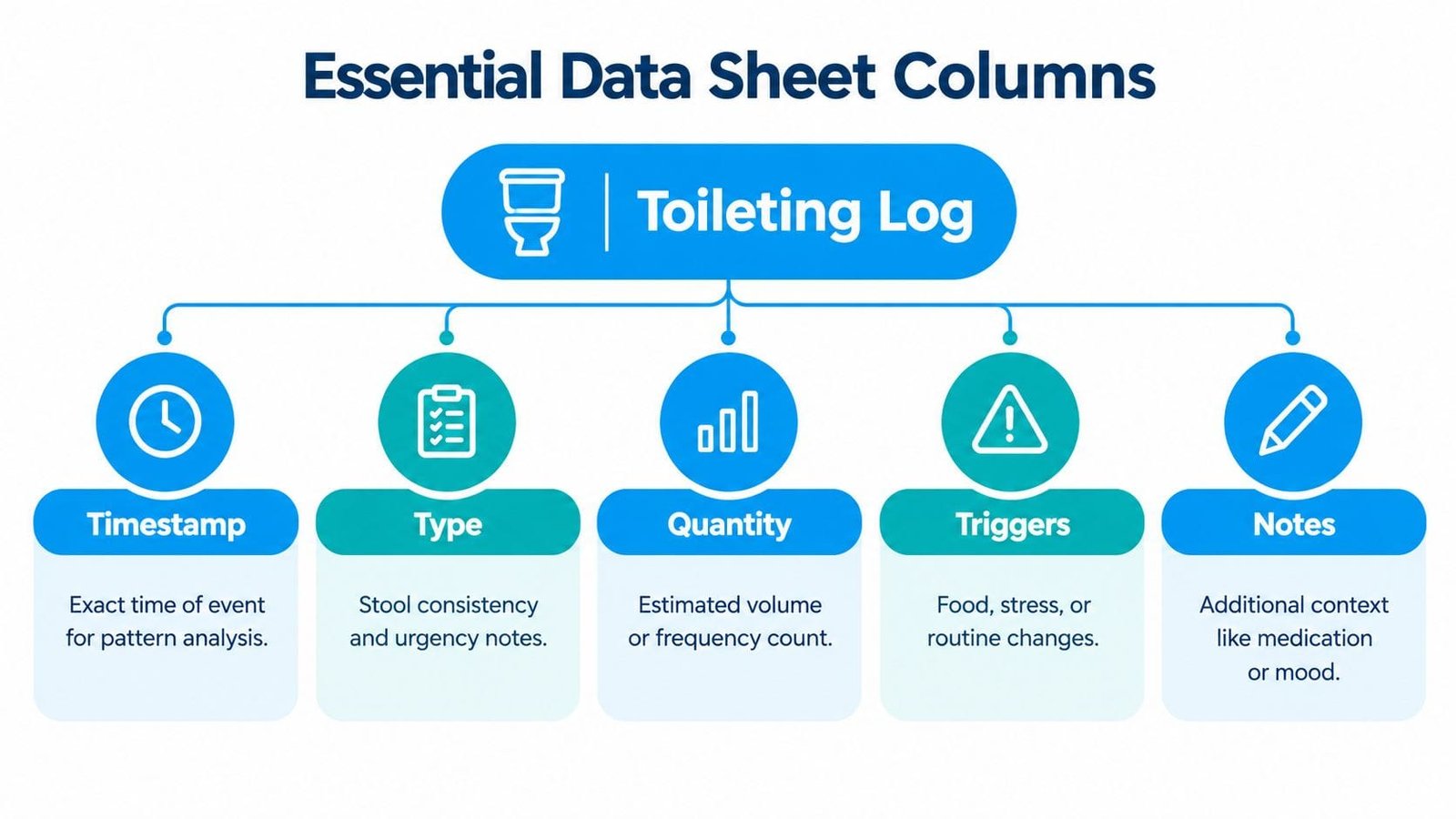
Start with the event itself
Record the date and exact time of each relevant event. “Morning accident” is less useful than a time that can be compared with breakfast, school arrival, medication, or the previous bathroom opportunity. For bowel movements, exact timing is especially important because patterns may emerge even when urine training is inconsistent.
Separate urine and stool rather than placing both under a single success box. For stool, include consistency as its own field. A child may sit on the toilet successfully but still experience pain, withholding, loose stool, or hard stool. A basic dry-and-wet chart won't make those distinctions visible.
A practical row might include:
- Time: When the bathroom trip, accident, or bowel movement occurred.
- Outcome: Toilet, pants, floor, other location, or no elimination.
- Initiation: Independent request, gesture, device, verbal request, or no initiation.
- Prompt level: No prompt, visual prompt, verbal prompt, model, or physical assistance.
- Stool details: Consistency, urgency, unusual appearance, or signs of discomfort.
- Context: Food, fluids, activity, transition, stress, mood, medication, or illness.
A rigorous toileting protocol may record each prompted sit, whether voiding occurred on the toilet or elsewhere, whether the child initiated, and whether an accident was followed by a toilet success within about one minute. In an intensive toilet-training study, researchers used event recording to calculate the percentage of urine voids that occurred in the toilet rather than relying only on accident counts (study protocol and outcome definition).
Add only the context you'll use
Food and fluid intake can help identify patterns, but don't turn every row into a full nutrition diary unless that information serves a clear purpose. Note relevant items such as a large drink, a new food, suspected dietary trigger, or unusually low fluid intake. Record activity and emotional state when they appear connected to the bathroom event, such as rushing from preferred play, fatigue, distress, or a difficult transition.
A table-format log used in a university autism toilet-training study captured date, time, accidents, successes, and comments. That combination matters because comments preserve context that a checkbox can't show (example of a table-format toileting log).
For a separate reference focused on bowel tracking, this bowel movement chart PDF guide can help you think through which stool-related observations belong on a home record. If your team needs a more structured format for behavior, skill acquisition, or caregiver implementation, you can also review ABA therapy data sheets and adapt the level of detail to the child.
Reading Between the Lines of the Data
A completed sheet is not the intervention. Its value comes from the decisions it supports.
Start by looking for clusters, not isolated failures. Ask whether accidents occur around a particular routine, location, person, activity, or physical condition. A pattern might involve refusal after a rushed transition to the bathroom, accidents during highly preferred play, or successful sits when the child receives a visual cue before leaving the activity.
The important question isn't, “How many accidents happened?” It's, “What conditions were present before the accident, and what happened after it?”
Compare conditions, not just totals
A child may have several successful toilet voids, but those successes might all occur after an adult gives a prompt. That tells you something different from independent initiation. A child may also stay dry during a calm morning but have accidents after returning from school. That points toward a possible routine, fatigue, communication, or transition issue rather than a general inability to use the toilet.
One classroom toilet-training study defined its core outcome as the percentage of urine voids that occurred in the toilet. The researchers distinguished on-toilet from off-toilet voids, calculated daily percentages by dividing in-toilet voids by total voids, and tracked independent requests made through picture exchange, speech, or a device touch (classroom study of event recording and initiation).
You don't need to reproduce a research table at home to use the same reasoning. Look separately at:
- Success with prompts: The child voids on the toilet after an adult initiates the trip.
- Independent success: The child requests, walks to the bathroom, or begins the routine without that prompt.
- Resistance: Refusal, escape, distress, or leaving the area after a bathroom cue.
- Physical context: Constipation signs, irregular stool, discomfort, hydration changes, or medication changes.
- Environmental context: Noise, public bathrooms, clothing, lighting, location, or a change in caregiver.
Choose the smallest useful question
Families are often encouraged to record densely, but ideal tracking can become impossible in a home where adults are already managing frequent interruptions. A resource on toilet-training data collection notes the gap between recommended recording and what families can realistically maintain, including the fact that some families may only manage tracking on a few days each week (practical toilet-training data collection resource).
That gap is why a pattern-focused sheet often works better than an exhaustive one. Choose one question for the next period of tracking. For example, does resistance occur mainly before transitions, or does it follow signs of bowel discomfort? Once that question is answered, change the sheet rather than continuing to collect irrelevant details.
Don't treat a disappointing pattern as a verdict. Treat it as a clue. If every accident occurs after long preferred activities, the next plan might include a predictable transition warning and a bathroom opportunity before the activity resumes. If bowel irregularity appears alongside refusal, take the record to the child's healthcare professional instead of changing diet, medication, or toileting demands on your own.
From Paper Logs to Voice-First Digital Tracking
Paper has real advantages. It's visible, inexpensive, and easy to hand to a teacher or clinician. A sheet on the refrigerator can work well when one caregiver handles most bathroom trips and the household follows a predictable routine.
Paper also creates friction. The pen disappears, the sheet gets covered by school notices, and nobody wants to complete a grid while helping a distressed child change clothes. When several adults share care, handwriting can become inconsistent, and important context may stay in text messages rather than in the record.
| Paper log | Voice-first digital log |
|---|---|
| Visible and familiar | Can be recorded without stopping to complete a form |
| Easy to use without a device | Entries can be organized after a spoken description |
| Requires manual review | Can support searchable patterns and summaries |
| Works well for a simple routine | Better suited to shared records across caregivers |
| Can be misplaced or damaged | Can be reviewed and shared from a central account |
Voice-first logging changes the moment of data entry. Instead of finding the correct column during a stressful event, a caregiver can describe what happened naturally: the child refused after leaving the tablet, sat with a verbal prompt, and had a bowel movement later with signs of discomfort. The caregiver should still review the captured entry, correct errors, and avoid treating automated organization as clinical interpretation.
For families who want to reduce data-entry fatigue, a mobile autism tracker can combine toileting-related notes with surrounding information such as meals, hydration, sleep, mood, medication, and behavior. That broader context can be useful when the bathroom pattern doesn't make sense in isolation. The app should support review and sharing, not replace a pediatrician, therapist, behavior analyst, or other qualified professional.
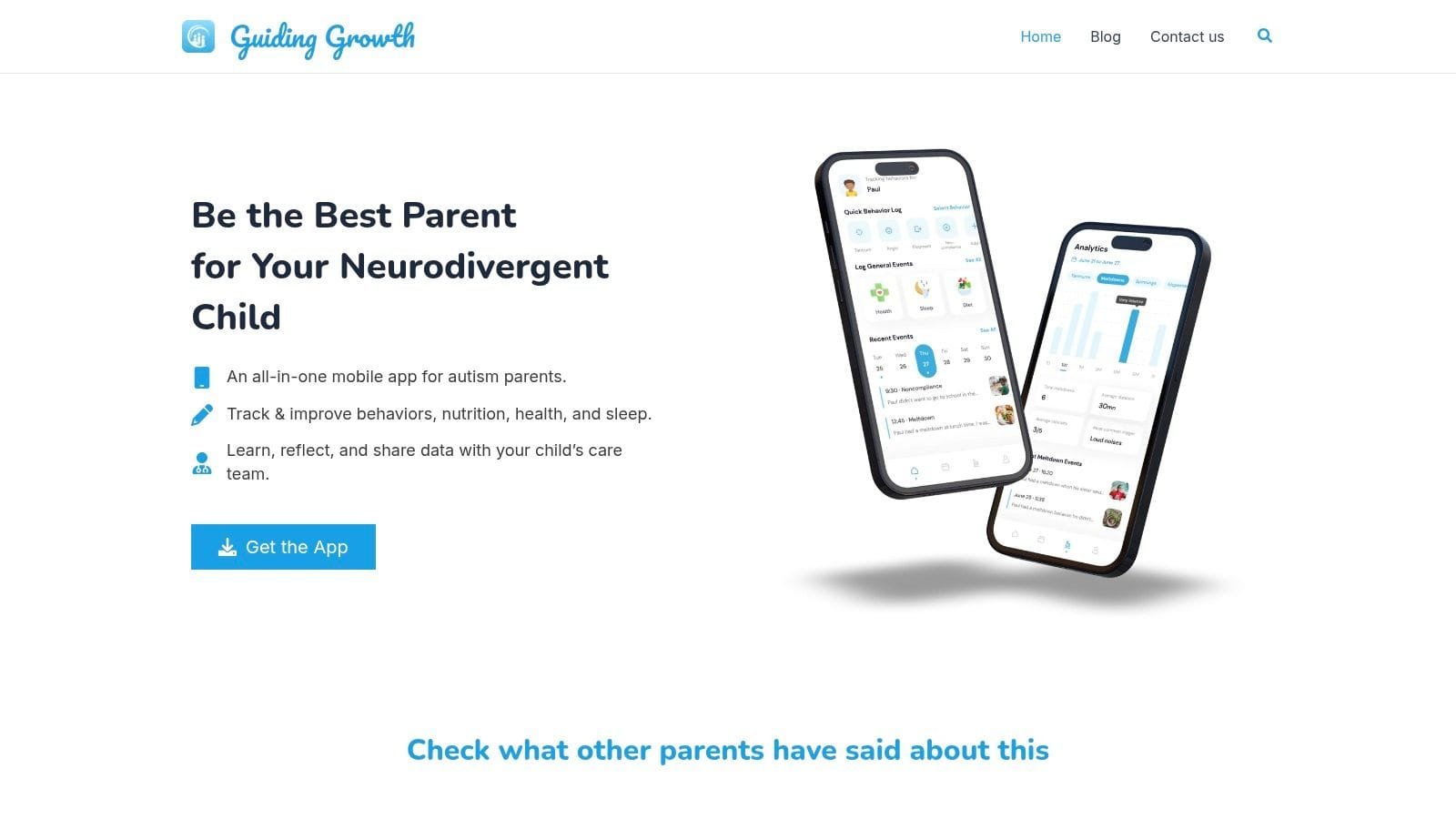
A voice recorder app can be especially practical when the caregiver's hands are occupied. Voice-first logging lets the family describe events in ordinary language, then review the organized record instead of reconstructing the day from memory. The right choice depends on privacy preferences, caregiver access, the child's setting, and whether the tool makes recording easier rather than adding another task.
Creating a Sustainable Daily Routine
The most detailed toileting data sheet is useless if nobody can maintain it. Build the record into routines that already happen instead of relying on motivation at the end of an exhausting day.
Log as close to the event as possible. After a bathroom trip, record the time, outcome, prompt level, and one relevant note. After an accident, record what happened before it and whether the child later used the toilet. If you can't write immediately, use a short neutral phrase or a voice note, then complete the entry during the next predictable pause.
Use a small review window
Meal preparation, school-bag packing, or bedtime can become a brief review point. Look for one pattern, not every possible explanation. Ask whether the next day needs a timing change, a clearer visual cue, a clothing adjustment, or a conversation with the care team.
Consistency matters more than intensity. A few consecutive days of usable information can be more helpful than a longer period of ambitious tracking with large gaps. Don't respond to missed entries by trying to recreate them from memory. Mark the gap accurately and restart with the next event.
Shared information beats separate theories.
Give every caregiver the same short set of definitions. Agree on what counts as an independent request, a verbal prompt, a successful sit, and an accident. If school staff use different labels from home, your team may mistake a documentation difference for a change in the child's skill.
A shared record also supports generalization across settings. Home caregivers can note bathroom conditions and routines, while school staff can add transitions, scheduled opportunities, and communication attempts. Review the information together and change one part of the plan at a time, unless a healthcare professional identifies an urgent medical concern.
Keep the child's dignity at the center. Record observable information without shaming language. “Left the bathroom after the prompt and cried for two minutes” gives a team something to work with. “Was difficult” doesn't.
Troubleshooting Common Tracking Roadblocks
Most families miss entries. Weekends disrupt routines, caregivers forget who logged the event, and constipation can make the record harder to interpret. A gap doesn't mean the plan failed. It means you have less information for that period.
If the sheet feels overwhelming, remove fields that nobody uses. Keep the time, location, outcome, initiation, prompt, and one context note. If bowel movements are irregular or painful, preserve those observations and share them with the child's healthcare professional. Autism toileting guidance treats bowel movement tracking as clinically important, and a toileting guidebook discusses the relevance of bowel patterns and health context beyond simple dry-and-wet counts (autism toileting guidebook).
When the data looks discouraging, check whether the sheet is measuring the wrong outcome. Fewer accidents may not yet mean more independence. A child might be successful only with intensive prompting, while another child initiates but struggles with stooling. Separate those skills so the next decision matches the actual barrier.
Constipation, expressive language delays, and low social motivation were significantly associated with toileting resistance only among children with ASD in a CDC-supported preschool study. The study reported toileting resistance in 49.1% of children with ASD, compared with 23.6% of children with developmental delay and 8.0% of the population-only comparison group (CDC-supported study of toileting resistance). Those figures don't predict what will happen for your child, but they show why structured records can help identify whether resistance is connected with communication, bowel comfort, motivation, or daily routines.
Your data is neutral information, not a judgment of your parenting. Use it to start a clearer conversation with the pediatrician, therapist, behavior analyst, or educator, especially when the record shows pain, persistent withholding, sudden change, or medical concerns.
Guiding Growth gives families a shared place to log daily events, including bowel movements, behavior, meals, sleep, mood, hydration, and medication, with voice-based entry, pattern views, and summaries that can support care meetings. Visit Guiding Growth to turn scattered notes into a more usable record for toileting decisions and the wider care plan.