You've probably bought a bin, filled it with rice, slime, and lights, and watched your child ignore it, throw it, or melt down within minutes. That's not a failed child or a failed parent. It's useful information about fit.
The sensory box ideas below work differently. Each one is a small experiment matched to one child and one situation, not a catalog item that should calm everyone. Start with the smallest setup, state your safety limits upfront, watch what happens, and change one thing at a time.
That approach follows the older idea behind sensory work. Occupational therapist A. Jean Ayres developed sensory integration theory in the 1950s and 1960s, then published Sensory Integration and Learning Disorders in 1972, defining how the brain organizes sensations so a person can use the body effectively, as explained in Ayres's biography and publication history. Her core point still applies. Match input to the child's profile, don't assume it's universally calming.
How to use this list
Pick one box. Offer it briefly when your child isn't already distressed, tired, or hungry. Note what they approach, avoid, or tolerate, and how long engagement lasts.
You'll refine faster with a few large, washable items and a clear stop plan than with a crowded bin. If something increases distress, remove it. That's a successful observation.
Table of Contents
- How to use this list
- 1. Dry Scoop-and-Pour Sensory Box
- 2. Water Play and Wash Station
- 3. Large-Texture Fabric Discovery Box
- 4. Sand Construction Sensory Box
- 5. Playdough Press-and-Shape Box
- 6. Nature Exploration Sensory Box
- 7. Quiet Choice and Comfort Box
- 8. Favorite-Interest Discovery and Sorting Box
- Sensory Box Options at a Glance
- Build One Box, Watch What Happens, Then Adjust
1. Dry Scoop-and-Pour Sensory Box
Set a shallow tray on a washable mat with a small amount of large rolled oats, a measuring cup, and two bowls. Begin with this minimum setup, then offer a scoop or spoon so your child can join in without touching the oats directly. Keep the tray within reach and supervise closely.
Scoop, pour, and transfer the oats between bowls. Some children enjoy a predictable dry texture; others avoid its feel, sound, or mess on their skin. Start with tools if direct touch seems stressful, and let your child choose whether to touch the oats.
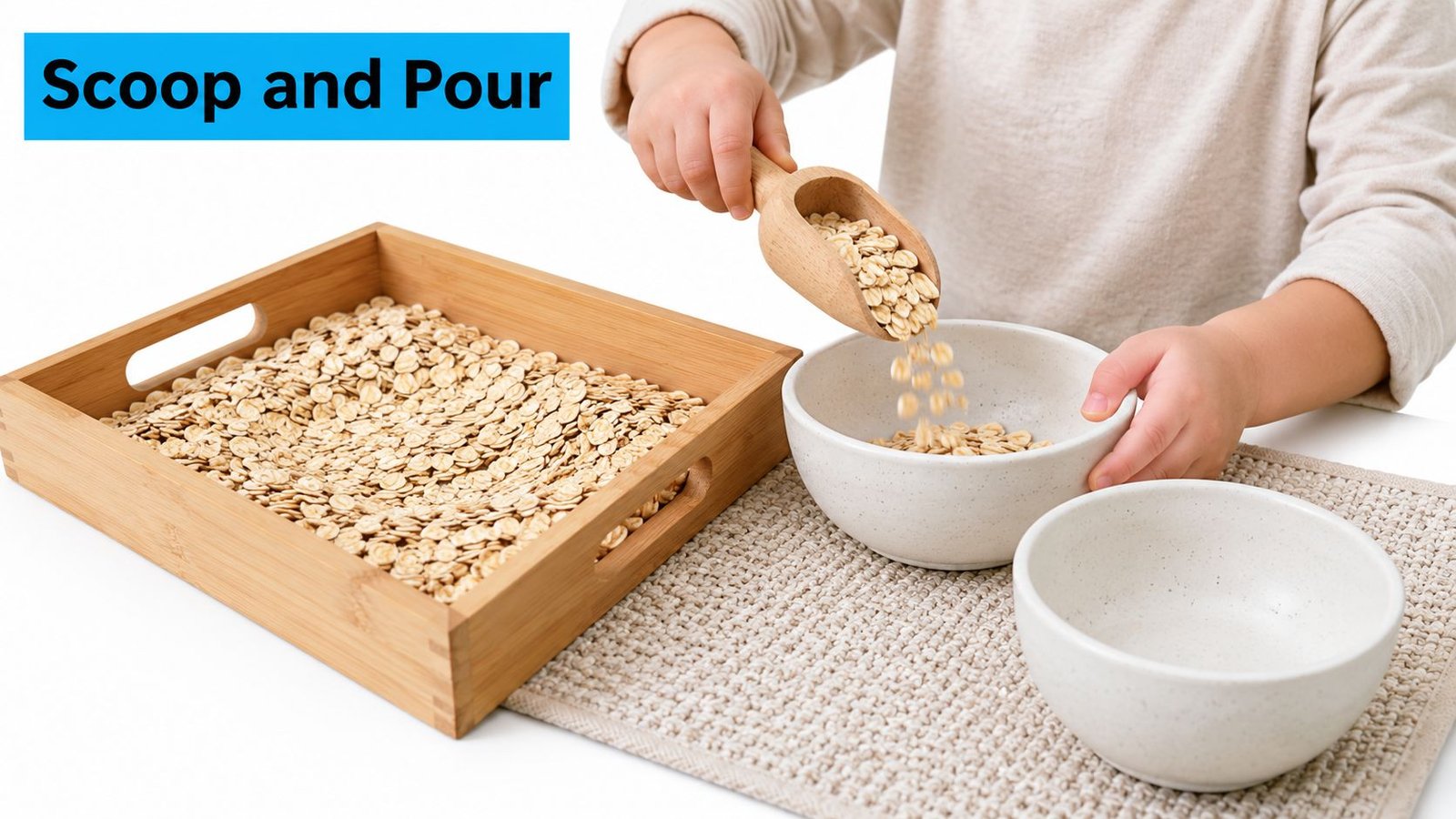
Start without requiring touch
Keep safety limits clear before play. Stay within arm's reach throughout, especially if your child mouths objects or cannot yet follow safety directions. In those cases, skip loose oats or rice. Keep the filler plain, and remove dusty materials and small objects that could be swallowed. Dried kidney beans are also unsuitable as loose filler because swallowing raw or dried beans can be harmful.
- Choose a tool: A spoon or scoop gives your child a way to participate without direct contact.
- Keep the filler clean: Discard oats that have been mouthed, sneezed on, or mixed with dirt.
- Change one variable at a time: If you later try another dry texture or tool, keep the rest of the setup steady.
Offer a brief session and log the material, tool, duration, and response. Repeat the same setup over several sessions, then compare what your child approaches, avoids, or tolerates. Oats accepted with a cup but refused by hand point to a specific preference. Use that observation to tailor the next setup, not to push for contact. The occupational therapy guidance on tactile, proprioceptive, and vestibular play offers broader context for observing how children respond to sensory input.
2. Water Play and Wash Station
Water changes everything. Temperature, splashing, sound, and wet sleeves can make this sensory box idea regulating for one child and miserable for another. Start plain and small so you can see which variable matters.
Create a vehicle wash with one large toy car, a sponge, a shallow basin of plain water, and a towel for drying. The familiar wash, rinse, dry sequence gives structure without turning play into a hygiene lesson.
Safety comes before creativity
Stay within arm's reach the entire time. Use a stable basin on a nonslip surface, keep towels nearby for wet floors, and empty the container immediately after play ends.
- Use plain water first: Skip fragrance, dyes, and bubbles until you know plain water is tolerated.
- Avoid electrical toys and hot water: Battery toys and warm water add risk without adding value.
- Offer distance tools: A long handled brush or pouring cup lets your child participate without wet hands.
Practical rule: If your child wants the dry towel more than the water, the towel is the activity. Follow that preference instead of redirecting back to splashing.
Note what you observe. Does cool water work but tepid water doesn't. Does pouring hold attention while washing doesn't. Those details help you rebuild the setup next time instead of guessing.
3. Large-Texture Fabric Discovery Box
For children who dislike mess, fabric is often the easiest entry point. Put three large fabric squares in a basket, for example smooth cotton, fleece, and a textured washcloth. Add two containers so your child can sort textures into like and not for me piles.
Sorting can happen with speech, gestures, pointing, or moving a piece away. Refusal counts as communication. You don't need a verbal label to learn from the response.
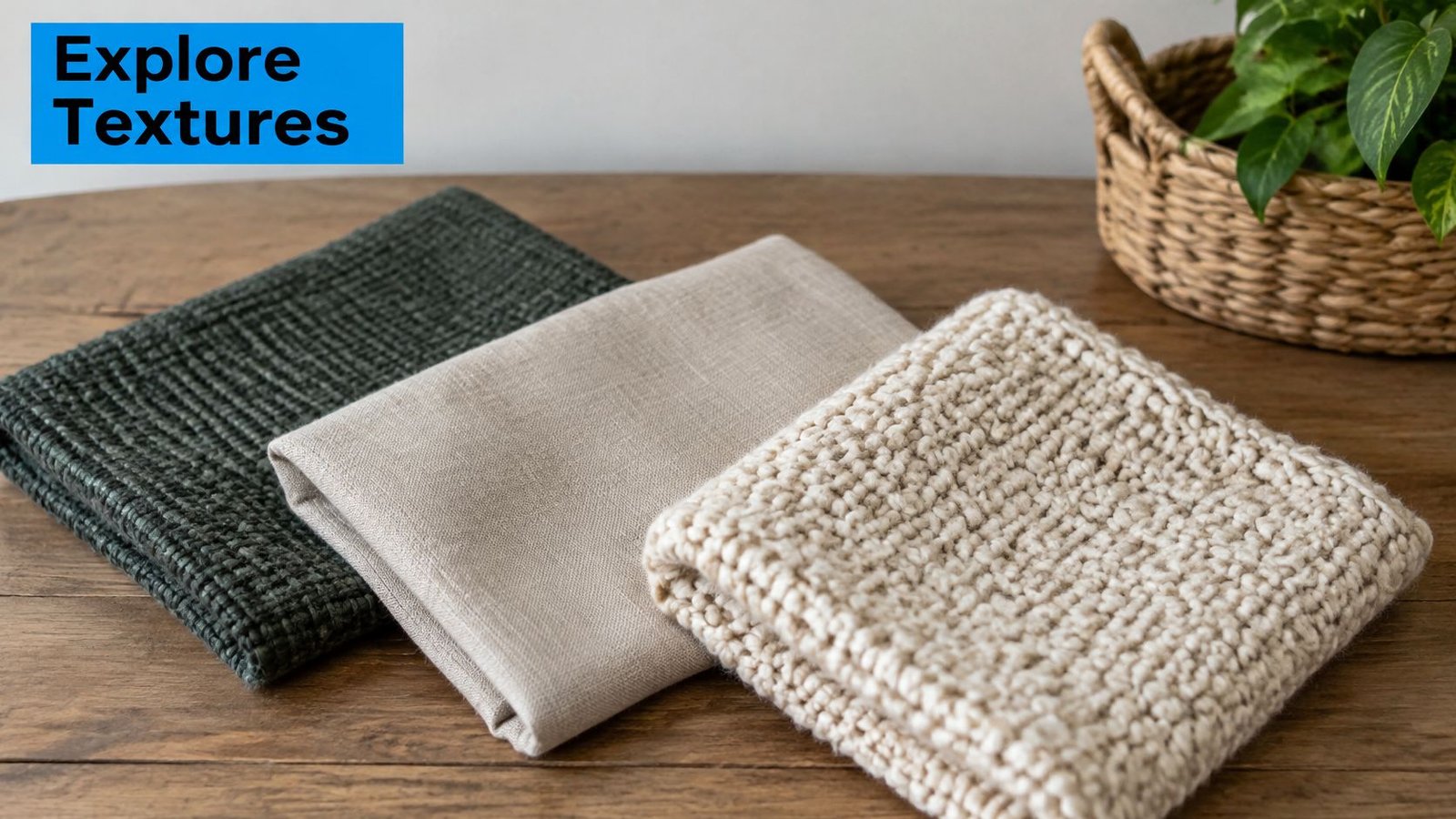
Build it safely and learn from it
Choose large, intact, washable pieces without cords, detachable trim, buttons, or shedding fibers. Wash them with a product your child already tolerates, inspect them regularly, and keep fabric away from the face and neck, particularly for younger children.
Fabric preferences often connect to daily life. A child who rejects a rough washcloth here may be telling you why certain clothing or towels cause trouble, which is why it's worth understanding how touch sensitivity shows up in everyday routines. Small details matter too, including differences in fleece softness and warmth, since two pieces both labeled fleece can feel quite different.
Never rub a disliked texture on your child's skin to build tolerance. Offer, wait, and respect a no. Log which textures get approached repeatedly and which get pushed aside immediately. Over several sessions, that pattern is a practical guide for bedding, clothing, and dressing choices.
4. Sand Construction Sensory Box
Sand behaves differently from oats or water. It holds shape, resists pressure, and collapses in a predictable way. That makes pressing, flattening, digging, and molding satisfying for children who like resistance and clear cause and effect.
Set up a small building site with commercially made moldable sensory sand, a broad scoop, and large block shaped molds. Skip miniature construction accessories. They're harder to grip, easier to mouth, and add clutter without improving play.
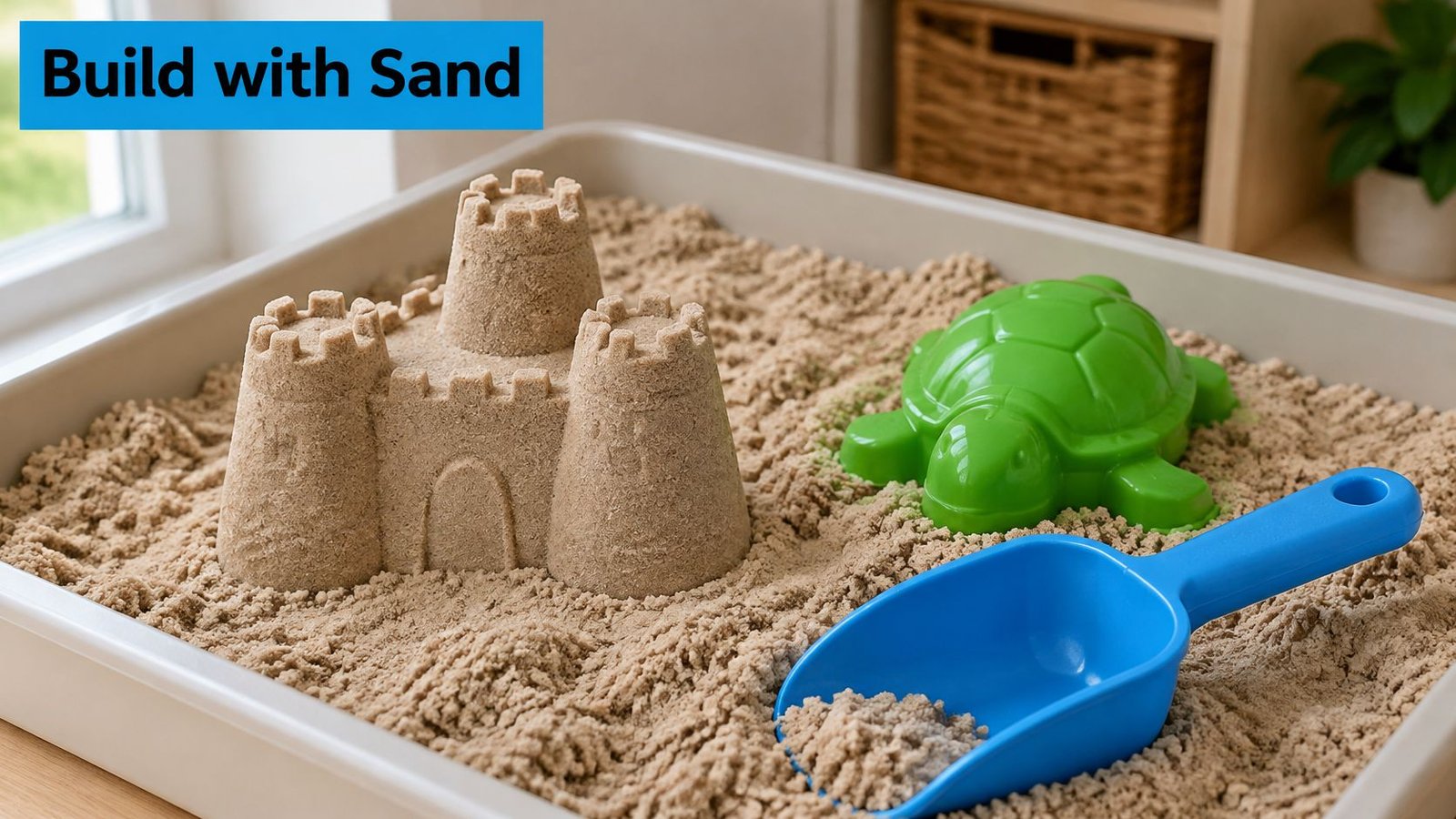
Products are not interchangeable
Use sand specifically labeled for children's play and follow the product's age and safety instructions. Check ingredient and allergen information for each brand, because formulas vary and you shouldn't assume all sensory sand is the same.
- Offer tools first: A scoop or mold lets a hesitant child test the material without bare hand contact.
- Keep sand out of the air: No blowing, throwing, or adding dusty materials to the box.
- Wash hands afterward: Do this every time, even when play stayed tidy.
Some children prefer dry play sand, others prefer the moldable kind that holds together, and some dislike both because of grit under nails or on palms. Try one type per session so your notes stay clear. If cleanup stress outweighs engagement in your home, this box isn't worth keeping in rotation.
5. Playdough Press-and-Shape Box
Give your child a palm sized piece of unscented playdough and one wide roller. That's enough. They can squash, roll, poke, flatten, or make impressions without needing to produce letters, animals, or recognizable models.
Squeezing and rolling give tactile input plus resistance through the hands. Some children find that very satisfying. Others hate the smell, stickiness, or residue, and that's a reason to stop, not to coach through it.
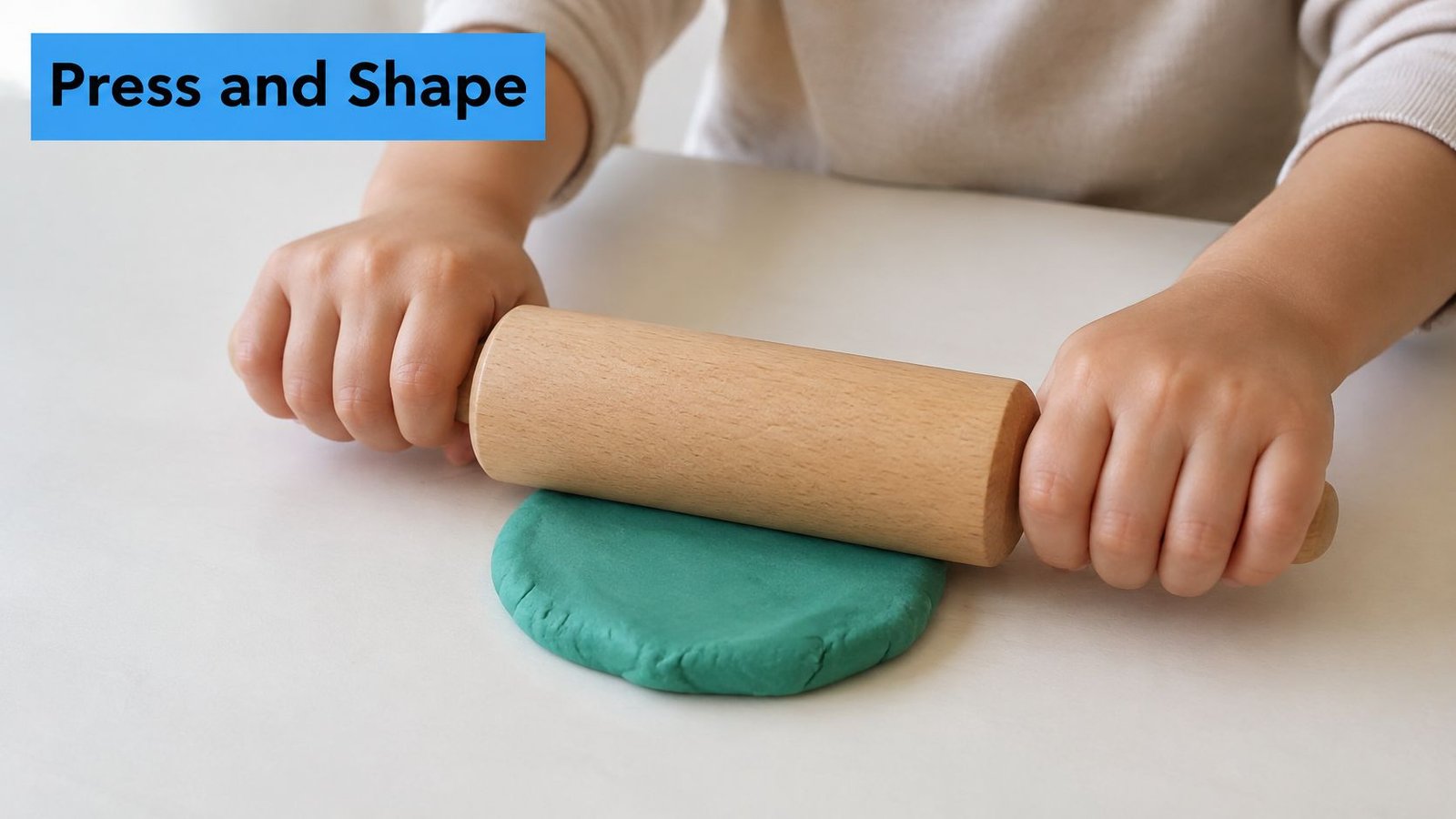
Keep tools large and ingredients checked
Check ingredients before use, and switch to an appropriate verified alternative when allergies require it. Avoid raw flour recipes, and never describe homemade dough as safe to eat, even if it's made in your kitchen.
- Choose large, blunt tools: Wide rollers and chunky cutters work well, similar in spirit to the large shapes people use in horse cookie decorating tips.
- Skip tiny decorations: No toothpicks, beads, googly eyes, or small stamps for children who mouth objects.
- Watch for fatigue: Stop if hands tire, posture collapses, or frustration rises.
Don't use hand over hand help unless your child welcomes it. Forced participation teaches you nothing about preference. Note whether your child prefers pressing with tools, squeezing with a full fist, or flattening with a roller. That distinction helps you choose future resistance based activities.
6. Nature Exploration Sensory Box
Natural does not automatically mean safe. That's the trade off with this box, and it's manageable if you select carefully. Offer a few clean, intact leaves and large smooth stones in a shallow tray for arranging, stacking, or sorting by texture and weight.
Contrasting surfaces invite close observation. A smooth stone, a veined leaf, and a sturdy piece of bark each demand different grip and attention, without any filler to sweep up afterward.
Selection rules for outdoor materials
Use only positively identified, nontoxic materials from areas free of pesticide contamination and animal waste. When you can't identify something with confidence, leave it outside.
- Avoid the risky list: No mushrooms, berries, thorns, splintering wood, or unknown plants, ever.
- Size matters: Choose objects too large to fit in your child's mouth and supervise closely throughout.
- Wash hands afterward: Treat this as nonnegotiable, even for items that look clean.
For children who mouth objects, substitute large washable nature themed toys or printed pictures instead. You keep the visual and sorting interest without ingestion risk.
Time outdoors and contact with natural materials connect to broader learning too, as explored in how nature supports learning for autistic kids. Log which materials hold attention. A preference for heavy, cool stones over light, papery leaves is a real sensory data point you can use elsewhere.
7. Quiet Choice and Comfort Box
This one isn't a filler bin. It's a small container with a few individually chosen supports, placed near a quiet space where your child can reach it independently. Think a familiar soft item, one sturdy fidget, a simple visual break card, or appropriately fitted hearing protection.
The purpose is access, not quiet compliance. This box shouldn't suppress harmless stimming or require your child to calm down on your timeline. Sometimes a child needs less stimulation or more space rather than another object, and leaving them alone is the right support.
Introduce it before it's needed
Present the box when your child is comfortable, explore items together briefly, and put it in its spot. First offering unfamiliar items during distress usually fails, because novelty adds demand at the worst moment.
- Inspect every item: Remove anything damaged, leaking, or shedding filling, and avoid water beads, accessible magnets, and unsecured batteries.
- Never make access conditional: Don't require compliance to earn the box or remove needed supports as punishment.
- Use hearing protection wisely: It should reduce overload while preserving awareness of important safety sounds.
A single smooth object can belong here if your child prefers it, and families sometimes browse palm stones in unakite for that kind of handheld weight. Whatever you choose, context matters, as discussed in how sensory tools can help during meltdowns. Log when your child seeks the box independently. Self-initiated use is the outcome that matters most.
8. Favorite-Interest Discovery and Sorting Box
Start with what your child already loves. For a child interested in vehicles, offer several large washable vehicles, fabric pieces as roads, and two parking containers. Lining up, sorting, driving, spinning wheels, or examining one vehicle closely all count as engagement.
This box can stay filler free, which reduces mess and ingestion risk while keeping the sensory elements in the objects themselves. Weight, texture, sound, and movement are already there.
Protect predictability while you play
Interests provide an inviting entry point, but they can also be emotionally important. Ask before hiding, burying, or rearranging favorite objects, especially if predictability matters to your child. A surprise that delights one child can distress another.
- Start with few items: Add complexity only if your child appears interested and comfortable.
- Make stopping easy: Provide a clear way to end and a predictable cleanup routine your child knows in advance.
- Keep sorting optional: Naming, categorizing, and pretend play are invitations, not requirements.
Use close supervision across every box, avoid water beads entirely, and seek individualized advice when swallowing risks, allergies, or significant distress affect play.
Track which interest based setups sustain attention longest and which versions cause friction. If fabric roads work but hiding vehicles in oats doesn't, you've learned that the interest is welcome and the filler isn't.
Sensory Box Options at a Glance
| Item | Main Sensory Input | Filler or Material | Ingestion Risk | Key Caution |
|---|---|---|---|---|
| Dry Scoop-and-Pour Sensory Box | Tactile, gentle sounds, hand-eye coordination | Rolled oats, uncooked rice, scoop, containers | Small fillers can be harmful if mouthed or inserted into the nose or ears | Supervise closely; consider allergies and keep materials clean and dry |
| Water Play and Wash Station | Tactile, visual cause and effect | Shallow water, sponge, large washable toys | Avoid access to water if the child may drink it or mouth toys | Continuous close supervision; empty water after play |
| Large-Texture Fabric Discovery Box | Contrasting tactile textures | Large fabric pieces, such as cotton, fleece, or satin | Low with intact large pieces; loose threads or decorations may be hazardous | Inspect for fraying, loose parts, and irritating residue |
| Sand Construction Sensory Box | Tactile resistance from pressing, digging, and molding | Children's play sand or moldable sensory sand | Unsafe for children who eat or frequently mouth play materials | Check product ingredients; avoid dusty sand and protect eyes and airways |
| Playdough Press-and-Shape Box | Tactile pressure and resistance | Playdough, large roller or stamps | Swallowing can be harmful; dough may contain allergens or high salt | Check ingredients, avoid raw-flour recipes, and use large blunt tools |
| Nature Exploration Sensory Box | Varied tactile and visual input | Large smooth stones, intact leaves, sturdy bark | Small natural items may cause choking or poisoning | Avoid unknown, toxic, sharp, or contaminated materials |
| Quiet Choice and Comfort Box | Individual comfort, tactile or auditory support | Selected comfort item, robust fidget, visual card, hearing protection | Fidgets may contain hazardous small parts, magnets, batteries, or liquid | Inspect items and do not use the box to replace environmental support |
| Favorite-Interest Discovery and Sorting Box | Interest-led visual and tactile exploration | Large themed objects; optional fabric pieces | Miniature accessories may cause choking | Start with a few large items and keep sorting or pretend play optional |
Build One Box, Watch What Happens, Then Adjust
Sensory differences are common enough that personalization isn't optional. A clinical review hosted by the U.S. National Library of Medicine reports prevalence estimates of approximately 90% to 95% for difficulty processing sensory information among autistic people, as summarized in a clinical review of sensory processing in autism. Those numbers cover many sensory systems. They don't tell you what your child will like, which is exactly why observation matters more than shopping.
Population data points the same way. In a U.S. monitoring analysis of 25,627 autistic children, documented sensory features appeared in 74.0%, according to Autism and Developmental Disabilities Monitoring Network data. A child may be sensory seeking, sensory avoidant, under responsive, or a mix across senses. The same item can regulate one child and overwhelm another, and sensory features connect to participation at home and in the community, as discussed in research on sensory features and participation.
Structure sessions so you can compare them
Evidence supports repeatable sessions over vague open ended play. A review of sensory based interventions reported sessions occurring two to seven times weekly, lasting approximately 15 to 60 minutes, as summarized in a review of sensory based intervention dosing. You don't need that intensity at home. Borrow the structure instead, with a simple card naming the material, intended duration, intensity, and stop criteria.
A 2025 systematic review found moderate strength evidence that interventions targeting multiple sensory systems can be more effective than single modality approaches, with strong evidence for deep pressure tactile input and caregiver training, as reported in a 2025 systematic review of sensory interventions. Caregiver training matters because you are the one selecting, supervising, and interpreting responses.
Safety checks you repeat every time
Small loose items need explicit controls. The U.S. Consumer Product Safety Commission defines a small part as an object fitting completely inside its small parts cylinder for children under 3, as explained in CPSC small parts and choking hazard guidance. Official guidance also lists magnets, coins, marbles, small balls, small batteries, and latex balloon pieces as hazards, as detailed in official choking hazard guidance for young children.
Inspect contents before every use. Check sensory processing demands against daily routines too, since difficulties affect feeding, dressing, and bathing, as described in research on sensory processing and daily activities. Fewer, well chosen items usually beat an expensive haul.
Build one box this week. Log baseline state, item chosen, duration, behavior, and recovery across several sessions in Guiding Growth, then review patterns with your child's therapist or teacher. Small, honest records beat memory every time.
Use Guiding Growth to log each sensory session by voice in about a minute, track which materials your child approaches or avoids over time, and turn those patterns into a clear summary for therapy, school, or doctor visits. Visit Guiding Growth to start recording what works for your child, one box at a time.