The meeting notice is on your fridge, the draft IEP landed in your inbox last night, and you're trying to remember whether transitions got easier in March or whether that was just one good week. You're not short on observations. You're short on a record the team can check, time to review documents properly, and wording for the questions you know matter.
Good IEP meeting preparation fixes those conditions before you enter the room. You request documents early, turn scattered notes into measurable evidence, write a summary people can read, and plan how you'll hear, understand, and follow up. A question list helps, but it's the last step, not the whole job.
Table of Contents
- Documents to Gather and When to Request Them
- Set Up Your Workspace Before the Next Meeting
- Turn Scattered Notes Into Measurable Evidence
- Questions and Goal Language to Bring to the Table
- Build a Summary the Team Can Read Before the Meeting
- Communication Access and Staying Steady in the Room
- Follow Up on Decisions, Owners and Review Dates
Documents to Gather and When to Request Them
Start this week with the meeting notice. Under the Individuals with Disabilities Education Act, schools must take steps to ensure one or both parents are present at each IEP Team meeting or have a meaningful opportunity to participate, and Arizona Department of Education guidance on meeting notices reflects that notices must arrive early enough for parents to attend and state the purpose, time, location, and expected participants. The share of U.S. public-school students served under IDEA rose from 8.3% in the 1976–77 school year to more than 15% in 2022–23, so you're participating in a large, formal decision process, not an informal chat. If the time or place wasn't mutually agreed, say so in writing and propose alternatives.
Next, request the draft IEP at least five working days before the meeting. That's the window that makes real review possible. Ask for a complete draft, including present levels, goals, services, accommodations, and modifications, not a goals-only excerpt the night before.
Work Through the Checklist Row by Row
| Document | Request by | What to check | Label after review |
|---|---|---|---|
| Meeting notice | As soon as it arrives, with time to attend | Purpose, time, location and expected attendees | Supported or unclear |
| Draft IEP | At least five working days before the meeting | Present levels, goals, services, accommodations, modifications | Supported, unclear or request for revision |
| Evaluation reports | Before the draft review | Results that match the concerns you raised | Supported or unclear |
| Progress reports | Before the meeting, for each reporting period | Measure used, baseline, reporting frequency | Request for revision if missing |
| Goal data-collection definitions | Together with the draft IEP | Operational definition for each goal | Unclear until defined |
| Your own dated records | Start early and keep adding | Examples, work samples, attendance, therapy notes | Supported by evidence |
| Proposed participant list | With the meeting notice | Who attends and who can make decisions | Supported or unclear |
Label every section as you read. Use three labels only: supported, unclear, or request for revision. That discipline stops you from highlighting everything and prioritizing nothing. If a present level claims progress, check whether an evaluation or progress report supports it.
When the Draft Arrives Late or Incomplete
Don't walk in cold and hope you'll catch up in the room. Note what's missing in writing, name the specific section, and ask for it before the meeting. If your child receives outside therapy and cost affects what data you can bring, practical help accessing affordable ABA therapy can point you toward options for keeping those services and records going.
Practical rule: If you can't point to the document that supports a draft claim, label it unclear and ask where the support lives.
Finish with your own file. Gather dated examples, work samples, attendance notes, and therapy notes, then name the three priorities you want resolved. Document review that doesn't feed an agenda just sits in a folder. Yours should end with three sentences you could read aloud in the first five minutes.
Set Up Your Workspace Before the Next Meeting
Set up once, between meetings, and IEP meeting preparation gets much cheaper in time. Create a profile for your child in Guiding Growth and add what you already track. The app lets you manage medications, doctor appointments, and therapy sessions in one place, so the record doesn't live across texts, portals, and paper calendars.
Log behavior each day with the basics that make an entry usable later. Record the trigger, intensity, duration, and location, plus what happened before and after. A bare note that the afternoon was hard won't help you in three months.
Log Repetitive Behavior the Same Way
- Name the behavior: Behavior Tracking also keeps a log of echolalia, hand flapping, and other stimming behaviors, along with their triggers and outcomes.
- Add context: Note who was present, what task was underway, and what support was offered.
- Record the outcome: Write what happened next, including whether the behavior settled, escalated, or repeated.
On tired days, use voice logging instead of forms. Describe the day in your own words, review the entries it creates, correct anything that's off, and save. A quick, imperfect entry you make beats a detailed system you abandon by Thursday.
Add Collaborators With the Right Permission
The Collaboration feature lets you share information in real time with family members, caregivers, and medical professionals. Add people one at a time and match permission to role. A co-parent or grandparent may only need view access. A therapist adding session notes needs permission to add events. Only the person maintaining your child's record should hold manage-profile rights.
Everyone then works from the same timeline instead of comparing memories. Set a reminder for your review date after each meeting so evidence keeps building between meetings. Guiding Growth is available on iOS and Android at guidinggrowth.app. It doesn't give medical advice, so bring patterns you notice to the care team and the school for interpretation.
Turn Scattered Notes Into Measurable Evidence
A note says behavior got better. Evidence lets another person check whether that's true. That difference decides whether your concern shapes a goal or gets politely acknowledged and dropped.
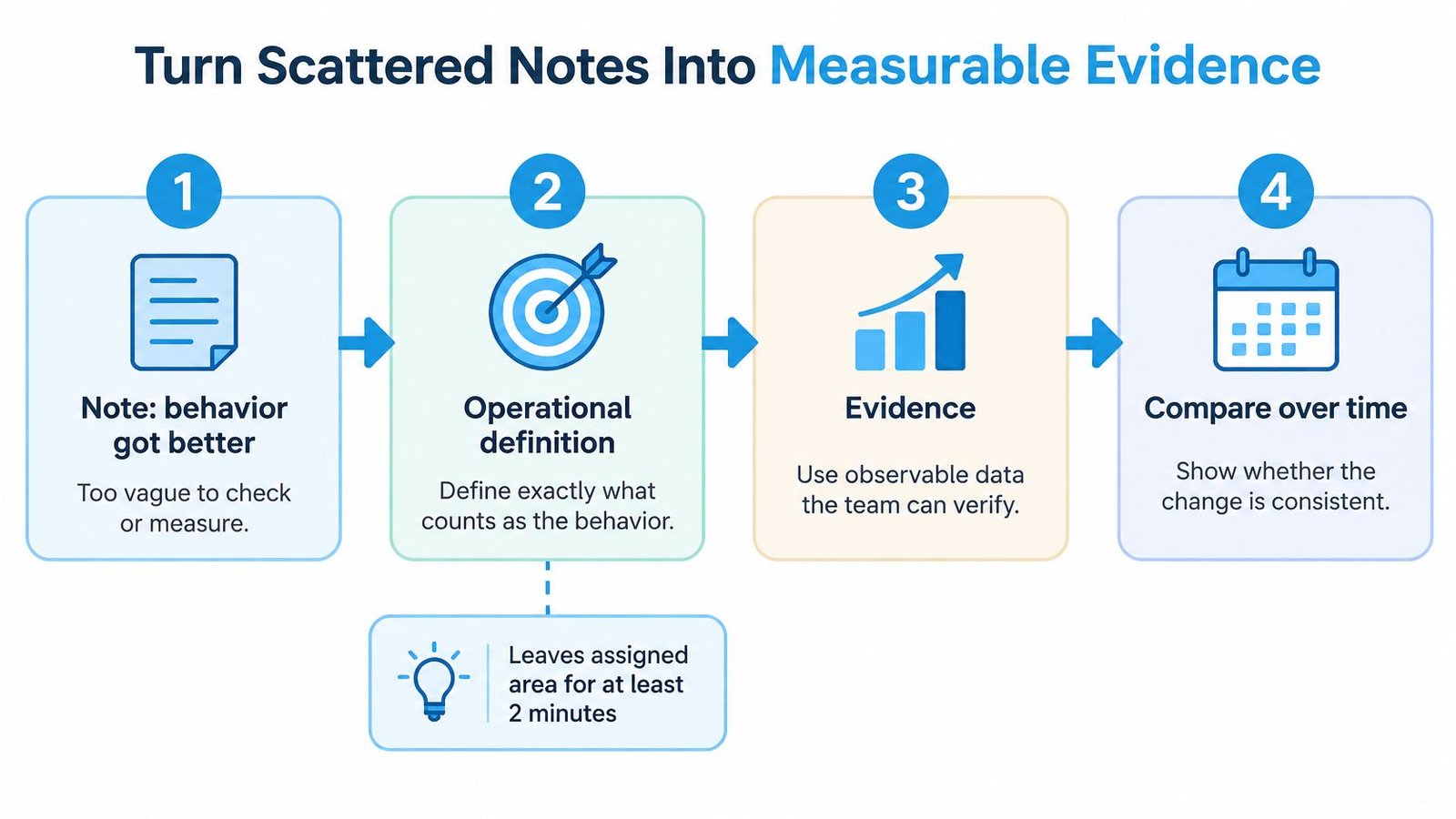
Under IDEA, the IEP must address present academic and functional performance and the disability's effect on involvement and progress in the general curriculum, and federal IDEA guidance for parents and families sits behind a workflow where a compliant annual goal specifies the observable behavior, conditions, mastery criterion, and number of successful demonstrations. Texas guidance adds that measurement should yield the same conclusion when different people measure it. If two adults would count differently, your definition isn't ready.
Six Steps From Observation to Evidence
- Define it observably: Write what counts, for example, "leaves assigned area for at least 10 seconds".
- Record a baseline: Use frequency, duration, latency, accuracy, independence, or intensity before you argue for change.
- Separate the sequence: Split what came before the behavior, the behavior itself, and what followed it.
- Note the conditions: Capture setting, people present, supports offered, and task demands.
- Compare across time: Look at dates and environments side by side, not just recent days.
- Translate the pattern: Turn it into a proposed goal, accommodation, service, or progress-monitoring question.
Report results with a denominator, such as 8 independent transitions out of 10 opportunities, with dates and support levels. Our overview of special education progress monitoring explains how that kind of count connects to goal review.
| Vague note | Measurable record | What it shows |
|---|---|---|
| Behavior got better | Leaves assigned area for at least 10 seconds, 3 times out of 10 opportunities, March 3 | Baseline and trend against a defined behavior |
| Transitions were hard | 8 independent transitions out of 10 opportunities, with a 1:1 prompt on the other 2 | Denominator and level of support |
| Progress report says doing better | Named measure, recorded baseline and data-collection frequency | Whether the rate of progress can reach the annual goal |
Avoid four common pitfalls. Don't mix anecdotes with measurements in the same entry. Don't change definitions midyear. Don't report only the worst incidents, and don't propose goals with no collection method attached.
Record what works, too. The team must consider strengths and parent concerns alongside difficulties, so log preferred communication methods, environments, and supports linked to better participation. Structured logs that capture triggers, intensity, duration, who was present, and location mean this record exists before you need it, not reconstructed from memory the week before.
Questions and Goal Language to Bring to the Table
Bring ready phrasing for the three moments that matter most. Vague questions get vague answers, and you won't improvise precise wording under time pressure.
IDEA requires each IEP to explain how progress toward annual goals will be measured and when periodic progress reports will be provided, and the U.S. Department of Education IEP guide notes progress reports must come at least as often as parents of nondisabled students receive progress information, with quarterly reports or reports issued with report cards given as examples. That requirement gives your progress questions a firm footing.
Progress Questions to Ask Verbatim
- Measure: "Which measure was used for this goal, and what baseline was recorded?"
- Frequency: "How often are data collected, and who collects them?"
- Sufficiency: "Is the current rate of progress enough to reach the annual goal on time?"
Each question forces a checkable answer. "Doing better" can't survive them, which is the point.
Goal Wording and Service Questions
Check that every goal names an observable behavior, the conditions, the mastery criterion, and the number of successful demonstrations required. If a goal says "improve," ask the team to rewrite it with a number and a date. For daily living targets, reviewing IEP goal examples for mealtime independence beforehand shows how concrete that wording can get, and our guide to IEP targets for autism helps you draft language in the same style.
For each service or accommodation, ask three things. What is it meant to change? How will the school know it's working? When will the team review it? A support with no review point tends to continue by inertia whether it helps or not.
If a goal can't be counted, it can't be monitored, and it probably won't be adjusted when progress stalls.
Prepare transition questions separately if your child is approaching adolescence, covering postsecondary education, employment, independent living, and self-advocacy. Write them now, because school topics tend to crowd out life after school. Bring no more than ten questions, ranked, and mark the three you can't leave without answers. Write down each answer in the team's own words so you can check it against the written IEP later.
Build a Summary the Team Can Read Before the Meeting
Aim for a summary someone can read in ten minutes. Busy team members skim long packets or skip them, so length works against you here.
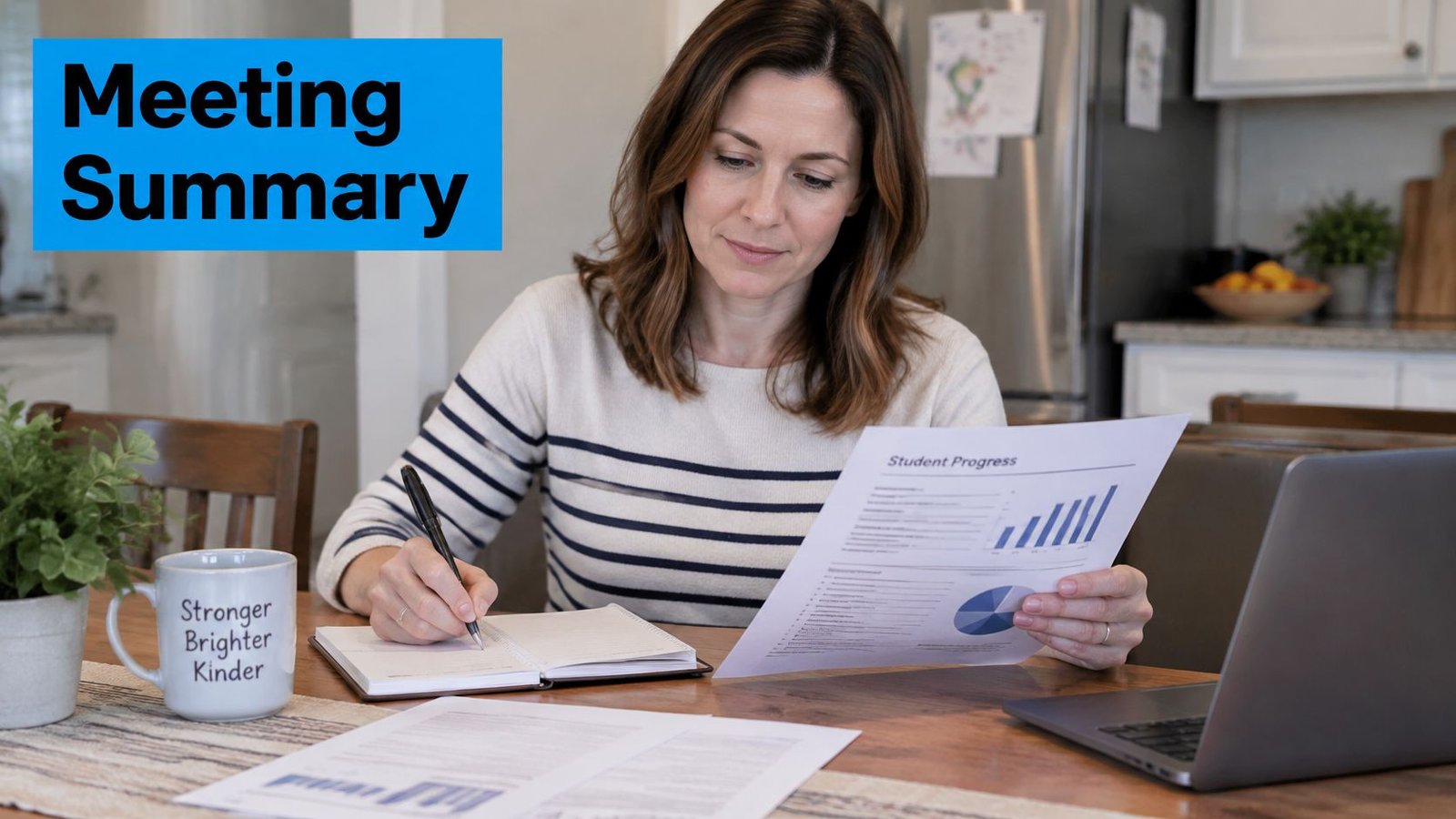
Open with your top three parent priorities. Follow with two strengths, then the data supporting each priority, then the questions you want answered. Our resource on IEP student strengths can help you phrase strengths as usable starting points rather than compliments.
Federal regulations require districts to ensure a parent is present at each IEP Team meeting or has a meaningful opportunity to participate, and 34 CFR 300.322 on parent participation requires notice early enough for attendance at a mutually agreed time and place, alternative methods such as telephone calls when neither parent can attend, and an interpreter when needed because of deafness or a parent's language. Sending your summary to the same expected attendees named in that notice helps everyone prepare from one timeline.
Generate, Check, Then Share
Choose the date range, select the event types to include, and pick the kind of meeting, such as an IEP review. Generate the data-backed summary and export it as a PDF. Then check it against your own memory before sharing.
If a pattern surprises you, open the underlying entries and confirm them first. Don't hand the team a pattern you can't explain. Choose recipients using the permissions already set in your workspace, and send the summary early enough that people can read it before the meeting, not during introductions.
The short walkthrough below shows how a meeting summary comes together from logged entries.
In the room, use the summary as a reference, not a script. When someone makes a claim, point to the specific dated entry that supports or contradicts it. That keeps discussion on shared facts and makes your IEP meeting preparation visible without turning the meeting into a presentation.
Communication Access and Staying Steady in the Room
Write a communication plan before the meeting, not during it. Note your preferred language, your preferred way of communicating, whether spoken, written, or with an interpreter, and whether you want a written summary of every decision. Share it when you confirm attendance so the school can arrange support in time.
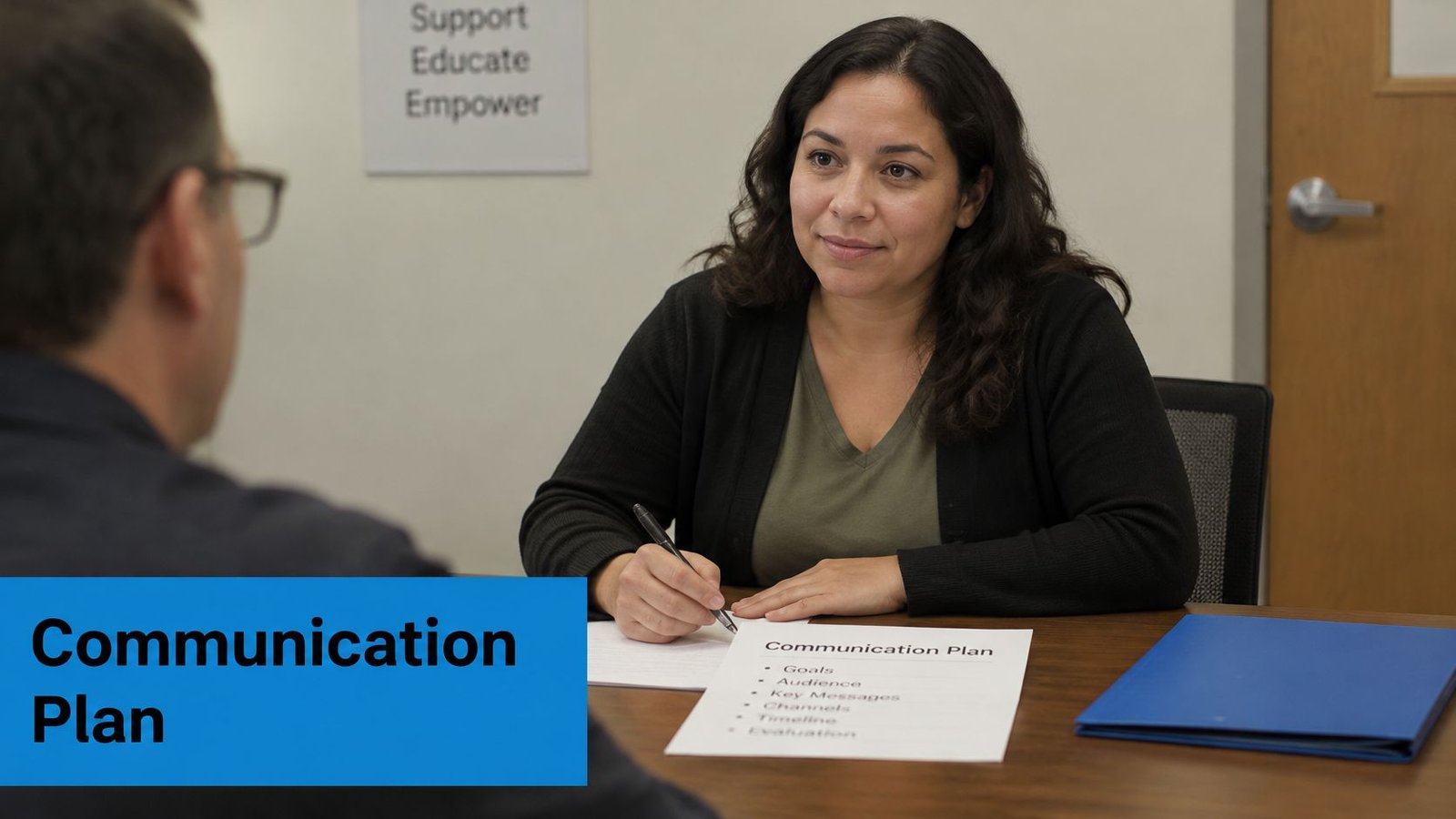
Jargon and adversarial dynamics can stop you from using knowledge you already have, and a 2025 California parent-training flyer describes public agencies testing a real-time interpretation tool covering more than 200 languages and dialects. Machine tools are emerging, but they don't remove the need to plan access carefully.
Interpreters and Plain Language
If your home language differs from the school's, request a qualified human interpreter in writing rather than relying on a machine. Machine translation can help you follow conversation, but it's weaker with education terms and precise goal wording. Verify every translated goal and accommodation against the English draft, ideally with the interpreter, before you agree to it.
Ask the team to define jargon in plain language as it appears. Agree on a signal to pause in advance, such as a raised hand or a set phrase like "I need that repeated." Deciding the signal beforehand means you don't have to interrupt assertively when you're already lost.
Virtual Access and Support Roles
- Check the technology: Confirm device and internet access work for everyone before a virtual meeting, and request a phone or video option if you need one.
- Bring support: Invite an advocate or trusted person where permitted, and tell the school in advance.
- Assign roles: Agree beforehand who takes notes, who tracks unanswered questions, and who speaks if discussion gets tense.
When disagreement isn't resolved, say so plainly and ask that it be recorded with a follow-up date. An unresolved point isn't a failed meeting. It's an honest one, and it protects you better than nodding along to wording you didn't fully understand.
Follow Up on Decisions, Owners and Review Dates
Attendance isn't the same as a finished plan. Before leaving the room, confirm three things aloud: what was agreed, who is responsible for each action, and when the next review will happen. If the team can't state those clearly, the meeting isn't done.
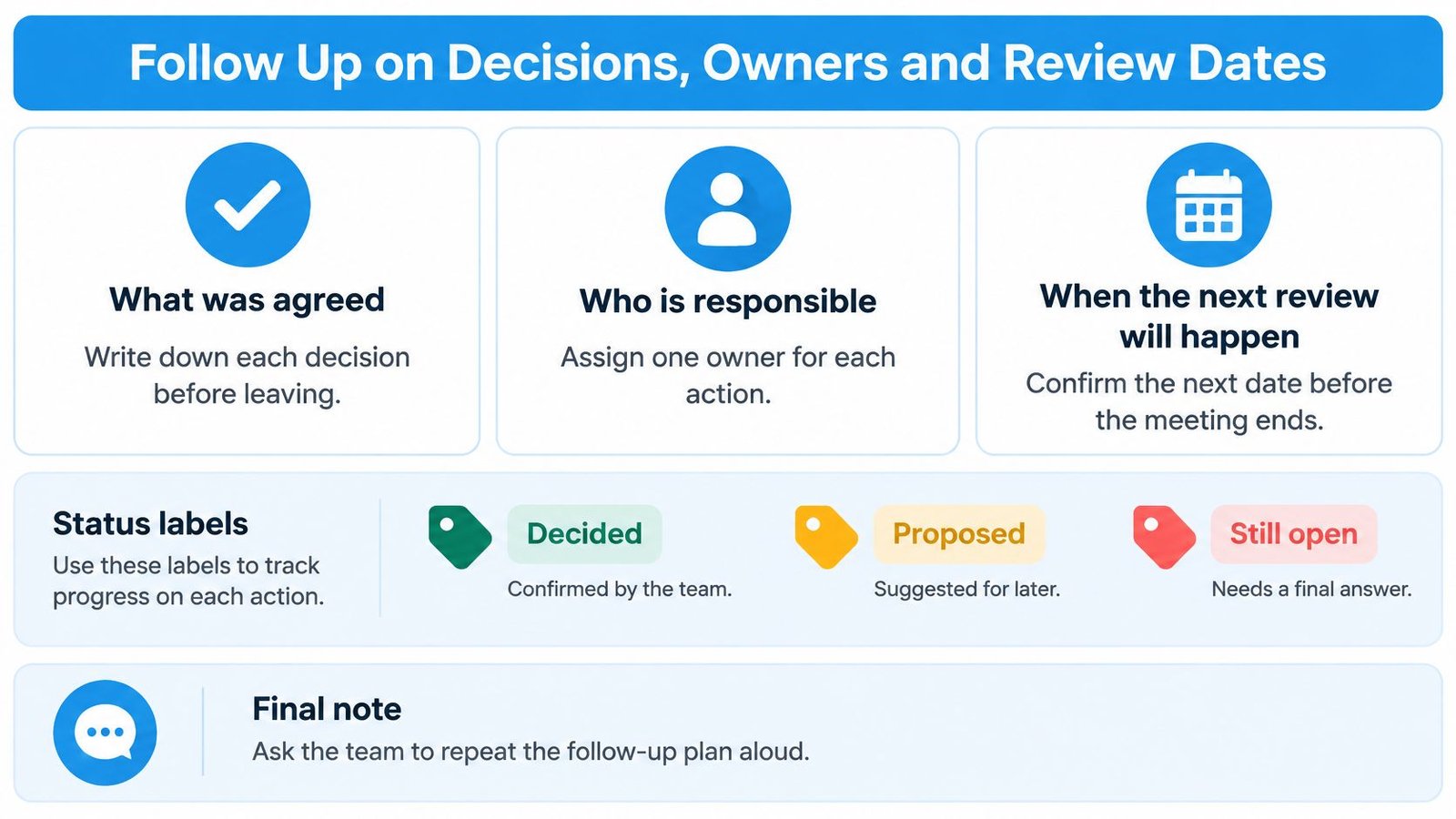
Label each item as decided, proposed, or still open. Those labels matter because a proposal discussed warmly in the room often gets remembered later as a decision. It isn't one until the team agrees and writes it down.
Pin Down Measurement Before You Leave
Ask the team to state the measurement rule for each goal. How often will data be collected, by whom, and using which definition? Don't accept vague commitments like "monitor" or "follow up" without a name and a date attached.
Before you stand up: Ask the team to repeat the follow-up plan aloud, item by item, while you check it against your notes.
If the team runs out of time, ask for a follow-up meeting or adjournment rather than signing off on incomplete content. A shorter second meeting beats a year of arguing about what an unfinished document meant. Note any disagreement and the date you'll return to it.
Close the Loop in Writing
Within a day or two, send a short written summary listing decisions, owners, dates, and open items. Ask the school to correct anything recorded differently from your notes. Silence after a clear summary is useful. A correction is even more useful.
When the written IEP arrives, check it line by line against your notes and label any mismatch as a request for revision. Then schedule your own review date, when you'll compare progress reports against each goal and judge whether the rate of progress is enough to reach it. Keep the summary, your notes, and the reports in one place, so the next round of IEP meeting preparation starts from the same record instead of from scratch.
Start your child's profile in Guiding Growth today, log this week's behavior, appointments, and therapy sessions in one place, and generate a data-backed summary you can send before the next meeting. You'll walk in with dated evidence, shared timelines for your whole care team, and questions tied to real patterns instead of memory. Visit Guiding Growth to set up your workspace on iOS or Android before the next notice arrives.