Introducing new foods to autistic kids can be challenging due to sensory sensitivities, anxiety, and physical difficulties. But with patience and specific strategies, you can help expand their diet and reduce mealtime stress. Here’s a quick summary of the key tips:
- Start small with food chaining: Gradually introduce foods similar to what your child already enjoys.
- Adjust textures: Match food textures to your child’s preferences, like smooth, crunchy, or predictable.
- Pair new foods with favorites: Serve unfamiliar items alongside familiar ones to ease anxiety.
- Use visual aids and stories: Tools like sticker charts and relatable stories can make trying new foods less intimidating.
- Create calm, pressure-free meals: Maintain a consistent routine and avoid forcing new foods.
- Incorporate food play: Let your child explore foods through fun, hands-on activities without the expectation of eating.
- Track progress: Keep a food log to document successes, patterns, and strategies that work.
Small, consistent steps and a supportive approach can make a big difference. The goal is to create positive food experiences, building confidence and comfort over time.
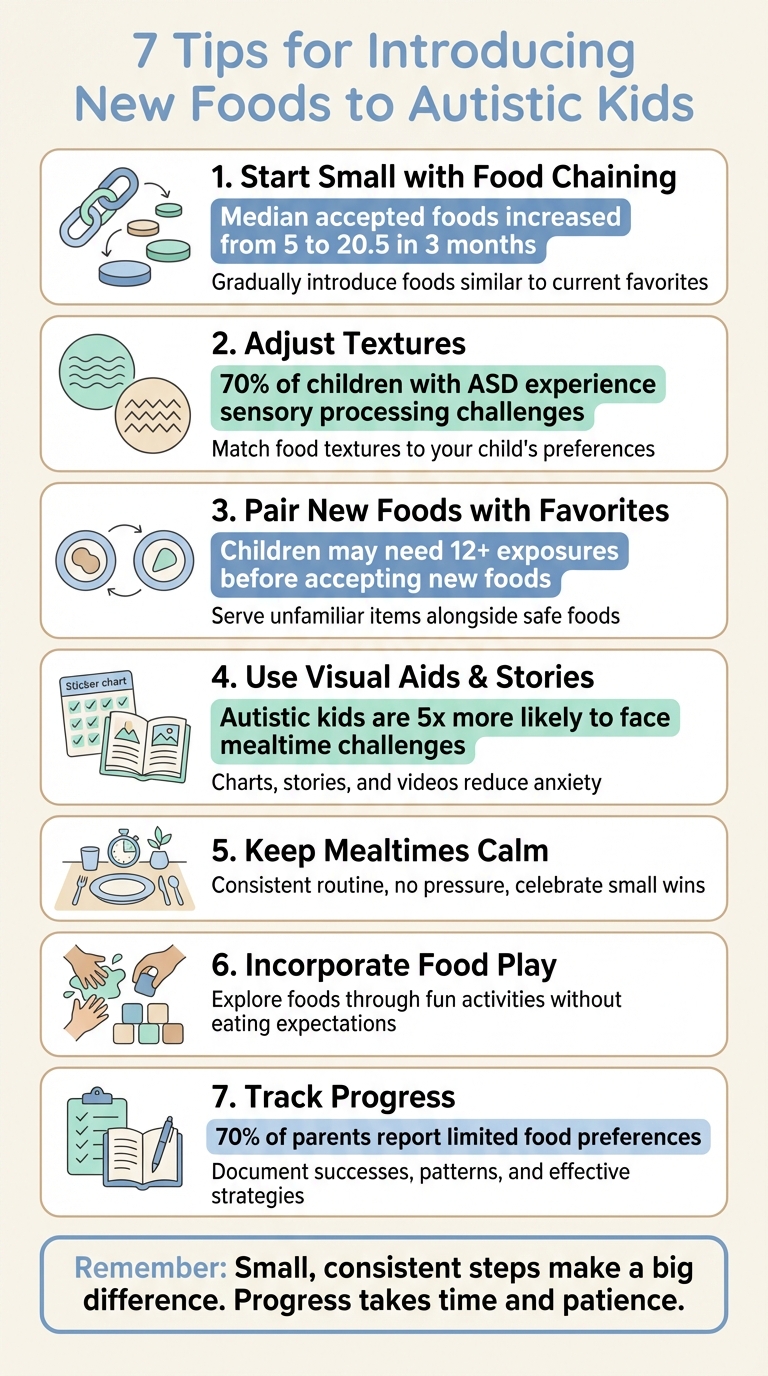
7 Evidence-Based Tips for Introducing New Foods to Autistic Children
Autism and Picky Eating: 7 Tips to Solve Feeding Problems
1. Start with Small Steps and Food Chaining
Food chaining helps expand a child’s food preferences by introducing new items that are similar in texture, flavor, color, or shape to the foods they already like. This method respects sensory sensitivities and works to reduce the anxiety that can come with trying unfamiliar foods.
A clinical study involving 10 selective eaters found that after just three months of food chaining, the median number of accepted foods increased from 5 to 20.5. For example, one child who initially ate only one type of food expanded to eight, while another went from eight foods to an impressive 129.
Here’s how it works in practice: Suppose your child loves a specific brand of chicken nuggets. Start by offering their favorite brand, then gradually introduce nuggets from a different brand. From there, try breaded chicken in new shapes, move on to breaded fish nuggets, and eventually offer baked fish. Similarly, if they enjoy plain white spaghetti, you could first try the same type from a different brand, then switch to brown rice pasta in the same shape. Add a touch of butter, and later introduce a small amount of white sauce. This slow progression helps minimize sensory overload and builds confidence in trying new foods.
Before tasting a new food, encourage your child to explore it first. Let them look at it, smell it, touch it, and even gently taste it. Start with very small portions, like a single blueberry or just one bite, and schedule short, low-pressure sessions – 5 to 10 minutes once or twice a day – outside of regular mealtimes. This approach keeps family dinners stress-free.
Another helpful tip: remove food from its original packaging as soon as you bring it home and store it in clear containers. This can prevent your child from fixating on specific brands or labels, making it easier to introduce alternatives.
2. Adjust Food Textures for Sensory Needs
When it comes to food acceptance in autistic children, texture often plays a bigger role than taste. Studies indicate that around 70% of children with ASD experience sensory processing challenges, which means certain textures can feel overwhelming or even cause anxiety. This might explain why a child could reject a food without even tasting it – the look or feel alone can be enough to create discomfort. Understanding your child’s texture preferences is key to navigating this.
Take note of the patterns in your child’s current "safe" foods. Are they drawn to crunchy items like chips and crackers, or do they gravitate toward smooth, creamy options like yogurt and soup? Keeping a food log can help. Record details like "dry and hard", "cold and smooth", or "uniform" to identify their preferences and guide your choices when introducing new foods.
Once you’ve identified your child’s preferred textures, you can adjust foods to suit their sensory needs. For example, blend "squishy" vegetables into smooth sauces or offer crunchy alternatives, like thinly sliced raw vegetables or air-fried snacks. Modify unpredictable textures – such as smashing cherry tomatoes – to create a more predictable eating experience.
3. Serve New Foods Alongside Familiar Favorites
A great way to ease the stress of trying new foods is by pairing them with foods your child already enjoys. Including a familiar "safe" food on the same plate can create a sense of comfort, making the unfamiliar feel less intimidating.
This method works by forming positive connections. Your child gets to enjoy their favorite foods while slowly getting used to the new ones. Research shows that many children need to try a new food more than 12 times before they accept it – and for autistic children, it might take even longer. By using this approach, you can introduce new foods naturally, without the pressure of an all-or-nothing meal. Small, interactive steps can make this process even more engaging.
Start small. Serve tiny portions, like a single blueberry or a baby carrot, alongside familiar favorites. You can also experiment with "stretching" a favorite food – try a different brand of the same cracker or cut their sandwich into a fun, new shape. Another idea? Play the "mystery ingredient" game. Let your child pick a small piece of a new food, like a pea or a tiny bit of broccoli, and mix it into a dish they already love, such as pasta. Giving them some control can make the experience feel less daunting.
The goal is gradual acceptance through repeated, low-pressure exposures. Let your child take the lead and progress at their own pace.
4. Use Visual Aids and Social Stories
Visual aids can make mealtime less stressful for autistic children by clearly outlining what’s expected of them. Since kids with autism are five times more likely to face challenges during meals, using visual tools and autism social skills activities can create a more predictable and less intimidating environment for trying new foods. These tools lay the groundwork for practical strategies that follow.
Try using a sticker chart or a picture-based choice board. For example, reward each bite with a sticker and let your child pick a new food option from the board.
Social stories are another great way to encourage trying new foods. Books like Daniel Tries A New Food by Becky Friedman or Dash is a New Fooder! by Wendy Hayden feature characters navigating similar experiences, making the process relatable [1]. Short videos of beloved characters, such as those from Sesame Street or Daniel Tiger, eating different foods can also help normalize the experience. For visual learners, an "Eat the Rainbow" chart can be a fun family activity, where everyone tries one new food of each color during the week.
When introducing new foods, offer them one bite at a time to avoid overwhelming your child with too many visual stimuli.
sbb-itb-d549f5b
5. Keep Mealtimes Calm and Pressure-Free
A calm, stress-free mealtime environment can make a big difference when introducing new foods to autistic children. Since autistic children are five times more likely to face challenges during meals, such as tantrums or rigid eating habits, reducing pressure is key to creating a positive experience.
Start by establishing a consistent routine. Serve meals at the same time and in the same place every day. Turn off electronics to limit distractions, and consider using a visual timer to show when the meal will end. This predictability can help ease anxiety and works well alongside strategies like food chaining and texture adjustments.
Adding calming activities before meals can also help. Spend a few minutes practicing deep breathing together – try inhaling for four counts and exhaling for eight. This can help calm the nervous system and set a peaceful tone. Most importantly, let your child know there’s no pressure to eat the new food. Simply sitting at the table with it nearby is already a step in the right direction.
If your child resists or displays behaviors like whining, stay calm and redirect their attention with neutral, food-related questions. For example, ask, "What sound do you think this food makes when you chew it?" or "Does this feel wet or dry?" Celebrate small wins with specific praise, such as, "I love how you stayed in your seat", or "Great job touching that new food." These positive reinforcements shift the focus from frustration to curiosity, making mealtimes a more enjoyable experience for everyone.
6. Use Play and Sensory Activities with Food
Playing with food might feel unconventional, but it’s a great way to help autistic children feel more comfortable with new food experiences. By focusing on fun and exploration, rather than eating, food play removes the pressure and makes mealtime less intimidating.
Here are some creative ways to make food play a part of your routine.
Set aside time for "food school" sessions once a week, separate from regular meals. These sessions are all about exploring food with no expectation of eating. For example, let your child "paint" with yogurt or pasta sauce on a cookie sheet, or use cookie cutters to turn sandwiches into fun shapes. You could also make pizza faces using vegetables like olives, peppers, or broccoli. If your child is hesitant to touch food directly, try introducing it through a favorite toy – like driving a small car through mashed potatoes or cooked noodles. This indirect interaction can help them feel more at ease.
Sensory bins are another great tool for tactile exploration. Fill containers with dry textures like rice or beans, and wet textures like cooked pasta or pudding. Encourage your child to scoop, pour, or hide small toys in the bins. You can also make it a game by issuing playful challenges: “Can you hold this apple against your cheek for 30 seconds?” These small, low-pressure steps can help children slowly become more comfortable with different textures.
During food play, ask sensory-focused questions to encourage curiosity, not eating. Questions like, “Does this feel wet or dry?” or “What sound does it make when you squeeze it?” can make the experience more engaging. This method aligns with the Sequential Oral Sensory (SOS) approach, which guides children through steps like tolerating a food’s presence, interacting with it, smelling, touching, tasting, and eventually chewing and swallowing. By building positive associations through play, children are more likely to try new foods when they feel ready.
7. Track Food Progress with Guiding Growth
Keeping track of your child’s food journey is an essential step in helping them develop healthier eating habits. Without proper documentation, it’s easy to miss what works and what doesn’t. By tracking meals, you can uncover patterns, celebrate small wins, and provide valuable insights to your child’s healthcare team.
Just like gradually introducing new textures or foods, consistent tracking helps reinforce progress. Start by maintaining a simple food log. Record which foods your child accepts or refuses and note their reactions. Pay attention to specific behaviors during meals and the strategies you use. As Aileen S. Garcia from the University of Nebraska-Lincoln suggests:
"Keep notes on what and how much the child eats, as well as refuses to eat, at mealtime. Make notes of strategies used and the child’s behavior during mealtimes. Refer to these notes to continue offering foods that the child eats and to use strategies that work." [2]
A helpful method is the "three-day rule." If your child accepts a new food for three days in a row, you can either increase the portion or try introducing a variation of that food. To make progress more engaging, consider creating a visual "new foods chart." Every time your child takes a bite of a new food, they can place a sticker on the chart – turning progress into a fun and rewarding experience.
Organizing your notes into two groups can also simplify the process:
- Highly preferred foods: These are the foods your child enjoys and eats regularly.
- Target foods: These are nutritionally beneficial options or items similar to their favorite foods.
This approach is particularly helpful for children with restrictive eating habits. For instance, up to 70% of parents with children on the autism spectrum report challenges related to limited food preferences. By tracking and categorizing foods, you can gradually expand their diet without overwhelming them.
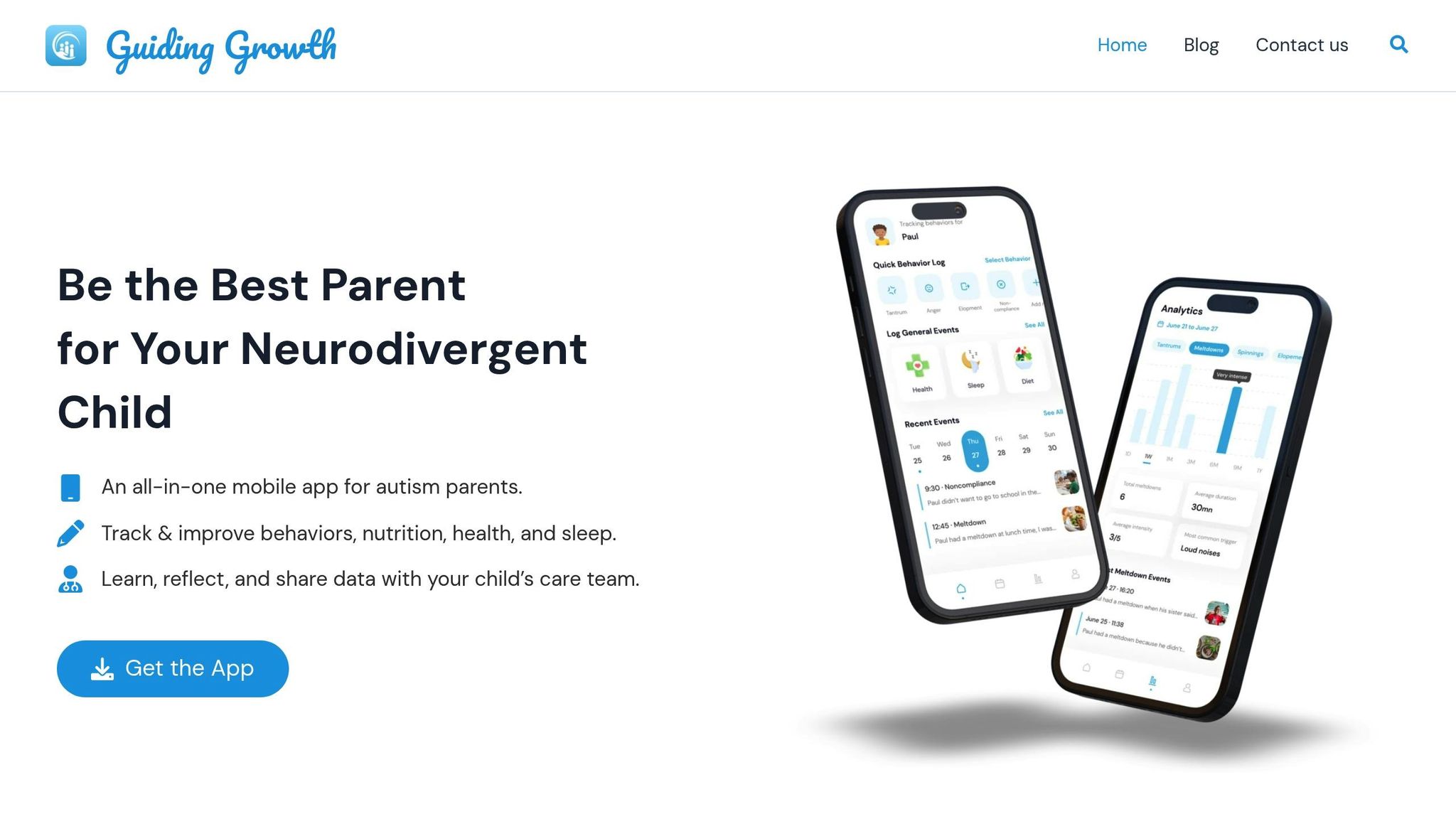
To make tracking even easier, consider using the Guiding Growth app. This tool lets you log meals, monitor food acceptance or rejection, and identify patterns over time. It’s an invaluable resource when consulting pediatricians or behavioral specialists, as it provides clear, detailed data to guide their recommendations. With documented progress, you’ll feel more confident and better equipped to improve mealtime experiences for your child.
Conclusion
Introducing new foods to your autistic child is a journey that requires patience, consistency, and celebrating even the smallest victories – whether it’s your child simply touching a new food, smelling it, or taking a single bite.
The strategies discussed in this article – like food chaining, adjusting textures, using visual aids, and creating pressure-free mealtimes – are most effective when applied regularly and with care. Children with autism often need significantly more exposures to a new food before they feel comfortable accepting it. This might mean 20, 30, or even more attempts.
These approaches are grounded in research and offer a solid framework for fostering positive mealtime experiences. Maintaining a calm and conflict-free environment during meals is key.
FAQs
How can I figure out which food textures my autistic child prefers?
Figuring out what food textures your autistic child prefers starts with observing their reactions during meals. Many autistic children experience sensory sensitivities, which can lead to distinct likes or dislikes for textures such as crunchy, soft, or sticky foods. Watch closely to see what they gravitate toward or shy away from.
To better understand their preferences, try offering a variety of foods with different textures in a calm, no-pressure setting. Allow them to explore the food in their own way – whether that means touching, smelling, or simply looking at it before deciding to taste. Over time, you may notice patterns in the types of textures they accept or avoid. If you’re feeling uncertain or need extra support, reaching out to a healthcare professional or occupational therapist familiar with sensory challenges can provide helpful strategies tailored to your child. This approach can help make mealtimes more relaxed and enjoyable for everyone.
What types of visual aids can make it easier for autistic kids to try new foods?
Visual aids can play an important role in helping autistic children feel more at ease when trying new foods. Here are a few examples of tools that can make mealtime smoother:
- Visual schedules: These charts or diagrams break down the steps of a mealtime routine, making the process predictable and less stressful for the child.
- Social stories: Short, personalized stories that explain mealtime behaviors and gently introduce new foods in a way that feels approachable and relatable.
- Picture-based choice boards: These allow children to pick foods visually, offering them a sense of control and making unfamiliar options feel less intimidating.
Incorporating these tools into daily routines can help parents establish a structured, supportive environment that aligns with their child’s specific needs.
What’s the best way to track my child’s progress with trying new foods?
To keep tabs on your child’s progress with new foods, try maintaining a straightforward food diary. Jot down essential details like the foods you offered, how much your child ate, and any noticeable reactions or behaviors during the meal. By observing patterns – whether it’s frequent refusals or small wins – you can uncover what approaches work best for your child.
The Guiding Growth app provides an easy way for you to keep track of your child’s food intake patterns, and can help you connect the dots and see how they reflect on behaviors.
Over time, you might notice gradual shifts, like a growing curiosity to touch, smell, or even taste certain foods. Regular notes can shed light on your child’s likes and dislikes, help you tweak your approach, and even provide useful information to share with professionals if needed. Keeping the process simple and consistent not only makes it manageable but also lets you celebrate those small but meaningful milestones!