You're in the grocery store, and it starts small. The freezer hum is louder than it should be. Someone's cart squeaks. The lights feel sharp. By the time you reach the checkout, your shoulders are tight, your brain is foggy, and you're wondering why something “simple” took so much out of you.
That experience is common for many autistic adults. It doesn't mean you're overreacting, difficult, or using the wrong coping style. It means your nervous system may be working very hard to process input that other people barely notice.
That's why sensory items for autistic adults matter. They aren't childish extras or trend products. The right tool can reduce overload, support focus, help your body settle, or give you the kind of input your system has been searching for all day. The challenge is that most advice stops at a product list. Real support starts with understanding your own pattern, then choosing tools that match it.
Table of Contents
- Why Sensory Regulation Is a Lifelong Journey
- Understanding Your Unique Sensory Profile
- Mapping Sensory Items to Your Needs
- How to Choose and Safely Use Sensory Tools
- Creating Your Own DIY Sensory Kit
- Tracking What Works From Trial and Error to Real Insight
- Conclusion Building Your Personalized Sensory Toolkit
Why Sensory Regulation Is a Lifelong Journey
An adult can look calm on the outside and still be in sensory distress. That happens at work when several people talk at once, on public transport when brakes screech, or at home when clothing seams feel unbearable after a long day. Many autistic adults learn to push through these moments, but pushing through isn't the same as being comfortable.

One study found that 96% of autistic adults reported sensory reactivity differences, with common triggers including loud noises at 87.5%, multiple conversations at 82.5%, and bright lights at 75% in that sample, which supports the idea that sensory items address a broad and persistent support need rather than a niche comfort preference (study on sensory reactivity in autistic adults).
Sensory tools are not childish
A lot of adults hesitate to use tools like ear defenders, chewable jewelry, tinted glasses, or textured fidgets because they worry the items will look immature. That worry makes sense. Many people were taught that if a support tool looks unusual, they should avoid it.
But sensory regulation is a functional need. If noise-cancelling headphones help you stay present in an office, that's an accommodation. If a weighted lap pad helps you settle during computer work, that's a strategy. If a smooth stone in your pocket keeps your body regulated during appointments, that's practical self-support.
Sensory items are best understood as access tools. They help a person do daily life with less strain.
Why adulthood can make sensory needs feel stronger
Adulthood often adds more sensory demands, not fewer. Jobs, commuting, parenting, shopping, medical visits, and social expectations all pile on. You may also have less recovery time than you did earlier in life.
That's why many adults say sensory needs became clearer only after burnout, late diagnosis, or a big life transition. The need was often there all along. What changed was the amount of input you had to manage, and how little room there was to recover between demands.
Understanding Your Unique Sensory Profile
Before buying anything, it helps to know what kind of input your body is reacting to, and what kind it's missing. I often describe this as a sensory thermostat. Some inputs feel turned up too high. Others barely register, so your body keeps looking for more.
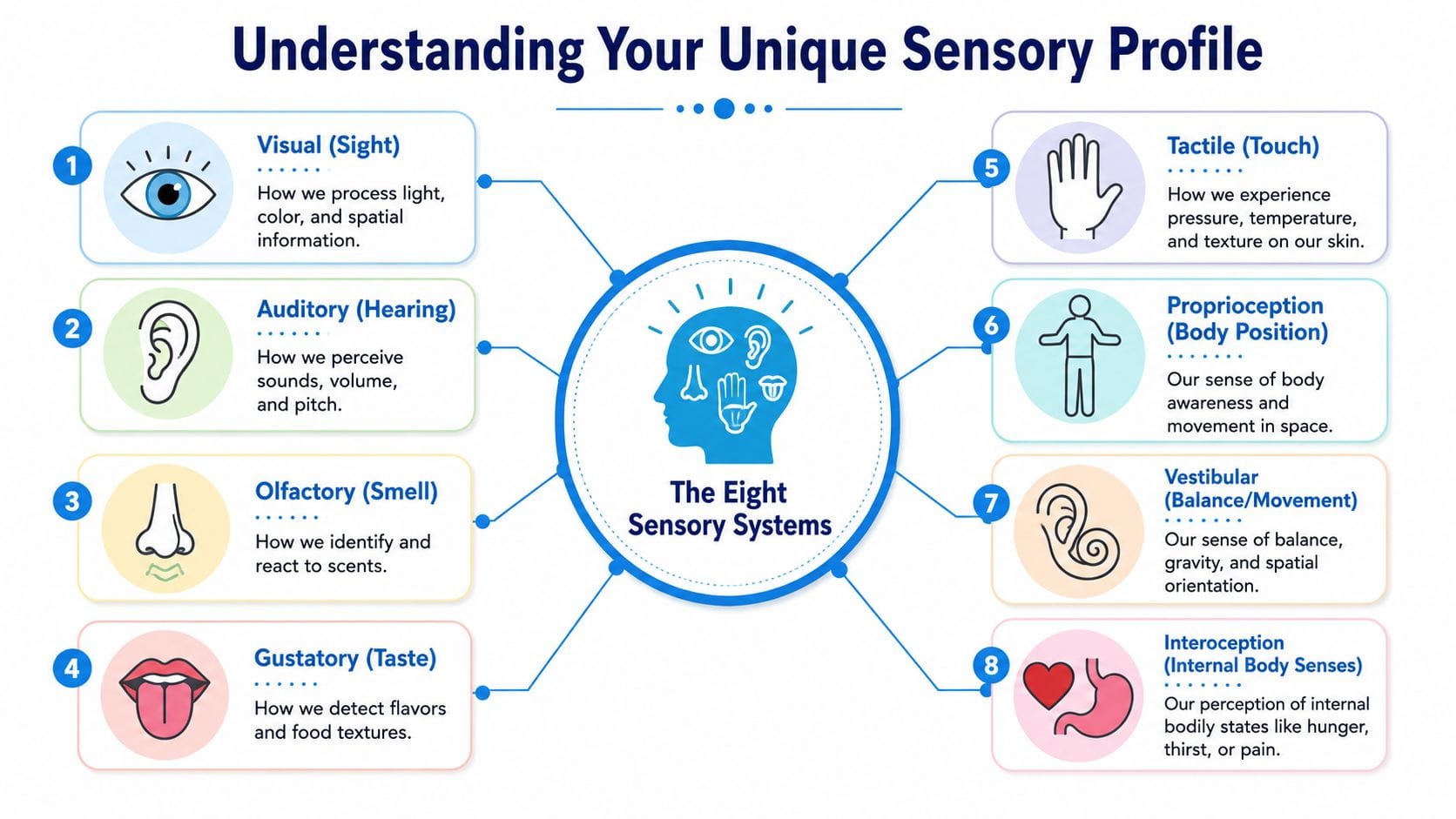
The eight sensory systems in daily life
While the five basic senses are commonly understood, sensory regulation usually makes more sense when you include all eight systems.
- Visual means sight. This includes brightness, motion, clutter, and contrast.
- Auditory means hearing. Volume matters, but so do pitch, repetition, and background noise.
- Olfactory means smell. Perfume, cleaning products, food smells, and traffic fumes can all matter.
- Gustatory means taste. Flavour intensity and food texture often overlap here.
- Tactile means touch. Fabric, seams, temperature, pressure, and surface texture all live in this system.
- Proprioceptive is body position and muscle-joint feedback. This is why squeezing, pushing, carrying, or deep pressure can feel organizing.
- Vestibular is balance and movement. Elevators, spinning, rocking, stairs, and quick direction changes can all affect it.
- Interoceptive is your sense of internal body states, such as hunger, thirst, nausea, pain, or needing the toilet.
Many people find it easier to watch the concept first, then put it into words for themselves:
A person-centred approach matters here. If you want a helpful overview of understanding person-centred care, it connects well with sensory support because it starts from the individual rather than forcing everyone into the same template.
Seeking, avoiding, and mixed patterns
Some adults are sensory-avoiding in a given system. They may want less input because the signal feels too intense. Others are sensory-seeking. They may need more input to feel grounded, alert, or comfortable.
You can be both.
You might crave strong crunch, chew, and movement, but also need dim lighting and soft clothing. You might love music through headphones, yet struggle when several people talk in the same room. That mixed profile is common, and it's one reason generic product lists often miss the mark.
Practical rule: Don't ask, “What sensory items are popular?” Ask, “What kind of input helps me feel more regulated in this specific situation?”
A simple way to start is to notice three things for a week:
- What sets you off. Noise, texture, temperature, scent, movement, hunger, visual clutter.
- How your body responds. Tension, shutdown, pacing, irritability, chewing, rocking, leaving the room.
- What changes the experience. Pressure, movement, quiet, darkness, oral input, a specific texture, or time alone.
If you want a guided way to start naming patterns, this resource on identifying sensory triggers in autism can help organize what you're noticing.
Mapping Sensory Items to Your Needs
The most useful sensory items for autistic adults usually have a clear job. They block, soften, organize, or provide input. That's more helpful than thinking in terms of “good” products versus “bad” ones.
Start with the sensory job
Some tools reduce input. Others add input in a controlled way. For adult sensory regulation, expert-curated resources often recommend items that deliver deep pressure, such as weighted blankets or lap pads, and items that provide controlled oromotor input, such as chewable jewelry, because they target specific sensory channels linked to calming, grounding, and self-regulation (adult autism sensory product guide).
That distinction matters. A weighted blanket and a chewable necklace are not interchangeable. One gives body-based pressure. The other supports oral sensory seeking. They may both help, but for different reasons.
Some readers also want examples beyond home use. Weighted wearables can be part of that conversation, especially for adults who prefer pressure they can use while sitting, commuting, or working. This explainer on how weighted wearables help with sensory regulation is useful if you're comparing blanket-style pressure with more portable options.
Sensory item cheat sheet
| Sensory System | If You Are Sensory-Seeking… | If You Are Sensory-Avoiding… | Recommended Item Types |
|---|---|---|---|
| Tactile | You may want texture, rubbing, tapping, or hand activity | You may need softer fabrics, fewer seams, and less surprise touch | Textured fidgets, smooth stones, fabric swatches, compression clothing, soft gloves |
| Proprioceptive | You may seek pressure, resistance, carrying, squeezing, or “heavy” input | You may still like steady pressure if it feels predictable, but not if it feels trapping | Weighted lap pads, weighted blankets, resistance bands, therapy putty, compression items |
| Auditory | You may prefer rhythmic sound, humming, tapping, or familiar playlists | You may need sound reduction and control over volume | Noise-cancelling headphones, ear defenders, filtered earplugs, calming audio playlists |
| Visual | You may enjoy watching motion, color changes, or repetitive visuals | You may need lower brightness and less visual clutter | Tinted glasses, sunglasses, screen filters, simple visual timers, calm visual cards |
| Oral | You may chew, sip, crunch, or seek mouth input under stress | You may avoid intense flavors or certain textures | Chewable jewelry, safe oral tools, sugar-free gum, water bottles with straws |
| Olfactory | You may enjoy strong preferred scents | You may react strongly to perfume or cleaning smells | Scent sachets, a familiar hand cream, mask options for strong environments |
| Vestibular | You may want rocking, swaying, or movement breaks | You may dislike sudden movement or unstable seating | Rocking chair, foot hammock, movement breaks, stable seating supports |
| Interoceptive | You may miss hunger, thirst, or body cues until stress is high | You may feel internal discomfort strongly and need predictable routines | Water reminders, temperature tools, routine prompts, meal-prep supports |
A few reminders make this table more useful in real life:
- Context matters: Headphones might help on a train but feel isolating in a family meal.
- Intensity matters: A mild texture may help one day and irritate the next.
- Timing matters: Some tools are best before overload, not during the peak of it.
A sensory item is successful when it changes your ability to function, recover, or stay present. Popularity doesn't tell you that. Observation does.
How to Choose and Safely Use Sensory Tools
It's tempting to buy the item everyone recommends and hope it works. That approach can get expensive fast, and sometimes it makes discomfort worse. A better plan is to choose tools the way you'd choose shoes or glasses. Fit comes first.
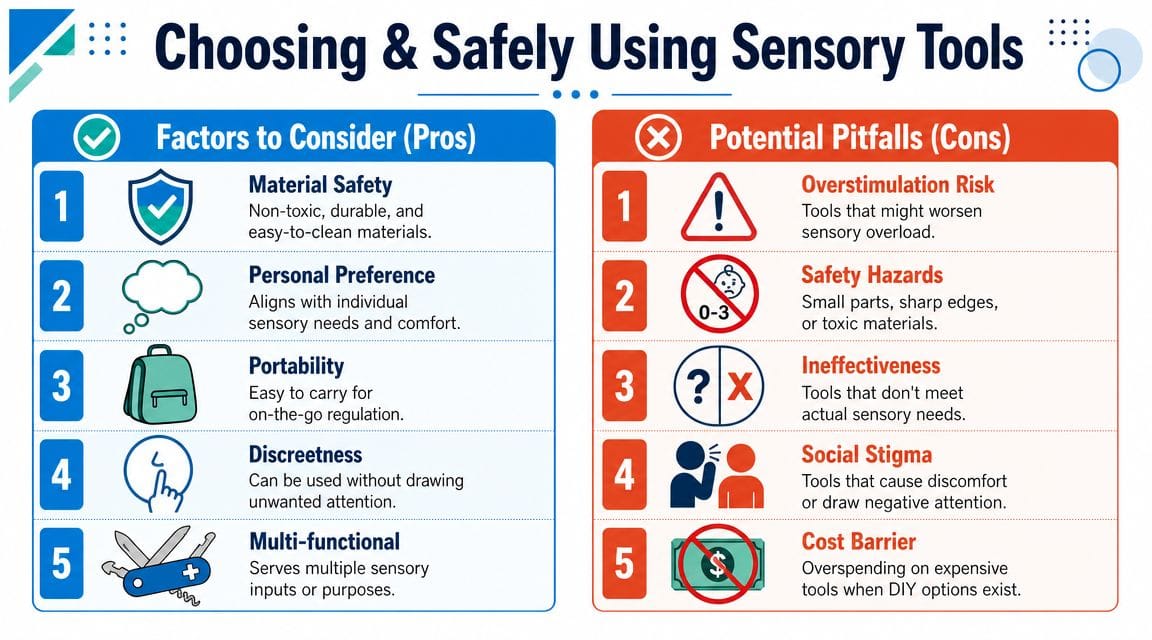
Use a simple decision filter
Try this three-part filter before you buy or use an item.
Name the trigger
Is the problem fluorescent lighting, layered conversation, scratchy fabric, jaw tension, restlessness, or difficulty settling after work? Specific beats general every time.
Decide on the goal
Do you want to calm, alert, focus, block input, or replace a less safe behaviour with a safer one? A person who needs grounding may choose very differently from a person who needs more activation.
Match the item to the sensory channel
If the need is auditory reduction, use an auditory tool first. If the need is oral input, don't expect a hand fidget to do the same job.
When a sensory item backfires
A key issue people often miss is that sensory needs are not uniform. An autistic adult may be sensory-seeking in one domain and hypersensitive in another, which means an item often described as calming, such as a weighted blanket, can feel restrictive or distressing for someone with tactile or temperature hypersensitivity (discussion of mixed sensory patterns and item fit).
Watch for signs that an item isn't helping:
- More tension instead of less: Clenched jaw, rigid posture, pulling away, or irritation.
- Avoidance after one try: If you dread using it, that response matters.
- Heat or pressure discomfort: This is common with heavy or close-fitting items.
- Increased agitation: Some visual or vibrating tools are stimulating when the body needs less input.
Material also matters. If blankets are part of your plan, fabric can make or break the experience. This guide to choosing cozy blanket materials is worth reading because texture, breathability, and heat retention can be just as important as the blanket itself.
A few practical checks help with safety and long-term use:
- Choose easy-clean items: Chewables, headphones, and hand fidgets need regular cleaning.
- Check for durability: Weak seams, peeling coatings, or rough edges can create new sensory problems.
- Think about portability: A tool that only works at home may not help during commuting or appointments.
- Consider discretion if that matters to you: Some adults prefer tools that fit in a pocket, bag, or work drawer.
- Trial in low-stakes settings first: Test at home before using an item in public or at work.
If you're comparing sound-reduction tools, this guide on how to choose noise-canceling headphones for autism can help you think through comfort, fit, and when headphones are the right choice.
The best sensory tool is not the one with the strongest claim. It's the one your body accepts and your daily life can realistically support.
Creating Your Own DIY Sensory Kit
A sensory kit doesn't have to be expensive, polished, or bought all at once. In fact, many adults prefer kits made from familiar items because the textures, smells, and routines already feel known.
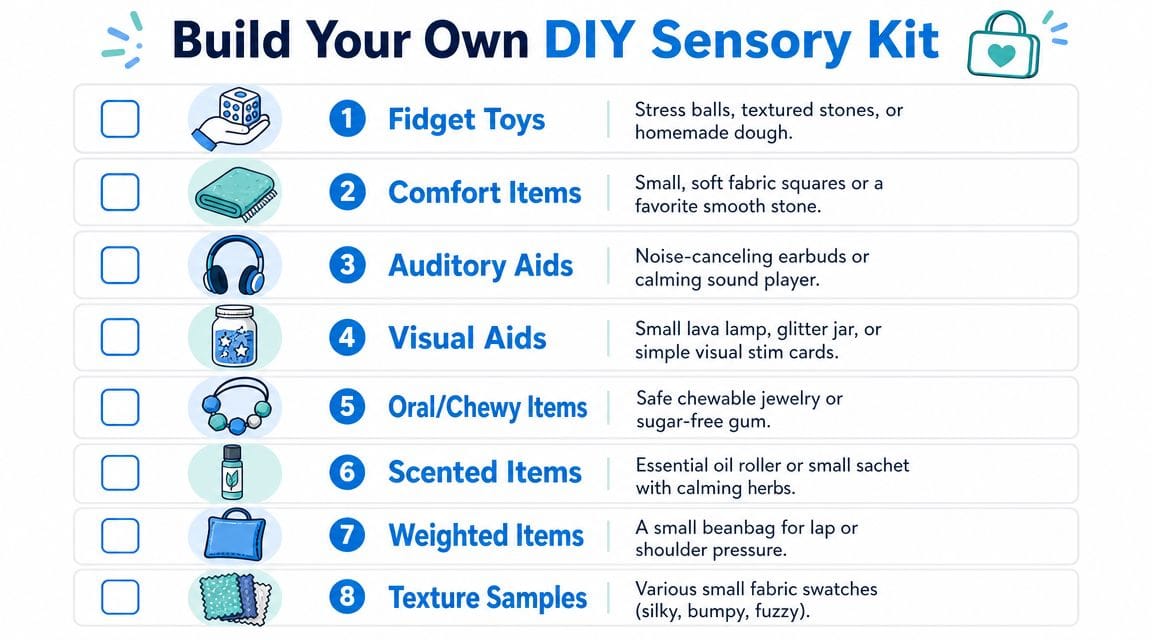
What to keep in a portable kit
Think of your kit as sensory first aid. You're not packing for every possibility. You're choosing a few items that reliably help in common situations.
Good kit categories include:
- Hand tools: A stress ball, textured strip, tangle-style fidget, or smooth pocket stone.
- Auditory support: Earbuds, ear defenders, or a downloaded calming playlist.
- Visual support: Tinted glasses, a cap with a brim, or a simple card to block visual clutter.
- Oral support: Gum, a chewy snack, or a safe chewable item.
- Comfort items: Fabric swatches, a small scarf, or a preferred lotion if scent is regulating for you.
- Pressure options: A small lap pad, beanbag, or compression accessory if that input helps.
- Body cue aids: Water bottle, electrolyte drink if advised for you, or snack options that are predictable and tolerated.
Simple DIY ideas that many adults prefer
Some sensory items work well because they are ordinary.
- Homemade texture card: Glue small pieces of fabric, felt, satin ribbon, cork, or foam onto a sturdy card. Keep only textures you like.
- Rice or flour stress ball: Fill a balloon with rice or flour for hand pressure. The feel is different, so test both.
- Pocket fabric strip: Sew or cut a strip from a preferred material and keep it in a pocket or bag.
- Mini weighted lap item: A small sewn pouch with beans or rice can provide brief lap pressure while reading or working at home.
- Visual glitter jar: Some adults enjoy slow visual tracking. Others hate it. Make a small one before committing to larger visual tools.
- Travel scent sachet: If scent helps you, a tiny pouch with a preferred calming smell may be enough. If smell overwhelms you, skip this entirely.
A useful kit is usually small enough that you'll carry it. If it becomes bulky, complicated, or full of “maybe someday” tools, it often gets left behind.
Tracking What Works From Trial and Error to Real Insight
Individuals often test sensory tools in a vague way. They try something once, have a mixed experience, and then decide it either works or doesn't. That misses the bigger pattern.
A better method is to track three points each time:
- Trigger or setting
- Item used
- Outcome
You don't need formal language. A simple note like “supermarket, headphones, helped until checkout” is useful. So is “weighted blanket after work, too hot after ten minutes.” Over time, those observations show whether a tool helps prevent overload, shortens recovery, improves focus, or only works in certain environments.
What to log so the pattern becomes clear
Keep the notes short, but include enough context to matter.
- Time of day: Morning regulation may look different from evening recovery.
- Energy level: Low energy can change what feels tolerable.
- Intensity of the environment: A quiet café is not the same as a crowded food court.
- Body response: Did you feel calmer, more alert, trapped, sleepy, irritated, or unchanged?
Short notes done consistently are more useful than detailed notes you stop doing after three days.
This kind of tracking helps families too. If a caregiver or partner is supporting an autistic adult, shared observations can reduce misunderstandings. Instead of “that tool didn't work,” you get a clearer picture: “it helped with waiting rooms, but not with commuting,” or “it worked when used early, not after overload had peaked.”
Conclusion Building Your Personalized Sensory Toolkit
The most helpful sensory items for autistic adults don't come from a trending product list. They come from a process. You notice what your nervous system is reacting to, identify the kind of input that helps, choose tools with care, and keep refining.
That process can be slow, and that's okay. A tool that helps one person may irritate another. A strategy that works at home may fail in a bright office. None of that means you're doing it wrong. It means your sensory profile is personal.
There's also a wider quality-of-life piece here. Better sensory support can make work more manageable, public spaces less draining, and relationships easier to sustain because you're spending less energy just trying to endure the environment. For some adults, that also opens more room for connection and confidence in social life. If relationships are part of your support picture, an autism dating site may be one way some adults look for more understanding social spaces.
Your toolkit doesn't need to be impressive. It needs to be usable. A pair of headphones, a chewable, a lap pad, soft clothing, a pocket fidget, or a homemade kit can all be meaningful if they match your actual needs.
Self-advocacy often starts with small sentences. “That light is too much for me.” “I need pressure, not more noise.” “This fabric works.” “That tool doesn't.” Those are powerful observations. They help you build a life that fits your body instead of asking your body to constantly adapt to strain.
If you're supporting a neurodivergent child and want a better way to notice triggers, log what sensory tools were tried, and spot patterns over time, Guiding Growth can help turn scattered observations into clear next steps.