Creating a sensory-friendly workplace is about making spaces comfortable and productive for everyone, especially neurodivergent employees. This approach focuses on reducing sensory overload with features like adjustable lighting, noise control, and better air quality. The benefits? Improved well-being, increased productivity (up to 140%), and access to untapped talent pools.
Key Takeaways:
- Lighting: Use natural light, dimmable LEDs, and personal lighting controls.
- Acoustics: Add sound-absorbing panels, quiet zones, and noise-canceling tools.
- Air Quality: Avoid strong scents, improve ventilation, and use low-VOC materials.
- Workspace Design: Create zones for focus and collaboration, offer ergonomic furniture, and allow personal workspace customization.
- Implementation: Start with a sensory audit, make gradual changes, and involve employees in the process.
Sensory-friendly workplaces not only support neurodivergent individuals (15-20% of the global workforce) but also benefit everyone by reducing stress and boosting focus. Small, thoughtful changes can lead to big results for both employees and businesses.
How to Create a Neurodiversity Friendly Office | ADHD Awareness Month
sbb-itb-d549f5b
Core Elements of Sensory-Friendly Design
Creating a sensory-friendly workspace involves thoughtful adjustments to lighting, acoustics, and air quality to ensure a balanced and comfortable environment for all employees.
Lighting for Sensory Comfort
Lighting plays a key role in shaping a sensory-friendly workplace. Incorporating natural light through large windows or skylights can help regulate employees’ circadian rhythms while minimizing visual strain. To manage brightness, use adjustable blinds or anti-glare films [1].
Fluorescent lighting should be avoided. These fixtures often flicker and emit a low buzzing sound that can cause discomfort for neurodivergent individuals. Instead, opt for dimmable LED systems, which eliminate these issues entirely [1][2]. For general office tasks, aim for lighting levels between 300–500 lux, though individual preferences may vary [2].
Provide personal lighting controls. Equip workstations with adjustable task lighting, allowing employees to modify brightness and color temperature to suit their needs. For quiet rooms or decompression spaces, blackout shades can offer complete light control during moments of sensory overload. Costs for these solutions range from under $200 per seat for basic dimmable lights to over $1,500 for advanced app-controlled systems [2].
Acoustics and Noise Management
Sound control is just as crucial as lighting when designing a sensory-friendly environment. Start by analyzing your office’s acoustic landscape to identify areas where noise travels freely and where quieter zones naturally exist. Use this information to designate "Hot" zones for collaboration and "Cool" zones for focused work. In quiet areas, aim to keep noise levels at or below 45 dB to support concentration [2].
Buffer zones are key. These transitional spaces help employees adapt to varying sound levels, reducing the risk of sensory overload. Install sound-absorbing panels on walls and ceilings, and use acoustic desk dividers to limit sound travel. For an immediate fix, consider pink noise systems, which create a consistent background sound that masks sudden noise disruptions [1].
"Sound management is perhaps one of the most important aspects of creating an autism-friendly workplace. The challenge lies in creating an environment that supports both focused work and collaboration without causing sensory overload." – Alannah Laud, Senior Designer, Office Principles [1]
Provide employees with tools like noise-canceling headphones and mobile acoustic panels for additional noise reduction. These measures can significantly boost productivity, with some organizations reporting improvements of 90–140% after implementing such practices [2].
Air Quality and Scent Control
Good air quality is another critical component of a sensory-friendly workspace. Poor air quality can lead to discomfort and health issues, particularly for employees sensitive to fragrances. Research by the Natural Resources Defense Council found that 86% of tested plug-in air fresheners contained phthalates, which can interfere with hormone production and cause allergic reactions [5].
Adopt a fragrance-free policy. Encourage employees to use unscented personal products and avoid wearing heavy perfumes or colognes. Replace conventional air fresheners with natural alternatives like baking soda, white vinegar, or activated charcoal to minimize exposure to volatile organic compounds (VOCs) [5].
"For some people, irritants like fragrances, deodorizers, scented candles, and other chemicals in the air can be as much an access barrier as a missing ramp or inoperative elevator." – Job Accommodation Network (JAN) [4]
Workstation placement is important. Position employees sensitive to scents away from areas like restrooms, break rooms, and elevators. Improve ventilation by opening windows for at least 10 minutes daily to refresh the air and increase oxygen levels. For added control, provide desk fans or portable HEPA air purifiers, which start at under $200 per unit. Additionally, use low-VOC building materials and fragrance-free cleaning products to reduce chemical exposure throughout the office [2].
Designing Flexible and Inclusive Workspaces
Creating a sensory-friendly workplace goes beyond tweaking lighting or sound levels. The layout and furniture choices are just as important in shaping employees’ daily experiences.
Zoning for Different Work Modes
Organizing the office into zones based on sensory intensity can make a big difference. Quiet zones for focused work should be separated from active areas meant for collaboration. For instance, placing relaxation spaces far from bustling conference rooms or social hubs ensures these spaces maintain their calming atmosphere.
Buffer zones are key to easing transitions between noisy and quiet areas. These can take the form of hallways with acoustic panels, small seating nooks, or corridors lined with plants, all of which help signal a shift in sensory intensity. To make navigation easier, consider adding color-coded pathways and clear signage. Cooler, muted tones work well in quiet areas, while warmer accents can energize collaborative spaces without overwhelming the senses.
Once zones are established, the next step is selecting furniture that complements these spaces.
Furniture and Ergonomic Considerations
Furniture plays a dual role in providing physical comfort and managing sensory input. Height-adjustable desks are a great option, letting employees switch between sitting and standing to improve circulation and stay focused. Ergonomic chairs with adjustable features like seat height, backrests, and armrests are essential for maintaining proper posture throughout the day.
Choose natural, non-distracting fabrics to avoid tactile discomfort, and go for matt finishes on desks to reduce glare and visual stress. For employees who need more movement, options like wobble chairs, desk cycles, or standing desk converters can help regulate energy levels without breaking concentration. However, softer seating options like bean bags should be reserved for decompression areas to avoid disrupting alertness during work hours. As Laud points out, "Task chairs need to be comfortable as these are great for keeping you alert, while bean bags can make you switch off too much."
Acoustic furniture, such as sound-absorbing desk dividers and privacy panels, can reduce auditory distractions while also creating visual boundaries that make employees feel less exposed. For those who need even greater focus, sound-insulated work pods provide a quiet retreat. These thoughtful furniture choices enhance sensory control and support the overall workspace design.
Personalization and Employee Choice
The most effective sensory-friendly workspaces are those that empower employees to tailor their environment to their needs. For example, equipping desks with dimmable lamps allows individuals to adjust brightness and color temperature to suit their visual comfort without affecting others.
Dedicated workstations can be particularly helpful for neurodivergent employees, offering predictability and reducing cognitive stress. Knowing they’ll return to the same workspace each day eliminates a significant source of anxiety.
Providing options in workspace configurations is another way to meet diverse needs. Some employees may prefer enclosed, neutral-toned focus zones, while others thrive in open areas with varied textures. Offering adjustable privacy screens and a range of desk locations ensures everyone can find an environment that works for them. This flexibility fosters a sense of control, making the workplace more inclusive and accommodating.
Implementing Sensory-Friendly Design in Your Workplace
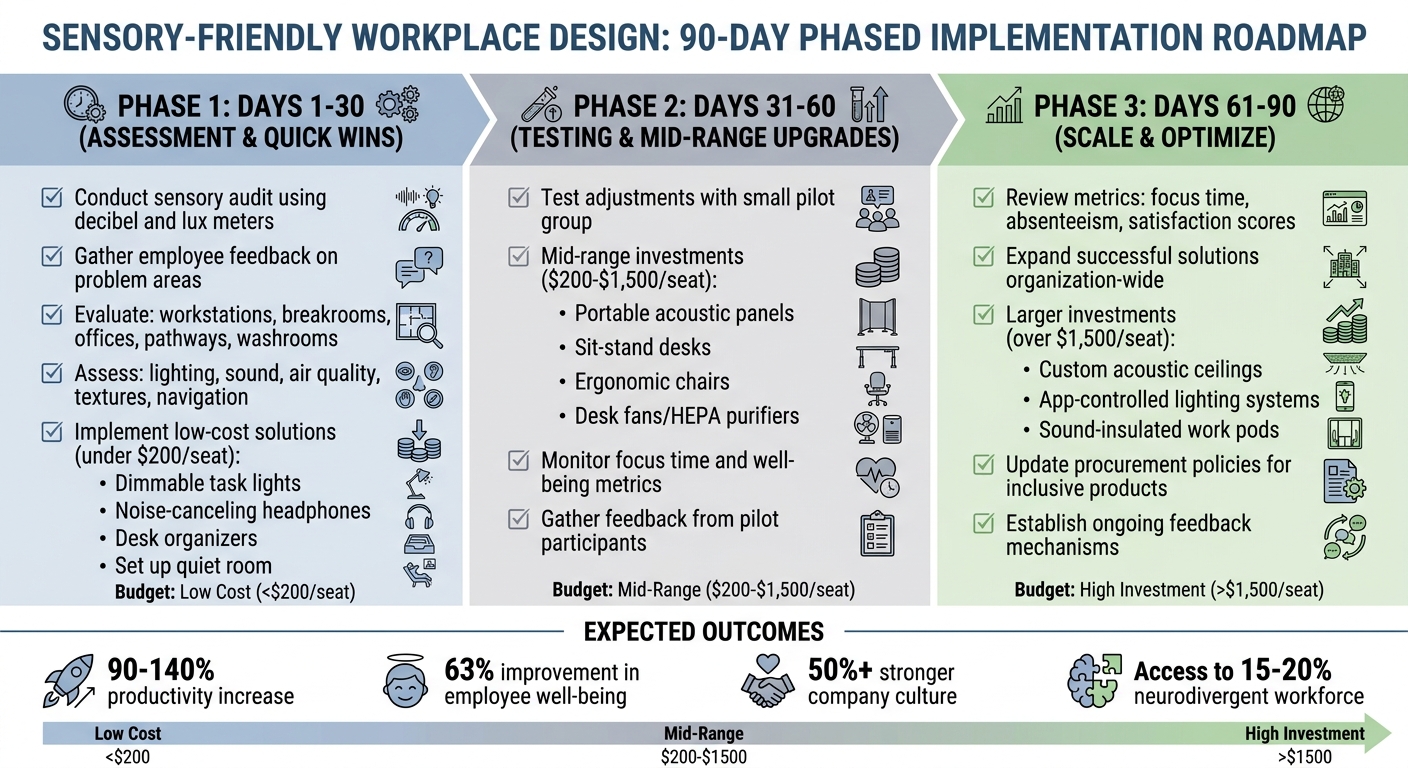
Sensory-Friendly Workplace Implementation Roadmap: 90-Day Action Plan
Bringing sensory-friendly principles to life requires thoughtful planning and a step-by-step approach. Start by assessing your current workspace and focus on making changes gradually, rather than attempting a complete transformation all at once.
Conducting a Sensory Audit
Kick off the process with a sensory audit. Combine employee feedback with objective data, such as noise levels (decibels) and light intensity (lux levels), to pinpoint problem areas [2]. Pay close attention to critical zones like workstations, breakrooms, private offices, and busy pathways. Don’t overlook washrooms, as they often include triggers like loud automated fixtures, poor acoustics, and strong-smelling cleaning products [6]. Evaluate how factors like lighting, sound, air quality, and textures influence focus and emotional well-being. Also, consider navigation and wayfinding features – clear landmarks and pathways are especially valuable for neurodivergent employees [6].
Phased Implementation Strategies
Use the findings from your audit to guide a phased improvement plan. A 30–90 day roadmap helps control costs and minimizes workplace disruption.
- First Month: Conduct your audit and identify affordable, high-impact changes.
- Second Month: Test selected adjustments with a small group.
- Third Month: Review metrics like focus time and employee well-being scores, then expand successful solutions [2].
Start with budget-friendly changes under $200 per workstation, such as dimmable task lights or desk organizers. Mid-range upgrades ($200–$1,500 per workstation) might include portable acoustic panels or sit-stand desks. Save larger investments, like custom acoustic ceilings or app-controlled lighting, for later phases once their value is clear [2]. Focus on modular, adjustable options that allow individual control without requiring permanent construction [1][2]. As you progress, update procurement policies to prioritize inclusive products that cater to a variety of needs.
Training and Awareness for Staff
Physical changes are most effective when everyone understands their purpose. Educate employees about neurological differences such as Autism Spectrum Disorder, ADHD, dyslexia, dyspraxia, and Sensory Processing Disorder. Highlight the contrast between hypersensitivity (easily overwhelmed) and hyposensitivity (requiring more sensory input) [3]. Managers should be trained on accommodation processes and how to support flexible work arrangements without stigma. Facilities and HR teams can collaborate with neurodivergent employees to source sensory-friendly products [2].
Introduce fragrance-free zones and quiet hours, and use clear signage to designate sensory zones – for example, marking "hot" collaborative spaces versus "cool" quiet areas. Establish regular feedback mechanisms to monitor sensory comfort and well-being, allowing for ongoing adjustments [2]. Companies that prioritize neuroinclusion have reported productivity increases of 90–140% and improvements in employee well-being by 63% [2]. Continuous training ensures these changes remain effective and adaptable over time.
Supporting Neurodivergent Employees in the Workplace
Neurodivergent individuals make up 15–20% of the global workforce, yet only 21.7% of autistic individuals are employed [1]. This gap isn’t due to a lack of skills – it’s often because traditional workplaces don’t address the specific needs of neurodivergent employees. Companies that prioritize neuroinclusion see impressive results: productivity increases of 90–140% and improved employee well-being in 63% of cases [2]. By refining workplace design and policies, organizations can better support neurodivergent talent.
Design Considerations for Neurodivergent Employees
A well-designed workspace can make a world of difference. Predictable layouts with intuitive navigation – featuring clear, color-coded zones and consistent signage – help reduce the mental effort needed to navigate the environment.
"When designing for autism in the workplace, we focus on creating adaptable spaces that give people choice and control. Simple elements like adjustable lighting, quiet zones, and clear wayfinding aren’t just good for autistic employees, they create better workplaces for everyone."
– Alannah Laud, Senior Designer, OP Group [1]
Hot-desking may be the norm in many offices, but offering permanent, dedicated workstations can provide stability and reduce stress for employees who rely on routine [1][2]. Using neutral, low-saturation color schemes and avoiding sharp contrasts between colors can also prevent visual overstimulation.
Flexible Work Arrangements
Physical design is just one piece of the puzzle. Flexible policies allow neurodivergent employees to tailor their work environment to their needs. This could include:
- Quiet hours to reduce sensory input
- Hybrid schedules or remote work options
- Splitting time between home and office based on tasks
Streamlining the process for requesting adaptive equipment or schedule changes is essential. Neurodivergent employees should feel supported, not weighed down by red tape. Tools like noise-canceling headphones, dimmable lamps, and adjustable desks can be game-changers [2]. Collaborating directly with neurodivergent staff ensures accommodations are practical and effective.
Building a Culture of Inclusion
Physical adjustments are most impactful when paired with a culture of understanding. Managers should be trained on accommodation procedures and encouraged to support flexible arrangements without attaching stigma. It’s also vital for all employees to understand sensory differences, such as hypersensitivity (being easily overwhelmed) or hyposensitivity (requiring extra stimuli to stay engaged). Transition zones between busy, collaborative areas and quieter spaces can help employees adjust gradually to sensory changes [1].
Conclusion and Key Takeaways
Recap of Sensory-Friendly Workplace Benefits
Designing a sensory-friendly workplace isn’t just about inclusivity – it’s a smart business move. Companies that embrace neuroinclusion report productivity boosts of 90–140%, with 63% noting better employee well-being and over half experiencing stronger company culture [2]. By addressing sensory overload – through improved lighting, better acoustics, and flexible zoning – you create a space where everyone can perform at their best. The results? Lower turnover, fewer sick days, and access to the 15–20% of the workforce that is neurodivergent, all of which positively impact the bottom line [2].
These changes aren’t just theoretical; they drive real, measurable improvements.
Actionable Next Steps
Start with a sensory audit. Use tools like decibel and light meters to identify areas that may overwhelm employees [2]. In the first 30 days, make small, cost-effective adjustments such as providing noise-canceling headphones (under $200 per seat), adding dimmable task lamps, or setting up a quiet room [2]. Track progress by monitoring key metrics like focus time, absenteeism, and satisfaction over the next 60 days [2].
Once you see what works, scale up. If your pilot program delivers results, expand these changes throughout the office. Update procurement policies to prioritize modular furniture and flicker-free lighting [2]. Shift away from universal hot-desking and introduce permanent workstations for consistency and reduced stress [1]. Create clearly defined zones with color coding and signage, and add transition areas to ease movement between high-energy and quiet spaces [1].
Finally, integrate sensory-friendly practices into your company culture. Train managers to handle accommodations effectively, establish "quiet hours", and empower employees to customize their workspaces with adjustable desks, personal lighting, and flexible schedules [2]. These steps don’t just ensure compliance – they create an environment where diverse talents can thrive. Investing in these initiatives fosters a workplace that supports everyone’s success.
FAQs
How do I run a sensory audit in our office?
To perform a sensory audit, begin by examining the workspace through the lens of individuals who have sensory sensitivities. Pay close attention to elements such as lighting, noise levels, and odors. A checklist can help you systematically evaluate each area, identifying potential issues like overly bright lights or disruptive sounds.
Once you’ve identified these challenges, take steps to address them. For instance, you could create quiet zones, minimize noise disturbances, or adjust the lighting to be more comfortable. Make it a habit to review and refine the environment regularly to ensure it remains welcoming and accessible for everyone.
What are the cheapest sensory-friendly changes to start with?
The easiest and most budget-friendly ways to create sensory-friendly environments often involve simple adjustments that either cost very little or are completely free. For instance, reducing background noise, dimming harsh lighting, and using clear, straightforward communication can make a big difference. Other practical ideas include setting up quiet areas, providing noise-canceling headphones, or making small changes to the surroundings – like tweaking the lighting or rearranging workspaces. These small efforts can go a long way in creating a more inclusive and comfortable environment for neurodivergent individuals, while also boosting overall productivity.
How do we balance quiet zones with collaboration spaces?
Balancing quiet zones and collaboration spaces in a sensory-friendly workplace requires careful planning to address various sensory preferences. Quiet zones are designed to offer peaceful areas where employees can focus or unwind, free from distractions. On the other hand, collaboration spaces are vibrant hubs that encourage teamwork and creative thinking.
To create an inclusive environment, it’s essential to keep these areas distinct. Incorporate sound-absorbing materials to minimize noise, provide adjustable lighting for different needs, and use clear signage to guide employees to the right space. This thoughtful setup gives employees the freedom to select environments that align with their preferences, fostering both productivity and overall well-being.