Your child was fine five minutes ago. Then the grocery store speaker crackled, a sibling bumped the cart, you said, “We need to hurry,” and suddenly everything exploded. Screaming. Hitting. Dropping to the floor. Maybe throwing a shoe. You're left standing there, heart racing, wondering the same painful question many parents ask: Is this anger? Defiance? Something I'm missing?
If you're searching for help with anger issues in autism, you're not alone, and you're not failing. Across clinical commentary, around 50% of autistic people may experience aggression at some point in life, often linked to anxiety, sensory overload, or communication difficulties rather than “anger” alone, and autism-related irritability became a recognized clinical target when the FDA approved risperidone in 2006 and aripiprazole in 2009 for irritability that includes aggression, tantrums, and self-injury, as described in this overview of autism and aggression.
What many parents need most is not another list of generic calming tips. It's a way to decode what the behavior means. A child who is overwhelmed needs a different response than a child who is protesting a limit. A child who lashes out during sensory overload needs a different plan than a teen who's carrying stress all day and finally snaps. For a broader foundation on reading emotional cues in autistic children, this guide to emotional awareness for autism parents is a helpful companion.
Table of Contents
- A Parent's Guide to Autistic Anger and Distress
- Decoding the Behavior Meltdown Tantrum or Aggression
- Uncovering Common Triggers and Root Causes
- Proactive Strategies to Prevent Anger and Meltdowns
- Calm and Safe De-escalation During an Episode
- Building Your Support System and When to Get Help
A Parent's Guide to Autistic Anger and Distress
When parents say, “My child has anger issues,” they're usually describing something much more complicated. They may mean explosive outbursts, sudden aggression, intense irritability, long recoveries after small changes, or a child who seems to go from calm to overwhelmed in seconds. From the outside, it can all look like one problem.
From the inside, it often isn't one problem at all.
An autistic child may hit because the room is too loud. Another may yell because they don't have the words to explain what's wrong. A teen may seem “angry all the time” when they're carrying social stress, rigid expectations, and exhaustion. The visible behavior is real, but it's often the final signal, not the starting point.
Practical rule: Treat the outburst as information first. Ask what the child's brain and body might be reacting to before deciding what consequence makes sense.
That shift matters. When you move from “How do I stop this?” to “What is this telling me?” your response changes. You stop chasing control and start building understanding.
Parents often worry that compassion means excusing harmful behavior. It doesn't. You can hold a clear safety boundary and still recognize distress. You can block a hit, move objects out of reach, and lower stimulation without assuming your child is choosing to make life hard.
This is the heart of working through anger issues autism families talk about every day. The most useful question usually isn't “How angry is my child?” It's “What kind of distress am I seeing, and what does this child need right now?”
Decoding the Behavior Meltdown Tantrum or Aggression
Many guides lump everything into one bucket called “anger.” That's where parents get stuck. If you misread the behavior, you'll probably use the wrong response.
A key gap in popular advice is the failure to separate anger, meltdowns, and aggression, even though the support for a sensory-driven meltdown is very different from the support for chronic irritability or other patterns, as noted in this discussion of anger issues in autism. If a child is in overload, lectures and consequences usually add fuel. If a child is testing a limit, reducing all demands may accidentally reinforce the wrong pattern.
For a deeper look at early warning signs before escalation, many parents also find this article on early signs of autism meltdowns useful.
Why the label matters
A meltdown is usually a loss of control caused by overwhelm. The child's nervous system is overloaded. They may cry, scream, run, hit, or collapse. The goal is not to “win” something. The child is struggling to cope.
A tantrum is usually goal-directed. A child wants something, dislikes a limit, or protests a demand. They still need support and teaching, but the internal state is different. There is often more awareness of the audience and outcome.
Aggression is a behavior, not a full explanation. Hitting, kicking, biting, pushing, and throwing can happen during a meltdown, a tantrum, panic, pain, communication frustration, or chronic irritability. That's why the word by itself doesn't tell you enough.
A behavior can look angry without being driven by anger.
Meltdown vs. Tantrum vs. Aggression at a Glance
| Characteristic | Autistic Meltdown | Tantrum | Aggression |
|---|---|---|---|
| Main driver | Overload, distress, loss of regulation | Protest, frustration, wanting a result | A form of behavior that can happen for different reasons |
| Level of control | Reduced | Usually more control than in a meltdown | Varies by cause |
| Typical goal | Relief, escape from overwhelm, discharge of distress | Change the situation, get or avoid something | Depends on what is triggering it |
| Response to logic | Usually poor in the moment | Sometimes responsive if calm returns | Depends on whether overload, fear, frustration, or another factor is present |
| Best first response | Reduce input, protect safety, co-regulate | Stay calm, keep the boundary, offer limited choices | Block harm, then identify what function the behavior served |
| What not to assume | “They're manipulating me” | “They have no responsibility at all” | “Aggression is the whole diagnosis” |
A quick real-life example helps. If your child screams, covers their ears, and lashes out when a blender starts, that points toward overload. If your child yells because you said no to another cookie, that may be closer to a tantrum. If your child shoves a classmate after a confusing social exchange, the behavior is aggression, but the root may be stress, misunderstanding, or panic.
A simple parent check
When you're unsure, ask yourself:
- What happened right before this? Noise, transition, denied request, confusing demand?
- Does my child look overwhelmed or strategic? Distress and collapse look different from protest.
- What happened after? Did the child need recovery time, or stop as soon as the outcome changed?
These questions won't solve everything in the moment, but they'll keep you from treating every hard behavior as the same problem.
Uncovering Common Triggers and Root Causes
Some episodes seem to come out of nowhere. Usually, they don't. Parents see the last straw. The child has often been carrying strain for hours.
A 2018 review found that autistic adolescents reported significantly more anger rumination than their peers, meaning they were more likely to perseverate on angry thoughts, and that pattern was linked to greater impairment, as described in this peer-reviewed review on anger rumination in autism. That matters because some behaviors that look like simple anger are signs of internal emotional-regulation difficulty.
The stress bucket idea
Think of your child as carrying a bucket of stress all day. Every demand adds a little. A scratchy shirt. A substitute teacher. A loud bus ride. Confusing language. Hunger. Waiting. A change in routine. Social effort. Bright lights.
Some children have a large, slowly filling bucket. Some have a smaller one, or one that fills quickly in certain settings. When it overflows, the reaction looks sudden. But the overflow is often the end of a chain, not the beginning.
That's why parents sometimes say, “He melted down over the wrong spoon.” It probably wasn't the spoon. The spoon was the final drop.
If sensory patterns are part of your child's picture, this guide on how to identify sensory triggers in autism can help you notice what tends to build that bucket faster.
Common roots behind the behavior
Several patterns show up again and again.
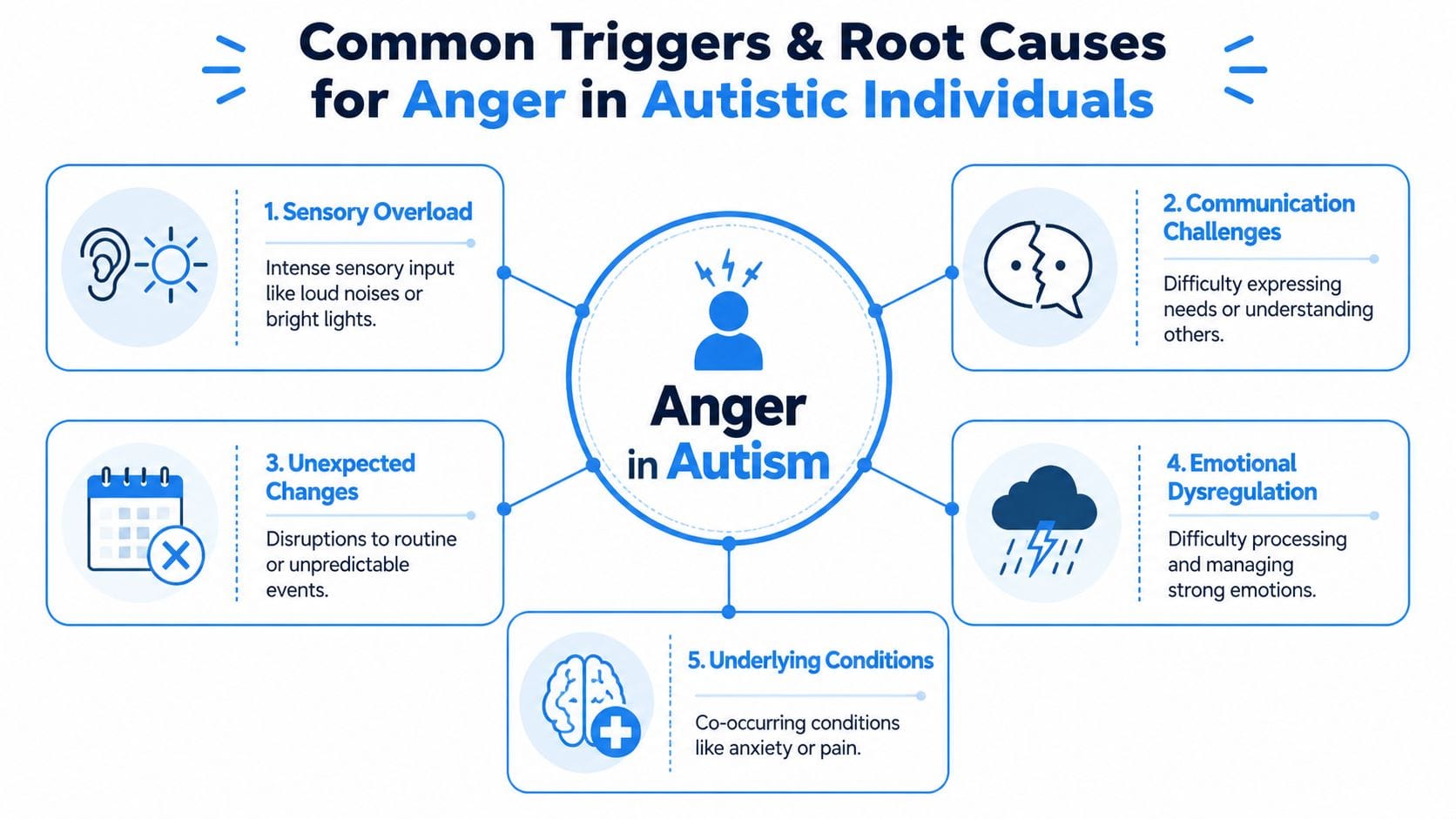
- Sensory overload can come from noise, crowds, light, movement, smell, temperature, or clothing. A child may not say, “This is too much.” They may become sharp, restless, rigid, or explosive.
- Communication breakdown creates intense frustration. If a child can't explain pain, confusion, fear, or a need for space, behavior may become their fastest language.
- Loss of predictability can feel unsettling. A changed route home, a missing object, a delayed plan, or a surprise demand can trigger strong distress.
- Internal emotional buildup matters too. Some children replay upsetting events again and again. Others carry anxiety, sadness, perfectionism, or shame that doesn't show until later.
- Physical discomfort also belongs on the list. Pain, illness, poor sleep, constipation, hunger, or fatigue can lower tolerance dramatically.
A useful reframe: The outburst is often the most visible symptom of invisible strain.
Parents sometimes get confused because the same child can have very different triggers on different days. That's normal. Triggers interact. A child who handles noise well on a rested Saturday may not handle the same noise after a hard school day.
The most helpful mindset is curiosity. Instead of asking, “What's wrong with my child?” ask, “What loads this child's system, and how can I spot it earlier?”
Proactive Strategies to Prevent Anger and Meltdowns
The best support often happens long before the hard moment. Prevention doesn't mean you can stop every episode. It means you reduce avoidable overload and make recovery easier when stress does build.
The most practical clinical priority is identifying whether a behavior is related to sensory overload, communication failure, or disrupted predictability, and a Functional Behavior Assessment style approach that logs antecedents, behavior, and consequences helps uncover patterns and teach a safer replacement response, as described in this overview of FBA-based support in autism.
Reduce load before it builds
Prevention works best when it's specific. “Calm down” is too vague. “Let's lower noise before homework” is usable.
Try building support around the pressure points you already know.
- Make sensory recovery easy. A quiet corner, headphones, dim lighting, a favorite blanket, or time alone after school can reduce baseline strain.
- Increase predictability. Visual schedules, countdowns, first-then language, and previewing changes can lower panic around transitions.
- Support communication. If spoken language disappears under stress, use visual choices, gestures, typed messages, or simple scripts like “break,” “help,” or “too loud.”
- Protect downtime. Some children need decompression after school, therapy, or social events before they can handle one more request.
- Adjust demand load. On hard days, shorten instructions, break tasks into smaller pieces, and choose what must happen.
Parents often feel guilty doing this, as if they're making life too easy. In reality, you're making success more possible. A child who isn't constantly overloaded has more room for learning.
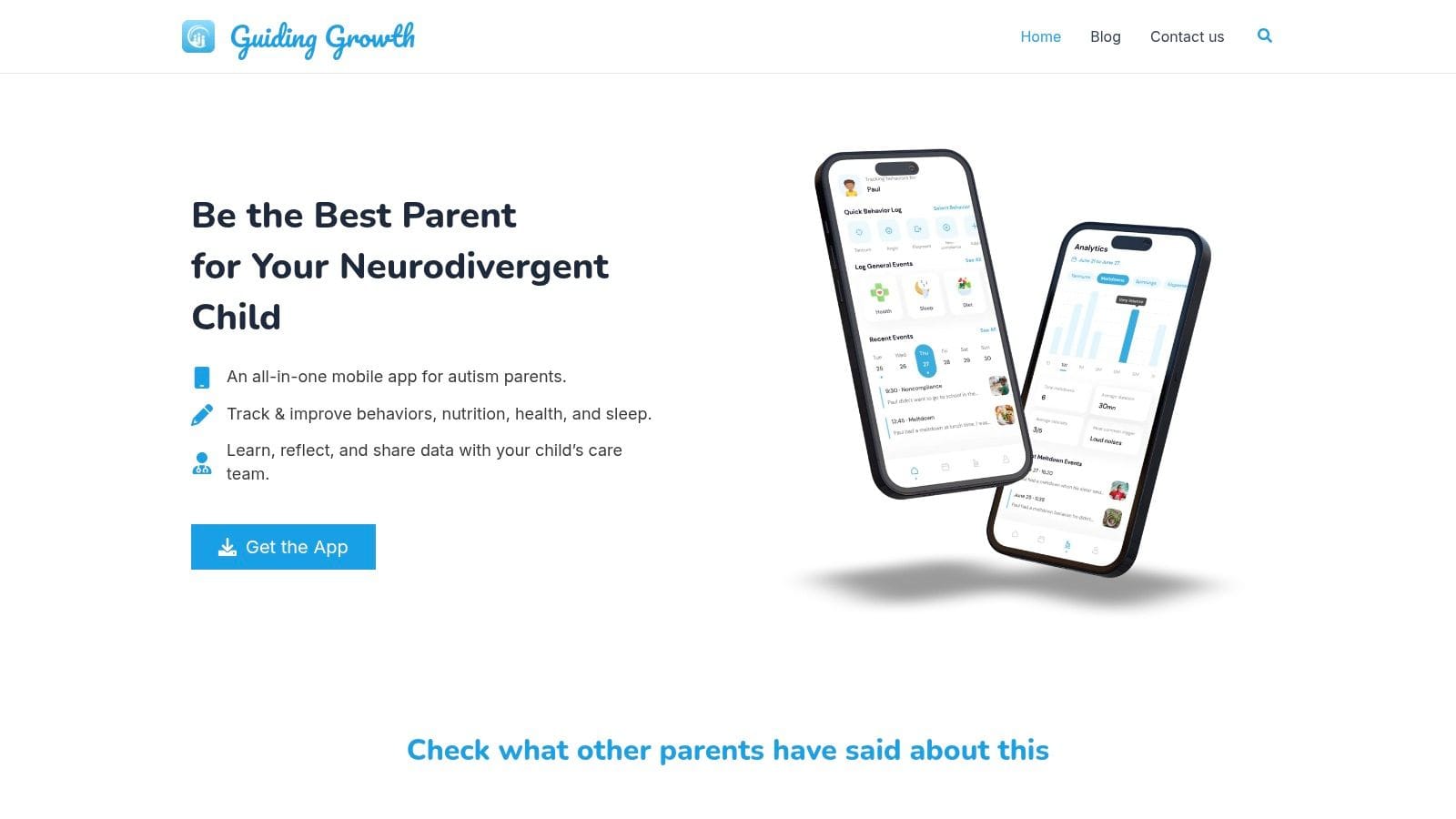
Track patterns like a detective
When distress feels unpredictable, memory can mislead you. Writing down what happened gives you something more reliable than “it always happens” or “it came out of nowhere.”
Use an ABC style note:
Antecedent
What happened before the behavior? Include setting, noise, people, demands, transitions, hunger, tiredness, and anything unusual.Behavior
What did your child do? Keep it concrete. “Hit table with both hands” is more useful than “was upset.”Consequence
What happened next? Did the demand stop, did someone talk more, did the child leave, did the room get quieter, did they get help?
After several entries, patterns usually emerge. Maybe Mondays are harder. Maybe sibling noise is the tipping point. Maybe aggression happens most often when your child can't escape a confusing task. Maybe what looked like random anger is a pattern of transition stress plus fatigue.
Teach a replacement, not just a stop
Once you know the likely function, teach the safer alternative that serves the same need.
For example:
- If your child hits to escape noise, teach a break card or a hand signal for leaving.
- If your child throws items when confused, teach a script such as “help me” or “show me.”
- If your child yells when plans change, practice a visual change card and a recovery routine.
The replacement has to work faster and more reliably than the behavior, or the child won't use it under stress.
Here, consistency matters. If one adult expects words, another expects eye contact, and another ignores early stress signs, the child gets mixed signals. A shared plan, used the same way across home and school, usually works better than a dozen disconnected strategies.
Calm and Safe De-escalation During an Episode
When a child is already escalated, your first job isn't teaching. It's safety.
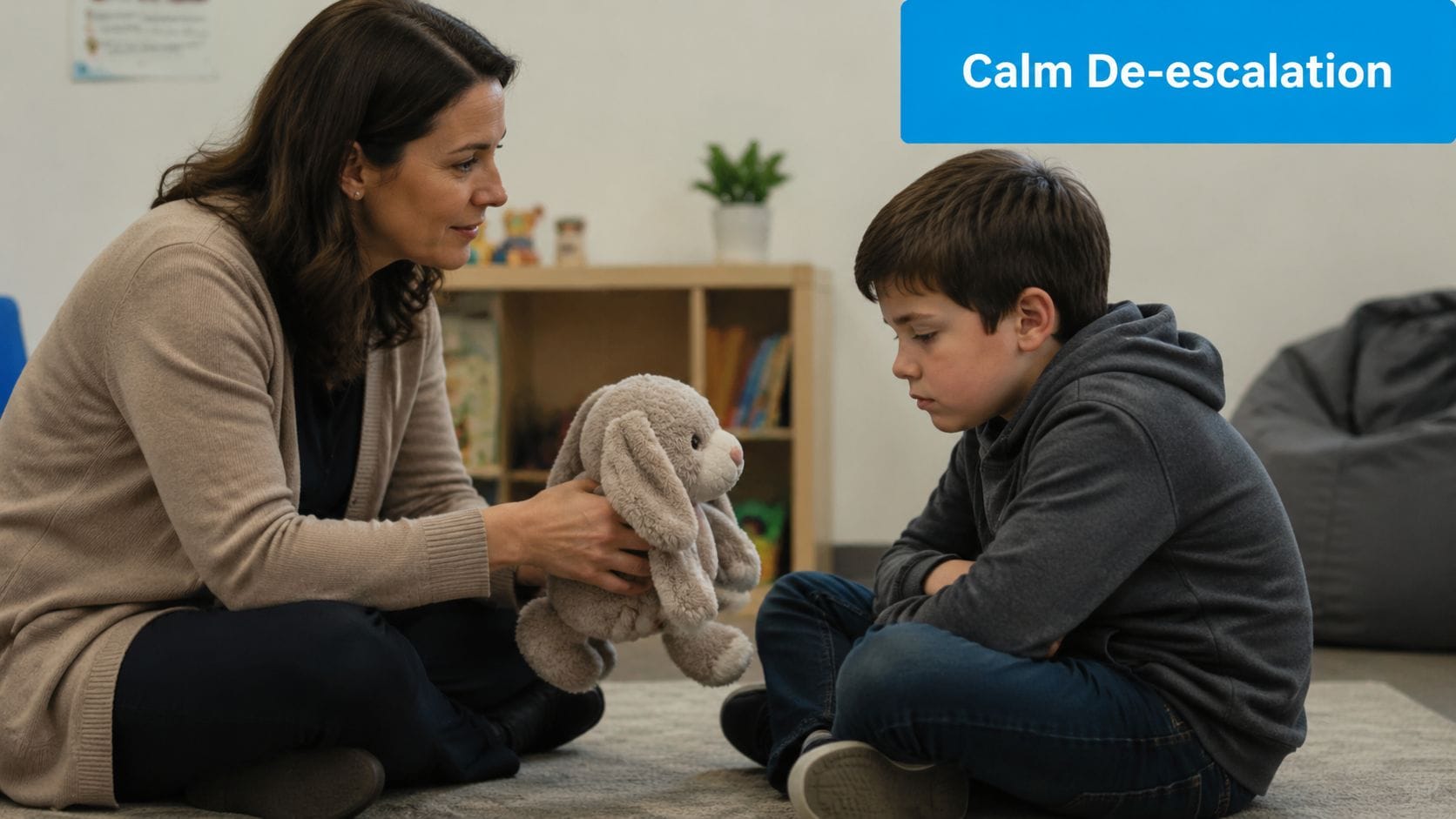
That can feel hard when you're scared, embarrassed, or angry yourself. But your regulation matters. A fast voice, too many words, repeated questions, or physical crowding usually increases pressure. A slower body and simpler language often help.
What to do first
Start with the environment. Remove objects that could be thrown. Move siblings back. Lower light or sound if possible. If the space itself is the problem, guide your child toward a quieter area only if that can happen safely.
Then reduce your language.
- Use short phrases. Try “You're safe,” “I'm here,” “Too much right now,” or “Break.”
- Drop demands temporarily. During acute escalation, reasoning, apologies, and lessons can wait.
- Offer space without abandonment. Some children need closeness. Others need you nearby but not touching.
- Protect without punishing. Block hits if needed. Keep everyone safe. Stay neutral.
What usually doesn't help?
- Interrogating. “Why are you doing this?” often asks for skills the child can't access in that moment.
- Arguing facts. Logic is weak medicine for a flooded nervous system.
- Threats or shame. These can increase fear and prolong the episode.
During a meltdown, the brain is often unavailable for problem-solving. Save the teaching for recovery.
A short demonstration can sometimes help parents picture the tone and pacing that support de-escalation:
How support changes with age
What helps a preschooler isn't always what helps a teenager.
For younger children, the trigger is often easier to spot. Noise, transitions, denied access, hunger, fatigue, or communication strain. The response tends to be more concrete: reduce stimulation, use visual cues, stay close, and help the child recover physically.
For adolescents and adults, anger may be tied to more layered stressors, including social pressure, perfectionism, executive function demands, and co-occurring depressive symptoms, as discussed in this resource on common causes of anger in autistic individuals. A teen who explodes after school may not be reacting only to one event. They may be collapsing after hours of masking, social confusion, and mental load.
That means de-escalation for older children often includes more dignity and more privacy. Fewer public corrections. More time before processing. More attention to shame, self-criticism, and overwhelm around expectations.
After the episode, wait for regulation before talking. Then keep the review brief:
- What was hard?
- What was the first sign?
- What might help next time?
If your child can't answer those questions verbally, that's fine. Use drawings, choices, visuals, or your own observations.
Building Your Support System and When to Get Help
Parents often carry this alone for too long. You don't have to.
A strong support system usually includes people who see different pieces of the puzzle. Your pediatrician may help rule out pain, sleep issues, medication concerns, or mental health needs. An occupational therapist may help with sensory regulation. A speech and language therapist may support communication breakdowns. A mental health clinician may help if irritability, rumination, anxiety, or depressive symptoms seem part of the picture. School staff can help identify patterns that only happen in academic or social settings.
Who to bring onto the team
Bring specific observations, not just labels. “He has anger issues” is understandable, but “Aggression usually happens after noisy lunch and a writing demand” gives professionals something they can work with.
Useful things to share include:
- Patterns in timing such as after school, before meals, or during transitions
- Common antecedents like noise, unpredictability, difficult tasks, sibling conflict, or social stress
- What helps recovery including quiet spaces, movement, visuals, or reduced language
- What makes it worse such as repeated questions, public correction, or forced discussion during escalation
If you're trying to explore local options, this guide to finding autism support services can help families think through what kinds of care may fit their needs.
Good support starts with a shared description of the problem. Different professionals can't collaborate well if everyone is picturing a different behavior.
Signs you should seek help sooner
Some situations need prompt professional assessment rather than more trial and error at home.
Seek help sooner if:
- Safety is at risk. Your child is injuring themselves, seriously hurting others, or causing dangerous property destruction.
- The pattern is intensifying. Episodes are becoming more severe, more frequent, or harder to recover from.
- You suspect pain or illness. Sudden behavioral change can be a health signal.
- Mood seems persistently low or tense. Ongoing irritability, withdrawal, hopelessness, or major changes in sleep and functioning deserve attention.
- School or home is becoming unmanageable. If daily life is dominated by crisis, you need more support, not more guilt.
Progress often starts when parents stop asking, “How do I make this behavior disappear?” and start asking, “What support does my child need to feel safer, communicate better, and recover faster?” That question leads to better plans, better teamwork, and usually a calmer home.
If you want one place to log patterns, daily routines, triggers, sleep, appointments, and share insights with the people supporting your child, Guiding Growth can help you turn scattered notes into a clearer picture of what's really driving hard moments.