You sit in the specialist's office with your phone open, three note apps half-organized, a paper from school folded in your bag, and one important concern already slipping out of reach because the visit feels rushed. By the time the appointment ends, you've answered questions, heard recommendations, and left with the sinking feeling that the full picture of your child never made it into the room.
That feeling is common. It doesn't mean you weren't prepared enough, and it doesn't mean the specialist doesn't care. It usually means the communication system is weak. Most families are still expected to carry complex behavioral, medical, and daily living information across appointments by memory, email threads, portal messages, sticky notes, and verbal updates.
Better specialist communication changes that. It turns the visit from a pressure test into a working session. It also matters more than many people realize. A PubMed study on interspecialty communication and avoidable hospitalizations found that high levels of interspecialty communication, especially when supported by Health Information Technology, were associated with a 30% reduction in the risk of potentially avoidable hospitalizations for patients.
For parents of autistic and neurodivergent children, that's the core issue. Good communication isn't about sounding polished. It's about getting the right details to the right people at the right time, then making sure those people communicate back in a way your family can effectively use.
Table of Contents
- Transforming Appointments from Stressful to Strategic
- Preparing Your Data Before the Visit
- Structuring Your Key Messages Effectively
- Navigating In-Person and Telehealth Visits
- Handling Sensitive Topics and Disagreements
- Maintaining Ongoing Communication and Collaboration
Transforming Appointments from Stressful to Strategic
You finally get the specialist appointment. You have 20 minutes, a week of notes in your phone, two concerns from school, one medication question, and a child who may not show the problem you came to discuss. Many parents leave those visits thinking, “I said a lot, but I'm not sure we solved the right thing.”
That usually happens when the visit stays in reporting mode. The parent tries to give a full history from memory. The specialist asks focused questions based on limited time and the chart. Important details get mentioned, but they do not get organized into a shared plan.
A better frame is a working loop.
The shift that helps most
Strategic specialist communication is a two-way process. Parents bring lived data, day-to-day context, and priorities. Specialists bring clinical judgment, pattern recognition, and options for testing, treatment, or referral. The visit goes better when both sides use that information to answer three practical questions: What pattern are we seeing, what decision needs to be made now, and what should each side watch before the next contact?
That changes the tone of the appointment fast.
Instead of saying, “He's been having hard days,” say what help you need interpreting: “We keep seeing rough mornings after poor sleep, and I need help sorting out whether we're looking at anxiety, sensory overload, medication timing, or a combination.” That gives the specialist something usable. It also makes it easier for them to respond with a differential, not just reassurance.
I have seen this lower stress for everyone in the room. Parents stop feeling like they have to prove everything at once. Specialists stop guessing which concern is the main priority.
Why this matters clinically
As noted earlier, stronger communication supported by health information technology is tied to lower risk of avoidable hospital use. The practical point is straightforward. When information moves clearly between home, specialists, therapists, and school, fewer details get lost before a problem grows.
Parents often hold the missing context. You may be the only person who can connect the poor sleep, the skipped breakfast, the longer bus ride, the afternoon shutdown, and the evening aggression. No single provider sees that full chain unless you build a system that helps them see it with you.
Modern tools can help if they support collaboration instead of adding another pile of messages. A portal, shared tracker, or summary note works best when it closes the loop: parent shares pattern, specialist responds with what it might mean, parent tracks the agreed markers, and both sides review the same thread next time. If your current system keeps breaking down, Fixing communication issues in medical practices explains why provider-side communication often fails too. If trust is already strained, this guide on building trust with autism healthcare providers can help reset the relationship before the next visit.
What strategic appointments look like
A strategic appointment is usually defined by three things:
- A clear decision point: You know the main question the visit needs to answer.
- Shared interpretation: The specialist reflects back what they think the pattern means, and you confirm whether that matches life at home.
- A closed loop for follow-up: Everyone leaves knowing the next step, what to monitor, and how updates should be sent between visits.
That last piece gets missed all the time. Families are told to “keep an eye on it,” but nobody defines what “it” is. Strategic visits name the markers. Frequency. Timing. Triggers. Response to a medication change. What school should watch for. What means “message us now” versus “bring it to the next appointment.”
When that structure is in place, the visit feels less like a rushed download and more like coordinated care.
Preparing Your Data Before the Visit
Good specialist communication starts before anyone enters the exam room or logs into telehealth. If your information is scattered, your message will be too.
The hidden cost of fragmentation is huge in every setting. Pumble's communication statistics roundup notes that U.S. companies lose an estimated $1.2 trillion annually due to miscommunication, and 86% of employees cite ineffective communication as the primary cause of workplace failures. Families feel a version of that burden every time they reconstruct a timeline from memory, portal messages, texts, school notes, and therapy updates.
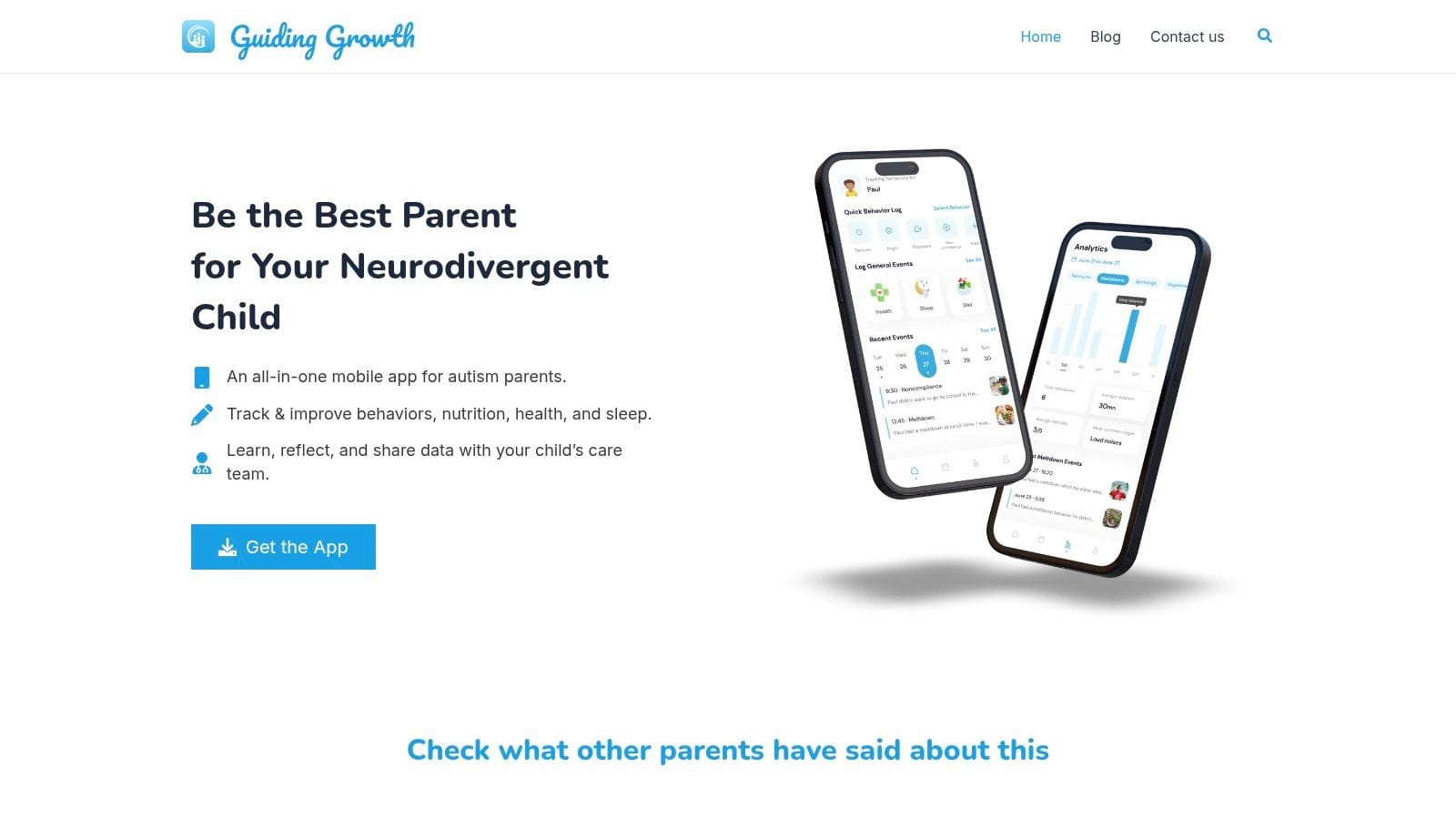
Early in your prep, it helps to think visually.
Track patterns instead of isolated incidents
Specialists rarely need a giant diary. They need organized context.
Instead of writing “bad day at school,” log what happened before, during, and after. That makes your observations easier to interpret and much harder to dismiss as vague.
A useful home tracking system includes:
- Sleep details: Bedtime, night waking, early rising, restless sleep, and what the next day looked like.
- Food and body clues: Refused foods, appetite changes, constipation concerns, stomach discomfort, hydration, and whether eating patterns changed behavior.
- Medication and supplement effects: Start dates, dose timing, obvious side effects, and what improved or worsened.
- Behavioral triggers: Transitions, sensory overload, demands, social stress, schedule changes, illness, and recovery time.
- Environment: School day versus weekend, new staff, travel, family stress, loud settings, and missed routines.
The detail that matters most is often the detail everyone forgets. Not the behavior alone, but what happened right before it.
That's why shorthand notes can fail you. “Meltdown at 4 pm” is less useful than “meltdown at 4 pm after skipped snack, noisy pickup, and two rapid verbal demands.”
Build a visit packet that a specialist can use quickly
Once you've tracked patterns, reduce it. Specialists don't need every raw entry in the first minute. They need a summary they can scan.
Use this short pre-visit checklist:
- Choose one main concern. If everything feels urgent, pick the issue causing the biggest daily disruption.
- Pull a short timeline. Include onset, frequency pattern, major changes, and what you've already tried.
- List medications and therapies. Keep names, timing, and recent changes together.
- Bring examples, not just labels. “Shutdown after multi-step prompts” is stronger than “communication issue.”
- Write your top three questions. If the visit gets compressed, your priorities still get airtime.
For families preparing records in advance, this guide on how to organize autism records for evaluations is a practical starting point.
A brief demo can also help you think about what kind of information is easiest to collect and share over time.
What works and what doesn't
| Approach | What happens |
|---|---|
| Bringing scattered screenshots and trying to narrate them live | The appointment gets consumed by reconstruction |
| Bringing a one-page summary with patterns and examples | The specialist can move faster to interpretation |
| Reporting only “what happened” | The specialist misses triggers and recovery factors |
| Logging antecedent, behavior, and aftermath | The specialist can test more useful hypotheses |
The strongest prep doesn't make the visit rigid. It makes it clearer. You're not trying to control the appointment. You're making it easier for the specialist to do good work with the data only your family can provide.
Structuring Your Key Messages Effectively
Even strong data can get lost if it's delivered as a pile of concerns. Most specialists are listening for a pattern, a conflict, and a decision point. If you hand them those three things in order, the visit gets better.
One simple way to do that is the And, But, Therefore framework. In scientific communication, the PLOS article on And, But, Therefore found that this structure increased message clarity and audience retention by 47%. Parents can use the same structure to make complex concerns easier to follow.
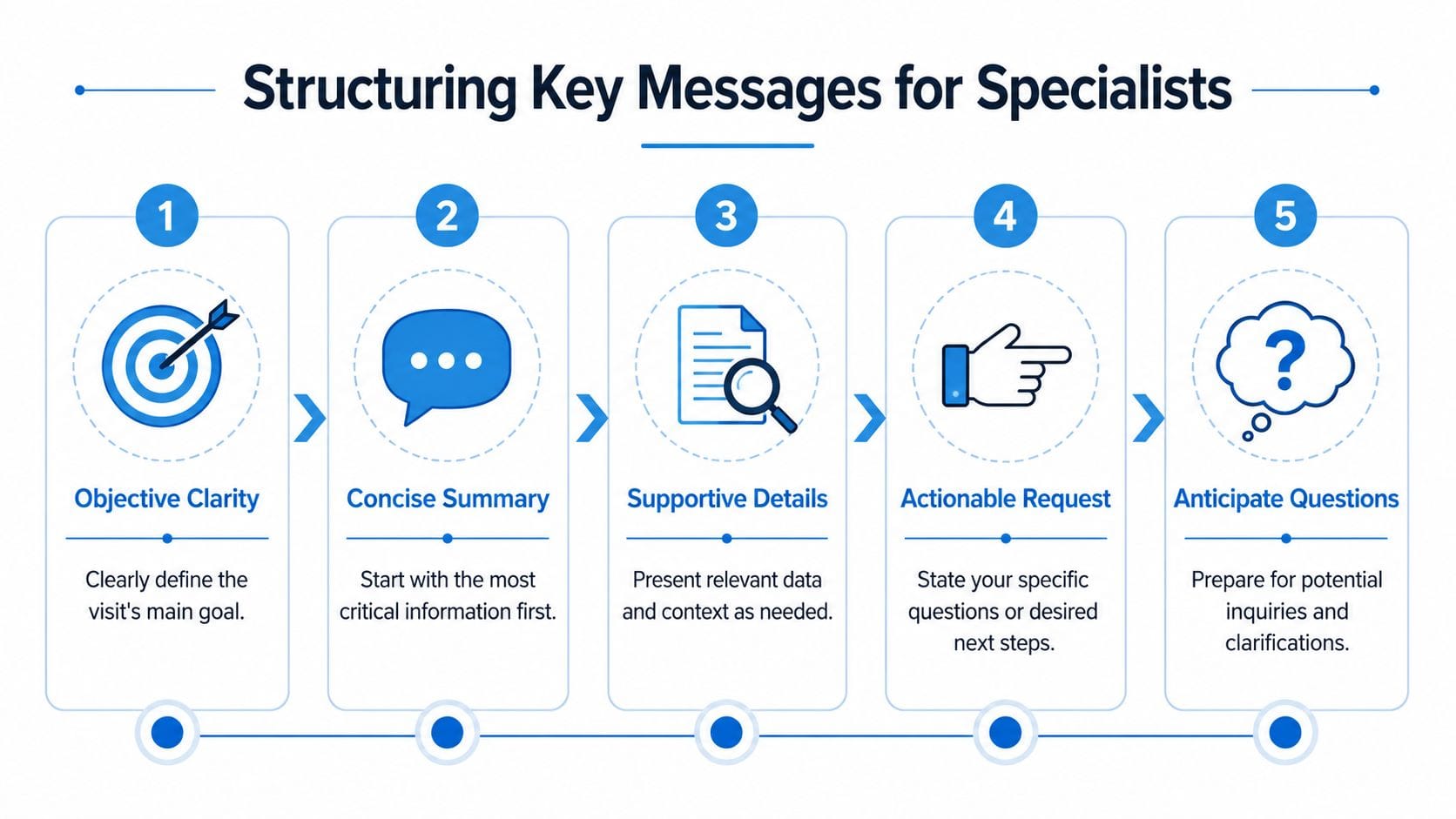
Use And But Therefore to stay clear
The format is straightforward.
- And: State the current reality and the shared goal.
- But: Name the specific problem or contradiction.
- Therefore: Ask for the decision, evaluation, or support you need.
Here's the difference in real life.
A scattered version:
- “He's been struggling at home and school and I'm not sure if it's anxiety or demands or sleep and sometimes he shuts down and then later has a huge reaction and we've tried changing routines.”
An ABT version:
- “He's doing best with predictable routines, and we want to support school participation. But he's shutting down when demands stack up, especially after poor sleep or crowded mornings. Therefore, we need help deciding whether to adjust supports, investigate anxiety, or change how adults are prompting him.”
The second version gives the specialist a map.
Turn emotion into a usable clinical summary
Parents are often carrying fear, frustration, grief, and urgency. That's real. It also helps to translate that emotion into a concise message that a busy clinician can act on.
Try this pattern when preparing your opening statement:
- Start with function: What's getting harder at home, school, sleep, eating, or community outings?
- Add the pattern: When does it happen, what precedes it, and what seems to lower the risk?
- End with the ask: What do you want help figuring out today?
“We don't need to solve everything today. I need us to leave with one clear next step and a plan for what to monitor.”
That line often resets the pace of a rushed appointment.
If the conversation starts to feel tense, especially when you're naming impact on your family, language from conflict-resolution tools can help. This piece on how to resolve conflict with I statements offers examples that can be adapted for healthcare conversations without sounding confrontational.
For appointment prep, it also helps to write your questions in advance. This list of 10 questions to ask autism specialists can help you decide which questions belong in the room and which can wait for follow-up.
A quick message template
Use this before the visit or in your notes app:
- Our goal is…
- What we're seeing is…
- The biggest barrier right now is…
- The examples that matter most are…
- By the end of this visit, we need…
That kind of structure does two things. It protects you from going blank, and it helps the specialist retain your main point after the visit ends.
Navigating In-Person and Telehealth Visits
The appointment itself is where many parents lose momentum. They come in prepared, then the specialist asks a broad question like “How have things been?” and the whole conversation starts drifting.
A better move is to open the visit with a shared agenda.
Open with a shared agenda
You don't need to be forceful. You need to be clear.
Try one of these opening lines:
- “I have two priorities for today, and I'd like to make sure we cover both.”
- “The main issue is increasing shutdowns after demands. I also want to review medication timing.”
- “I brought a short summary so we can spend more time on decision-making.”
That kind of opening helps in person and on video. It also signals that you're there to collaborate, not just report.

Telehealth needs a little extra discipline. Keep your notes, medication list, and school observations in front of you. Mute notifications. If your child may appear on camera, think ahead about sensory load, timing, and whether the specialist needs direct interaction or mainly your report.
Use pauses clarifying questions and teach-back
If your child is present, timing matters. This guidance on autism processing time notes that autistic children often need 5–10 seconds to process a verbal prompt before responding. When adults interrupt that window, they can accidentally restart the child's processing.
That has a practical consequence in appointments. If a specialist asks your child a question and quickly repeats or rephrases it, you can gently support the interaction by saying, “He often needs a little wait time before responding.”
Give the prompt once. Wait. Watch. Then decide whether support is needed.
The same principle applies to you. If a specialist gives a recommendation you don't fully understand, pause before agreeing. Ask for plain language and confirm what you heard.
A simple teach-back script works well:
Specialist: “Let's trial this support and monitor response.”
Parent: “I want to make sure I understand. You're recommending we change the prompting style at home and school, track shutdowns, and hold off on another change until we review the pattern. Is that right?”
That one sentence catches misunderstandings early.
Other useful phrases during the visit:
- For clarification: “When you say dysregulation here, what signs do you want us to track specifically?”
- For redirection: “Before we move on, I want to make sure we answer the sleep question because it seems connected.”
- For feasibility: “That makes sense clinically. What would this look like in a real school morning?”
- For plain language: “How would you explain that recommendation to another caregiver in one or two sentences?”
In-person versus telehealth trade-offs
| Setting | What helps most |
|---|---|
| In person | Hand over a concise summary at the start and anchor the room around it |
| Telehealth | Keep your summary visible on screen or beside you so you don't lose your sequence |
| Child present | Protect processing time and reduce rapid-fire questions |
| Parent-only visit | Use the extra space to discuss patterns, risks, and sensitive issues openly |
The strongest appointments aren't the ones where everyone agrees immediately. They're the ones where everyone leaves with the same understanding of the problem.
Handling Sensitive Topics and Disagreements
The hard moments usually sound small at first. A specialist recommends a strategy that already blows up at home. A school report uses terms that do not match what you see. A medication plan may help one problem but create another your child cannot absorb.
At this juncture, the relationship either tightens or starts to fray.
Sensitive conversations go better when parents bring two things at once: respect for the specialist's expertise and clear evidence from daily life. Specialists see patterns across many children. Parents see the pattern that matters most, which is how this child responds in real settings, with real limits, across a whole week. Good care needs both.
Start with the shared objective, then name the friction
A direct opening works better than a loaded one. It keeps the discussion on problem-solving instead of blame.
Try language like this:
- “We all want less distress and more participation. I'm concerned this plan may increase strain at home.”
- “I want to stay with this point for a minute because the recommendation makes sense on paper, but we're seeing a different response in practice.”
- “I can see the clinical logic. I'm not sure it fits our child's current capacity.”
That framing matters. It tells the specialist you are still in collaboration mode, even when you disagree.
Confusion around reports is one place where this often breaks down. Families are handed technically accurate documents that are hard to turn into action. Research on communication back to families found that 60% of parents of neurodivergent children report confusion when interpreting professional behavioral reports in this plain-language communication study. If a report cannot be translated into daily decisions, the family still leaves without a workable plan.
Ask for the translation, not just the terminology:
- “What does this mean for tomorrow morning at home?”
- “Which part of this matters most right now?”
- “What should school do differently based on this report?”
- “How will we know this recommendation is helping, not just sounding right?”
If a recommendation cannot be explained in plain language, it is much harder to carry out consistently across home, school, and clinic.
Discuss demand avoidance as an observable pattern
Demand avoidance can trigger disagreement fast because adults may be using different definitions. One person sees refusal. Another sees threat response, overload, or shutdown. If you argue labels first, the conversation often stalls.
Stay with the observable pattern instead.
- “We see more distress when the instruction is direct and repeated.”
- “He is more likely to engage when he has processing time and a choice of entry point.”
- “The current prompting style may be increasing load rather than helping follow-through.”
- “I want us to look at whether the communication method is affecting the response.”
That approach keeps the discussion clinical. It also supports a two-way loop. The parent brings concrete examples. The specialist helps test whether the pattern points to anxiety, overload, avoidance, skill gaps, or a mix of factors. Then both sides can adjust and review what happens next, instead of getting stuck in a debate about intent.
You can also lower defensiveness by changing the wording:
| Less helpful phrasing | More collaborative phrasing |
|---|---|
| “That approach always makes things worse.” | “We repeatedly see more distress with that approach.” |
| “He refuses because people push him.” | “Pressure seems to increase shutdown or escalation.” |
| “School isn't handling him right.” | “He may respond better to a communication style that lowers threat and keeps him engaged.” |
If the specialist disagrees, move to a testable plan
Disagreement does not mean the appointment failed. It usually means the team has reached the part that needs clearer evidence.
Ask for a short trial with defined observations:
- “Can we agree on what signs we're each looking for over the next two weeks?”
- “What would tell you this is a fit, and what would tell you it is not?”
- “Can we compare the current approach with a lower-pressure version and track the difference?”
- “What is the smallest change we can test first?”
This is the part families often miss, and it is where modern tools help. A short portal message, shared behavior log, school note, or simple symptom tracker can turn disagreement into a feedback loop. Instead of sending one worried message after another, parents and specialists can look at the same examples, from the same period, using the same success markers. That reduces guesswork and helps everyone adjust faster.
Sometimes the right outcome is not immediate agreement. Sometimes it is agreement on what to monitor, what to try, and when to review. That is still progress. It protects the relationship and gives the next conversation something stronger than memory.
Maintaining Ongoing Communication and Collaboration
The visit ends, but the work doesn't. Often, good appointments fall apart afterward. No one captures the decisions clearly, home and school interpret the plan differently, and by the next appointment everyone is working from a different memory.
A short follow-up message fixes a lot of that.
Send a short post-visit summary
Within a day, send a brief summary through the patient portal or agreed communication channel. Keep it tight. You're not rewriting the appointment. You're confirming the plan.
A strong post-visit note includes:
- What was decided: The treatment adjustment, referral, school recommendation, or monitoring plan
- What your family will track: Specific behaviors, sleep changes, appetite, side effects, shutdowns, or response to a support
- What the specialist will do: Send a script, review labs, coordinate with another provider, or revisit the plan at follow-up
- When you'll reconnect: Next visit timing or what should trigger earlier contact
This kind of message protects everyone from drift.

Keep one living record between appointments
Ongoing specialist communication works best when the family has one central record rather than separate fragments. That record should be easy to update, easy to review, and easy to share with the people who support your child.
Include the practical things that tend to get lost:
- Daily observations that show patterns instead of isolated bad moments
- Medication and appointment history in one place
- Behavior context such as triggers, supports used, and recovery time
- Caregiver alignment so grandparents, therapists, school staff, and clinicians aren't all working from different assumptions
Good follow-up doesn't mean sending more messages. It means sending fewer, clearer messages that close the loop.
When specialists receive a concise summary and usable record, they're more likely to understand the home reality between visits. When parents can see patterns clearly, they can advocate with more confidence and less exhaustion. That's what true collaboration looks like. Not constant contact, but consistent alignment.
If you're tired of piecing together notes from memory, Guiding Growth gives you one place to track behaviors, sleep, diet, medications, routines, and care updates, then share clear reports with the people supporting your child. It helps turn specialist communication into an actual working loop instead of a last-minute scramble before every appointment.