You leave the therapy room with a folder, a few notes, and a familiar ache of uncertainty. Your child may have cooperated, smiled, or even said a new word, but the bigger question hangs in the air on the drive home, is speech therapy progress happening, or are you just hoping it is? Parents ask that because speech gains don't always show up neatly in a single session, especially when a child is tired, shy, or working on skills that only appear in real life.
The encouraging part is that therapy does help many children. In a large UK outcomes dataset from 49 providers using the RCSLT Online Outcome Tool, 79% of children and young people improved in at least one area related to communication needs or participation in daily activities, and the sample included children with developmental language disorder/difficulties, speech sound disorder/difficulties, and autism RCSLT outcomes dataset. That matters because progress often shows up outside the clinic first, during snack time, bath time, play, or the moment your child finally gets a need met without melting down.
Parents are in the best position to notice those moments. A therapist sees a slice of behavior in a scheduled appointment, but you see the full rhythm of your child's day, the easier mornings, the better repairs after a breakdown, the way a prompt works at breakfast but not at bedtime, and the small wins that never make it into a glossy progress report. Tools like Guiding Growth's sensory-sensitivity guide can help families think about those everyday patterns in a more structured way without turning home life into homework.
Table of Contents
- From Clinic to Home An Introduction for Parents
- Setting Meaningful Goals You Can Actually Track
- Choosing Your Metrics Beyond Just Counting Words
- How to Document Progress Without the Paperwork
- Interpreting Your Data to See the Bigger Picture
- Sharing Insights for Better Team Collaboration
From Clinic to Home An Introduction for Parents
A parent leaves a session with notes in hand, then spends the drive home sorting through what happened. The child answered one question, missed two others, and needed help for the rest. That mix can feel uncertain, especially when you are trying to figure out what really matters. Progress in speech therapy progress is usually clearer when you look at it across ordinary routines instead of one appointment.
A child may try a new phrase at the dinner table, then go quiet the next day. They may answer a familiar adult more easily than a new one, or use a skill once and drop it the next time they are tired or distracted. Families often expect speech progress to show up in a straight path, but communication change is usually uneven, with small gains appearing before they hold steady.
What progress usually looks like at first
Early gains can feel inconsistent. A child may use a new phrase only at home, answer a question only with a familiar person, or repair a breakdown once and then forget the skill the next day. That does not mean the work is not helping. It means the child is still practicing a skill in real life, where attention, mood, noise, and routine all affect performance.
Practical rule: if a skill only appears once in the clinic, once at home, and then disappears, it is not failure. It is data.
The better question is whether the child is using the skill in more places, with less help, or with less frustration. Parent observation matters because you see the moments therapists may not catch, like asking for a snack with words instead of grabbing, or joining a sibling game without shutting down. Those are functional gains, and they deserve attention even when articulation or sentence length is still developing.
Some children also have sensory needs that shape how they show progress, especially in busy homes or unpredictable routines. If your child gets overwhelmed by noise, touch, or transitions, this guide on adapting speech therapy for sensory sensitivities can help you make sense of why a skill may appear in one setting and not another.
Why home observations matter
Clinical sessions give you a snapshot. Home gives you the pattern. A child may stay quiet in the clinic, then talk nonstop in the car, or use more language with a sibling than with an unfamiliar adult. Those differences matter because they show where communication is easiest, where support is needed, and what gets in the way.
That is the shift that helps families most. You stop asking only, “Is therapy working?” and start asking, “Where does my child communicate well, what seems to help, and what keeps getting in the way?” Once you can answer that, you are not guessing. You are bringing useful information to the therapist and making the next session more relevant to daily life.
Setting Meaningful Goals You Can Actually Track
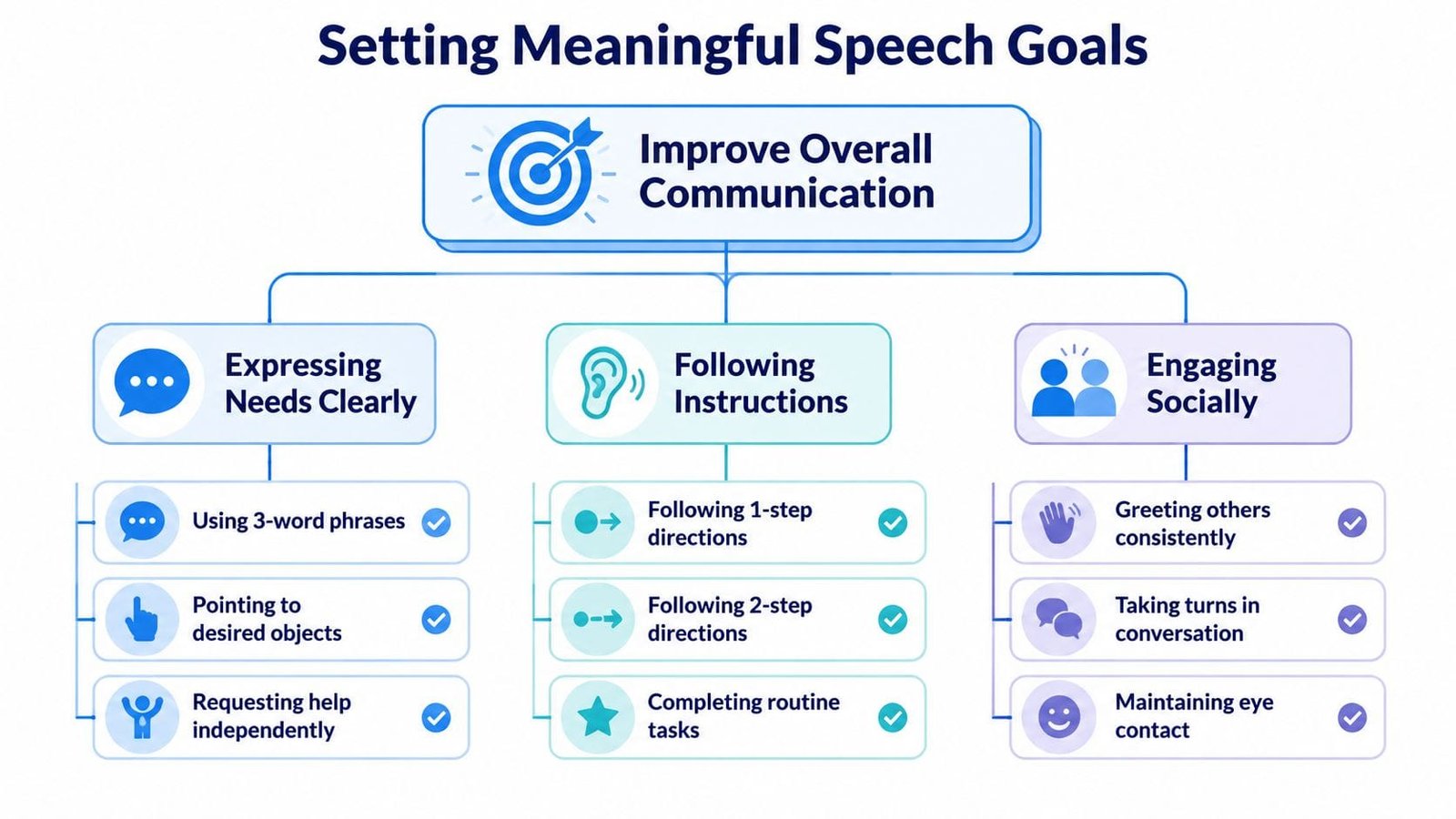
A goal like “improve language” sounds helpful, but it's too vague to guide a family through a hard week. A more useful goal names the behavior, the context, and what success looks like, so everyone can see whether the child is moving forward. That's why measurable goals matter so much in speech therapy progress, especially when a child's services are inconsistent or short.
Turn therapy language into family language
A clinically sound goal names the observable behavior, the context, the criterion for success, and how it will be maintained ClinicNote goal structure. In plain English, that means the goal should sound more like, “My child will ask for help during snack time,” and less like, “My child will increase expressive communication.” The first version tells you what to watch for at home.
The best goals fit real routines, not just test items.
For example, a child might work on using a phrase to request a favorite item, following one-step directions during cleanup, or joining a turn-taking game with a sibling. Those are easier to track than abstract skill labels because they happen in places you already visit every day. They also help you and the therapist decide whether progress is carrying over outside the session.
Keep the target narrow
One goal should be small enough that you can notice it without a clipboard. If your child is learning to communicate frustration more clearly, the target might be using words, signs, or a device to request help before escalation. If your child is working on speech clarity, the goal might focus on one sound in one predictable routine rather than in every conversation.
The point isn't to shrink expectations. It's to make progress visible. Families who can name the target clearly are much better prepared to notice when a skill appears, disappears, or starts to generalize into new situations. That's the kind of clarity that makes therapy feel less like a mystery and more like a collaboration.
Choosing Your Metrics Beyond Just Counting Words
Counting new words can be useful, but it misses too much. A child may say the same three words for months and still be making real gains by pointing more purposefully, repairing breakdowns, or staying calmer when communication fails. That's why a complete view of speech therapy progress needs both numbers and functional observations.
Track what a child actually does
Expert guidance recommends tracking percentage correct across multiple sessions, not just a single visit, and documenting exact counts such as 18/25 correct productions, or 72%, along with the level of support and the communication context Little Words guide. That kind of note helps you see whether a skill is holding steady or only showing up when the child is highly cued.
| Simple Home Speech Progress Log | ||||
|---|---|---|---|---|
| Date & Time | Activity/Context | Target Skill | Observation | Notes |
| Example use | Snack, play, bath, car, bedtime | Requesting, speech sound, following directions, social turn-taking | “Used 3-word phrase,” “Pointed to request,” “7/10 /s/ sounds correct” | “Seemed tired,” “Very engaged” |
Add the signs that matter in real life
Some of the most important indicators aren't pure speech counts. Watch for successful communication attempts, even when they're nonverbal, because a child who points, gestures, or uses a device to get a message across is still practicing communication. Also track reduced frustration, more willingness to join routines, and faster recovery after misunderstandings.
A child may not produce clearer speech every day, but still show stronger participation at dinner or less avoidance when asked to choose between two options. That's meaningful progress. Families who only count words can miss the child who is learning to be understood in more flexible ways.
For parents who want to keep these notes in one place, a simple digital log can work better than loose scraps of paper. The guide to automated transcription for creators is a useful example of how voice-first logging can reduce friction when typing feels impossible, and Guiding Growth can also be used to capture therapy-related notes and observations in one place through its therapy session notes feature. The important part is not the tool itself, it's making the habit sustainable so the data doesn't stop after three busy days.
How to Document Progress Without the Paperwork
Busy parents do not need another spreadsheet they will abandon by Friday. They need a way to capture a real moment quickly enough that it fits into the day, because the notes that get kept are the notes that get written. That matters most when therapy is delayed, inconsistent, or too brief to show the full picture.
Start with a low-effort capture system
A simple note is enough. Record the date, the setting, the target skill, what your child did, and one line about what seemed to help or get in the way. If that feels easier, make it part of a routine, like logging after meals, before bed, or right after therapy.
What usually breaks consistency is not lack of care, it is friction. The note feels too long, the moment passes, and the parent plans to remember it later. That almost never works. A quick capture system does because it does not depend on memory under stress.
Use tools that match real family life
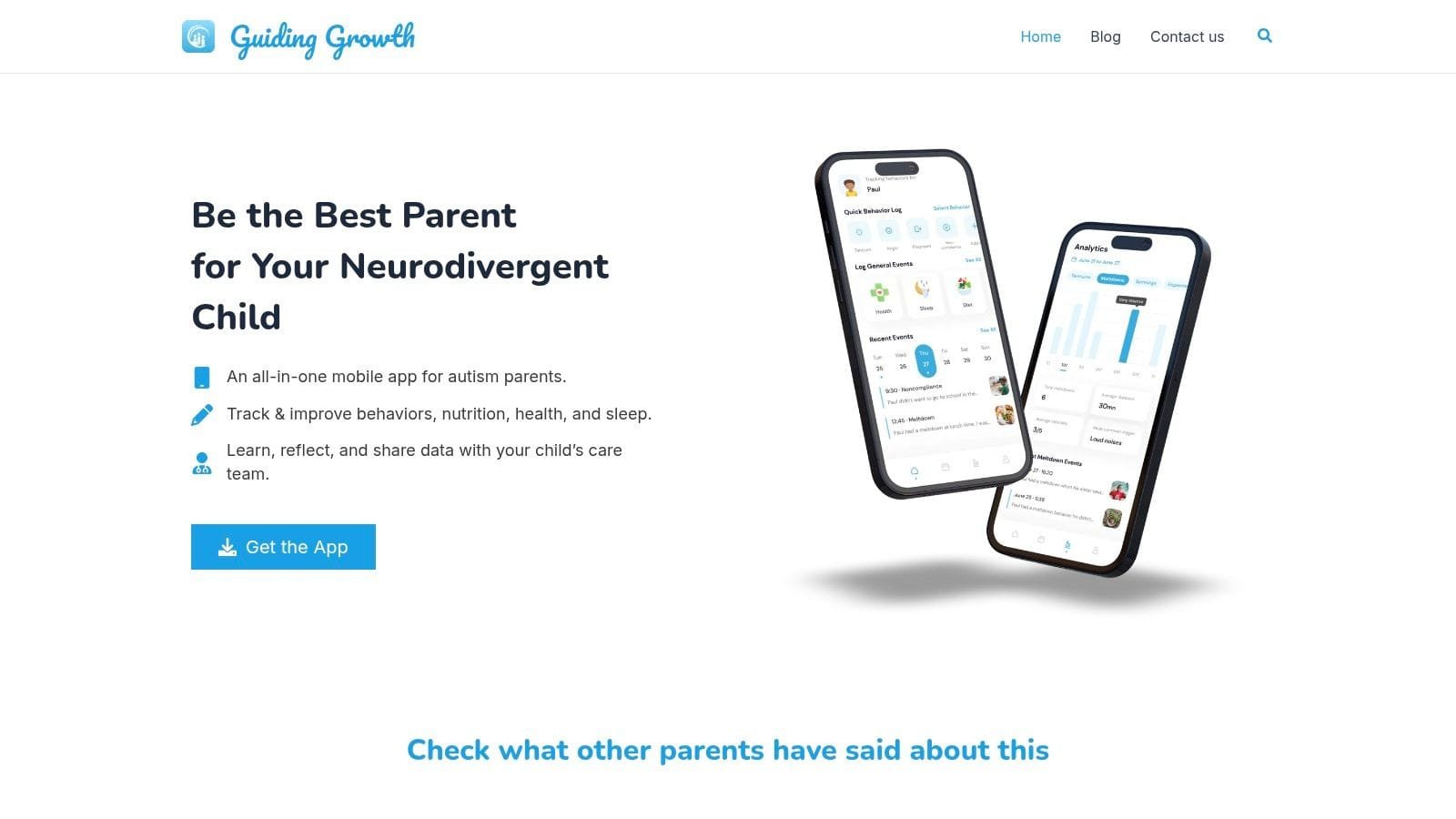
Many families face inconsistent or delayed therapy services because of large caseloads and long waitlists, which makes parent-led documentation of small gains at home especially important service gap and home documentation. In that situation, a modern app can be more useful than a notebook because it keeps observations, routines, and therapy notes connected instead of scattered.
A practical approach is to log a moment as soon as it happens, then let the app organize the pattern later. Voice logging helps when your hands are full, your child is upset, or you are trying to remember a teacher's comment on the way to another appointment. For families who want a simpler way to record notes without typing everything out, the guide to automated transcription for creators shows one way voice-first capture can reduce the effort of documentation, and Guiding Growth can also help keep therapy-related notes in one place through its therapy session notes feature.
The point of documentation is not bureaucracy. It is memory you can trust, especially in the weeks when progress feels hard to see.
Interpreting Your Data to See the Bigger Picture
A stack of notes means little until you look for patterns. One child may communicate more clearly after a good night's sleep. Another may participate more after predictable routines, shorter transitions, or a certain kind of prompt. The point is not to prove perfection, it's to learn what helps your child succeed.

Look for function, not just accuracy
A modern view of progress includes repaired communication breakdowns, shared attention, and participation, not just clearer sounds or more words broader progress outcomes. That matters because a child who can recover after being misunderstood is building a real-world communication skill, even if articulation still needs work.
Think about what happens before and after the communication attempt. Did your child ask for help faster when the environment was calmer? Did frustration drop when choices were visual instead of verbal? Did a sibling conversation last longer when you modeled one short phrase? Those are useful patterns, and they often matter more than a single perfect production.
Use patterns to guide decisions
The most useful interpretation doesn't come from one big takeaway. It comes from noticing small repeating links. If a child uses more words at breakfast than at dinnertime, that might point to fatigue. If a child avoids speech when a demand is sudden but responds when warned, that tells you something about predictability and support. If participation improves when a caregiver waits longer before prompting, that changes the way the whole team coaches.
Functional progress is often quieter than articulation progress, but it's more connected to daily life.
Visual summaries are particularly useful. A timeline or chart makes it easier to see whether the child is trending toward more successful communication, even if the change is gradual. Families often feel less overwhelmed once the pattern is visible, because they can finally tell the difference between a rough day and a real plateau.
Sharing Insights for Better Team Collaboration
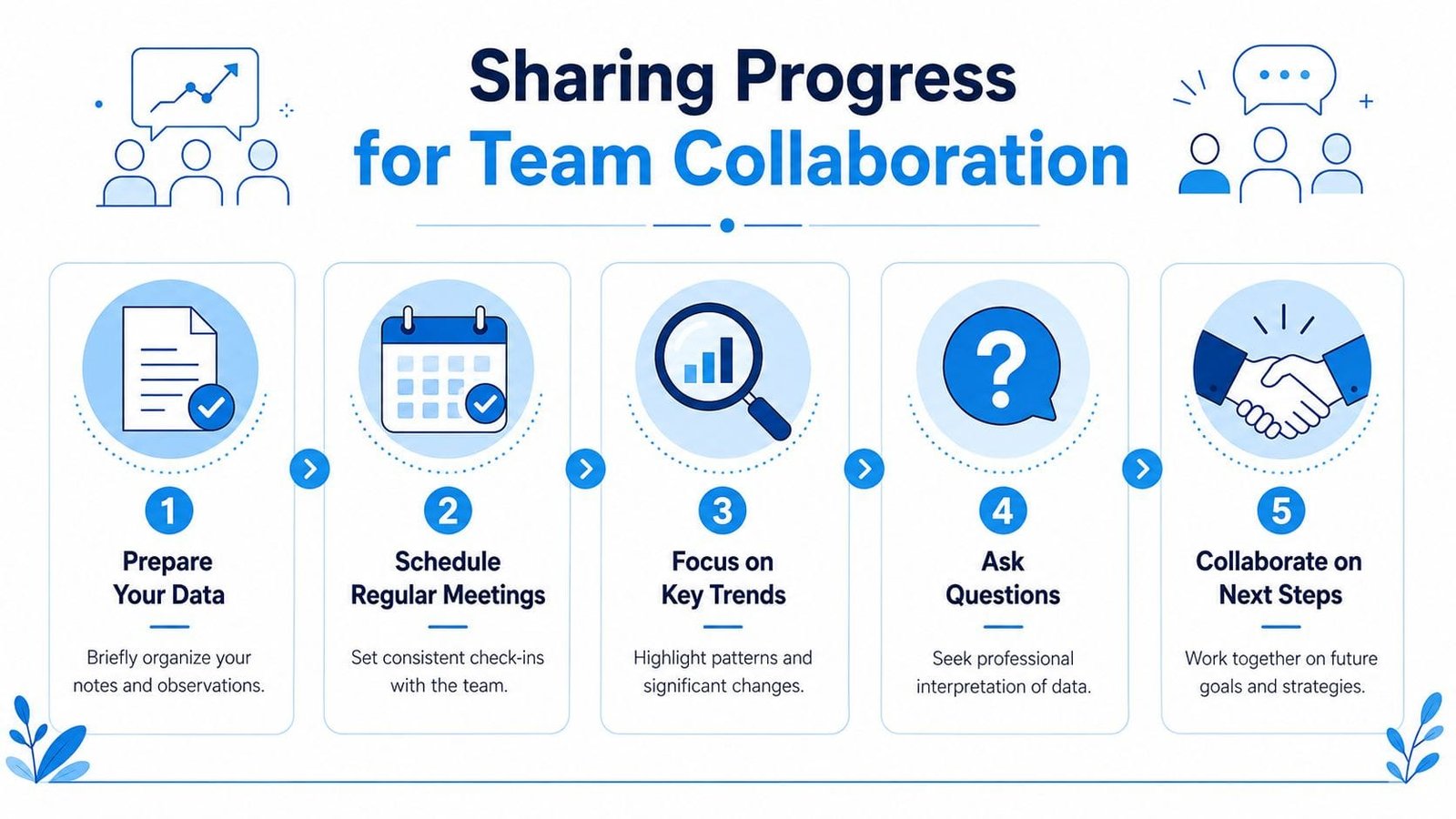
Therapists do their best work when they can see what's happening between sessions. Your home notes are not a challenge to their expertise, they're a window into the hours of the day they never get to observe. That makes your documentation valuable, especially when you can bring it into school meetings, therapy check-ins, or caregiver conversations in a calm, organized way.
Bring a few strong patterns, not a dump of everything
The most helpful conversations usually start with a short summary. You can say, “I noticed my child uses more words during snack time than during cleanup,” or, “The meltdown happens less often when the request is shown visually.” Those are useful because they point to strategy, not just behavior.
If you're sharing digital notes, keep the focus on what changed, what stayed the same, and what seems to help. The safest approach for families using collaborative tools is to make sure shared information stays organized and private, and a guide on securing team data for 2026 is worth reading if you want a practical lens on secure sharing. The goal is simple, give the therapist enough context to adjust goals without drowning them in raw detail.
Use your data to ask better questions
Good questions turn data into planning. Try, “Does this look like a cueing issue or a generalization issue?” or, “Should we keep working on this skill in the same routine, or move it to another one?” Those questions invite clinical interpretation while keeping your observations at the center of the discussion.
You can also ask whether the target still matches daily life. If the child is using a skill in therapy but not at home, the next step may be changing the context, not pushing harder. That's the kind of alignment that improves collaboration between parents, therapists, and school teams.
When families track communication across real routines, the whole team gets a better map. Guiding Growth helps parents centralize daily observations, therapy notes, routines, and shared updates in one place, so the story of progress doesn't get lost between appointments. If you're ready to make speech therapy progress easier to see, visit Guiding Growth and start turning everyday moments into clear, useful insights.