You're halfway through the grocery store when your child suddenly covers their ears, presses against the cart, and starts crying. The public-address system has crackled overhead, carts are rattling, and several conversations are happening at once. Other children nearby barely look up, so you may wonder why this sound feels so enormous to your child.
That moment is useful information, not bad behavior. An autism sensory profile helps you understand how your child notices, interprets, and responds to the sights, sounds, textures, smells, tastes, movement, and body sensations that fill an ordinary day. It turns isolated observations into a practical map, one you can update as your child grows and as circumstances change.
Table of Contents
- What an Autism Sensory Profile Really Means
- The Seven Sensory Domains in Everyday Life
- Hyper-reactivity, Hypo-reactivity, and Sensory Seeking Explained
- Common Tools and Observation Methods for Parents
- How to Collect Sensory Data Without Burning Out
- Reading Patterns Over Time and Turning Data Into Insight
- Practical Strategies for Home, School, and Outings
- Sharing Your Sensory Profile With Therapists and Clinicians
What an Autism Sensory Profile Really Means
A sensory profile isn't a diagnosis, a score that defines your child, or a list of behaviors to eliminate. It's a personalized description of how your child's nervous system receives and organizes information from the world and from their own body.
The grocery-store reaction may point to auditory sensitivity, but sound alone may not explain everything. Bright lights, crowded aisles, unfamiliar smells, hunger, fatigue, and the effort of staying regulated can all add to the load. Your child may tolerate the same store on a quiet morning and struggle later in the day.
A living map, not a permanent label
A useful profile grows from repeated observations. Look across visual, auditory, tactile, gustatory, olfactory, vestibular, and proprioceptive input, and record what happened before the reaction, what your child did, and how recovery unfolded.
Sensory differences are common in autism. A population-based analysis of 25,627 autistic children in the U.S. ADDM Network found documented sensory features in 74.0%, with a 95% confidence interval of 73.5% to 74.5%; the estimate was 70.1% at age 4 and 74.5% at age 8 (population-based analysis of sensory features in autistic children). These findings support looking at sensory experiences as part of everyday planning, not treating them as an unusual add-on.
Practical rule: Describe what your child experiences before deciding what the behavior means.
A living profile can help you anticipate difficult transitions, prepare a quieter route through a busy place, choose a recovery activity, and explain the situation to a teacher without relying on a rushed memory. It also gives therapists more useful information than “loud places are hard.”
As you collect observations, Guiding Growth can provide a place to organize sensory triggers, preferences, reactions, and outcomes alongside other daily-care information. The purpose isn't to make your child fit a template. It's to make their environment more understandable and supportive.
The Seven Sensory Domains in Everyday Life
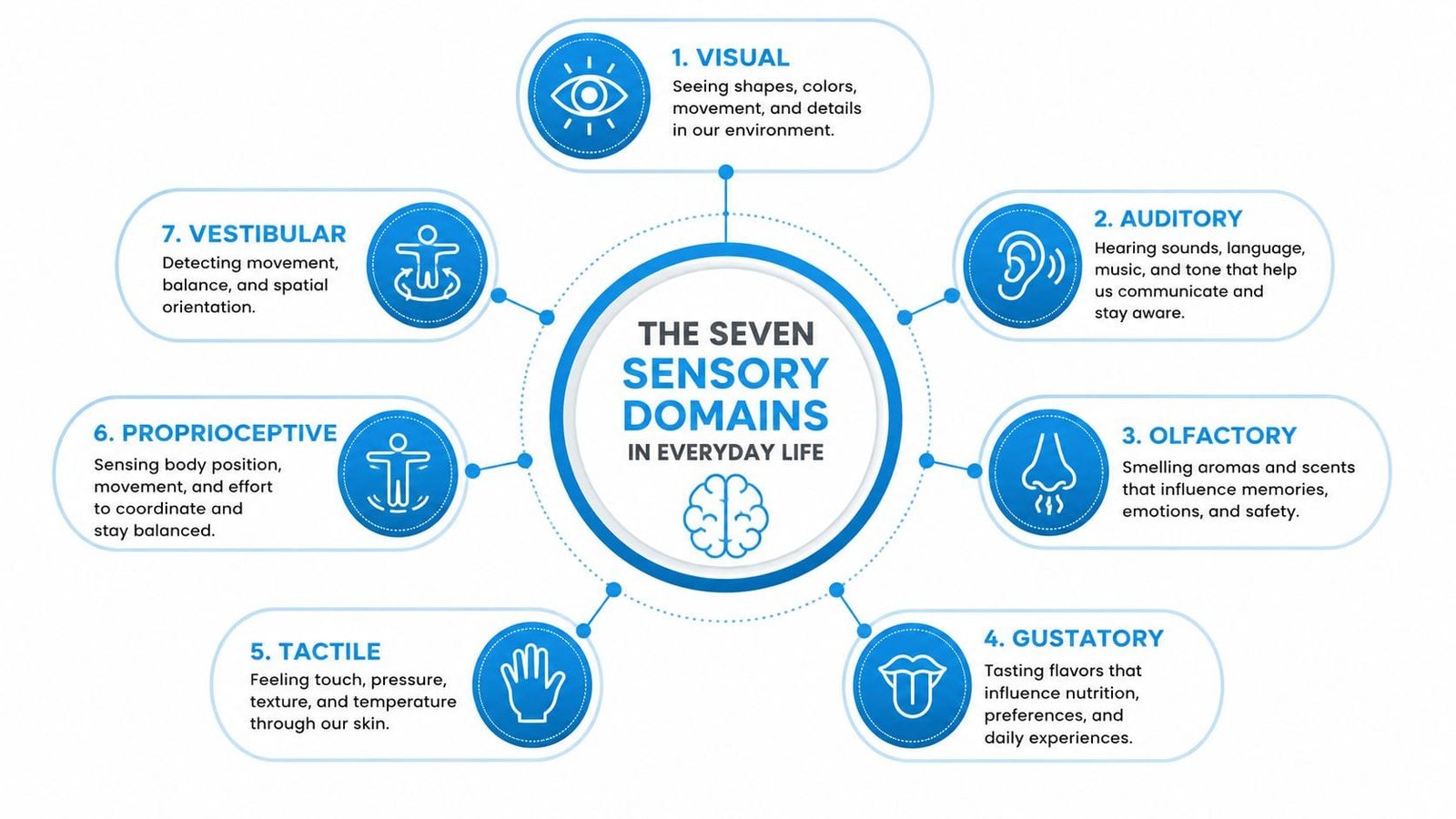
Start with the seven channels that most often shape a child's daily comfort. Each one can be over-responsive, under-responsive, or actively sought, and a child may have different patterns in different channels.
Sight and sound
Visual input helps the brain interpret light, color, movement, and arrangement. Fluorescent lights may feel harsh, or a toy room with shelves, patterns, and scattered objects may make it difficult for your child to find one activity.
Auditory input involves processing sound, volume, pitch, and background noise. A vacuum cleaner, hand dryer, school bell, or cafeteria may overwhelm one child, while another child may make repeated sounds to create more auditory input.
Touch, taste, and smell
Tactile input comes through the skin and includes texture, pressure, temperature, and unexpected contact. A sock seam, clothing tag, hairbrush, or sticky playdough may become the focus of the entire morning. Families looking more closely at this area can use this guide to understand autism touch sensitivity.
Gustatory input is taste, including the flavor and mouthfeel of food. A child may accept crunchy foods but reject mixed textures, sauces, or soft foods.
Olfactory input is smell. Perfume in an elevator, cleaning products, cooking odors, or another person's scented lotion may change whether your child can stay in the room.
Movement and body position
Vestibular input supports balance and the experience of movement. Swings, escalators, elevators, car rides, and quick changes in head position may be exciting, uncomfortable, or frightening.
Proprioceptive input tells the brain where the body is and how strongly muscles and joints are working. Carrying groceries, pushing a laundry basket, wall pushes, or crashing into cushions can provide the heavy body work some children seek.
Map all seven before focusing only on the most visible behavior. A child who appears to “hate” the supermarket may be responding to sound, light, smell, movement, and body fatigue at the same time.
Hyper-reactivity, Hypo-reactivity, and Sensory Seeking Explained
Consider a child getting dressed before a birthday party. The shirt feels unbearable, the hair dryer is too loud, and the child refuses to leave. At the party, they cover their ears during the hand dryer, don't notice frosting on their face, and spend the afternoon crashing into cushions.
Those reactions may represent three different response patterns. Hyper-reactivity means ordinary input registers as too intense. Hypo-reactivity means input may not register strongly or quickly enough. Sensory seeking means the child actively looks for more input to feel organized, alert, or comfortable.
DSM-5 added sensory hyperreactivity, hyporeactivity, and unusual sensory interests to autism diagnostic criteria in 2013 (review of sensory symptoms in autism). The three patterns can appear in one child, across different senses or at different times.
| Response Pattern | What It Looks Like | Example at Home |
|---|---|---|
| Hyper-reactivity | The child reacts strongly to input other people may barely notice. | Covers ears when the hand dryer starts or refuses a shirt because of its texture. |
| Hypo-reactivity | The child may not notice an input or may need extra cues to register it. | Doesn't notice a scraped knee, food on their face, or their name being called. |
| Sensory seeking | The child repeatedly pursues a particular sensation. | Spins, hums, mouths objects, jumps, or crashes into pillows. |
Label the moment, not the child
Use neutral notes during calm periods and difficult periods. Write down the trigger, the response, how intense it appeared, and how long recovery took. You might record, “At bedtime, bathroom fan started. Covered ears, shouted, left room. Quiet bedroom and low speech helped. Recovered after sitting under a blanket.”
A 2024 systematic review and meta-analysis found that higher sensory processing differences were associated with more internalising and externalising problems in autistic people. Hypersensitivity had stronger links with internalising symptoms, while sensation seeking had stronger links with externalising symptoms, and visual, auditory, and tactile sensitivities showed stronger associations than smell and taste processing (systematic review and meta-analysis of sensory processing and behavioral outcomes). That doesn't let anyone predict a child's behavior from a label. It does support recording the specific pattern and context rather than treating every reaction as the same.
Common Tools and Observation Methods for Parents
No single tool captures the whole child. A questionnaire may show broad tendencies, while a note made during a rushed school morning preserves the context that a score can't.
| Tool or Method | What It Captures Well | Where It Falls Short |
|---|---|---|
| Sensory Profile-2 and Dunn's framework | Offers a structured clinical snapshot of sensory patterns and participation. | Scores can be difficult to interpret without examples from daily life. |
| Structured observation sheet | Records the immediate setting, trigger, response, and recovery. | The observer may miss what happened before the visible reaction. |
| Sensory checklist | Helps a family remember common sights, sounds, textures, tastes, and movements to explore. | A checklist can make a changing experience look fixed. |
| Parent journal | Preserves context across meals, sleep, outings, and routines. | Handwritten entries can become inconsistent when caregivers are tired. |
| Behavior log | Links an observable action with an antecedent and outcome. | It may overemphasize behavior and miss the child's sensory preference or communication. |
| Home environmental audit | Identifies lighting, noise, clutter, smells, and touch demands that can be adjusted. | It shows what is present, not automatically what your child experiences. |
| Sensory diet | Organizes planned sensory-motor activities with professional guidance. | It should be individualized and monitored rather than copied from a generic list. |
Use tools as lenses
A standardized questionnaire can start a conversation with an occupational therapist. An observation sheet can answer, “What happened right before the hand clapping?” A journal may reveal that clothing struggles appear mainly after poor sleep or before school.
The strongest assessment approach combines caregiver report with direct observation and considers frequency, sensory type, and modality (clinical review of sensory processing assessment in autism). That combination helps distinguish a recurring pattern from a one-off response.
You can use sensory tools to help calm meltdowns while keeping the question broader than “What tool should I buy?” A tool is useful when it matches a recorded need, works safely for your child, and produces an observable improvement in participation or recovery.
Guiding Growth is one option for organizing behavior logs, sensory observations, routines, sleep, food, appointments, and care-team collaboration in one place. It can reduce the need to search across scraps of paper and separate phone notes, but it doesn't replace an occupational therapy assessment or clinical judgment.
How to Collect Sensory Data Without Burning Out
You don't need to document every sound, texture, and transition. Choose one sensory area for a week, such as sound, and notice it during routines that already happen.
Record five simple details:
- Time: Was it morning, after school, bedtime, or another predictable point?
- Setting: Where were you, and who was present?
- Input: What happened just before the response?
- Response: What did your child do, say, avoid, seek, or fail to notice?
- Support: What changed afterward, and how did recovery look?
A quick note might read: “Tuesday, school pickup, hallway bell sounded. Covered ears and dropped to the floor. Moved outside, reduced speech, waited. Walked to car after a quiet pause.” That entry is more useful than “bad afternoon” because it names the input, context, response, and support.
Make the record fit real life
Use a short voice memo when your hands are full. Add a timestamped app entry after the event. Take a photo of a cluttered room or a clothing seam if that helps you remember the environmental detail. You can fill in missing information later, and you don't need perfect wording.
A workable log beats an ambitious log you stop using.
Try recording one predictable routine each day rather than chasing every reaction. If you miss several days, resume without trying to reconstruct everything. Incomplete notes can still show that hand dryers, crowded checkout lines, or late afternoons repeatedly appear before distress.
Keep the focus on support, not surveillance. Include moments that go well, such as “wore new socks after choosing them from two options” or “used headphones and stayed for the whole appointment.” Successful conditions are part of the profile too.
Reading Patterns Over Time and Turning Data Into Insight
A single entry tells you what happened once. A group of entries can show whether the same type of input appears across places, routines, and energy levels.
Look for repeated features:
- Triggers: Does distress follow sudden sound, touch, visual clutter, or mixed sensory environments?
- Timing: Does the pattern appear before breakfast, after school, or near bedtime?
- Setting: Is the response specific to the supermarket, classroom, bathroom, or car?
- Outcome: Does a quiet space, movement, deep pressure, or fewer spoken instructions help?
- Participation: Does the adjustment help your child remain in the activity, leave safely, or recover sooner?
A 2025 large-scale study described five sensory styles, including sensory adaptive, generalized sensory differences, taste and smell sensitivity, under-responsive or sensation seeking, and movement difficulties with low energy (study of sensory styles in autistic people). These groupings are useful reminders that two children who both cover their ears may still need different supports because their broader profiles differ.
Use a small testing cycle
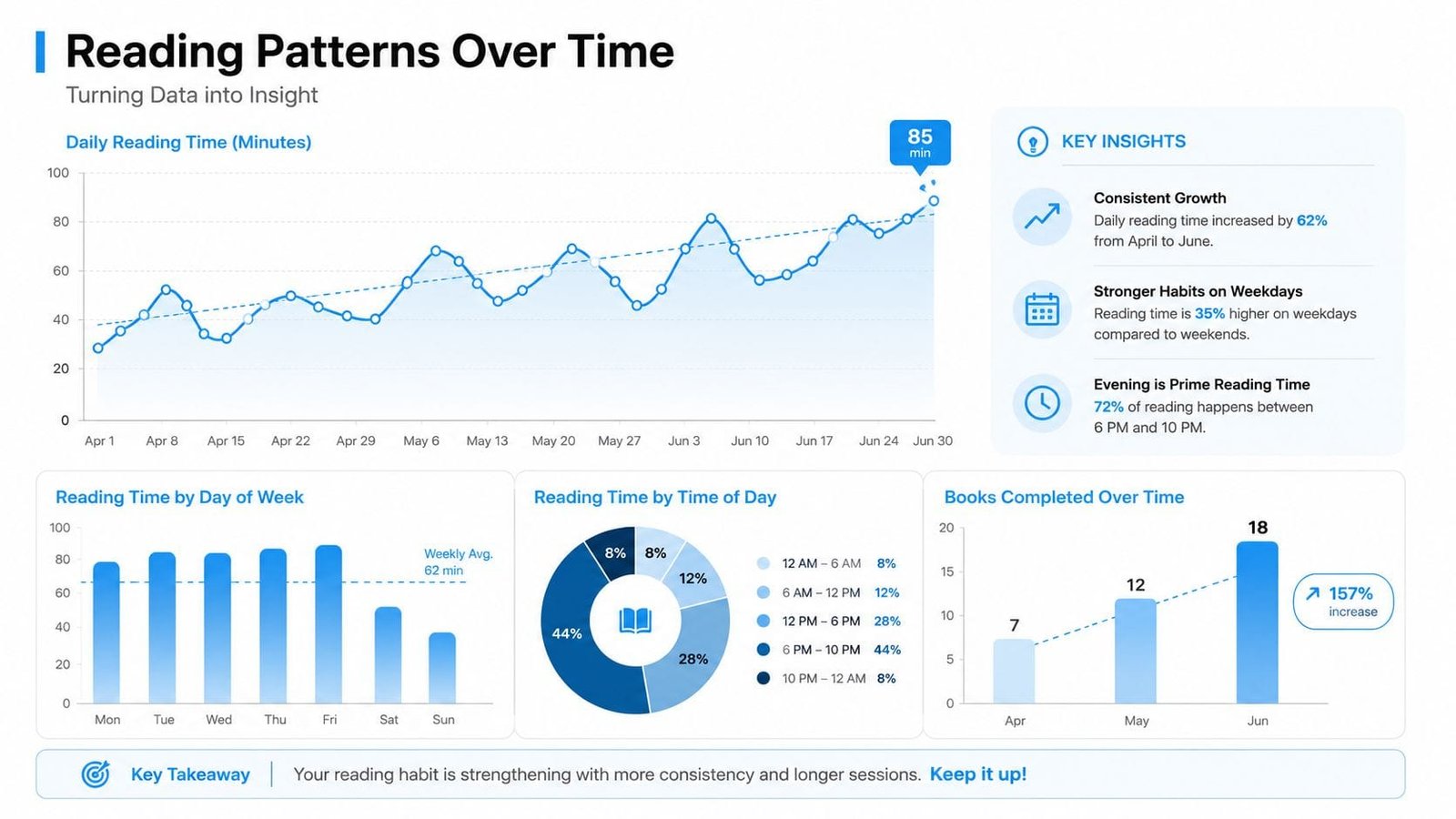
Guiding Growth can help families view entries through timelines, frequency patterns, or other visual summaries. These displays can make a recurring after-school pattern easier to notice than a long written list. The ways to visualize data matter less than using a view that helps your family ask a clear question.
Try this cycle:
- Identify: “Noise reactions cluster during school dismissal.”
- Hypothesize: “The hallway may combine sudden sound, crowding, and touch.”
- Change one thing: Try earlier pickup, headphones, or a quieter exit.
- Re-check: Log what happened under the new condition.
Treat the result as information, not a verdict. A strategy may help in one setting and not another. Consistency helps, but perfection isn't required.
Practical Strategies for Home, School, and Outings
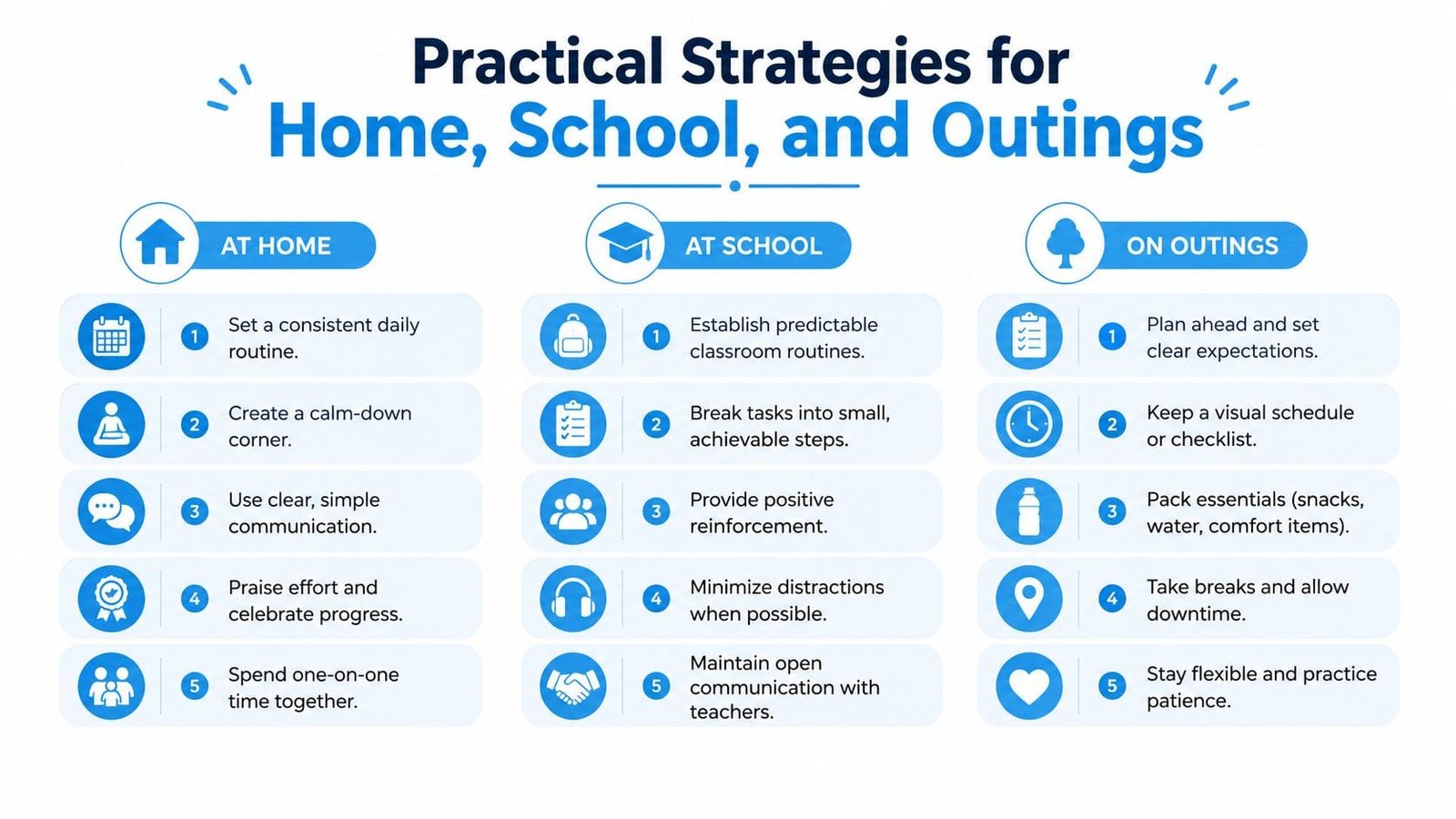
Start with the pattern you can describe most clearly, then test a small environmental change. The purpose isn't to make every setting identical. It's to give your child more control and a reliable way to recover.
Reduce overload where you can
Auditory: Keep noise-reducing headphones available, identify a quiet corner at home, and give advance notice before using the vacuum or blender. At school, ask whether your child can leave before a noisy transition or sit away from hallway doors.
Visual: Dim harsh lighting where possible, reduce visible clutter in the work area, and use a simple visual schedule so your child doesn't need to process spoken directions and a busy room at the same time.
Tactile: Offer clothing choices with different textures, remove irritating tags, and introduce unfamiliar fabrics gradually rather than forcing contact. A weighted lap pad during seated work may be appropriate for some children, but discuss its use with an occupational therapist.
Add useful body input
Vestibular and proprioceptive: Before a transition, try a short movement routine such as carrying groceries, pushing against a wall, moving books, or doing animal walks. Watch whether the activity helps your child organize or makes them more activated.
For eating and smell, keep preferred foods available while introducing changes without pressure. During outings, plan the exit before entering, carry familiar sensory items, and choose quieter times when possible.
A school sensory toolkit might include headphones, a fidget item, a visual card for requesting a break, and a familiar calming object. Staff should know what each item does and when to offer it, rather than treating the kit as a reward or punishment.
Make one adjustment at a time and log the outcome for several weeks. Recording both the strategy and the result in Guiding Growth can help parents, educators, and therapists stay aligned about what supports participation.
Sharing Your Sensory Profile With Therapists and Clinicians
Appointments often begin with, “How has everything been?” A tired parent may remember the hardest morning and forget the quieter pattern that matters just as much. A concise sensory summary gives the conversation a stronger starting point.
Before an appointment, prepare a two to four week window of entries. Highlight the top three triggers and the two calming strategies that appeared most useful. Group the examples by sensory domain, then add the setting, time of day, duration, and recovery details.
Match information to the professional
An occupational therapist may need the clearest description of movement, touch, body awareness, equipment, and participation. A speech therapist may benefit from notes about communication changes during overload, response to spoken instructions, and the amount of language your child can process in that moment. A pediatrician may need the broader picture, including sleep, eating, pain, medication questions, and changes from your child's usual pattern.
Bring examples that show both difficulty and success:
- “Covered ears during the school bell on three logged days.”
- “Used headphones and walked through the hallway with adult support.”
- “Refused mixed-texture foods at dinner but ate the same ingredients separately.”
- “Needed quiet time after the outing before speaking again.”
Export or share a Guiding Growth report or PDF when that feature is available to your care team, and confirm that the recipient can open it securely. Ask the clinician which observations they want continued before the next visit.
A sensory profile becomes more useful when it stays current. Share meaningful changes as they arise instead of waiting for an annual update, especially when a new reaction affects school, eating, sleep, self-care, safety, or family routines.
Guiding Growth gives you one place to record sensory triggers, reactions, routines, sleep, food, appointments, and care-team notes, with quick voice logging for busy moments and visual summaries for spotting patterns. Visit Guiding Growth to turn scattered daily observations into a living autism sensory profile you can use at home and share with the people supporting your child.