You're staring at a shelf of autism resources after a diagnosis, a difficult transition, or another recurring meltdown, and every book seems to promise the missing answer. The problem is that no single autism spectrum disorder book for parents can explain every child, age, support need, or family situation. The useful question is more specific: what decision do you need to make next?
This list organizes ten books by that decision. You'll find titles for understanding autistic identity and history, choosing early-learning strategies, supporting communication, adapting sensory environments, responding to meltdowns, and advocating across home, school, and care settings. Each recommendation is considered for its author expertise, evidence basis, autistic perspectives, intended age range, practical strengths, and limitations.
Parent resources have also changed with autism history. Early guidance was shaped by harmful theories, including Leo Kanner's 1943 claim that autism was connected to a supposed lack of maternal warmth. Later milestones, including Bernard Rimland's 1964 challenge to psychogenic theories and the DSM-III's 1980 distinction between autism and schizophrenia, helped move parent education toward diagnosis, support, and practical coping through the documented history of autism.
Use the list to choose one book, not to build another overwhelming reading pile. You can also explore the parenting section at Storyshort for broader family-support ideas. Guiding Growth can serve as an optional companion for turning ideas into consistent observations that you can discuss with caregivers and professionals. Its logs can organize patterns, but they don't diagnose autism or replace qualified clinical guidance.
Table of Contents
- 1. Uniquely Human A Different Way of Seeing Autism
- 2. An Early Start for Your Child with Autism
- 3. More Than Words
- 4. Turn Autism Around
- 5. Ten Things Every Child with Autism Wishes You Knew
- 6. The Out-of-Sync Child
- 7. NeuroTribes
- 8. Sincerely, Your Autistic Child
- 9. No More Meltdowns
- 10. The Explosive Child
- Comparison of 10 Parent-Focused Autism Books
- Build a Reading-and-Tracking Plan That Fits Your Family
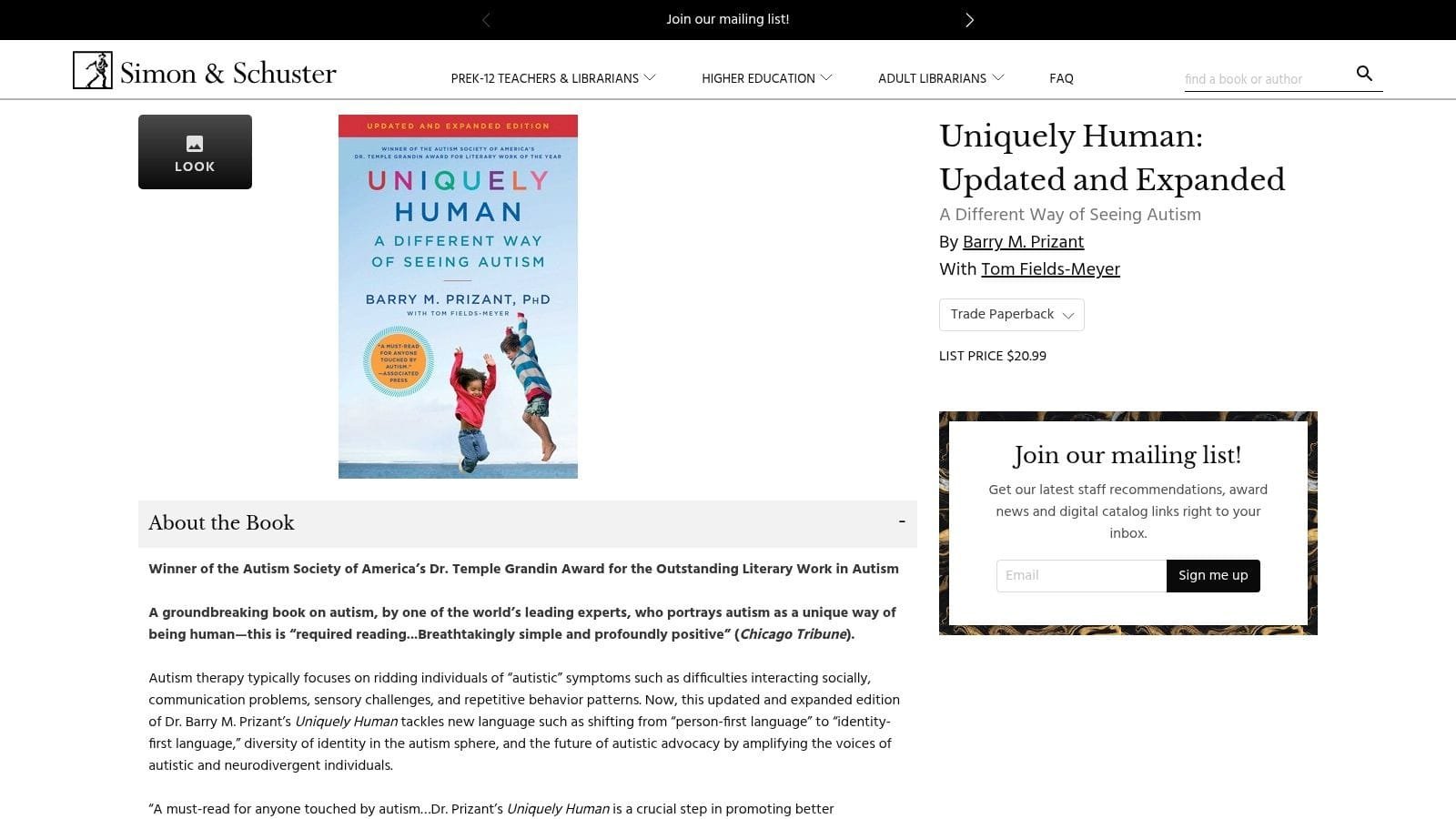
1. Uniquely Human A Different Way of Seeing Autism
Barry M. Prizant's Uniquely Human is the strongest starting point when your immediate decision is, “How should I interpret what my child is communicating?” The book reframes autistic behavior as meaningful communication and coping, rather than treating every difference as a problem to eliminate. Its updated and expanded edition addresses identity-first and person-first language, autistic advocacy, and practical support at home and school through the publisher's book description.
The approach works particularly well when a child's distress is being described as defiance, attention-seeking, or noncompliance without enough attention to sensory load, communication barriers, anxiety, or an unpredictable environment. Prizant uses stories to connect research with familiar family situations, then offers concrete “try this” practices. That makes the book accessible without flattening autism into a simple parenting formula.
What it helps you decide
Use it before choosing a behavior strategy, especially if you're unsure whether a behavior reflects a need for escape, regulation, connection, predictability, or communication. A practical translation might be to record what happened before a difficult moment, what your child did, what adults changed, and whether the child recovered more easily.
Practical rule: Understand the behavior's function before choosing the intervention.
The trade-off is that Uniquely Human isn't a tightly sequenced skills manual. Parents who need a detailed communication curriculum or a minute-by-minute routine may need another book alongside it. The perspective is its main tool, and that perspective can prevent well-intended strategies from becoming compliance exercises. For concrete support after a meltdown, pair the reading with this guide to parenting through meltdowns and repairing trust.
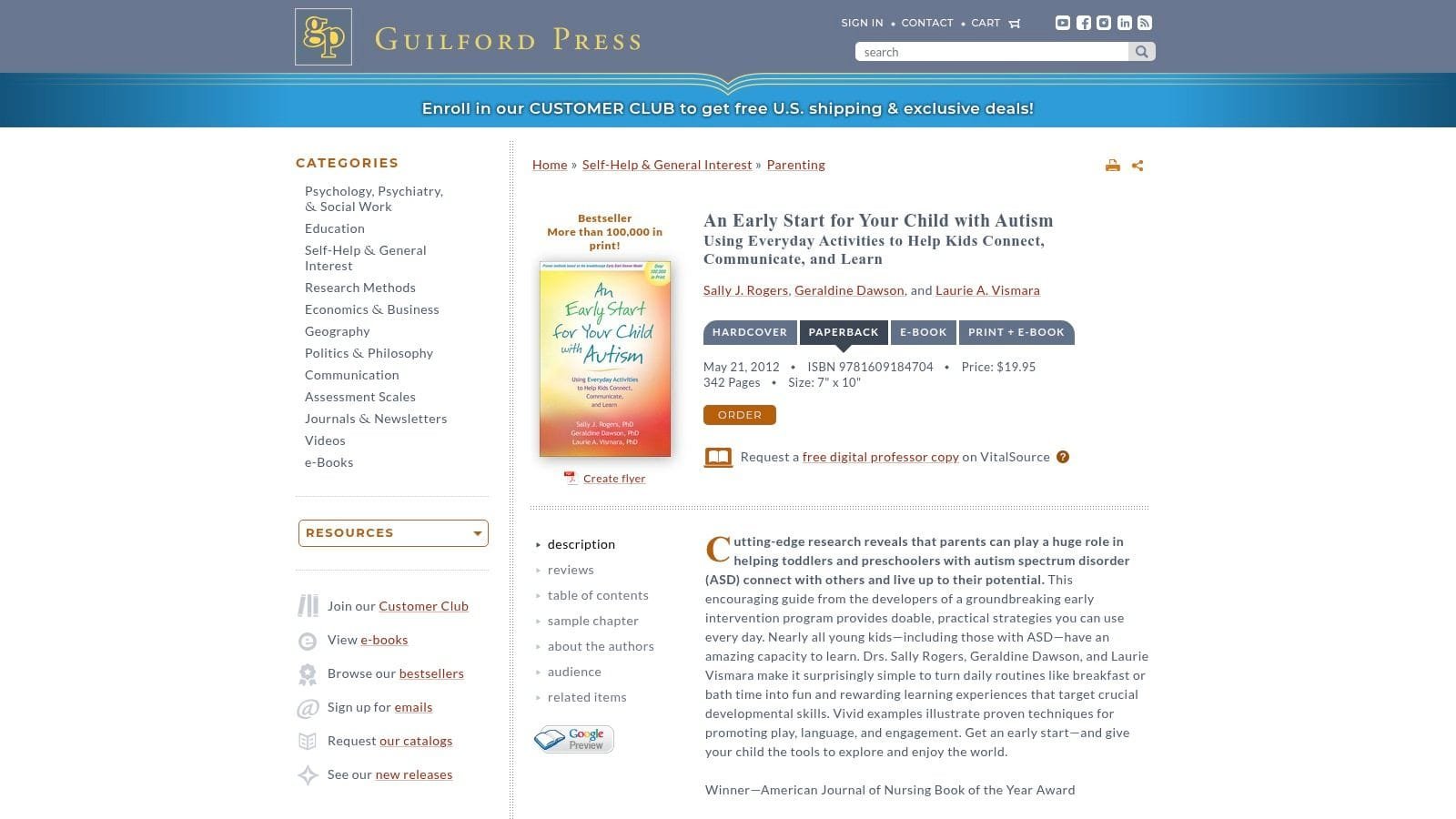
2. An Early Start for Your Child with Autism
If your next decision concerns a toddler or preschooler, An Early Start for Your Child with Autism offers a more structured route. Sally J. Rogers, Geraldine Dawson, and Laurie A. Vismara present parent-implemented strategies associated with the Early Start Denver Model, integrating learning into play, meals, dressing, bath time, and other ordinary routines in the publisher's overview.
The book's strength is translation. Instead of keeping intervention inside a clinic, it shows parents how to create opportunities for social engagement, shared attention, play, imitation, and communication during activities the child already knows. Checklists and goals can help a family move from “we need to work on communication” to an observable target, such as offering a choice and waiting for a gesture, sound, word, sign, or other response.
Best fit and real limitation
This is primarily an early-childhood guide. It's most useful for families building foundational interaction and learning routines for young children, and it's less detailed for older children whose needs involve academic independence, puberty, complex communication systems, or adolescent anxiety.
Avoid turning every household interaction into a lesson. Pick one routine, define one small goal, and preserve the child's enjoyment and autonomy. Record whether the activity was easy, difficult, or neutral, along with sleep and sensory context, so you can tell whether a strategy fits the child rather than assuming a missed response means a lack of ability.
For a companion approach to early observation and home practice, see this early autism detection and home therapy guide. Guiding Growth can help you keep the routine visible across caregivers, but a log can't determine whether a child needs a particular intervention.
3. More Than Words
Communication is the central decision in More Than Words, the Hanen Centre's parent guide for supporting autistic children through everyday interaction. Rather than beginning with isolated drills, the book emphasizes child-led engagement, following interests, recognizing communication attempts, and creating natural reasons to interact in the Hanen Centre's guidebook information.
Its stage-of-communication framework gives parents a way to choose goals that match the child's current profile. A child who communicates by pulling an adult toward an item needs a different starting point from a child who uses spoken phrases but struggles to sustain a reciprocal exchange. The visual examples make the advice easier to apply during play, meals, getting dressed, and community activities.
Turn interaction into a repeatable routine
Choose one activity your child enjoys and observe what they do to request, protest, share, comment, or seek help. Then make a small change, such as pausing before handing over a favorite item or offering two meaningful choices. The aim isn't to force eye contact or a particular response. It's to make communication more successful and less effortful.
- Match the goal: Work on a communication function your child uses every day.
- Follow motivation: Build practice around interests rather than demanding attention without context.
- Share the method: Give other caregivers the same prompt, pause, and response pattern.
The trade-off is cost and commitment. This guide is more substantial than a casual paperback, and families may need time to learn its framework before it feels natural. It also isn't a complete guide to AAC selection, speech-language assessment, or complex communication access. Treat it as a home-carryover resource and coordinate it with your child's speech-language pathologist.
Use these autism communication strategies to connect reading with daily observations. Track the communication attempt and the adult response, not only whether the child produced a target word.
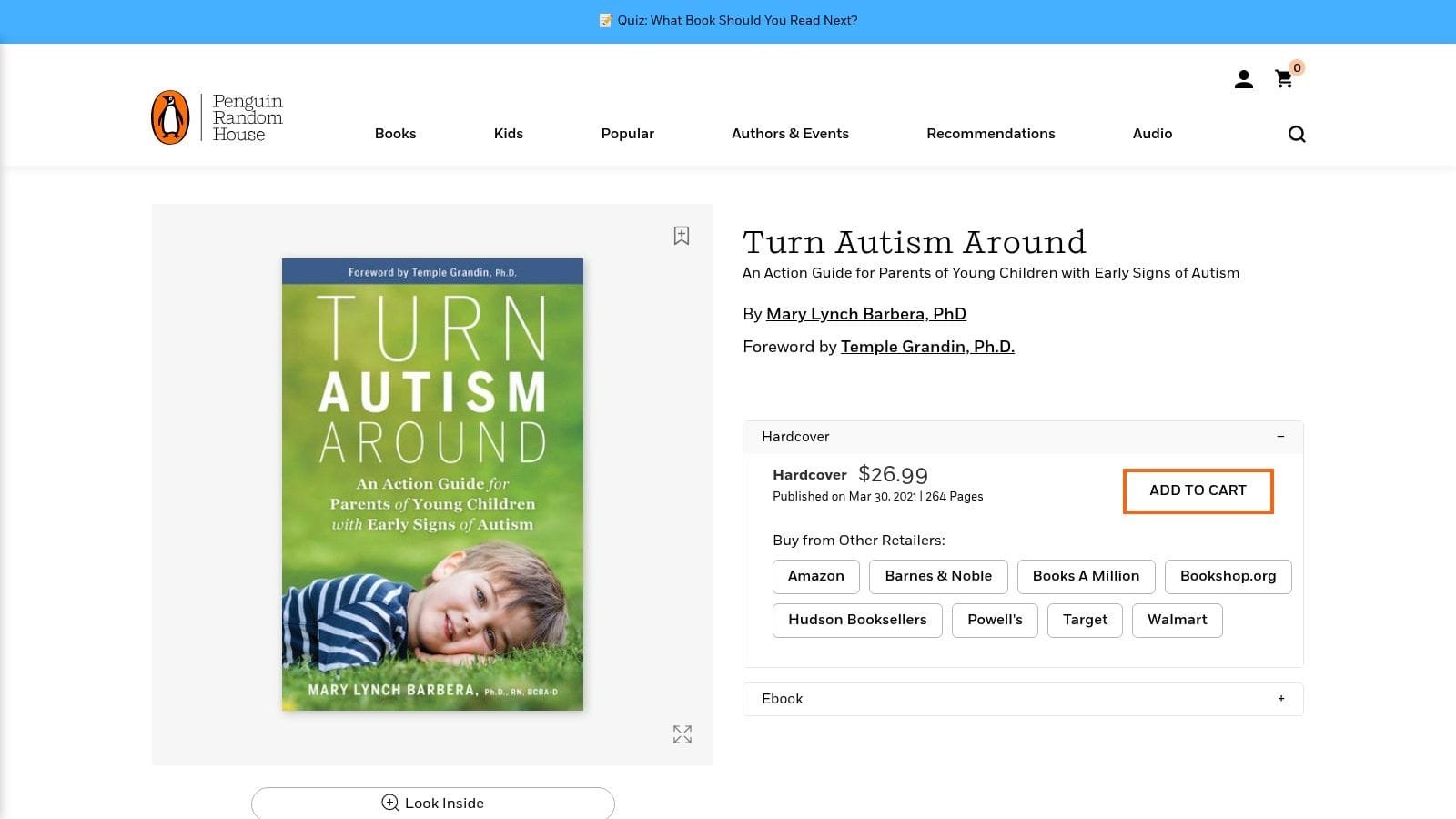
4. Turn Autism Around
Mary Lynch Barbera's Turn Autism Around is designed for parents who need a clear action plan for a very young child showing early signs of autism. It draws on ABA principles and emphasizes brief, home-based routines addressing communication, self-care, sleep, eating, toileting, and behavior according to the publisher's description.
Its appeal is implementation speed. A parent with limited time can select a short routine, practice it consistently, and observe what changes. The companion online resources, assessments, videos, and checklists can make the material feel more concrete than a book that stays at the level of theory.
Where the approach fits
This title can be useful when a family needs help selecting one daily priority. For example, instead of trying to improve everything at once, you might focus on helping a child request a snack, tolerate a toothbrushing step, or participate in a bedtime transition. Record the setup, the prompt, the child's response, and what happened afterward.
The book's limitations deserve equal attention. It focuses on young children, although some routines may translate to older children with early language levels. Families who don't want an ABA-based framework may prefer Uniquely Human, More Than Words, or Sincerely, Your Autistic Child. Even when a strategy is practical, parents should ask whether it supports communication, safety, autonomy, and wellbeing, rather than only making behavior more convenient for adults.
Use the book as a source of possible routines, not as a replacement for an individualized assessment. A qualified professional can help adapt goals to communication access, sensory needs, motor abilities, and the child's broader health.
5. Ten Things Every Child with Autism Wishes You Knew
Ellen Notbohm's Ten Things Every Child with Autism Wishes You Knew is the quickest perspective-setting read in this list. Its memorable framework gives parents, relatives, teachers, and babysitters shared language for understanding autistic experience and responding respectfully through the author's book page.
That makes it particularly useful after identification, before a school meeting, or when extended family members keep interpreting autism through stereotypes. The revised and updated third edition expands the material, and a companion title for educators makes it easier to carry the central ideas into school conversations.
Use it to align the adults
Choose one idea from the book and convert it into an adult agreement. If transitions are difficult, agree that caregivers will preview the change, use the same visual cue, allow processing time, and avoid adding multiple verbal demands during distress. If a child communicates through movement, repetition, or AAC, agree to treat those actions as information rather than automatically suppressing them.
The book isn't a detailed skills curriculum. It won't give you a full sensory plan, an AAC implementation protocol, or a complete response for severe aggression or self-injury. Its value is consistency and empathy. A short, shared framework can be more useful than a large manual that only one caregiver reads.
Parents should also avoid treating any “ten things” framework as a universal description of autism. Autistic children vary in communication, sensory profiles, learning styles, support needs, and preferences. Use the book to generate questions about your child, then verify those questions through observation and collaboration.
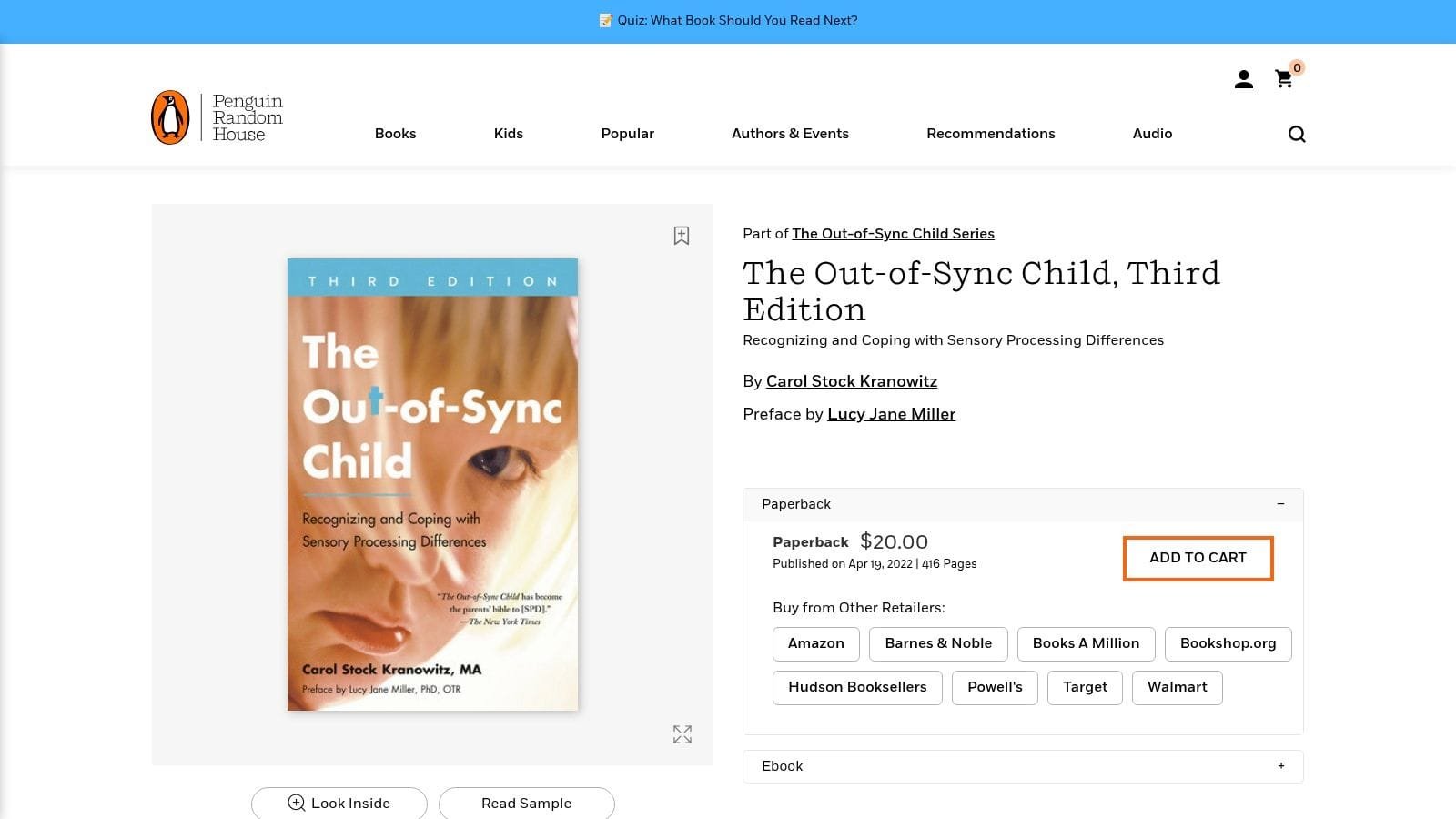
6. The Out-of-Sync Child
When the immediate decision is environmental, The Out-of-Sync Child gives parents a detailed way to think about sensory processing differences. Carol Stock Kranowitz explains how sensory input can affect participation and offers practical accommodations for home and school in the publisher's description of the third edition.
The book is useful when a child refuses clothing, covers their ears, crashes into furniture, avoids messy play, becomes overwhelmed in crowded spaces, or seems unable to settle after a demanding day. Instead of asking, “How do I stop this behavior?” parents can ask, “What input is making this task harder, and what change could make participation safer?”
Build an accommodation hypothesis
Select one context, such as the school cafeteria, hair washing, or the evening routine. Note the sensory features, your child's signals, the accommodation you tried, and the outcome. A quieter location, softer clothing, reduced visual clutter, movement before seated work, or a predictable warning may help, but the right support depends on the child and situation.
The strength of this book is depth. It can give parents useful vocabulary for conversations about school supports and care-team planning. Its limitation is scope. It focuses on sensory processing and isn't an autism handbook, communication guide, or behavior manual. Activity-based companion books may be useful for families who want more ideas for movement and play.
Avoid assuming that every difficult behavior is sensory. Pain, sleep disruption, hunger, medication effects, communication frustration, anxiety, and task difficulty can look similar. Track context broadly, and ask qualified professionals to evaluate persistent or concerning changes.
7. NeuroTribes
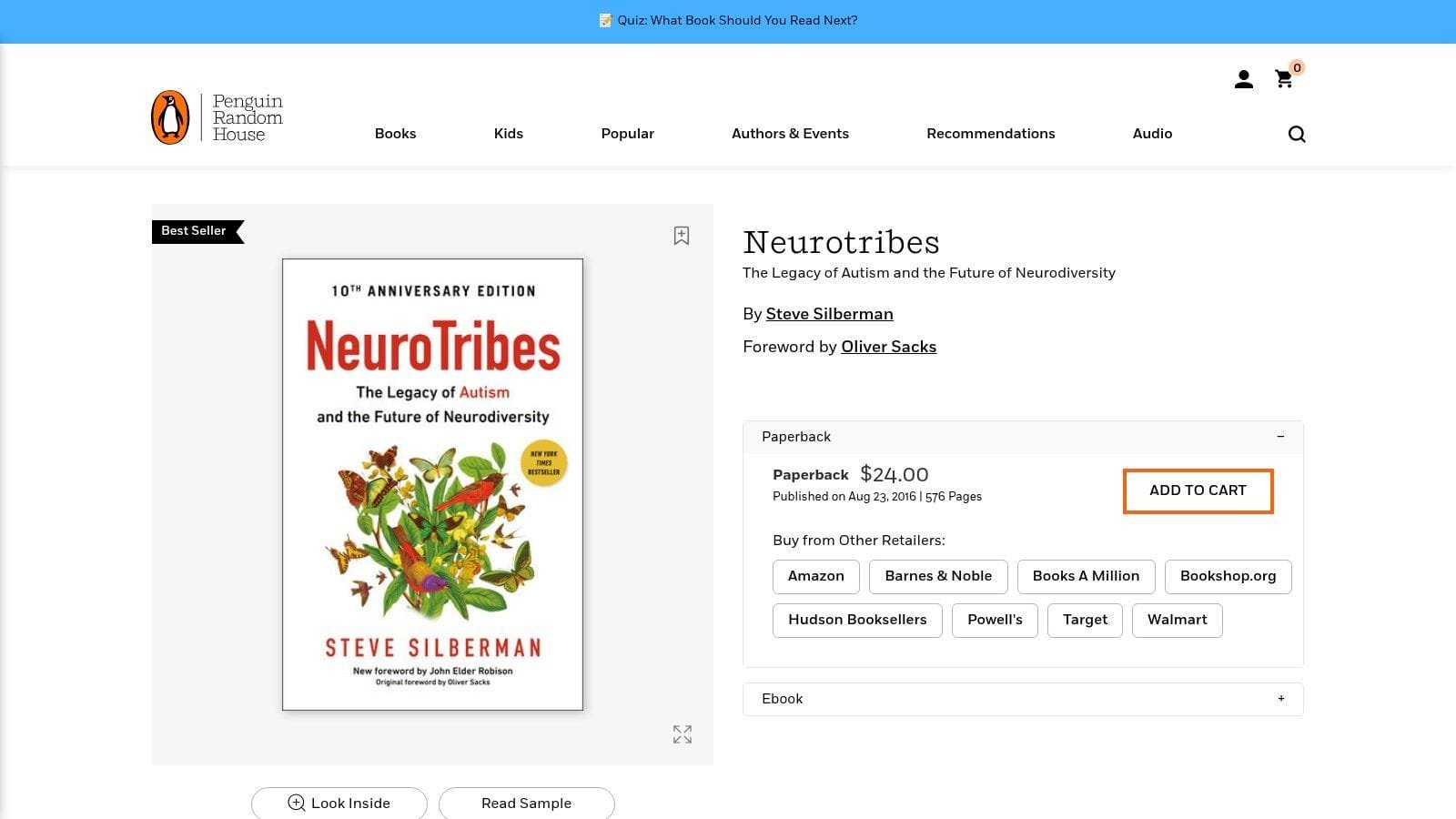
Steve Silberman's NeuroTribes supports a different parenting decision, “What assumptions about autism should shape our family's expectations and advocacy?” It's a reported history of autism and the neurodiversity movement, with profiles of autistic people and communities that broaden the discussion beyond therapy and behavior management through the publisher's overview.
This is not a book you pick up for a bedtime visual schedule or a response plan for tomorrow morning. Its contribution is perspective. Understanding how autism has been described, diagnosed, and debated can help parents recognize why older resources may center blame, normalization, or uncertainty, while newer guides increasingly address support, inclusion, identity, and family coping.
The history matters because diagnostic language has changed. The autism spectrum concept broadened through the DSM-III-R in 1987 and DSM-IV in 1994, which expanded recognized presentations to include PDD-NOS and Asperger's syndrome in the documented history of autism. Those changes help explain why books written for different generations may describe children and families in very different terms.
Translate perspective into advocacy
After reading, write down one expectation you want a professional or school team to reconsider. It might involve participation, communication access, sensory accommodations, or the difference between appearing typical and being supported. Bring a specific observation and a practical alternative, rather than only a broad philosophical argument.
The trade-off is length and immediacy. Families in crisis may need a more direct guide first. Read NeuroTribes when you have enough space to examine the larger context, and pair it with a practical book matched to your child's current need.
8. Sincerely, Your Autistic Child
Sincerely, Your Autistic Child changes the source of authority. The collection brings together short essays by autistic people discussing growing up autistic, acceptance, identity, communication, school, and advocacy through the publisher's description.
This format works well for parents who want perspectives that a clinician-authored manual cannot provide. Different essays may challenge assumptions about eye contact, social success, masking, independence, sensory regulation, or what “help” feels like from the child's side. The diversity of voices is important because no single autistic adult can represent every autistic child.
Read for questions, not rules
Choose one essay that changes how you think about a recurring situation. Then ask your child's caregivers what they observe, what the child appears to enjoy or avoid, and whether the current support increases access or reduces visible difference. For a child who uses limited speech, include all available communication forms and don't assume that spoken language is the only measure of understanding or agency.
The trade-off is the essay structure. This isn't a single prescriptive roadmap, and readers may encounter differing or even conflicting experiences. That's a feature rather than a flaw, provided you use the collection to widen your questions instead of searching for a universal autistic script.
Recent parent reading lists increasingly include autistic-authored or autistic-informed resources, as well as books for grandparents, teens, and autistic parents. That broader family focus matters when diagnosis, masking, late identification, and family dynamics affect more than one person. Pair this collection with a practical guide, then check whether the resulting routine gives your child more communication, predictability, comfort, and choice.
9. No More Meltdowns
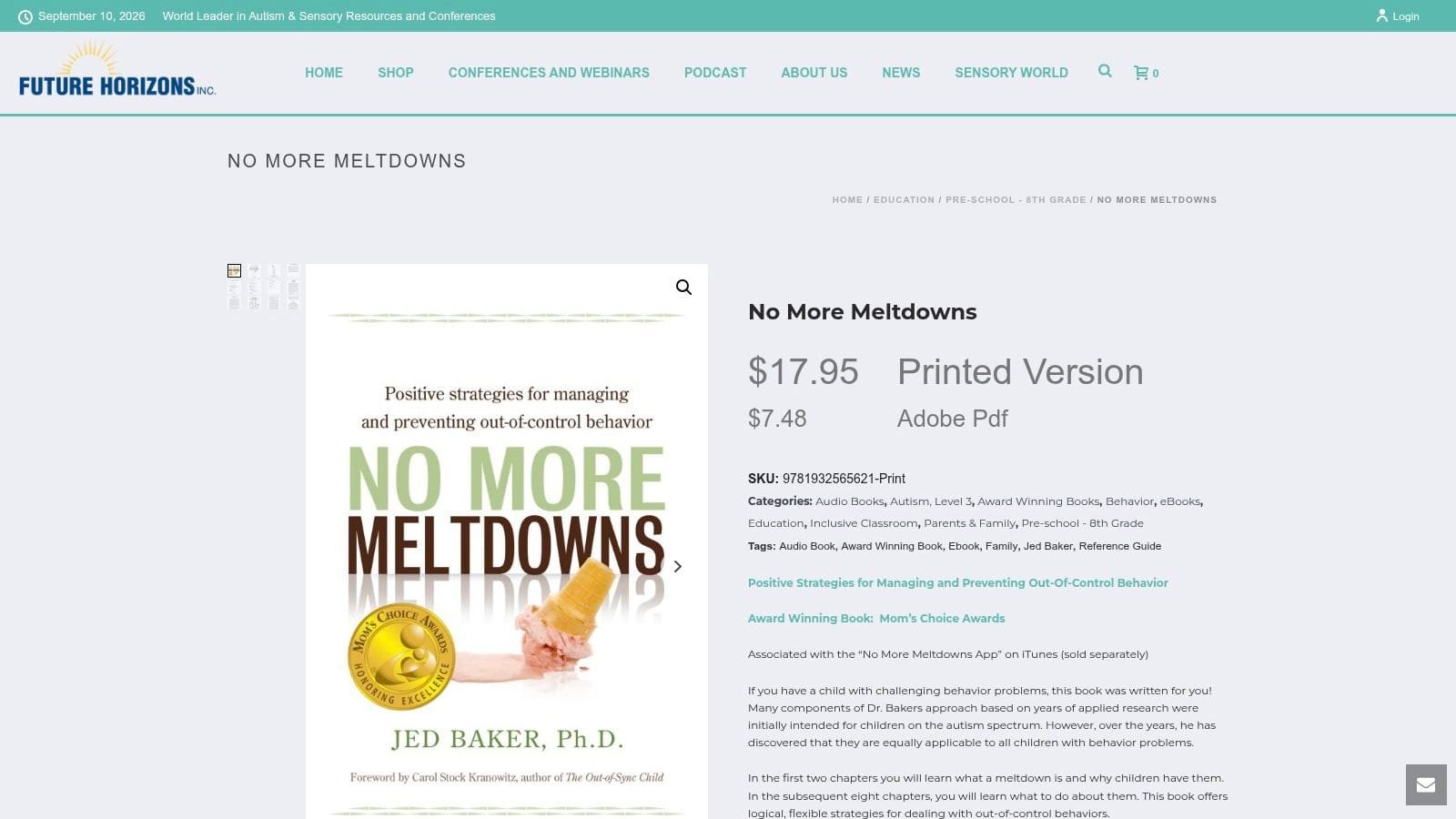
Jenna and Deborah Kearney's No More Meltdowns is aimed at the decision parents face during repeated, intense episodes: “What can we change before, during, and after the meltdown?” Its four-part flow moves from regulating the adult, to helping the child calm, to analyzing triggers, to preventing future episodes through the book's publisher information.
The sequence is practical because it doesn't begin with a demand for perfect calm from the child. Parents can first reduce their own verbal load and physical intensity, then consider safety and co-regulation. Once everyone is settled, the family can examine what preceded the episode, including transitions, communication breakdowns, sensory demands, fatigue, hunger, pain, and unexpected changes.
Pair the book with structured observation
Create a simple record for each episode:
- Before: Note the activity, demand, transition, people present, environment, sleep, food, and communication context.
- During: Record observable actions and safety concerns without interpreting motives.
- After: Note what helped recovery and whether the next routine was changed.
- Plan: Choose one prevention adjustment to test consistently.
Guiding Growth can centralize behavior entries such as meltdowns and shutdowns alongside sleep, routines, diet, medications, appointments, and therapy sessions. That can be easier than searching through scattered notes when you're preparing for a professional conversation, but the record remains an observation aid. It doesn't establish a diagnosis or prove that one trigger caused an episode.
The book's limitation is its behavioral lens. It pairs best with identity-affirming and sensory-communication resources so that prevention doesn't become an effort to suppress harmless autistic regulation. Safety, dignity, and recovery should remain more important than making a child look calm.
10. The Explosive Child
Ross W. Greene's The Explosive Child isn't autism-specific, but it can be valuable when chronic inflexibility, frustration, and severe outbursts dominate family life. Its Collaborative and Proactive Solutions model, especially Plan B, focuses on identifying lagging skills and unsolved problems, then solving them with the child rather than relying on punishment or escalating demands through Greene's book information.
The framework applies across ages and settings, from toddlers to teens. That flexibility is useful when the same problem appears at home, school, and therapy, such as difficulty ending screen time, leaving the house, tolerating a clothing requirement, or beginning homework. The parent's task is to identify the specific unsolved problem, listen to the child's concern, and develop a realistic solution together.
A respectful way to test Plan B
Start outside the crisis. Choose a recurring problem and describe it without blame. Ask what makes the task difficult, reflect the child's concern, and collaborate on a solution that also addresses the family's safety or practical need. If the child can't participate verbally, adapt the process using AAC, visuals, choice-making, drawing, or another accessible communication method.
The strength is its non-punitive, skills-building stance. The limitation is equally clear: autism-specific communication, sensory, medical, and developmental considerations still need attention. A child may be unable to solve a problem in the moment because of overload, pain, fatigue, or limited access to communication, not because the family hasn't held the right conversation.
Use behavior logs to identify when collaborative problem-solving is possible and when the priority must be safety and recovery. Then share recurring patterns with the child's qualified professionals, who can help distinguish skill gaps from health, sensory, communication, or environmental barriers.
Comparison of 10 Parent-Focused Autism Books
| Title | ✨ Key features | 👥 Target audience | ★ UX/Quality | 💰 Value | 🏆 Why choose |
|---|---|---|---|---|---|
| Uniquely Human: A Different Way of Seeing Autism (2022) | ✨ Strengths-based reframing; “try this” practices; updated advocacy/language | 👥 Parents & schools seeking dignity-focused approach | ★★★★ | 💰 Medium | 🏆 Emphasizes collaboration, respect, and practical family/school tips |
| An Early Start for Your Child with Autism | ✨ Step-by-step Early Start Denver Model coaching; routine-embedded activities | 👥 Parents of toddlers/preschoolers (0–5) | ★★★★★ | 💰 Medium–High | 🏆 Gold-standard, evidence-based parent-implemented intervention |
| More Than Words (2nd ed.) | ✨ Child-led interaction strategies; stage-based goals; visual examples | 👥 Parents & SLPs focused on communication carryover | ★★★★ | 💰 Medium–High | 🏆 Practical, visual techniques backed by Hanen training |
| Turn Autism Around: An Action Guide | ✨ 15‑min/day home routines; free online resources & videos | 👥 Busy parents of very young/early-language children | ★★★★ | 💰 Medium | 🏆 Actionable daily routines for fast, practical wins |
| Ten Things Every Child with Autism Wishes You Knew (3rd ed.) | ✨ Memorable "Ten Things" framework; quick, shareable chapters | 👥 Families & educators needing quick empathy-building tools | ★★★★ | 💰 Low–Medium | 🏆 Concise, validating, easy to share with caregivers/teachers |
| The Out-of-Sync Child (3rd ed., 2022) | ✨ Deep sensory processing explanations; home/school accommodations | 👥 Parents/caregivers addressing sensory differences | ★★★★ | 💰 Medium | 🏆 Thorough sensory guidance useful for IEP/504 planning |
| NeuroTribes: The Legacy of Autism | ✨ Longform history & neurodiversity narrative; community profiles | 👥 Parents/advocates wanting context, history, and advocacy framing | ★★★★★ | 💰 Medium–High | 🏆 Broadens mindset toward acceptance and systemic change |
| Sincerely, Your Autistic Child | ✨ Short, diverse first-person essays with actionable insights | 👥 Parents wanting autistic-perspective guidance & conversation starters | ★★★★ | 💰 Medium | 🏆 Authentic voices that improve perspective-taking and advocacy |
| No More Meltdowns | ✨ Four-step prevention/response model; planning templates & vignettes | 👥 Parents needing concrete meltdown strategies (pairs with logging) | ★★★★ | 💰 Medium | 🏆 Practical, quick-to-implement model that complements tracking tools |
| The Explosive Child (6th ed.) | ✨ Collaborative & Proactive Solutions (Plan B); lagging-skill tools | 👥 Parents/educators of children with chronic inflexibility/outbursts | ★★★★ | 💰 Medium | 🏆 Compassionate, non-punitive framework scalable across ages |
Build a Reading-and-Tracking Plan That Fits Your Family
The best reading plan is small enough to use during real family life. Start with one perspective-setting title, such as Uniquely Human, Ten Things Every Child with Autism Wishes You Knew, NeuroTribes, or Sincerely, Your Autistic Child. These books can help you examine whether a proposed strategy supports communication, autonomy, comfort, participation, and identity.
Next, choose one book that matches the immediate decision. For a young child and early learning, consider An Early Start for Your Child with Autism or Turn Autism Around. For communication, start with More Than Words. For sensory accommodations, choose The Out-of-Sync Child. For recurring meltdowns or explosive reactions, compare No More Meltdowns with The Explosive Child.
Don't apply every recommendation at once. Select one or two strategies, define what you'll observe, and test them consistently enough to understand the pattern. If bedtime is the priority, record the routine, transition warnings, sensory conditions, sleep onset, night waking, and next-day effects. If communication is the priority, record the context, the child's communication attempt, the support offered, and whether the child could express a need more successfully.
Guiding Growth can help bring those observations into one place. Parents can record:
- Context and triggers: Note transitions, demands, environments, people, communication access, and sensory conditions.
- Behavior and recovery: Log meltdowns, shutdowns, demand avoidance, echolalia, hand flapping, or other observable actions without treating them as diagnostic evidence.
- Sleep and routines: Track bedtime patterns, waking, meals, school preparation, and other daily sequences.
- Diet and medications: Record nutrition details, preferences, sensitivities, medication information, and changes to discuss with qualified professionals.
- Appointments and collaboration: Keep doctor appointments, therapy sessions, caregiver notes, and shared goals aligned.
When typing is difficult, Guiding Growth includes quick voice logging, which can help parents capture an observation soon after it happens. Its visualizations and sharing features can support reflection and collaboration with family members, caregivers, educators, therapists, pediatricians, and other professionals. The app also includes Alma AI, an AI autism parenting companion, but AI suggestions should be treated as general support, not clinical assessment or treatment direction.
A tracking pattern can suggest a useful question, such as whether a transition becomes harder after poor sleep or whether a visual preview helps during school preparation. It can't diagnose autism, determine treatment, establish causation, or replace qualified clinical advice. Bring concerning changes, safety issues, medication questions, sleep problems, feeding concerns, and developmental questions to the appropriate professional.
Before buying any autism spectrum disorder book for parents, use this comparison checklist:
- Age fit: Is the guidance intended for toddlers, preschoolers, school-age children, teens, or the whole family?
- Immediate goal: Does it address identity, early learning, communication, sensory access, meltdowns, sleep, routines, or advocacy?
- Evidence basis: Does the author explain the framework and distinguish practical experience from established evidence? Some strengths-based parent books are built on substantial research. For example, a review of The Strengths-Based Guide to Supporting Autistic Children notes 165 cited sources, mostly journal articles, plus an annotated bibliography of five sources published from 2011 to 2020 in the reviewed book analysis.
- Autistic perspectives: Does the book include autistic authors, contributors, or meaningful engagement with autistic experience?
- Implementation load: Can your family use the strategy during an ordinary routine, or does it require extensive training and preparation?
- Limitations: What does the book leave out, and which professional or autistic-led resource should balance it?
Choose the book that answers your next question, then let your child's communication, comfort, safety, and participation guide what you keep.
Guiding Growth gives parents a single place to log behaviors, sleep, nutrition, medications, appointments, therapy, and daily routines, with quick voice logging for moments when typing isn't practical. Visit Guiding Growth to connect book-based strategies with clearer observations and coordinated conversations with the people supporting your child.