You notice it in a dozen small moments. Your child's hands flutter when they're thrilled to see bubbles. Their fingers flick near their face in a bright store. They wring their hands during a hard transition, and suddenly you're wondering what it means, whether you should stop it, and whether you're missing something important.
If you searched for answers about autism stimming hands, you're probably not looking for a cold definition. You're looking for reassurance and a way to respond well. That makes sense. Parents often see the movement first, but what matters most is the reason behind it.
I want to offer a gentler frame. Hand stimming is often a clue, not a problem statement. It can tell you that your child is excited, overloaded, anxious, focused, or trying to settle their body. When you read it that way, your job changes. You stop asking, “How do I make this stop?” and start asking, “What is my child's nervous system telling me right now?”
That shift matters in everyday care, and it also matters when you're coordinating with therapists, schools, or medical providers. If you ever need the administrative side of autism support, this overview of billing guidance for ASD professionals can help you understand one part of that broader system.
Table of Contents
- An Introduction to Your Child's World
- What Is Hand Stimming in Autism
- The Reasons Behind Hand Stimming
- How to Provide Practical Support
- How to Monitor and Track Stimming Patterns
- Navigating Safety and School Environments
- From Understanding to Confident Parenting
An Introduction to Your Child's World
A parent once told me, “I can tell something is happening inside him before he has words for it. His hands show me first.” That's such an important observation.
Many children use their hands as part of how they regulate their bodies and express what they're feeling. A child might flap when they're joyful, rub their fingers together when the room feels too loud, or hold their hands in a certain position when they're concentrating. The movement can look unusual from the outside, but for the child it may feel organizing, relieving, or expressive.
That's why I encourage parents to stay curious. Instead of treating the movement as random, look at the moment around it. What just happened? What changed in the room? What changed in your child's body or emotions?
Hand stimming often makes more sense when you stop looking at the hands alone and start looking at the whole situation.
This doesn't mean every hand movement has one simple explanation. It means the movement is worth understanding. That understanding gives you something much more useful than generic advice. It gives you context, and context helps you respond with calm instead of fear.
What Is Hand Stimming in Autism
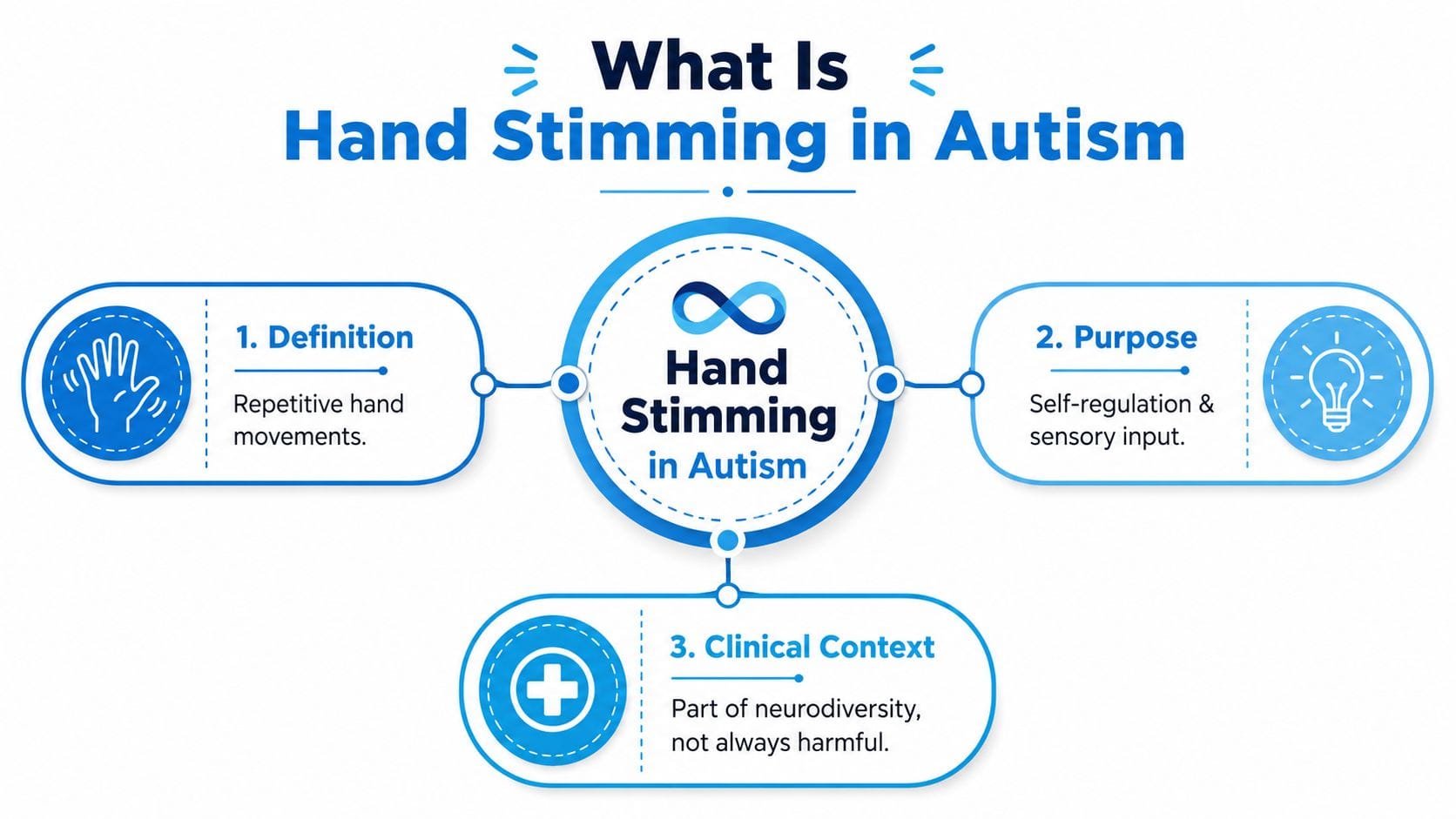
Hand stimming refers to repetitive hand or finger movements that help an autistic person manage sensory input, emotions, attention, or arousal. In autism, these behaviors are understood as part of restricted and repetitive behaviours and interests (RRBIs). The UK National Autistic Society explains that repeated movements and behaviors are one of the two core characteristics required for an autism diagnosis, and that stimming can support sensory stimulation, calming, or expressing joy. The same guidance also notes that these behaviors are often beneficial and usually harmless, reflecting a shift away from older approaches that focused on suppression and toward understanding the behavior's function in context, as described by the UK National Autistic Society guidance on repeated movements and stimming.
A movement with meaning
Parents sometimes hear the word “stimming” and assume it means a bad habit. That old idea is one reason families feel alarmed. But a more accurate view is that hand stimming is often part of how an autistic child organizes experience.
If your child flaps, flicks, presses, taps, or wrings their hands, they aren't necessarily trying to be disruptive. They may be trying to feel steady. They may be showing delight. They may be coping with too much noise, too much waiting, too much excitement, or too little input.
What hand stimming can look like
Hand stimming doesn't look the same in every child. Common examples include:
- Hand flapping when excited, overwhelmed, or highly alert
- Finger flicking near the eyes or in front of lights
- Hand wringing during stress, uncertainty, or transition
- Finger posturing or holding the hands in a repeated position
- Opening and closing the hands in a steady rhythm
- Rubbing hands on fabric or surfaces for tactile input
Some of these movements are large and easy to notice. Others are subtle. Both matter.
Practical rule: If a movement seems repetitive, returns in similar situations, and appears to help your child get through the moment, treat it as meaningful information.
The Reasons Behind Hand Stimming
A parent often sees the movement first and the reason second. Your child starts flapping in the grocery store line, rubbing fingers together during homework, or opening and closing their hands when a favorite song comes on. The hands are visible. The need underneath is easier to miss.
Hand stimming usually has a job. A helpful way to understand that job is to watch for patterns in the moment, the same way you would look for clues when your child gets a stomachache. You would ask what they ate, how long it had been since lunch, and whether they seem tired or sick. Hand stimming works much the same way. The movement is a clue, not the whole story.
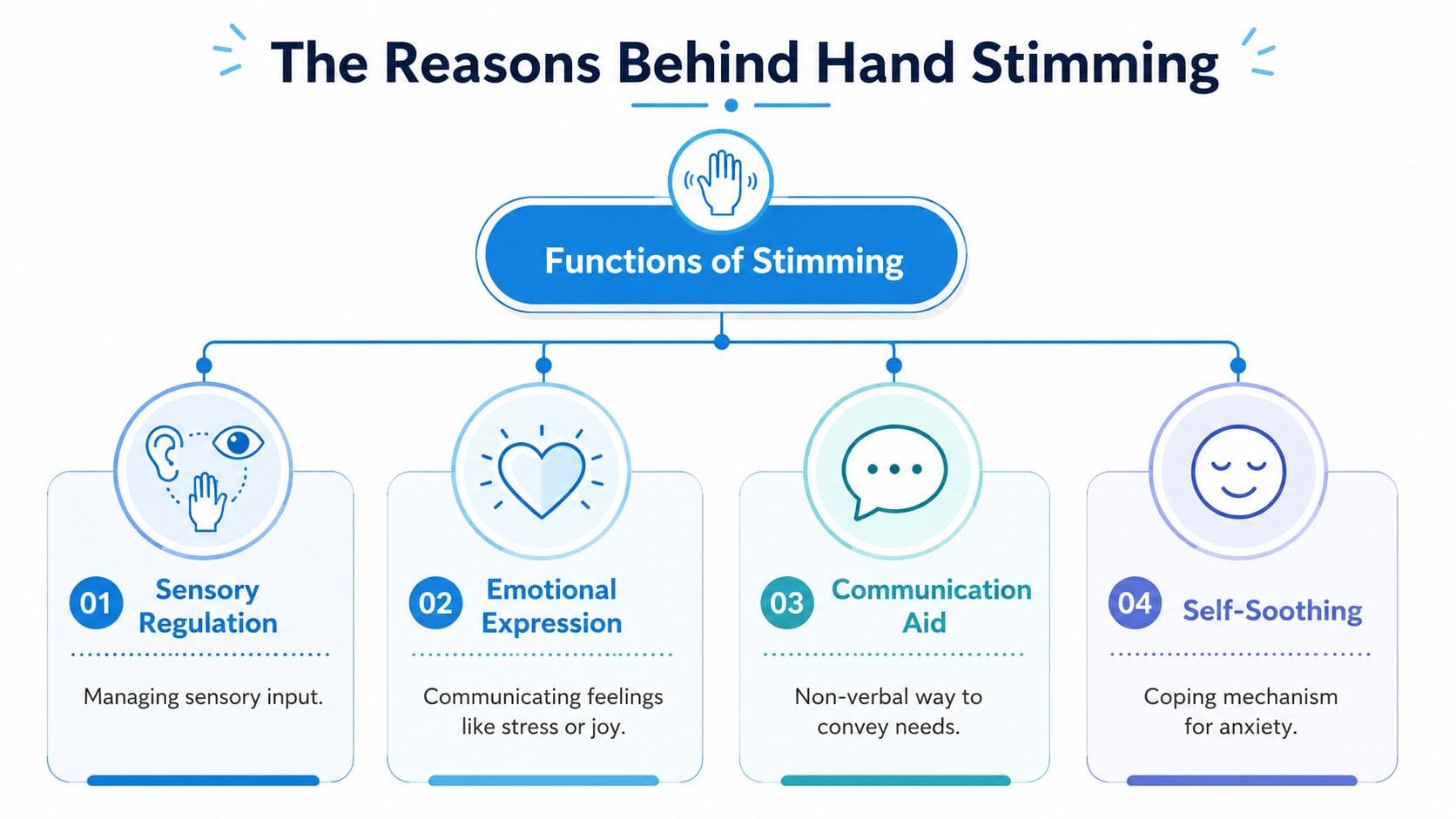
A review from The Ohio State University notes that these repetitive movements are common in autism and often serve a coping and regulating function, as described in the Ohio State Health article on repetitive movements and autism. For parents, the practical takeaway is simple. Start by asking what the behavior is doing for your child.
Sensory regulation
For some children, hand stimming helps dial down too much input. For others, it helps wake up a system that is not getting enough. That difference matters.
If your child flaps in a loud cafeteria, flicks fingers under bright lights, or rubs hands on fabric in a crowded store, the movement may be helping create a more predictable sensory experience. Repetition can give the brain one clear signal to focus on when everything else feels messy or intense.
The opposite pattern also happens. A child who seems bored, sluggish, or disconnected may use repetitive hand movements to get more sensory input. In that case, the behavior is not about escaping sensation. It is about getting enough of it.
This is why tracking context is so useful. If you want to connect the movement to what happened right before it, this guide on identifying sensory triggers in autism can help you start observing patterns in a more organized way.
Emotion moving through the body
Hand stimming can also be a sign that emotion is rising fast. Joy, anticipation, frustration, and disappointment can all show up in the hands before a child has words for them.
Parents are often confused when the same movement appears in very different moments. A child may flap when opening a birthday present and flap again when a routine changes. The movement looks similar, but the body around it usually looks different. A happy child may lean in, smile, and seek more interaction. A distressed child may tighten up, turn away, or have trouble recovering.
That full-body picture gives you better information than the hand movement alone.
Coping when life feels too big
Sometimes hand stimming is the body's way of creating order during stress. Repeated movement can act like a rhythm the nervous system can hold onto when a situation feels unpredictable, demanding, or socially confusing.
This is one reason observation works better than guesswork. If hand stimming increases during waiting, transitions, unfamiliar places, or social pressure, write that down. Over several days, those notes often reveal a pattern you cannot see in a single hard moment.
If your child also has a hard time being watched, joining groups, or speaking in uncertain social situations, this article on social anxiety explained may offer added context. Stimming and social anxiety are not the same thing, but they can overlap in a child who is already working hard to stay regulated.
The goal is not to label every hand movement on the spot. The goal is to ask a better question. What need is my child meeting with this behavior right now? Once you can answer that more consistently, your next steps become much clearer.
How to Provide Practical Support
When parents first ask for help, they often ask what they should do in the moment. The answer depends less on the exact hand movement and more on what's driving it.
Start with observation, not correction
Before you step in, pause long enough to ask a few quick questions:
- What happened right before this? Think noise, crowding, waiting, fatigue, transitions, hunger, pain, excitement, or frustration.
- What is my child's body telling me? Look for signs of tension, withdrawal, pacing, covering ears, tearfulness, or revved-up energy.
- Does the stimming seem to help? If your child settles while doing it, the movement is probably serving a useful regulating function.
Evidence-based parenting guidance recommends treating hand stimming as a signal to assess context, including antecedents such as noise, fatigue, anxiety, pain, or transitions. If the behavior is harmful, the recommendation is to replace it with lower-risk sensory input rather than suppress it outright, as described in this practical guide to stimming causes, management, and types.
Change the setting before changing the child
A lot of support happens before words are even needed. If the room is loud, lower the sound. If the store is too bright, shorten the trip. If transitions are hard, preview what's coming next. If your child is tired, expect regulation to be harder.
Often the most effective response is environmental, not verbal.
You might try:
- Reducing sensory load by dimming lights, leaving a crowded space, or turning off background noise
- Adding predictability with a visual schedule, countdown, or simple first-then language
- Offering a body break such as walking, jumping, squeezing a pillow, or quiet movement
- Creating a calmer landing spot with a beanbag, corner tent, headphones, or familiar object
If you're thinking about replacement options for hard moments, this resource on sensory tools that help calm meltdowns can help you match tools to the need you're seeing.
Redirect only when safety or participation calls for it
Sometimes hand stimming is safe and can be allowed. Sometimes it interferes with writing, eating, lining up at school, or staying safe in public. In those moments, don't jump to “stop.” Aim for “meet the same need in a safer or more workable way.”
You could say:
- “Your hands need to move. Squeeze this while we wait.”
- “It's loud in here. Let's step outside for a minute.”
- “You're excited. Let's flap together, then sit for snack.”
- “Your body looks stressed. Do you want pressure on your shoulders or a break?”
When the child feels understood, redirection usually goes better. When the child feels controlled, the stress often rises.
That's why validation matters. You don't have to agree that the moment is easy. You just need to show that you recognize it's real for your child.
How to Monitor and Track Stimming Patterns
If hand stimming feels unpredictable, tracking usually changes that. What looks random across a hard week often starts to form a pattern once you log a few details consistently.
Authoritative parenting guidance recommends understanding the function of stimming by tracking patterns to identify triggers like transitions, noise, or excitement, so adults can decide when to accommodate, when to redirect, and how to preserve dignity across home and school settings, as outlined in this guidance on stimming in autistic children and pattern tracking.
What to log
You don't need a complicated behavior chart. You need a small set of consistent observations.
| Data Point | Why It's Important | Example |
|---|---|---|
| Time of day | Patterns often cluster around specific parts of the day | Before school, after therapy, bedtime |
| Location | Environment can change sensory load and expectations | Grocery store, classroom, car, playground |
| What happened before | Antecedents often reveal triggers | Transition, loud bell, sibling conflict, waiting |
| What the movement looked like | Different stims may serve different functions | Flapping, finger flicking, wringing, pressing hands together |
| Intensity and duration | Helps separate brief expression from prolonged dysregulation | Brief excitement versus ongoing stress |
| Child's mood or body state | Adds emotional and sensory context | Tired, excited, frustrated, hungry, overwhelmed |
| What helped after | Shows which supports actually work | Quiet space, snack, deep pressure, movement break |
A notebook can work. A phone note can work. What matters is that you capture the moment while it's still fresh.
Why patterns matter more than single moments
One isolated episode won't tell you much. A series of logged moments can show that hand wringing happens before difficult transitions, or that flapping spikes in noisy places, or that finger flicking appears when your child is happy and visually engaged.
That kind of pattern changes your next move. You stop guessing and start planning.
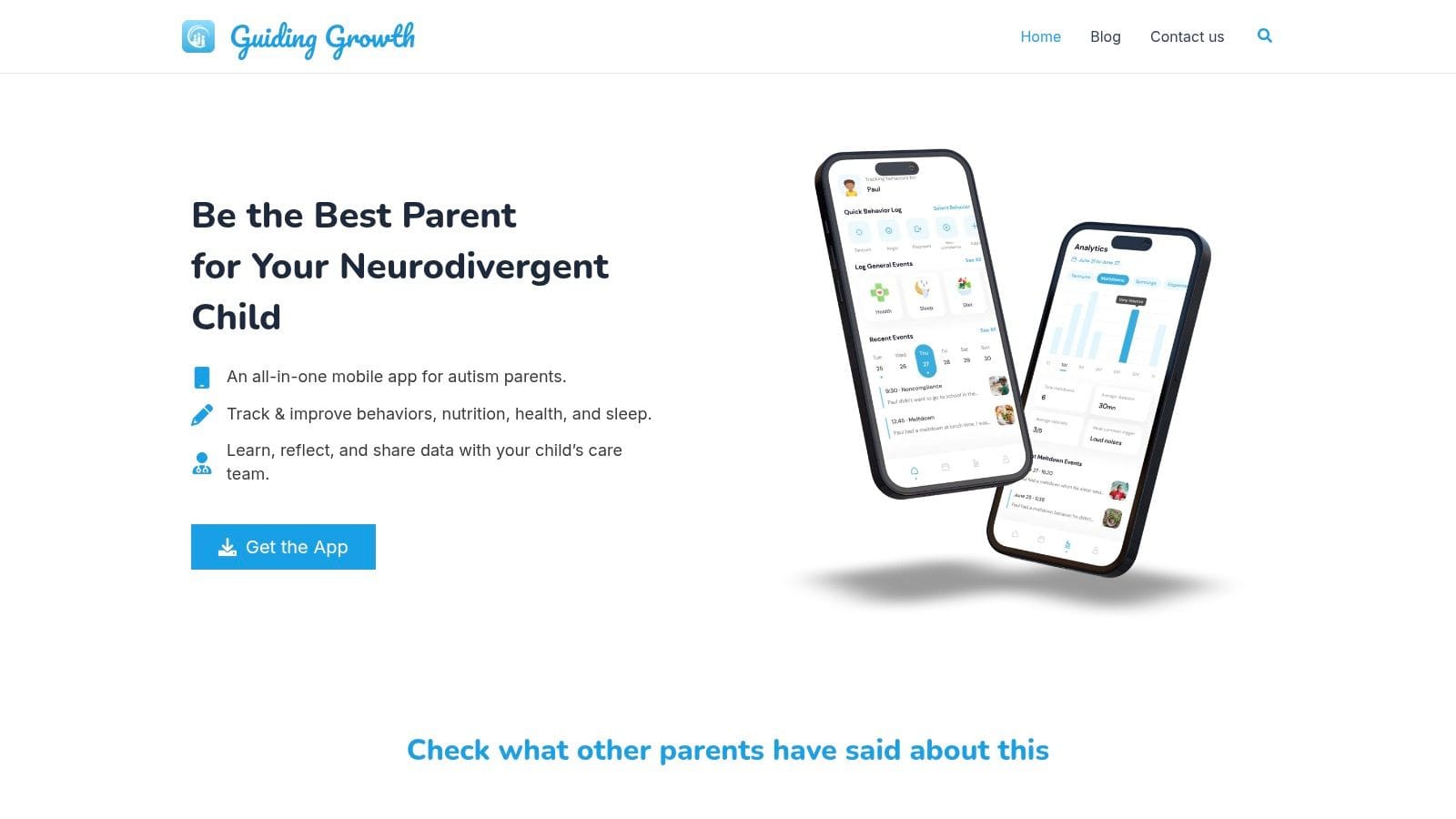
One practical option is behavioral trigger tracking for autism support, especially if you want a structured place to log antecedents, outcomes, routines, and quick notes in one system. Guiding Growth also includes behavior logging for things like hand flapping, along with voice logging, shared records for caregivers, and visual summaries that make it easier to spot repeating contexts over time.
A short demonstration can make that process easier to picture.
The value of tracking isn't the record itself. It's the moment you realize, “This happens most often when my child is tired and the room gets loud.”
That insight leads to better timing, better supports, and fewer moments where you feel blindsided.
Navigating Safety and School Environments
Parents often get stuck in two places. One is safety. The other is school.
When a stim is safe but draws attention
A hand movement can be unusual without being harmful. If your child is flapping, flicking, or posturing their fingers and no one is getting hurt, the first question isn't “How do I stop this?” It's “Is this helping my child regulate?”
If the answer is yes, support may mean allowing it. Social discomfort from bystanders is not the same thing as danger.
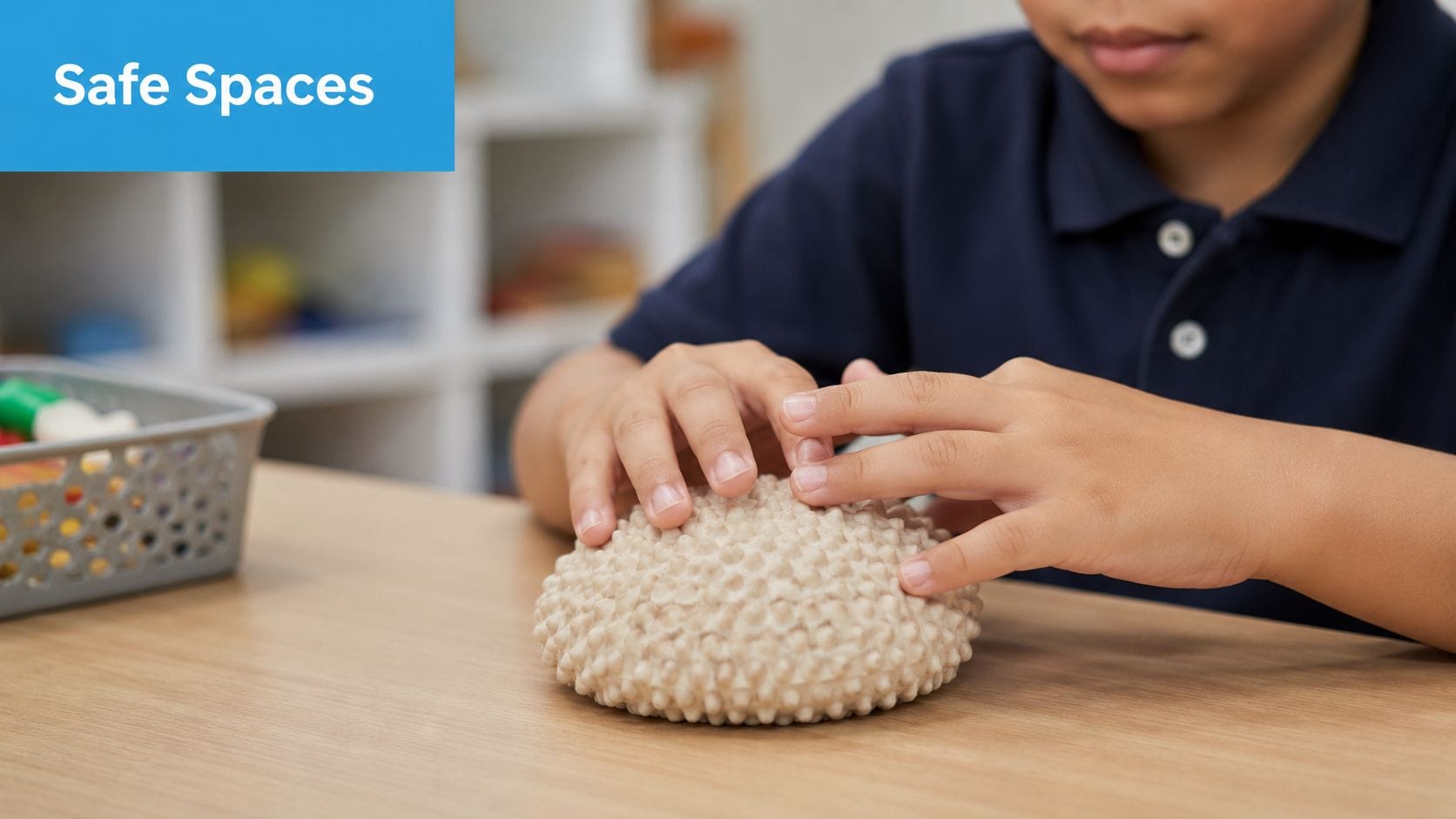
If the stim is causing injury, skin irritation, or making it impossible for your child to participate in something important, then a replacement plan makes sense. Try to match the support to the need. A child who needs tactile input may do well with a textured fidget. A child who needs calming pressure may respond to deep pressure or firm squeezes. A child who needs movement may need a quick motor break before being asked to sit.
When school needs a plan
School staff may notice hand stimming when it affects handwriting, circle time, lining up, or peer attention. That doesn't mean the goal should be elimination. It means the team needs clarity.
Ask the teacher to describe:
- When it happens most often such as transitions, assemblies, group work, or independent tasks
- What seems to come before it like noise, waiting, demand, or excitement
- Whether it blocks participation or looks different
- What already helps even a little
Then build a simple support plan. That might include movement breaks, a quiet corner, access to a sensory object, reduced waiting time, visual transition cues, or a nonverbal signal your child can use when overloaded.
Use plain language with school staff. “He isn't doing this to avoid work. His hands are showing us he's overloaded.” That sentence alone can shift the tone of a meeting.
From Understanding to Confident Parenting
It is 7:40 a.m. You are trying to get shoes on, the bus is coming, and your child starts fluttering their hands faster and faster. In that moment, confidence rarely comes from telling the behavior to stop. It comes from knowing what the behavior may be doing for your child.
Hand stimming often works like a pressure valve. It can help a child organize sensation, release tension, hold onto excitement, or steady themselves when the world feels too loud, too fast, or too demanding. Once you view the movement through that lens, the question changes. Instead of asking, “How do I make this stop?” you can ask, “What is my child's nervous system asking for right now?”
That shift matters. It turns stimming from a mystery into information.
You do not need perfect interpretation to be an effective parent. You need a simple method. Watch for patterns. Write down what happened before, during, and after. Notice whether the movement shows up with noise, waiting, transitions, fatigue, excitement, or frustration. Over time, those notes can give you something much more useful than a vague rule about whether to allow stimming. They give you clues you can act on with confidence.
This is the bridge between acceptance and support. You can respect hand stimming and still study it carefully. A short log helps you see whether your child needs less sensory input, more movement, clearer warning before transitions, or a different way to stay regulated during hard parts of the day.
That same observation mindset often helps families think more broadly about participation and independence over time. On a different topic, some parents also read Industry Horror when they start considering practical pathways for support and future opportunities.
Your child's hands are not random. They are often communicating a need before your child can explain it in words. When you learn to read those patterns, you can respond with more calm, more precision, and more trust in your own judgment.
If you want one place to log hand stimming, track triggers, organize routines, and share notes with caregivers or therapists, Guiding Growth can help simplify that process. It also includes quick voice logging for busy days and Alma AI, a built-in support companion that can help you think through patterns, questions, and next steps whenever you need it.