You've probably been there already. Your child is in speech therapy or occupational therapy, you're working hard to support routines at home, and still you find yourself searching late at night for one more thing that might help. Better sleep. Less digestive discomfort. Fewer overwhelm moments. More ease in the day.
That search is understandable. Many families looking into integrative healing for autism aren't chasing a miracle. They're trying to make daily life more comfortable, predictable, and supportive for their child. The hard part is that integrative options are often presented as a long list of ideas, with very little guidance on what's safe, what has some support behind it, and how to tell whether anything is helping your specific child.
Table of Contents
- What Is Holistic Support for Autism Really
- Understanding the Core Areas of Holistic Support
- A Parent's Guide to Common Holistic Therapies
- How to Safely Integrate Holistic Strategies
- Measuring Progress and Discovering Patterns
- Sharing Your Insights with Professionals
- Your Journey to Empowered Holistic Support
What Is Holistic Support for Autism Really
A parent might start with one small observation. Their child seems more dysregulated after a poor night of sleep. Or meltdowns cluster around certain meals. Or a calmer sensory setup changes the entire evening. Those moments often lead families toward a whole-person approach to autism care, but that phrase can mean very different things depending on who's using it.
This approach isn't a cure, and it shouldn't be framed that way. It's a whole-child approach that looks at sleep, nutrition, sensory needs, emotional regulation, routines, communication, and the environment around the child. The purpose is not to erase autistic traits. The purpose is to improve comfort, participation, regulation, and quality of life.

Families are not unusual for exploring these options. Global usage of complementary and alternative therapies, which form the core of integrative care for autism, ranges from 32% to 87% in the United States according to a review archived through PubMed Central. That wide range still tells us something important. Parents are often looking beyond one therapy room or one prescription pad.
Clinical reality: The most helpful holistic plan usually doesn't replace standard care. It strengthens it.
For some families, that means adjusting food choices with a clinician's input. For others, it means looking at sensory load, sleep timing, movement breaks, or music-based supports. In some cases, it also means consulting a specialist who understands both mental health and integrative care. Parents who want that lens may find integrative autism psychiatry in Pennsylvania useful as an example of how some providers think across biology, behavior, and lived experience.
The key shift is this. Whole-person support works best when it moves away from “What fixes autism?” and toward “What helps this child feel better and function better in daily life?”
Understanding the Core Areas of Holistic Support
When I explain integrated support to parents, I often describe it as scaffolding. No single beam holds the whole structure. A child does better because several supports work together and reduce strain across the day.

Whole child support works like scaffolding
The first pillar is foundational health. This includes nutrition, digestion, hydration, and sleep. Dietary strategies such as gluten-free and casein-free approaches are often explored to support gastrointestinal comfort and the gut-brain connection. Families trying to identify food patterns often need practical systems for logging meals and responses, which is why resources on identifying food sensitivities can be useful in day-to-day care.
The second pillar is sensory integration and environmental fit. Light, noise, clothing textures, transitions, and clutter can all affect regulation. A child who looks oppositional may be overloaded. Small environmental changes sometimes make a large functional difference because they reduce stress before it builds.
The third pillar is emotional regulation and body-based support. This includes movement, co-regulation, occupational therapy strategies, calming routines, and simple nervous-system supports that help a child recover from stress. These are often more effective when adults notice early signs of strain instead of waiting for a crisis point.
A fourth pillar is communication support. Communication isn't separate from regulation. A child who can express discomfort, ask for a break, or signal “too much” has more ways to stay organized.
Why these pillars need to work together
Complementary therapies fit on top of that structure, not underneath it. Music therapy is one example often discussed because it may support engagement and behavior when it's well matched to the child. Nature-based interventions are another area worth watching. A systematic review and meta-analysis of 24 studies involving 717 participants found that group-based recreational nature interventions were associated with short-term improvements in sensory, social, and behavioral functioning, though emotional functioning showed no significant improvement, as reported in JAMA Network Open.
That split matters. It reminds parents to look at more than one outcome. A child may show easier transitions outdoors but no change in emotional recovery after frustration. That doesn't mean the strategy failed. It means the effect may be specific.
Good holistic support is rarely one intervention. It's a coordinated response to the child's actual needs.
If you want a simple framework for thinking this way, Patient Talker's model insights offer a helpful example of how biological, psychological, and social factors interact. That perspective fits autism care well because eating, sleeping, sensory load, stress, family routines, and communication all influence each other.
A Parent's Guide to Common Holistic Therapies
It is 9 p.m., your child is finally asleep, and you are scrolling through another thread full of confident claims. One parent says a diet changed everything. Another swears by supplements. A third warns that both were expensive distractions. Families often arrive here tired, hopeful, and under pressure to make the right call quickly.
The better question is not which therapy sounds most impressive. It is which approach matches your child's specific problem, carries acceptable risk, and can be tracked clearly enough that you and your care team can tell whether it is helping.
How to judge a therapy before trying it
Use three filters before you spend money, change routines, or add a new provider.
- What is the target? Trouble falling asleep, constipation, sensory overload, and social participation are different problems. A treatment pitched as useful for everything usually has weak logic behind it.
- What kind of evidence supports it? Some approaches have modest support for related concerns such as sleep or engagement. Evidence for changing core autism features is often limited.
- What are the downsides? “Natural” products can still affect appetite, sleep, behavior, digestion, and medication response. Time burden matters too. A strategy that creates family stress may not be worth a small gain.
A review of complementary approaches published on PubMed reached a pattern I see in practice. Evidence for core autism symptoms remains limited, melatonin may help sleep in some children, music therapy may support behavior and engagement, and chelation should be avoided because of safety concerns and lack of benefit.
Evidence and Safety of Common Approaches
| Approach | Proposed Benefit | Evidence Level | Safety Considerations |
|---|---|---|---|
| Melatonin | Support for sleep onset and sleep regulation | Supported for sleep-related difficulties associated with ASD | Review dosing and timing with the child's medical team, especially if other medications are involved |
| Music therapy | Support for engagement and behavioral challenges | Reasonable support as a complementary option | Best provided by a qualified therapist who can match sessions to communication style and sensory needs |
| GFCF diet | Support for gastrointestinal comfort and food-related behavior patterns in some children | Mixed evidence, with individual variation in response | Requires planning to protect nutrition, growth, and family feasibility |
| Magnesium and vitamin B6 | Often promoted for social and communication benefits | Evidence remains insufficient for ASD treatment | Side effects and interactions are possible, so these should not be added casually |
| Physical activity and movement-based supports | Regulation, motor organization, and participation | Promising for some goals, though study quality varies | Match the activity to the child's motor skills, sensory profile, and fatigue level |
| Chelation therapy | Often marketed as a detox treatment | Not supported as safe or effective for autism | Should be avoided because it can cause harm |
Diet changes deserve more scrutiny than they usually get. Gluten-free and casein-free diets are widely discussed, but the central issue is not whether another family saw improvement. The issue is whether your child has a clear baseline problem, whether the diet can be carried out without reducing nutrition, and whether any change holds up over time. A review in Nutrients describes the evidence for gluten-free and casein-free diets as mixed and notes the need for careful nutritional monitoring.
That trade-off is easy to miss. A child may have fewer stomach complaints but also eat fewer foods overall. Sleep may improve while school lunch becomes a daily battle. Those details matter because a support is only useful if the net effect on daily life is positive.
Supplements raise similar issues. A product can sound promising in online groups and still have weak evidence, uncertain dosing, or quality-control concerns. I tell parents to treat supplements the same way they would treat any medical intervention. Define the symptom, decide how to measure change, and stop if the benefit is unclear.
For families comparing options, this guide to natural remedies for autism offers a practical overview of lower-risk supports versus ideas that deserve more caution. If school participation is part of the bigger picture, tools that reduce communication barriers can matter too, including Voicy's solution for student accessibility.
Choose therapies based on the child's target problem, safety, daily burden, and measurable results. Testimonials are not enough.
How to Safely Integrate Holistic Strategies
Monday starts with a new supplement. Tuesday brings an earlier bedtime. By Friday, your child is less irritable after school, but no one can say why. That kind of overlap is common, and it can push families toward keeping supports that are unhelpful, or stopping ones that might have helped if they had been tested more carefully.
Safety starts with a plan that is specific enough to follow in real life.
A practical safety checklist
Use this sequence before adding any new integrative strategy.
Talk with the care team first. Bring the pediatrician, dietitian, therapist, or prescribing clinician into the decision early. This matters most for supplements, sleep aids, and restrictive diets, where side effects, interactions, and nutrition gaps are real concerns.
Pick one clear target. Start with one problem you can observe, such as time to fall asleep, stooling discomfort, food refusal at dinner, or recovery time after school.
Research the provider, not just the therapy. Training, licensure, and scope of practice matter. A qualified occupational therapist, physician, registered dietitian, or certified therapist can screen for risks and adjust the plan when a child is not tolerating it well.
Introduce one variable at a time. If several changes begin together, you lose the ability to connect the support with the outcome.
Define success before you begin. Write down what improvement would look like and how long you will test for it. “Falls asleep within 30 minutes on at least 4 nights a week” is more useful than “sleep seems better.”
Food changes are one of the clearest examples. Some children do seem more comfortable when a diet change addresses constipation, reflux, bloating, or another eating-related issue. A clinical report from the American Academy of Pediatrics on complementary and alternative medicine in autism advises families to review safety, nutrition, and possible interactions with the child's physician before trying diet-based or supplement-based approaches, especially when the plan could restrict intake or complicate medical care (AAP clinical report).
The practical question is not just, “Is this support popular?” It is, “What changed in this child after we started it?”
Why one change at a time matters
Parents are often asked to notice sleep, digestion, mood, sensory regulation, school participation, and appetite all at once. In practice, notes get scattered across text messages, paper calendars, school emails, and half-finished food logs. A simple behavior tracking app for parents managing autism supports can make it easier to record what changed, when it changed, and what happened next without relying on memory.
For families who capture observations by speaking rather than typing, accessibility tools can reduce the burden of documentation. A practical example is Voicy's solution for student accessibility, which shows how speech-to-text tools can help parents or school staff record details quickly while the moment is still fresh.
Safety principle: If you cannot describe what changed, when it changed, and what you were measuring, you cannot judge whether a therapy helped.
That discipline protects children from unnecessary restrictions, helps families notice genuine benefit sooner, and gives clinicians better information to work with.
Measuring Progress and Discovering Patterns
Most parents don't have a motivation problem. They have a data problem. They're observing a lot, but the information is spread across memory, texts, notebooks, calendar entries, and school updates. That makes it hard to know whether a holistic approach is helping or whether you're seeing normal week-to-week variation.
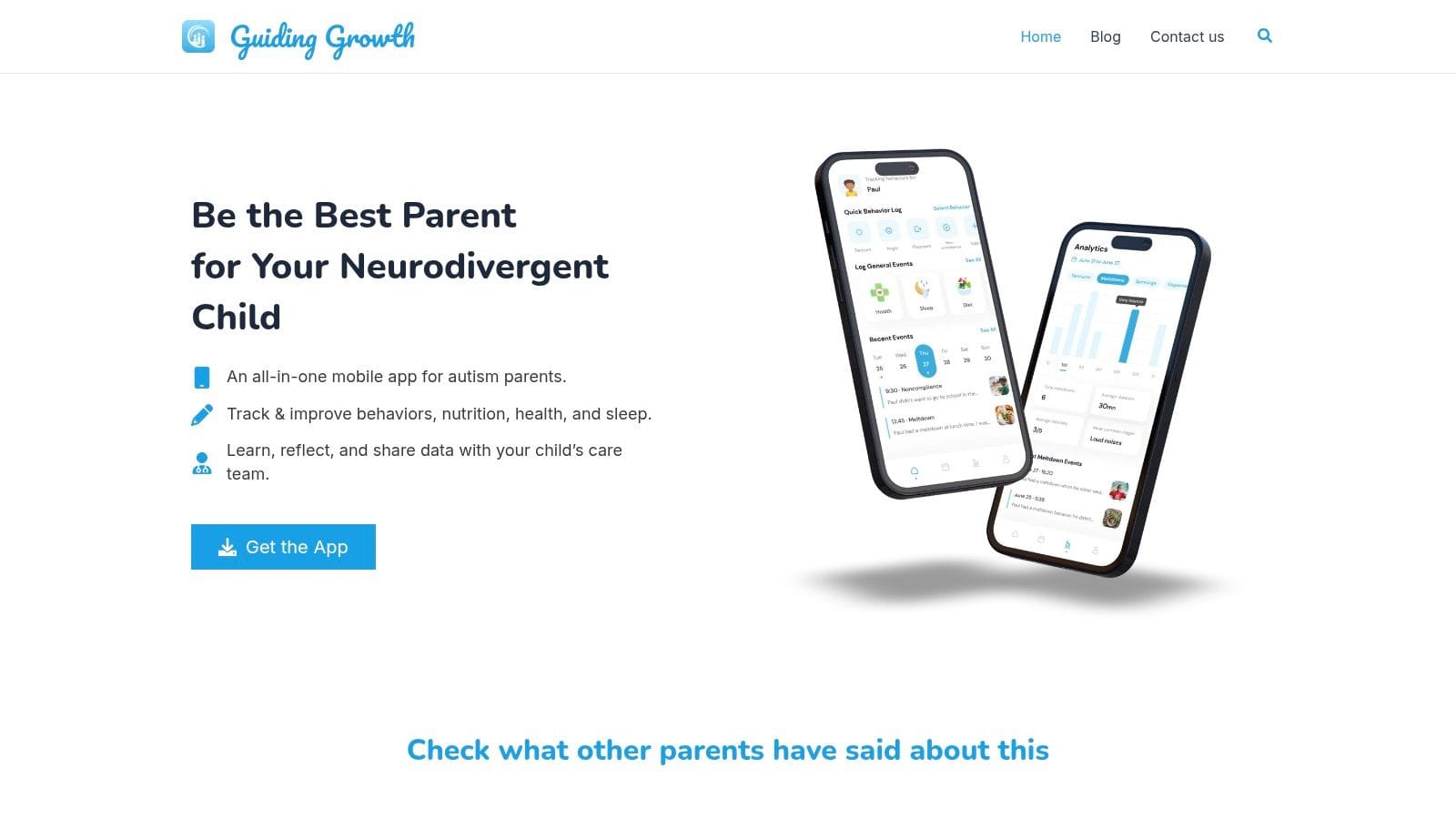
One of the biggest blind spots in certain healing approaches for autism is the lack of a systematic way to connect interventions with behaviors. A review of this gap noted that parents often have to manually correlate dietary changes or supplements with outcomes like meltdowns, demand avoidance, or echolalia, leaving them unsure whether an intervention worked, as discussed in this article on tracking intervention efficacy.
What parents need to track
The most useful records usually include:
- What changed: A new supplement, a removed food, a new bedtime routine, a new therapy session, or a sensory tool.
- When it changed: Date, time, and context matter.
- What happened next: Sleep quality, appetite, bowel patterns, distress signals, meltdowns, shutdowns, sensory seeking, engagement, or recovery time.
- What else was going on: Illness, school changes, travel, visitors, or missed naps can muddy the picture.
A system designed for this kind of structured record-keeping works better than memory alone. Families who want to centralize behavior observations can look at a dedicated behavior tracking app so they can connect patterns across daily life instead of keeping separate logs for separate problems.
What better records make possible
When parents track consistently, they stop relying on impressions like “I think the new routine helped.” They can start noticing more useful patterns. Bedtime is smoother on days with less after-school sensory load. Stomach discomfort shows up after a narrow set of foods. A therapy seems positive in session but leads to exhaustion later in the day.
That doesn't turn a parent into a researcher. It turns them into a better observer.
Here's a quick walkthrough of what that kind of organized tracking can support in real life:
The goal isn't perfect data. It's useful data. Enough to separate coincidence from a real pattern, enough to have a grounded conversation with professionals, and enough to stop guessing every time you try something new.
Sharing Your Insights with Professionals
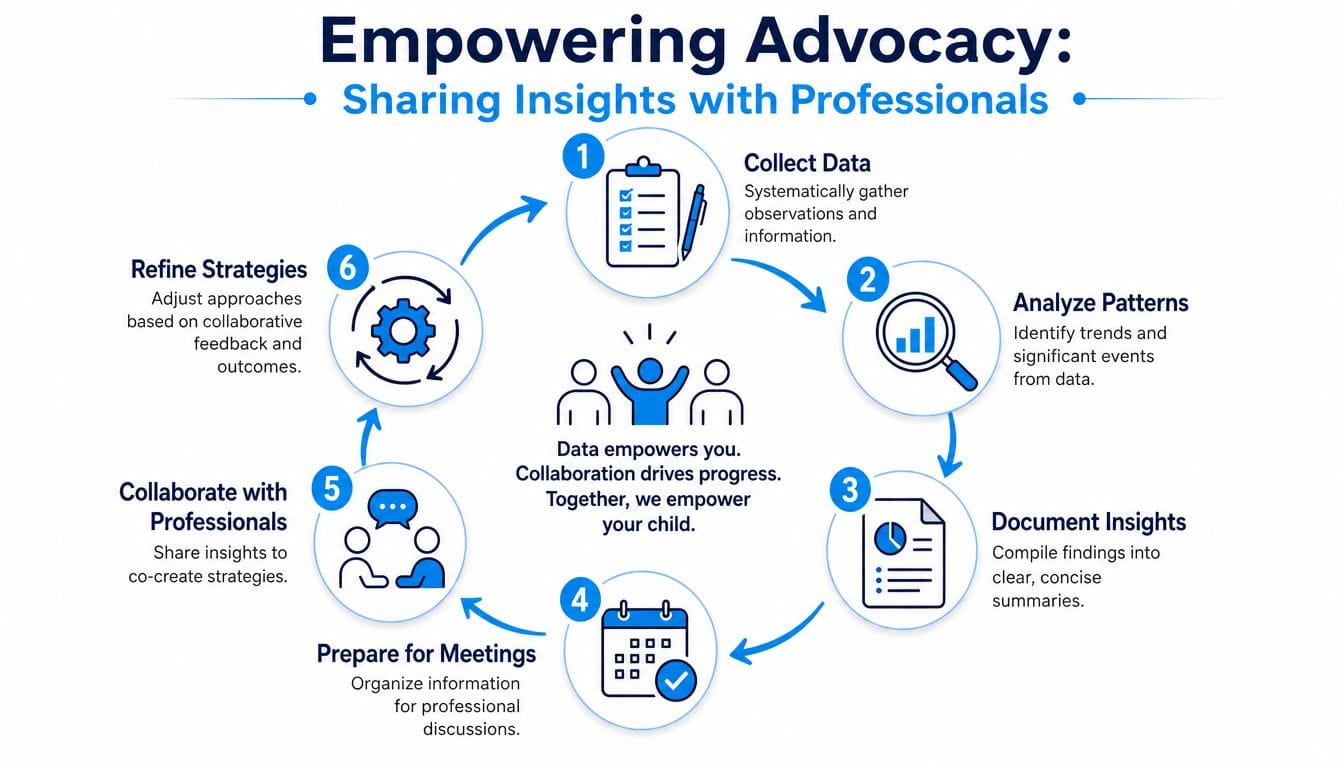
Good records become even more powerful when they leave the house with you. Pediatricians, therapists, and school teams can do much more with a parent who brings patterns instead of isolated anecdotes.
Bring patterns, not just impressions
Instead of saying, “I think dairy might be a problem,” bring a short summary of what you observed. Note the days dairy was present, what signs followed, and whether sleep, stooling, irritability, or sensory tolerance changed. A therapist can use that information differently than a general statement made from memory.
For very young children, this matters even more. Best-practice guidance notes that children under 3 years old with ASD should begin intervention services as early as possible and those services should combine developmental and behavioral approaches adjusted to the child's developmental level, according to guidelines published in PubMed Central. When multiple services are happening at once, organized parent observations help the team see the whole picture.
Turn observations into better questions
The best appointment questions are specific.
- Ask about interaction effects: Could this supplement affect appetite, sleep, or medication timing?
- Ask about what to monitor: Which signs would tell us this is helping, and which would tell us to stop?
- Ask about realistic time frames: How long should we trial this before deciding?
If you're using structured logs, AI assistance can help summarize the information before a visit. Guiding Growth's Alma AI can help parents pull together observations, spot themes, and prepare focused questions for appointments. That kind of summary doesn't replace clinical judgment. It makes the conversation sharper and more productive.
Bring a short timeline, your main question, and the top patterns you've seen. Professionals can work with that.
Your Journey to Empowered Holistic Support
The most helpful view of integrated support for autism is also the most grounded one. It isn't about finding one hidden cure. It's about building a support system around your child's body, environment, communication, regulation, and daily rhythms.
That means staying cautious about big claims. It means avoiding unsafe treatments. It means choosing supports that match a real need, introducing them methodically, and paying attention to what changes. Most of all, it means trusting that your observations matter when they're captured clearly and shared well.
Parents often know when something feels off, but they deserve more than intuition alone. They deserve a way to connect what they're seeing at home with the professionals helping their child. That's where confidence grows. Not from hype, but from careful noticing, steady collaboration, and practical tools that reduce guesswork.
If you want one place to organize behaviors, sleep, food, routines, appointments, and shareable insights, Guiding Growth gives families a practical way to support holistic care with better records and less stress.