Your child is sobbing in the grocery store because the lights feel too bright, the cart is squeaking, and someone brushed past their arm. Or maybe mornings fall apart over socks, shirt tags, or toothpaste. From the outside, these moments can look sudden or confusing. From the inside, your child may be dealing with a nervous system that's taking in more, less, or different sensory information than expected.
That's why sensory regulation matters so much in autism. It's not about “bad behavior” or a child being difficult. It's about how the brain receives, filters, and responds to sound, touch, movement, light, taste, smell, and body sensations. If you're newly navigating this, you're not overreacting, and you're not alone. Many parents begin by feeling like they're guessing.
Sometimes the first clues show up even earlier in family life. If your own sensory system has shaped feeding, touch, or sound tolerance, resources like guidance for sensory-sensitive breastfeeding parents can help put those experiences into words and make them feel less isolating.
Table of Contents
- A Parent's Guide to Sensory Overload and Regulation
- What Are Sensory Processing Differences in Autism
- Identifying Your Child's Unique Sensory Profile
- Practical Sensory Regulation Strategies for Home
- Sensory Supports for School and Community Settings
- How to Track Patterns and Find What Truly Works
- When and How to Seek Professional Support
A Parent's Guide to Sensory Overload and Regulation
A child who melts down when a fire alarm sounds but seems calm a few minutes later can leave a parent feeling whiplashed. A child who refuses a familiar food because it “feels wrong” can make dinner feel impossible. These moments often aren't random. They're signals.
Sensory regulation is the process of taking in sensory input and staying organized enough to function. When that process goes smoothly, a child can learn, play, connect, and recover from everyday stress. When it doesn't, even ordinary tasks can feel painful, chaotic, or exhausting.
That matters because sensory differences are deeply tied to autism. Between 93% and 96% of autistic individuals experience sensory processing differences that significantly impair daily functioning, according to Hands in Autism. In plain terms, sensory challenges are not a side issue. They're part of daily life for many autistic children.
Practical rule: Start by asking “What is my child's body trying to tell me?” instead of “How do I stop this behavior?”
Parents often get confused because the same child may crave movement, hate hand dryers, chew on sleeves, and ignore a scraped knee. That can look inconsistent. It usually isn't. It's a sensory system responding differently to different kinds of input.
A helpful shift is to stop thinking only in terms of triggers and start thinking in patterns.
- Behavior is communication. Covering ears, running, freezing, refusing clothing, or crashing into cushions can all be meaningful sensory responses.
- The environment matters. Noise, lighting, smells, hunger, sleep, transitions, and social demands can all change what your child can handle.
- Regulation comes before skills. A child who feels overloaded can't reliably show language, flexibility, or coping skills in that moment.
When parents understand sensory regulation autism support becomes more practical. You stop chasing isolated incidents and start noticing the sensory load underneath them.
What Are Sensory Processing Differences in Autism
Some parents hear “sensory processing” and picture only loud noises or picky clothing. It's broader than that. Sensory processing is how the brain receives information from the body and environment, then sorts out what matters, what can be ignored, and how to respond.
The brain's filter can work differently
A useful analogy is a sensory traffic controller. In many children, the brain acts like a traffic system that lets important signals through while turning down background noise. In autism, that system can get jammed. Signals may come in too strongly, too weakly, or all at once.
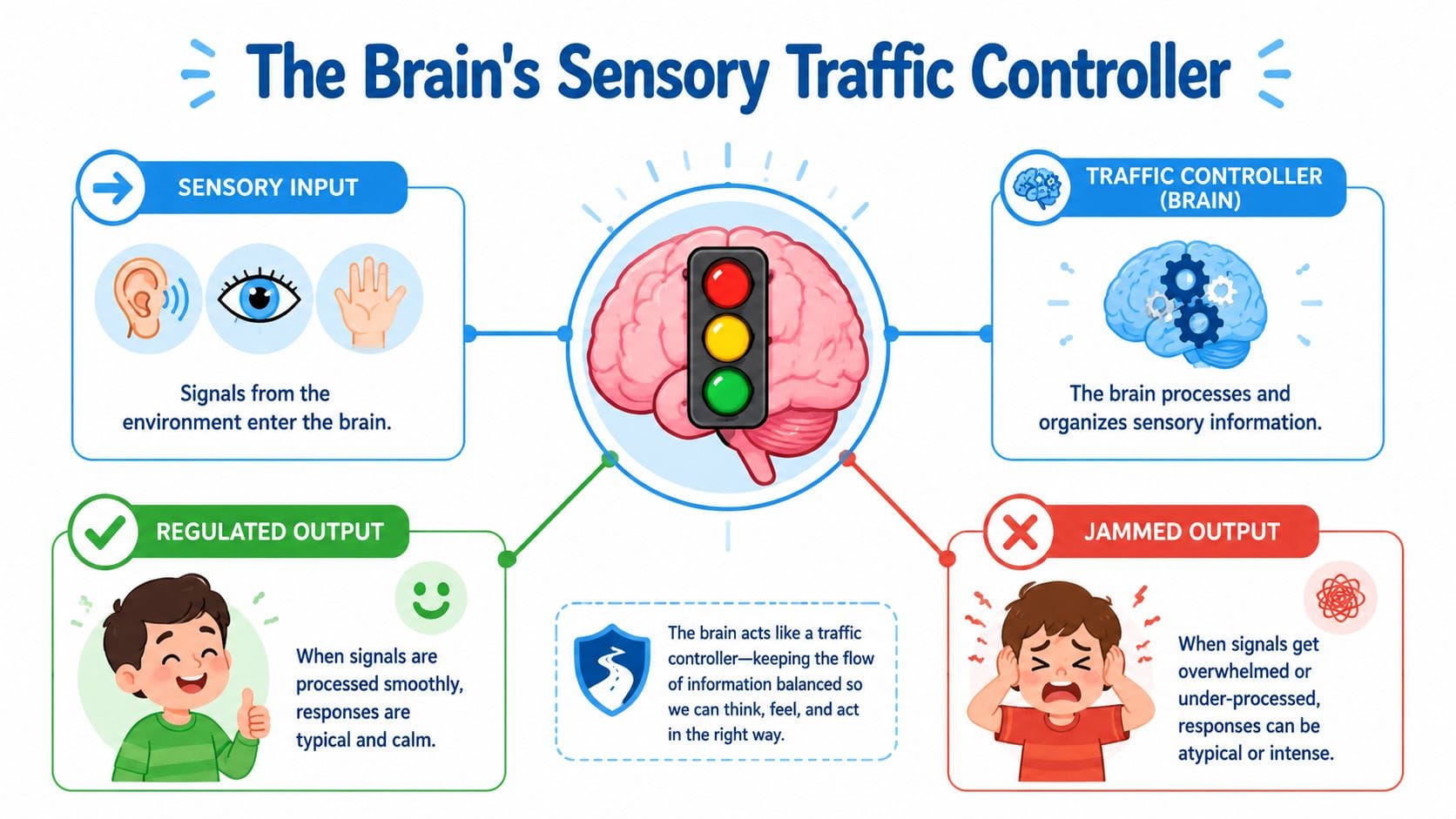
Researchers describe one part of this as an imbalance between cortical excitation and inhibition, where the brain has more trouble “gating” or filtering sensory input. That can lead to both over-responsiveness and under-responsiveness, as summarized in this review of sensory neurobiology in autism.
If that language feels abstract, think of it this way. Your child may not have an “attitude problem.” Their brain may be having trouble deciding which sensations to turn down and which to notice.
Hyper and hypo sensitivity in real life
Parents usually notice hyper-sensitivity first because it's more visible. A shirt tag may feel like sandpaper. A buzzing light may feel impossible to ignore. Toothbrushing may feel sharp or alarming. A crowded room may flood the system all at once.
Hypo-sensitivity can be easier to miss. A child may not notice cold hands, a full bladder, their name being called, or a minor injury. Some children seek stronger input because their body needs more sensation to feel organized.
Here's a simple comparison:
| Sensory pattern | What it can look like |
|---|---|
| Over-responsive | Covers ears, avoids messy play, gags at textures, resists grooming |
| Under-responsive | Doesn't notice pain quickly, seems unaware of mess on face, misses verbal cues |
| Seeking | Jumps, crashes, spins, chews, presses into people or furniture |
When a child reacts intensely to ordinary input, the nervous system may be saying “too much.” When a child constantly seeks sensation, it may be saying “not enough.”
This is why sensory regulation autism support works best when it starts with understanding. The strategy has to match the child's actual sensory experience. Noise-canceling headphones may help one child and frustrate another. A movement break may calm one child and rev up someone else.
Identifying Your Child's Unique Sensory Profile
No two autistic children have the same sensory pattern. One child may avoid loud sounds but seek rough-and-tumble play. Another may crave chewing and swinging yet refuse certain fabrics or foods. Your job isn't to memorize every possible strategy. It's to notice your child's pattern well enough to make smart choices.
Sensory seeking and sensory avoiding
A useful place to start is with two broad patterns: sensory seeking and sensory avoiding.
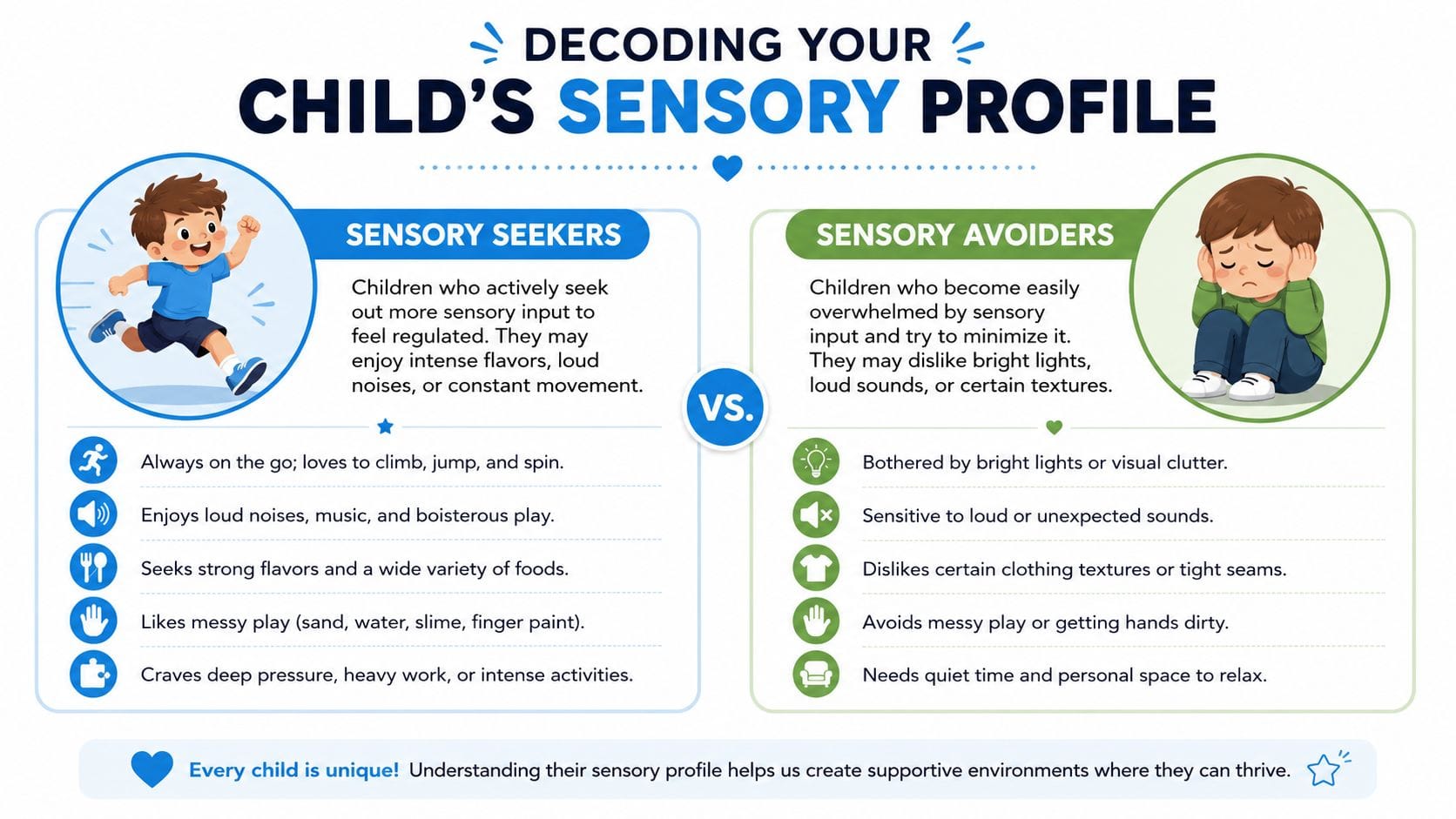
A sensory seeker often looks like a child who needs more input to feel settled. They may jump from the couch, hum, spin, bite shirt sleeves, squeeze into tight spaces, or touch everything in the store. An avoider often looks like a child who's trying to protect their system. They may cover ears, refuse certain clothes, hide from bright rooms, pull away from touch, or leave the table when smells get strong.
One important point often gets lost. Around 50% of the autistic population is under-responsive to input like pain or temperature, which means sensory seeking isn't a minor side category. It deserves careful attention, especially when behaviors involve safety risks, as explained in this discussion of hypo-responsivity and sensory seeking.
Looking at all eight senses
Parents often track only the five familiar senses. That misses some of the biggest clues. Look at all eight.
Sound
- Avoiding might look like covering ears during the vacuum or school assembly.
- Seeking might look like making repetitive noises, turning volume up high, or banging objects.
Sight
- Avoiding can show up as squinting, distress under bright lights, or difficulty in cluttered rooms.
- Seeking might include staring at spinning objects, flickering light, or close-up visual details.
Touch
- Avoiding often includes distress with seams, hair brushing, sticky hands, or unexpected touch.
- Seeking can look like rubbing textures, pressing into cushions, or craving deep squeezes.
Taste and smell
- Avoiding may involve narrow food preferences, strong reactions to toothpaste, or gagging at odors.
- Seeking might look like licking objects, preferring intense flavors, or smelling items repeatedly.
Vestibular sense (movement and balance)
- Seeking often includes spinning, swinging, jumping, and hanging upside down.
- Avoiding may show up as fear of swings, stairs, or fast movement.
Proprioception (body position and pressure)
- Seeking can look like crashing, stomping, carrying heavy things, or tight hugs.
- Avoiding may be less obvious, but some children resist pressure or seem awkward with force.
Interoception (internal body signals)
- Under-responsiveness may involve not noticing hunger, thirst, temperature, or the need for the toilet.
- Over-responsiveness can show up as distress around small internal sensations.
Mixed profiles are common. A child can be sound-avoidant, movement-seeking, touch-defensive, and under-aware of pain all at once.
A simple way to observe is to keep three questions in mind:
- What does my child move toward?
- What does my child move away from?
- When do those patterns change?
That last question matters most. Sensory needs often shift with sleep, illness, transitions, hunger, and stress. The more specific you are, the easier it becomes to choose supports that fit.
Practical Sensory Regulation Strategies for Home
Home is where many families can make the biggest day-to-day difference. You can't remove every trigger, but you can lower the sensory load and add the kinds of input that help your child feel more organized.
Strong evidence supports caregiver-led, home-based sensory strategies. In particular, deep pressure tactile input has been shown to improve functional outcomes for autistic children with sensory processing challenges, according to this review on caregiver education and home sensory interventions.
Build support around the need
Don't start with a random sensory toy bin. Start with the function.
If your child gets overwhelmed by sound, lower competing noise where you can. Turn off background TV, close the bathroom door before running the fan, and give warnings before blenders or vacuums. Some families also find it helpful to learn more about understanding white noise for deep work, then test whether steady background sound helps or irritates their child.
If your child needs deep pressure or body awareness, think heavy work. Carrying groceries, pushing a laundry basket, wall pushes, animal walks, and helping move couch cushions can all give organizing proprioceptive input. Some children also settle with firm cuddles, tightly tucked blankets, or a weighted blanket if it's appropriate for them.
If chewing helps your child organize, safe oral tools can be useful. Families exploring options may want to compare different sensory chew toys for autism and match the tool to the child's biting style and age.
Simple home ideas parents can try
Here are practical starting points you can test at home:
- For children who need to move: Build short movement breaks into the day before hard moments, not only after a meltdown. Jumping, swinging, scooter boards, hallway races, and obstacle courses can help.
- For children who get overloaded easily: Create a calm corner with dim light, a beanbag, pillows, familiar textures, and fewer visual distractions.
- For children who crave touch or pressure: Offer deep pressure in ways your child likes. That might be burrito wraps in a blanket, cushion sandwiches, or firm shoulder squeezes if they welcome them.
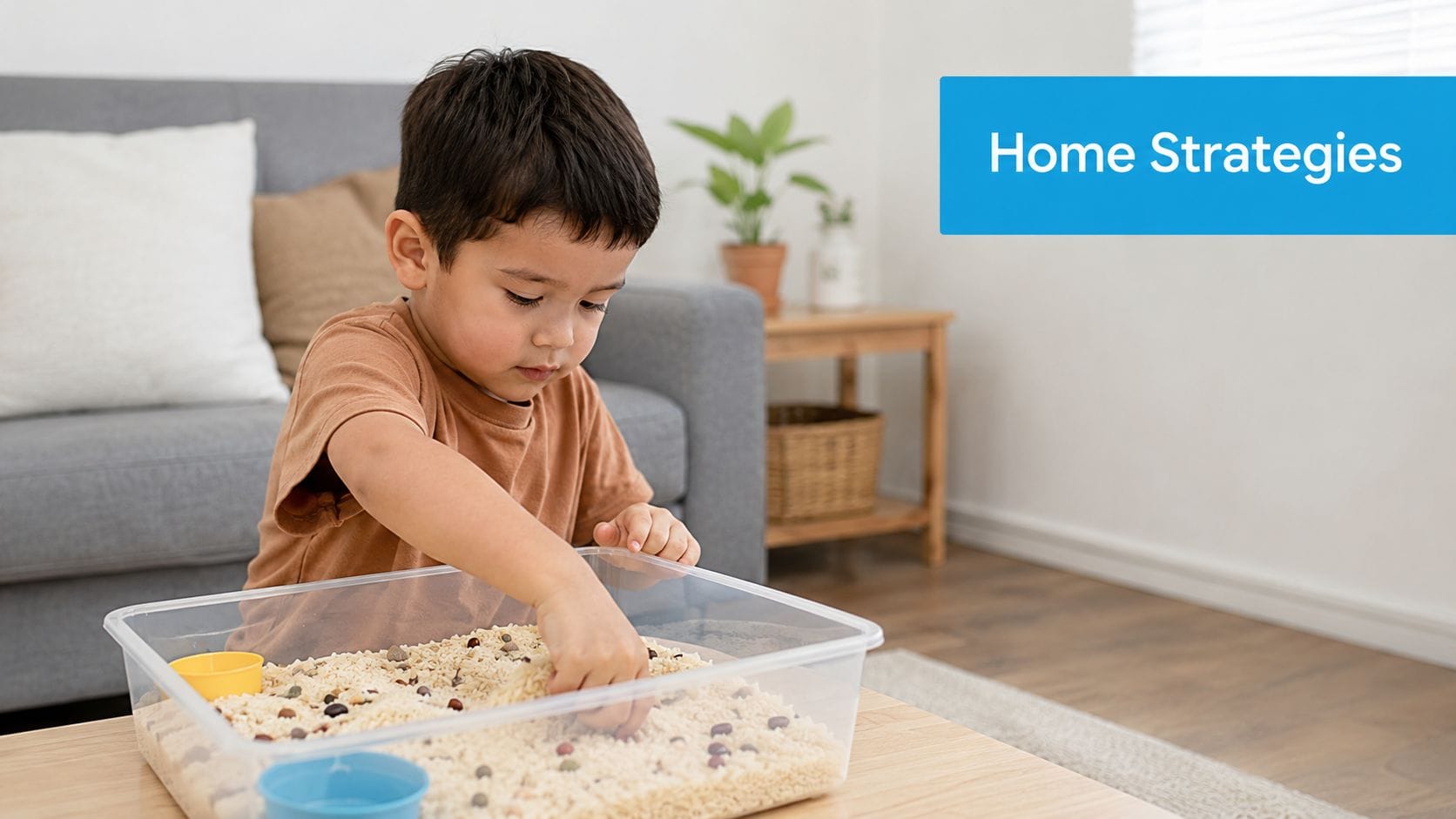
- For tactile exploration: Sensory bins with rice, beans, or water beads can give controlled exposure and play-based input.
A short video can help parents picture what sensory play can look like in everyday life.
A few home rules make these strategies work better:
- Offer before overload. A movement break before homework is more useful than after the child has already crashed.
- Keep it predictable. Sensory activities often work best when they're woven into routines.
- Watch the response. If a tool leads to calmer play, easier transitions, or better attention, keep testing it. If it leads to more dysregulation, change it.
Sensory regulation autism support at home works best when parents stay curious. The question isn't “Is this a good sensory strategy?” The better question is “What does this strategy do for my child?”
Sensory Supports for School and Community Settings
School, stores, playgrounds, restaurants, and therapy waiting rooms ask children to regulate in places they don't control. That's often where sensory stress shows up fastest. Preparation matters more than perfection.
A key school support is the sensory break. To support learning and prevent overload, breaks should be part of the daily schedule, not treated as a reward after distress. That can include quiet time in a calm corner, movement using swings or jumping, and alternative seating such as wobble cushions, as described in this ASHA guidance on classroom sensory supports.
What to ask for at school
When parents meet with teachers, it helps to be concrete. “He has sensory issues” is true, but it doesn't tell staff what to do. Instead, describe the pattern and the support.
You might say:
“Loud group transitions are hard for her. She does better if she gets a short warning, access to headphones, and a movement break before circle time.”
Useful supports to request include:
- Scheduled movement breaks so the child doesn't have to hold it together for too long.
- A calm space for short regulation breaks when the room gets too busy.
- Alternative seating such as a wobble cushion if movement helps attention.
- Fidget tools when they improve focus rather than distract from learning.
- Reduced noise supports for assemblies, cafeteria time, or music class. Parents comparing options may find this guide to the best noise-cancelling headphones for autism useful before talking with school staff.
A short school summary can help teachers act faster. Include triggers, early signs of overload, what helps, and what usually makes things worse.
How to plan for outings
Community settings are less predictable, so think in layers. First, reduce what you can. Then pack supports. Then build in recovery time.
A practical outing checklist looks like this:
- Before leaving: Choose quieter times, preview the plan, and keep the trip short if your child is already tired.
- In the bag: Headphones, sunglasses, chewy item, fidget, snack, water, comfort object, spare clothing.
- During the outing: Watch for early signs like faster movement, covering ears, going silent, or becoming silly and wild.
- Afterward: Plan decompression time at home instead of moving straight into another demand.
Parents often feel pressure to “push through.” Sometimes that works. Often it backfires. Many children do better when adults respect sensory limits while still building participation gradually and thoughtfully.
How to Track Patterns and Find What Truly Works
Many parents already try a lot. Headphones one week. Chewies the next. A calm corner, a weighted blanket, movement breaks, dim lights, fewer errands. The problem usually isn't effort. It's that without tracking, every strategy gets judged by memory, and memory is unreliable when life is busy.
Why guessing keeps families stuck
One major challenge in sensory care is that the long-term durability of many interventions is unclear, which leaves families in a real guesswork gap. That's why this evidence review on sensory interventions highlights the importance of structured, longitudinal tracking instead of relying on short-term impressions.
If your child seemed calmer after using headphones, what actually helped? Was it the headphones, or was it because they also slept better, skipped a loud assembly, and had a preferred snack beforehand? Without patterns, it's easy to give credit to the wrong thing.
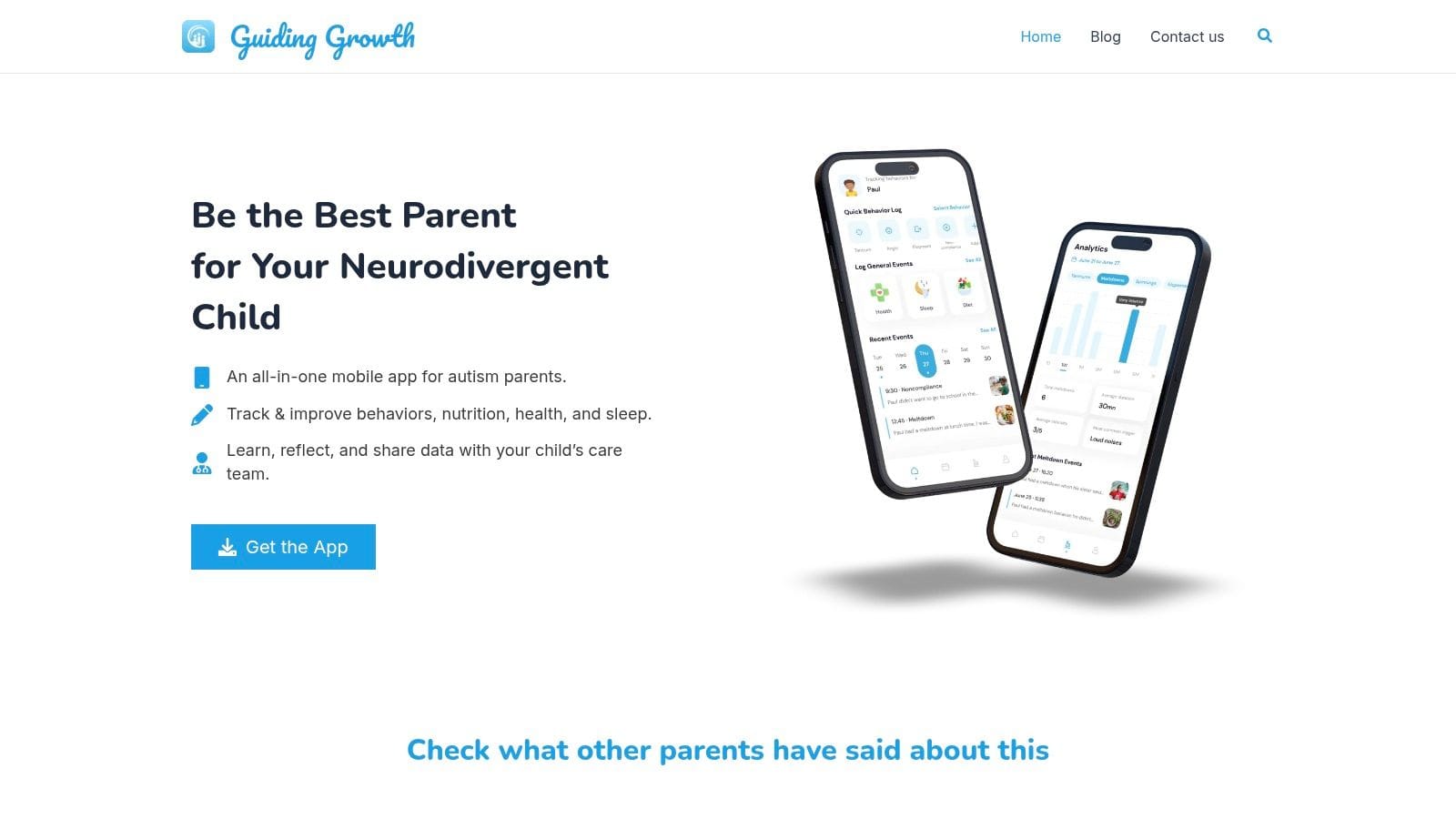
That's why a dedicated behavior tracking app can be so helpful for sensory regulation autism support. Instead of keeping scattered notes, parents can log behaviors, possible triggers, routines, and responses in one place, then look for patterns over time.
What to track each day
You don't need a complicated chart. You need consistent observations. Track the same few variables often enough that patterns become visible.
A simple framework:
| What to log | Examples |
|---|---|
| Behavior | Meltdown, shutdown, refusal, pacing, covering ears, crashing, chewing |
| Possible trigger | Loud room, bright lights, scratchy shirt, hunger, transition, crowded car ride |
| Context | Time of day, location, who was present, what happened right before |
| Body factors | Sleep, food, illness, constipation, medication timing |
| Support used | Headphones, movement break, deep pressure, quiet corner, snack |
| Outcome | Calmed quickly, no change, escalated, helped only briefly |
Track what happened before, during, and after. Most breakthroughs come from context, not from the behavior alone.
A good pattern log can answer questions parents ask every day:
- Does dysregulation happen more after school or before dinner?
- Do bright stores go better when we use sunglasses and keep the trip under a certain length?
- Does deep pressure help with bedtime but not with transitions?
- Are “behavior problems” worse on poor-sleep days?
When you track over time, your child's sensory profile becomes less mysterious. You can walk into an OT appointment or school meeting with specifics instead of general worries. You can also stop wasting energy on tools that sound promising but don't actually help your child.
When and How to Seek Professional Support
Parents can do a lot at home, but you don't have to figure this out alone. An occupational therapist with sensory expertise can help translate your child's patterns into a more targeted plan. That often means identifying which input helps, which input overwhelms, and how to build regulation into daily routines.
Signs it is time to get extra help
It's a good idea to seek support when sensory needs are doing more than causing occasional rough moments.
Consider professional help if:
- Safety is becoming a concern. Your child doesn't notice pain, bolts in overwhelming places, crashes hard into furniture, or seeks risky sensory input.
- Daily life is shrinking. Clothing, toothbrushing, sleep, meals, school attendance, car rides, or outings are regularly disrupted by sensory distress.
- Home strategies aren't enough. You've tried reasonable supports and still see frequent overload, shutdowns, or recovery that takes a very long time.
- You suspect another issue may be involved. If sound responses seem extreme or inconsistent, it can help to rule out hearing concerns through specialists who offer services for children's hearing.
What an OT can do
An OT can look beyond single incidents and assess the whole pattern. They may help you build a sensory routine, adapt the home or school environment, and identify whether the child needs more movement, more pressure, less noise, fewer visual demands, or a different transition plan.
Bring your observations with you. Specific notes about triggers, timing, and responses make evaluations much more useful. You know your child best. A skilled professional adds structure and clinical reasoning to what you're already seeing.
Sensory support isn't about making an autistic child seem less autistic. It's about helping them feel safer, more comfortable, and more able to participate in daily life.
If you want one place to log meltdowns, shutdowns, sensory triggers, sleep, food, routines, and what worked, Guiding Growth makes that process much easier. It helps parents replace scattered notes with clear patterns, so you can make calmer decisions, share useful information with caregivers and therapists, and build support around what works for your child.