Your child is chewing the shirt collar again. Yesterday it was the pencil eraser. Last week it was the sleeve of a jacket, the corner of a toy, and maybe even hair or fingers. Most parents I meet feel two things at once in that moment: concern and confusion. You want it to stop because it looks unsafe or hard on the teeth, but you can also tell your child is getting something important from it.
That instinct is usually right. Chewing often isn't random. It can be a way to calm the body, focus the mind, or cope with stress. For some autistic children, chewing is one of the clearest signals that their nervous system is asking for help.
A sensory chew toy can give that need a safer outlet. But the toy itself is only one piece of the puzzle. The bigger job is figuring out why your child is chewing, how to keep them safe, and how to tell whether what you're trying is helping.
Table of Contents
- Your Child Chews on Everything Now What
- Understanding Sensory Chew Toys and Their Benefits
- How to Choose a Safe and Effective Sensory Chew Toy
- Introducing a Chew Toy and Monitoring Its Use
- Beyond the Toy Investigating Underlying Causes
- Tracking What Works with the Guiding Growth App
- Maintenance Alternatives and Next Steps
Your Child Chews on Everything Now What
A parent once told me, “I spend half my day saying, ‘Don't put that in your mouth.’” If that sounds familiar, you're not failing. Many autistic and neurodivergent children chew on non-food items because their body is seeking oral input, comfort, or regulation.
That can look different from child to child. One child nibbles the neck of every T-shirt. Another grinds hard on LEGO pieces or pencil ends. Another mouths soft fabric whenever the room gets noisy or a demand feels too big. The behavior may look the same from the outside, but the reason underneath can be very different.
Start with safety, not shame
The first step isn't punishment. It's redirection. A purpose-built chew toy gives your child something made for the job, rather than leaving them to chew clothing, toys, or household items that can break, splinter, or carry germs.
Chewing is often a form of communication. Your child may be showing you that they need help getting organized, calm, or focused.
Parents also worry about teeth, jaw habits, and long-term oral health. That concern is valid. If your child has a long history of oral habits, this guide on how thumb sucking impacts oral health can help you think through what to watch for and when to ask a dental professional for guidance.
What helps most right now
You don't need to solve everything today. A practical starting point is:
- Notice the pattern: Is the chewing happening during homework, transitions, car rides, or noisy places?
- Protect first: Offer a safe chew tool instead of trying to eliminate the need on the spot.
- Stay curious: Ask what the behavior might be doing for your child. Calming them? Waking them up? Helping them cope?
That shift matters. When you stop treating chewing as “bad behavior” and start reading it as information, your next steps get much clearer.
Understanding Sensory Chew Toys and Their Benefits
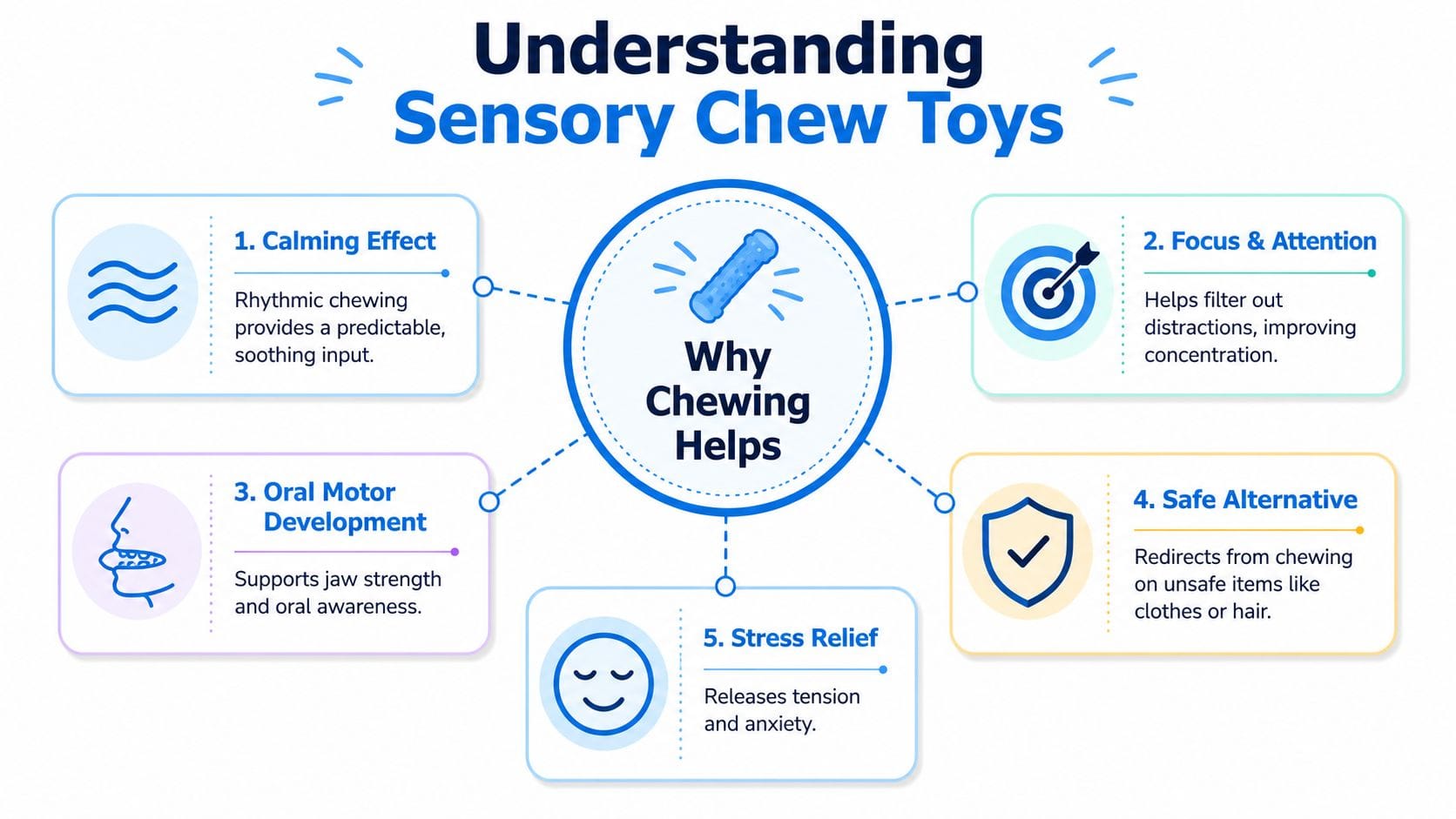
Chewing helps many children for the same reason a weighted blanket, rocking chair, or deep hug can help. It gives the body predictable input. In this case, that input goes through the jaw.
Why chewing feels regulating
A useful phrase here is proprioceptive input. That means information your muscles and joints send to the brain about pressure and movement. Rhythmic chewing gives strong input through the jaw, and that can help the nervous system settle.
The clearest clinical description comes from Hello ABA's explanation of sensory chew tools, which notes that sensory chew toys function as a therapeutic oral motor intervention by delivering proprioceptive input through rhythmic mastication, activating self-regulating mechanisms that can reduce hyperactivity and anxiety. The same source explains that this oral stimulation can help ground a person during overwhelm, especially for individuals with Sensory Processing Differences.
Think about adults for a moment. Some people chew gum while working. Some bite a pen cap when concentrating. Some tap a foot under the table to release tension. Children often do similar things, just more openly and with less socially acceptable tools.
What benefits parents often notice
When the chew tool matches the child's needs, families often see several practical benefits:
- Calmer body: Rhythmic chewing can help a child settle after stress or sensory overload.
- Better focus: A child who usually chews shirts or classroom items may attend more easily when that oral need has an appropriate outlet.
- Safer redirection: The toy can replace chewing on clothing, hair, fingers, or random objects.
- Support for daily routines: Some children do better with a chew tool during schoolwork, therapy, car rides, or waiting times.
A sensory chew toy isn't just a distraction. It can be a functional coping tool.
Why the right context matters
Chew toys work best when adults understand when and why the child uses them. If your child chews most during overload, transitions, or meltdowns, it helps to look at the bigger sensory picture too. This guide on sensory tools that help calm meltdowns is a useful companion because oral input is often only one piece of regulation.
Practical rule: If the chewing increases during stress, don't assume the child is “acting out.” First ask whether their body is asking for more support.
What can be confusing
Parents sometimes expect every chew toy to work the same way. They don't. One child wants firm resistance through the molars. Another wants light nibbling with the front teeth. One likes smooth silicone. Another seeks texture. That's why success often depends less on the idea of chewing and more on the fit between the tool and the child.
That's also why sensory chew toys for autism should be chosen with the same care you'd use for shoes. The general category matters less than the specific match.
How to Choose a Safe and Effective Sensory Chew Toy
The market is full of cute options. Safety matters more than cute.
Some children mouth lightly. Others chew with enough force to destroy a weak product fast. The best chew toy is the one that matches your child's chewing style, sensory preferences, and daily setting without creating new risks.
Start with the non-negotiables
Safety standards require chew toys to be made from non-toxic materials and designed to be hard to swallow. Expert guidance also recommends buying from manufacturers in the U.S. or Canada, and many products use a chew rating system to help match durability to the user's needs. That matching matters because many people who need high-intensity chew tools are over the age of 10 and may chew with substantial force.
Look for products that clearly describe:
- Material safety: Non-toxic silicone or another purpose-built chew-safe material.
- Durability level: A chew rating or resistance description.
- Shape and size: Large enough and designed in a way that reduces swallowing risk.
- Cleaning instructions: You need to know how to keep it hygienic.
Match the toy to the chewing pattern
Watch your child for a few days before buying. Where are they chewing with their mouth?
If they nibble with the front teeth, they may prefer a thinner or more flexible option. If they crunch with the premolars or molars, they usually need something tougher and more substantial.
Here's a simple way to understand it:
| Chew Level | Common Behaviors | Recommended Toy Type |
|---|---|---|
| Light | Shirt nibbling, lip-side chewing, gentle pencil chewing | Softer handheld chew or lighter pencil topper |
| Moderate | Regular chewing during school, transitions, or screen time | Mid-resistance pendant, bracelet, or handheld textured chew |
| Strong | Deep biting, molar grinding, breaking weaker items | High-durability handheld chew or tougher pendant with appropriate chew rating |
Choose for the setting, not just the sensation
Different forms work better in different places.
Handheld chew tools
These are often easiest for younger children or children who need stronger jaw input. They're easy to supervise and usually less likely to become a clothing accessory that gets forgotten in rough play.
Pencil toppers
These can help in school or table work when the child already tends to chew pencils. They're most useful for children who want oral input while their hands stay busy.
Chewelry
Necklaces and bracelets can be discreet and convenient, especially for older children who don't want to carry a handheld item. But wearable options need extra safety attention, which I'll cover next.
A chew tool should fit the child's body, habits, and environment. A perfect toy for home may be a poor choice for recess, the car, or circle time.
Texture and weight matter too
Some children want smooth resistance. Others want ridges, bumps, or a heavier object that gives extra sensory feedback. If a child keeps rejecting one chew toy, it may not mean they “don't like chewies.” It may just mean the texture, firmness, or shape is wrong.
That's why I usually tell parents to think in layers: safety first, chewing strength second, sensory preference third, convenience fourth. If you reverse that order, you're more likely to buy something that looks appealing but doesn't get used.
Introducing a Chew Toy and Monitoring Its Use
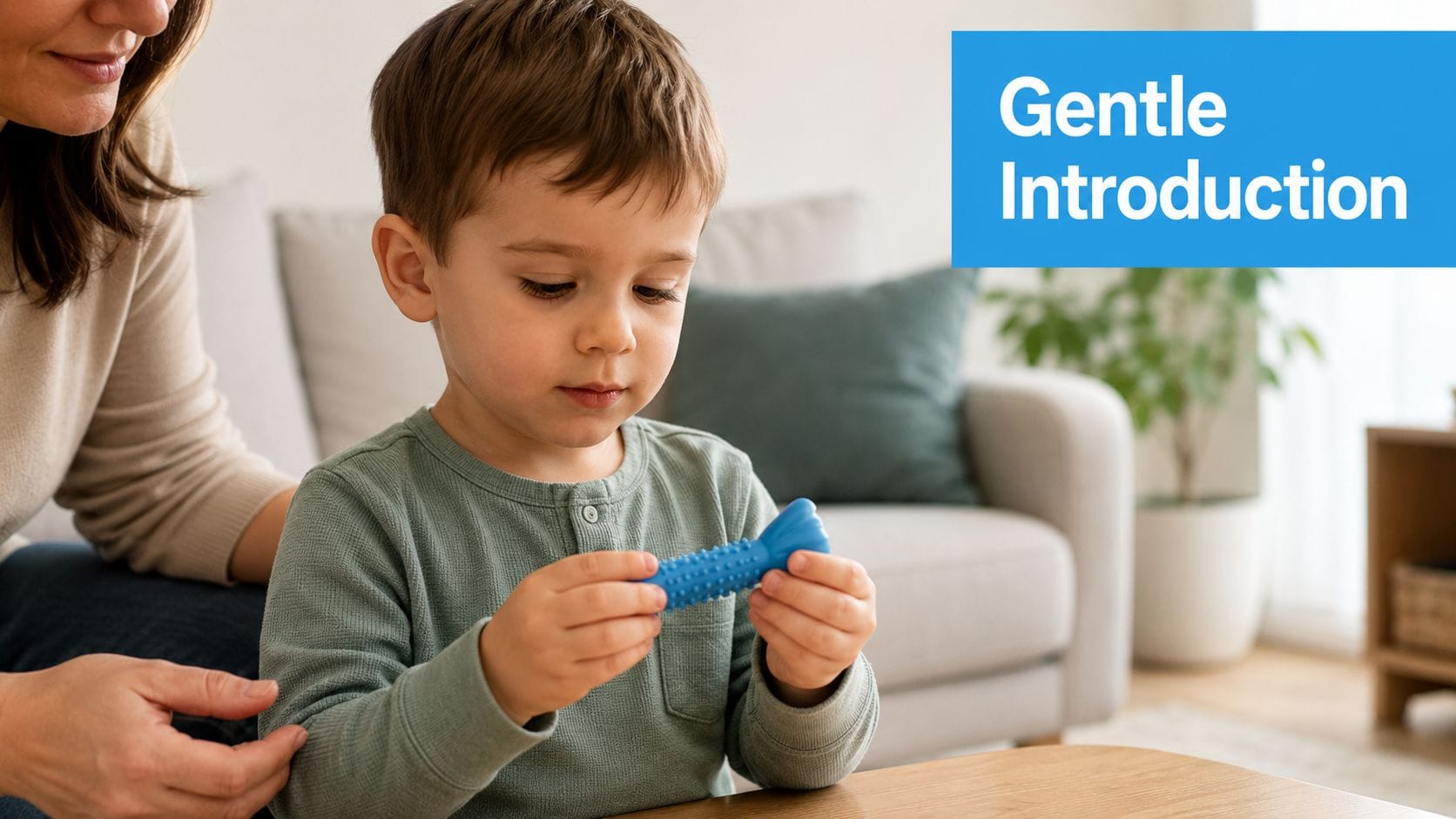
The first introduction should feel calm and low-pressure. If the toy arrives with too much attention attached to it, some children avoid it immediately. Others turn it into a game and chew it in unsafe ways.
Keep the first try simple
Offer the chew toy during a time when your child usually seeks oral input. Don't make it a demand. You might place it nearby during homework, in the car, or while watching a preferred activity.
A few helpful phrases:
- “This is for chewing.”
- “If your mouth wants to chew, use this.”
- “The chewy is for your mouth. The toy car is for your hands.”
That last line matters. Children often need very concrete boundaries.
Set rules early
A chew toy works better when the expectations are consistent. Keep the rules short and visual if needed.
- Chew only your own tool.
- Use it in approved places.
- Keep it clean.
- Give it to an adult if it looks damaged.
Children who use wearable chewelry need even more structure. According to Sensory Direct's safety guidance on sensory chews, any necklace-style chew should have a safety breakaway snap, all chew toys should be used under supervision, and they should be replaced at the first signs of damage so a child doesn't ingest broken pieces.
Watch the toy, not just the child
Parents usually monitor whether the child likes the chew. I also want you to monitor the product itself.
Check it daily for:
- Small tears
- Stretching or thinning
- Surface cracks
- Loose parts or weakened cords
This quick demonstration can help you think through safe use in daily life:
Notice when it helps most
Instead of asking, “Does my child like it?” ask better questions:
- Does it reduce chewing on shirts?
- Does it help during waiting, transitions, or homework?
- Does the child seek it before becoming overwhelmed?
- Does one style work better than another?
If a chew toy is fraying, cracking, or losing shape, retire it right away. Safety decisions should be immediate, not delayed until later.
A chew toy should make life easier and safer. If it's becoming a battle, getting constantly thrown, or creating new hazards, adjust the tool or the context.
Beyond the Toy Investigating Underlying Causes
A chew toy can be helpful. It can also distract adults from a bigger question: why is the chewing so persistent?
That question matters because experts, including Dr. Mary Barbera, emphasize that chew toys are a short-term intervention and should be faded as soon as possible once it's appropriate. She also stresses that excessive chewing can signal underlying medical issues, and that families should consider diet review and blood work before treating the toy as the full answer. Her discussion highlights possible physiological contributors such as low zinc, high copper-to-zinc ratios, lead toxicity, and iron deficiencies, which may require medical assessment and supplementation rather than only behavioral substitution, as explained in Dr. Mary Barbera's guidance on chew toys for kids.

When chewing may be a symptom
This doesn't mean every child who chews has a nutritional deficiency or toxic exposure. It means you shouldn't assume the behavior is purely sensory without checking the whole picture.
Bring it up with your pediatrician if you notice:
- Sudden increase in chewing
- Chewing paired with eating concerns
- Fatigue, pallor, or very limited diet
- Persistent mouthing of non-food items
What to ask the doctor
You don't need a perfect theory. You just need a clear description.
Try saying:
“My child is frequently chewing non-food items. We're using a safe chew tool for now, but I'd like to rule out medical or nutritional causes too.”
That gives the clinician a concrete starting point. If your child's school team is involved, it can also help to gather observations from teachers. Families who are weighing school supports may find Queens Online School's autism school guide useful as they think about environments, accommodations, and the kind of daily structure that can either increase or reduce stress behaviors.
The most balanced approach
The most practical plan is usually a dual approach:
- Use the chew toy now to keep your child safer and more regulated.
- Investigate root causes so you're not only managing the surface behavior.
Parents also benefit from learning how to spot patterns around overwhelm, routines, and context. This resource on identifying sensory triggers in autism can help you think more clearly about what's happening around the chewing, not just the chewing itself.
A toy can be a bridge. It shouldn't become the entire map.
Tracking What Works with the Guiding Growth App
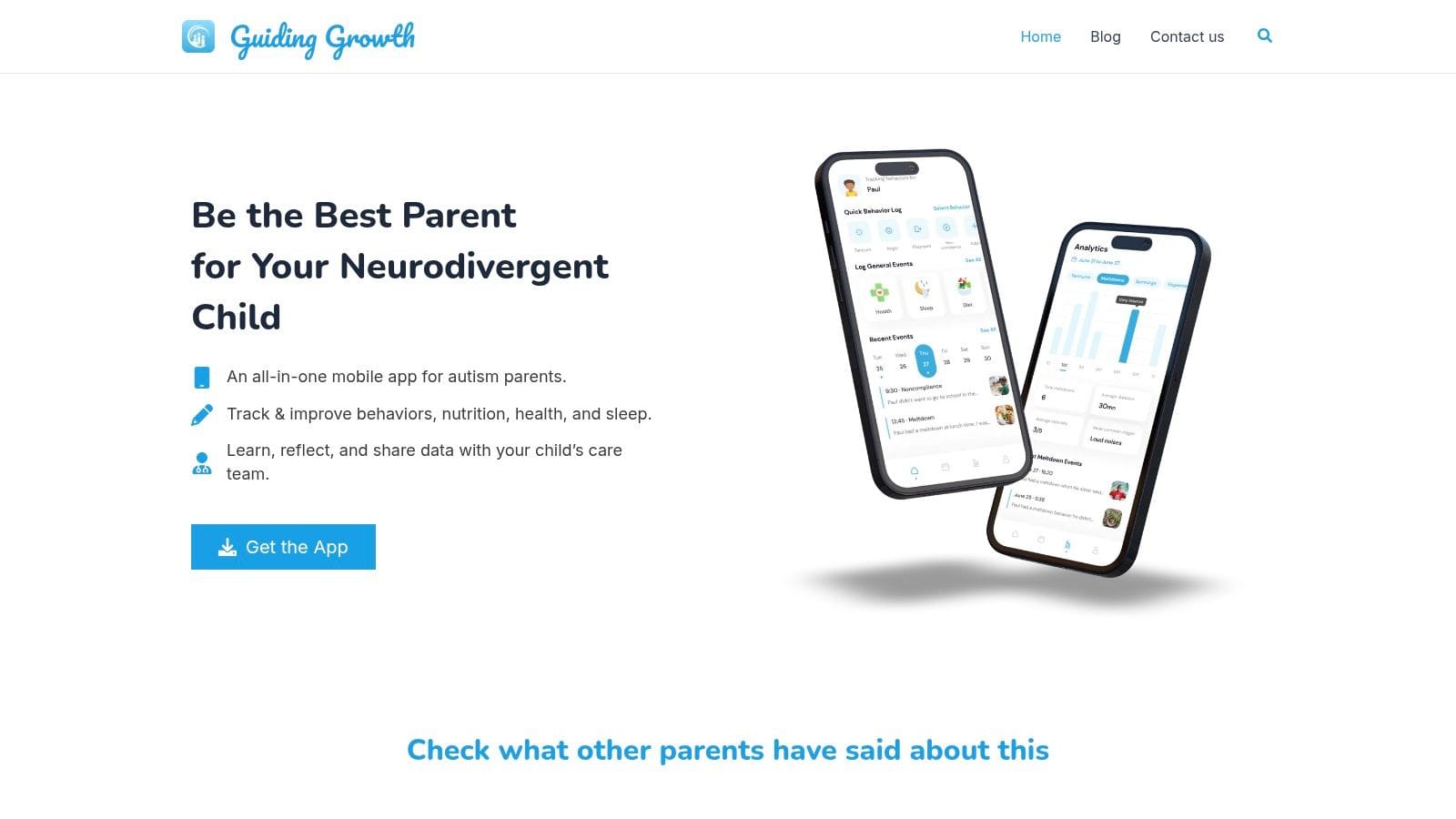
Most parents try a chew toy and then rely on memory to judge it. Memory is useful, but it's also messy. After a long week, it's hard to remember whether the shirt chewing was worse on therapy days, whether school was smoother with the pencil topper, or whether chewing increased when your child skipped a preferred snack.
Turn hunches into patterns
The strongest reason to track is clarity. A chew tool may seem helpful, but what you really want to know is when, how, and under what conditions it helps.
A simple tracking routine can include:
- Chew toy used: pendant, handheld chew, pencil topper
- Time and setting: schoolwork, car ride, waiting room, bedtime routine
- Related behavior: shirt chewing, mouthing objects, demand avoidance
- Outcome: calmer body, better attention, no change, refusal
That kind of note-taking is especially useful because Fun and Function's discussion of chewy toy benefits explains that chew toys can support self-regulation, concentration, and prevention of inappropriate mouthing, and that parents can track behaviors such as demand avoidance and diet to correlate chew toy use with improved focus during specific activities.
A quick real-life example
Let's say your child uses a chew necklace before homework and a handheld chew in the car. After a couple of weeks, your notes might show that the necklace gets ignored, but the handheld chew is used consistently before difficult transitions. You may also notice that chewing spikes on days with poor sleep or a very limited lunch.
That changes your next decision. Instead of buying more random chew products, you can respond to the pattern you observe.
The question isn't “Does this toy work?” The better question is “What happens before, during, and after my child uses it?”
What to track over time
Parents often focus only on the chewing itself. Broader tracking gives better answers.
Include things like:
- Diet patterns
- School demands
- Sleep quality
- Meltdowns or shutdowns
- Sensory overload
- Transitions that tend to be hard
If you want a structured way to monitor those changes, tracking sensory milestones in autism can help you organize what you're seeing over time instead of keeping it all in your head.
Good support comes from observation, not guesswork.
Maintenance Alternatives and Next Steps
A chew toy only helps if it stays clean, intact, and appropriate for your child's current needs. Once families find a tool that works, they sometimes stop reassessing. That's when problems creep in.
Keep the tool clean and usable
Follow the manufacturer's cleaning instructions exactly. In general, the goal is simple: wash it often enough that saliva buildup, lint, and daily grime don't turn the tool into another problem.
Build a short routine:
- Check it each day: Look for wear before handing it over.
- Clean it consistently: Especially after school, outdoor use, or illness.
- Store it predictably: A clean container or designated spot helps.
- Replace without hesitation: If it's damaged, it's done.
If chew toys aren't the right fit
Some children never really take to them. Others use them for a while and then move on. That doesn't mean oral sensory support was the wrong idea.
You can explore other oral input options such as:
- Crunchy or chewy foods: If feeding is safe and appropriate for your child.
- Blowing activities: Bubbles, whistles, or other therapist-approved breath activities.
- Oral care tools: A vibrating toothbrush may be useful for some children who seek oral sensation.
- Heavy work and full-body regulation: Sometimes the chewing decreases when the whole body gets better sensory input.
Put the full plan together
The strongest approach usually looks like this:
- Protect your child first with a safe, durable chew tool if they're chewing unsafe items.
- Match the tool carefully to chewing strength, texture preference, and setting.
- Inspect and supervise so wear and tear don't become a choking risk.
- Ask bigger questions if the chewing is frequent, intense, or persistent.
- Track patterns so you can make decisions based on real observations.
If oral habits have affected dental care, some families also need a dentist who understands sensory and behavioral needs. This guide to accommodations for special needs patients can help you think through what supportive dental visits may look like.
The key point is simple. Sensory chew toys for autism can be helpful, but they work best as part of a bigger, thoughtful plan. When parents stay curious, prioritize safety, and look for root causes, they support the whole child instead of chasing one behavior.
Guiding Growth can help you keep all of this organized in one place. You can log chewing episodes, diet, sleep, meltdowns, and daily context so patterns become easier to spot and share with therapists, caregivers, or your child's doctor. If you want a calmer, clearer way to track what's helping your child, explore Guiding Growth.