By the time dinner's over, you've answered the same question three times, checked the school bag, and tried to remember whether this week was easier than last week or you're just less exhausted tonight. Your child may be decompressing on the couch, stimming, refusing one more bite of food, or melting down because the pajamas feel wrong again. In that moment, quality of life assessment isn't a form to fill out, it's the practice of noticing what life has really looked like for your child, across the parts of the day that keep getting missed.
Table of Contents
- What Quality of Life Assessment Really Means for Your Family
- The Core Domains That Matter Most
- Choosing the Right Assessment Method for Your Child
- Running a Weekly Quality of Life Check-In
- Real Scenarios From Real Families
- Why Logging Alone Is Not Enough
- Your First Month With a Quality of Life Habit
What Quality of Life Assessment Really Means for Your Family
Tuesday evenings are where the truth usually shows up. A child may seem fine in the car line, then fall apart the minute they get home, and a parent is left trying to remember whether the week was better because there were fewer blowups, or worse because everyone just got quieter. That is what a quality of life assessment does for family life. It helps you capture the week as it actually unfolded, not as you hope it looked in hindsight.
A child does not need to “complete” a quality of life assessment the way they would a school worksheet or a clinic screening. For families, it is a structured way to notice patterns in sleep, food, regulation, comfort, communication, and independence, then connect those patterns to daily care. The strongest frameworks already point in this direction, because quality of life has long been treated as multidimensional, not as a single score, from the WHOQOL project's cross-cultural work in 15 international field centres to the broader indicator approach used in public reporting by Eurostat methodology.
Parents are usually the people who see the whole movie. Clinicians often see a snapshot, a good day, a bad day, a rushed appointment, or a short description from a tired caregiver. You live the pattern. You know when a child's irritability started after a change in bedtime, when a new food brought more distress than any handout predicted, and when “fine at school” really means “holding it together until they get home.”
Practical rule: If the same problem keeps showing up in different forms, do not treat each incident as unrelated. Start tracking the pattern, not just the incident.
That shift matters because quality of life is not just about symptoms. It is about lived experience, and lived experience only becomes visible when you watch it over time. A parent-led routine can also connect daily changes to developmental context, which is why a clear guide to child development milestones can help you tell the difference between a rough patch and a pattern that needs attention. A single-purpose app like Guiding Growth can keep that tracking focused on real behavior, sleep, nutrition, and sensory signals instead of burying you in a generic dashboard you will never use.
The Core Domains That Matter Most
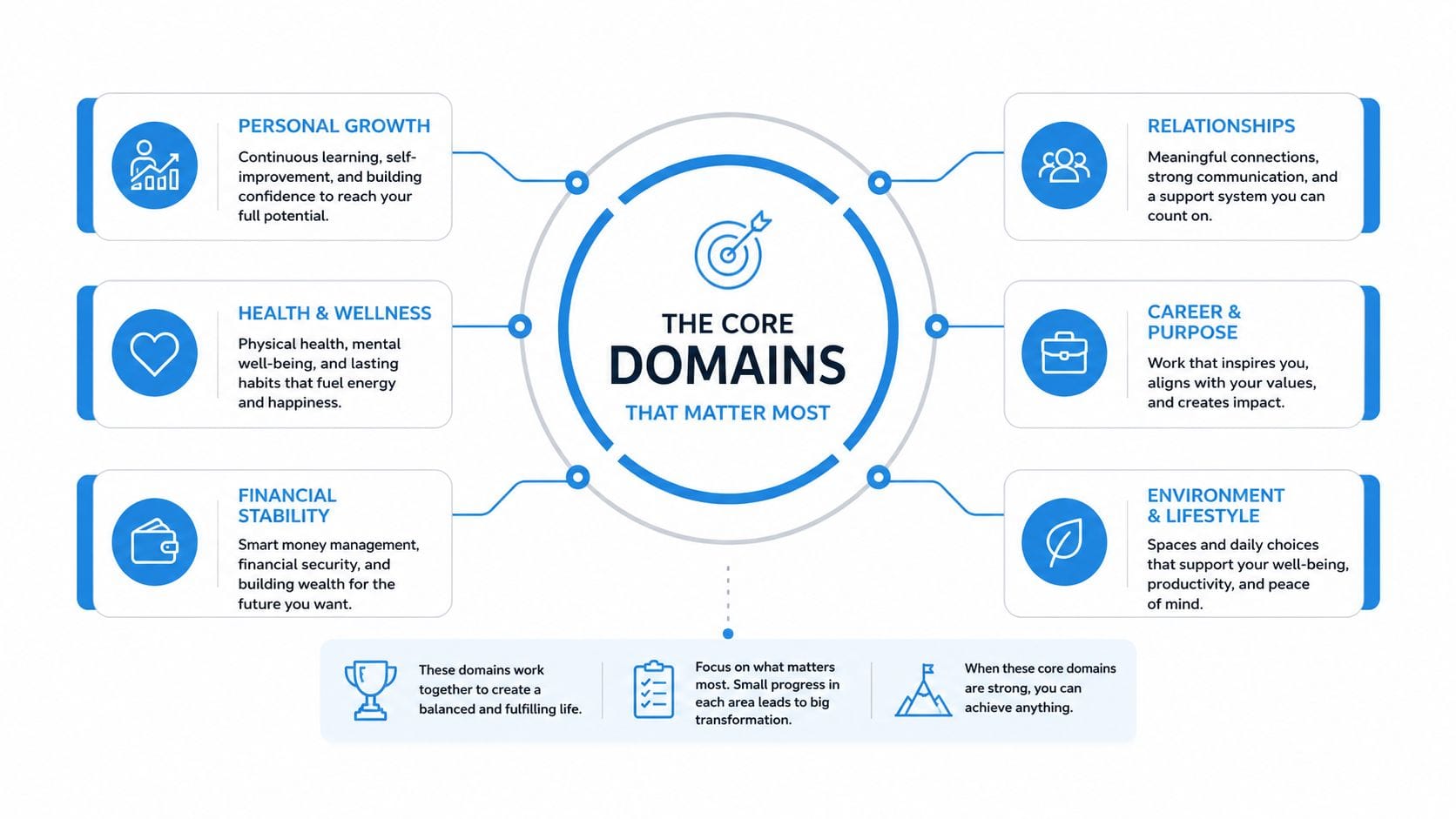
Modern quality-of-life frameworks work because they resist the temptation to reduce everything to one score. Eurostat organizes its indicators into 8 + 1 statistically measurable dimensions Eurostat methodology, and the original Quality of Life Scale was built around five conceptual domains, later adding independence as a sixth item QOLS. For families, that translates into a simple truth, one hard week in one area can hide a better week somewhere else.
Translate the framework into daily life
Start with the domains you can observe at home. Sleep and rest might look like falling asleep without a prolonged battle, or it might look like three broken nights in a row. Food and nutrition can mean a child tolerated breakfast, or it can mean they accepted only three safe foods and spent the rest of the day nauseated or avoidant. Behavior and regulation covers meltdowns, shutdowns, agitation, and recovery time after stress.
The rest of the picture matters just as much. Communication and social connection might be a child pointing, scripting, or asking for help instead of spiraling. Physical comfort and pain often shows up as pacing, guarding, refusal, or a sudden drop in tolerance. Independence and autonomy is the difference between needing constant adult prompting and managing one small routine with less friction.
Finally, track overall mood and joy. A week can be technically “quiet” and still feel flat, withdrawn, or disconnected. That's why a multidimensional lens beats a single wellbeing score every time.
- Sleep and rest: A good week means fewer bedtime battles, a bad week means the child wakes already dysregulated.
- Food and nutrition: A good week means a few meals feel easy, a bad week means refusals stack up.
- Behavior and regulation: A good week means recovery comes faster, a bad week means every transition becomes a fight.
- Communication and social connection: A good week means the child reaches out more, a bad week means language or connection drops.
- Physical comfort and pain: A good week means the body seems settled, a bad week means discomfort keeps showing through behavior.
- Independence and autonomy: A good week means one task gets easier, a bad week means even familiar steps need more help.
- Overall mood and joy: A good week means there are more moments of ease, a bad week means the whole house feels on edge.
For families who want a developmental lens alongside these domains, support your child's growth journey can be a useful companion resource, especially when you're trying to separate “not yet” from “something changed.”
You can also keep a child-development reference close at hand through this overview of child development, because the best tracking always makes room for context, not just outcomes.
Choosing the Right Assessment Method for Your Child
The right assessment method depends on what you need right now. If you want a baseline before changing routines, a standardized questionnaire can help. If you want to understand your child's day-to-day reality, a parent-rated scale or continuous tracking usually tells a more useful story. If you need to hand someone else a clear summary, the best method is the one that turns your observations into something another adult can use without guessing.
The Quality of Life Scale is a helpful middle ground because it measures five conceptual domains and adds independence QOLS. That structure is easier to use at home than a long clinic battery, and it keeps the focus on function, participation, and autonomy, not just symptoms. For many families, that's the sweet spot between a one-time questionnaire and a sprawling notebook full of disconnected notes.
A tool is useful only when it fits the decision you're trying to make.
| Method | Best For | Time Required | Limitation |
|---|---|---|---|
| Standardized questionnaire with a clinician | Building a clinical baseline | One appointment snapshot | Misses the rhythm of home life |
| Parent-rated scale like QOLS | Comparing domains over time | Short, repeatable check-ins | Still depends on regular use |
| Daily tracking in an app | Spotting patterns in real routines | Small daily inputs | Requires consistency to be meaningful |
A few trade-offs are worth being honest about. Questionnaires bring clinical structure, but they freeze a child's life into a single moment. Daily tracking catches the messiness, but only if you can keep it going when life is noisy. That's why many parents do best with one structured tool for comparison, plus continuous tracking for the authentic story.
If you're comparing care options, a Vernon counselling guide can be useful when you're thinking about how to share observations clearly with a therapist or coach, because the best conversations start with concrete patterns, not vague worries.
A practical approach is simple. Use a structured method to establish a reference point, then use ongoing tracking to see what changes after sleep shifts, diet changes, school stress, or therapy adjustments. If you want that ongoing view organized around behavior rather than buried in scattered notes, this behavior tracking app is the kind of tool families often look for when they're tired of piecing the week together from memory.
Running a Weekly Quality of Life Check-In
Sunday evening is enough time to look back without turning the whole thing into homework. Sit down with the week's behavior notes, sleep patterns, and nutrition entries, then look for the same question every time, what changed, what stayed steady, and what seemed to set the tone. A weekly quality of life check-in works because it forces you to compare one week against the last instead of relying on how the week feels in the moment.
Use the same rubric every time
Rate each domain on a simple 1 to 5 scale. Keep the meaning of the numbers steady, so a 1 always means very hard and a 5 always means relatively stable or comfortable. This is the same practical logic that makes structured scales useful in veterinary quality-of-life work, where repeated observation beats one-off impressions and calendars help families notice good and bad days over time VeterinaryPartner.
Then ask two questions. Which two or three domains changed the most since last week, and what was happening around that shift? A stomach bug, a school schedule change, a noisy weekend, a new medication, or a sensory-heavy outing can make the difference between a puzzling score and a clear pattern.
Write one sentence for each change. Keep it plain. “Sleep dropped after the bedtime routine changed.” “Food got harder after the flu.” “Communication improved when the child had more warning before transitions.” That kind of note is much more useful than a paragraph of worry.
Make the context visible
Good data includes the why, not just the what.
Context keeps the review honest. If a child had fewer meltdowns but also stayed home all week, that matters. If school was unusually supportive, say so. If a sibling was sick, note that too. The point isn't to judge the week, it's to make the next week easier to read.
A simple home review usually looks like this:
- Review the logs. Look at behavior, sleep, food, appointments, and any major events.
- Score the domains. Use the same 1 to 5 logic for sleep, food, regulation, communication, comfort, independence, and mood.
- Circle the biggest changes. Focus on the shifts, not every tiny fluctuation.
- Write the context. Add illness, school changes, travel, sensory overload, or family stress.
- Choose one next step. Adjust one routine, not five.
- Save it for next week. The value comes from comparison.
If you want a way to connect weekly reviews with a broader view of treatment and support, how to track autism therapy progress can help you think about tracking as part of a larger care routine rather than a separate chore.
Real Scenarios From Real Families
One family starts noticing that the hardest weeks cluster around a narrow set of dinners and worse sleep. At first, it feels like a hunch, the kind parents mention in the car but don't trust yet. After a few weekly check-ins, the pattern becomes visible enough to bring to the pediatrician: certain foods line up with disrupted sleep, and disrupted sleep lines up with more meltdowns the next day.
The power is not in proving a perfect cause. The power is in bringing clean, ordinary data instead of a vague complaint. Once the family sees the pattern on paper, they can test changes more calmly, and the pediatrician can respond to something specific instead of trying to interpret one bad appointment.
Another child looks fine at school and wears a smile in front of teachers, so people assume things are steady. At home, though, the child stops asking for help, resists dressing, and needs more prompting for familiar routines. A weekly review shows that independence and communication have dropped, even though school reports still sound reassuring.
That gap matters. It tells the parent that “doing well” in one setting doesn't always mean life is going well overall. It also changes the conversation with therapists, because the concern is no longer a general sense of regression, it's a documented shift in home functioning that deserves attention.
The best family data often confirms what everyone sensed but couldn't yet name.
These are the moments when tracking stops being paperwork and starts becoming advocacy. The family isn't guessing less because they're worried less. They're guessing less because they've built a record that can be trusted.
Why Logging Alone Is Not Enough
More notes don't automatically mean better care. A 2025 PLOS ONE study found that giving home healthcare teams access to QOL data did not confirm the hypothesis that it would improve quality of life outcomes, which is a useful reality check for any parent who's been told that logging itself is the solution PLOS ONE study. Data capture by itself is just storage.
What changes outcomes is the loop. Families need visual patterns, not just raw entries. They need a way to see whether sleep and behavior are traveling together, whether one appointment week consistently brings more stress, and whether a nutrition shift is worth discussing with the care team. Without that, logging becomes another place where useful details disappear.
That's where a purpose-built app matters. A tool like Guiding Growth is designed to hold behavior logs, sleep, nutrition, medications, appointments, and therapy sessions together in one place, so the family isn't rebuilding the week from memory. Quick voice logging helps in the messy moments when typing isn't realistic, and Alma AI can act like an on-demand parenting companion when you're staring at the pattern and not sure what it means.
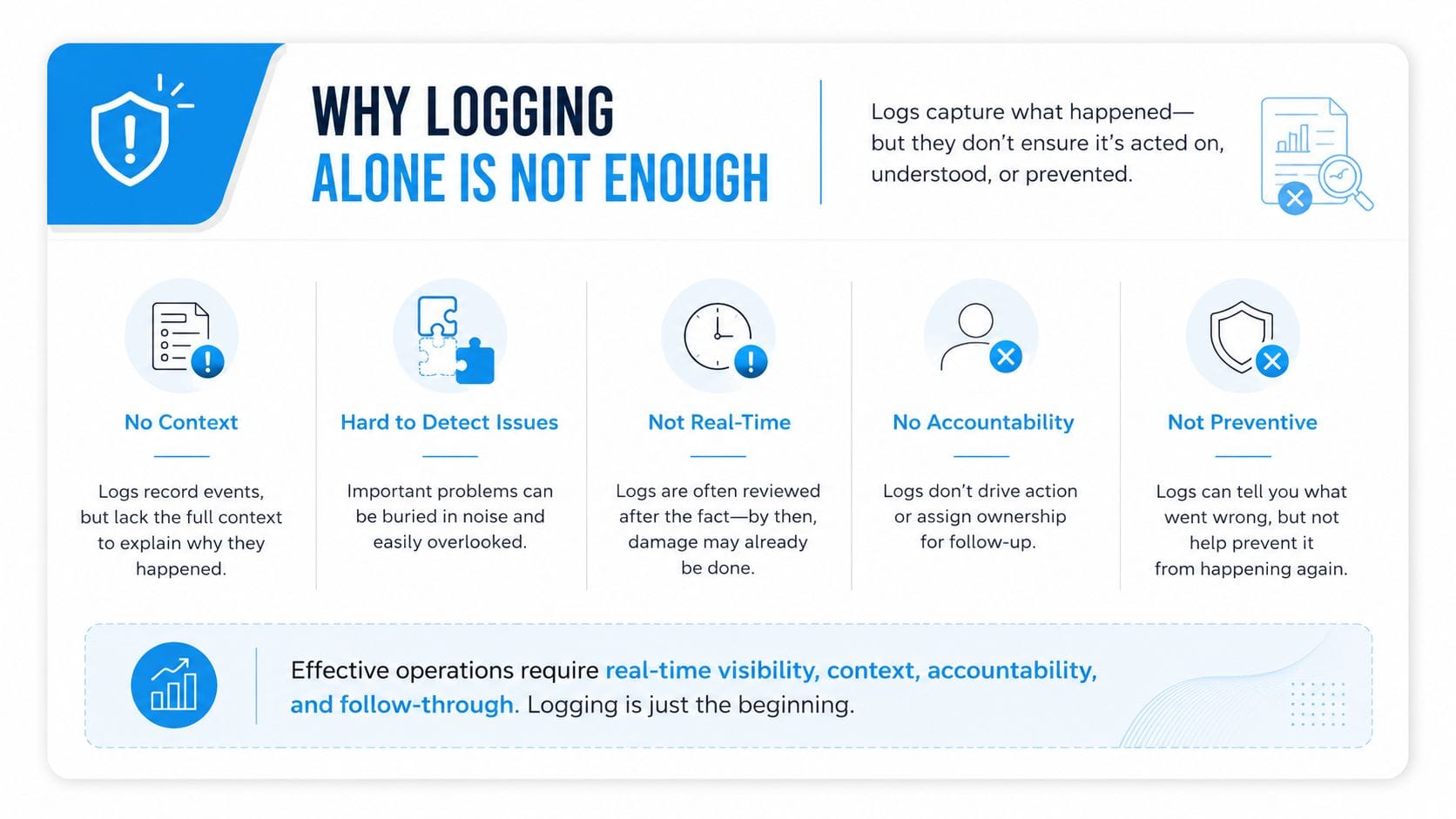
The point is not to collect more for its own sake. The point is to make the information actionable, shareable, and easier to interpret with other adults who care for the child. When families can move from log to insight to decision without a lot of friction, tracking starts serving the child instead of draining the parent.
Your First Month With a Quality of Life Habit

Start with one month, not forever. Week one, choose the domains that matter most and set up tracking for behavior, sleep, and nutrition so you have a baseline. Week two, run your first weekly check-in and write down what surprised you. Week three, share one summary with a partner, co-parent, or therapist. Week four, review the month, notice two trends, and choose one small care change to test.
Guiding Growth keeps that whole routine in one place, including behavior logging, sleep routines, diet notes, medications, appointments, and therapy sessions, with visualizations that make reflection faster. That's what makes the habit stick, less searching, less reconstructing, more understanding.
If you're ready to stop guessing and start seeing the pattern, try Guiding Growth and turn your child's daily signals into a clearer, calmer care routine.