Your child is in the grocery store, the cart wheels are rattling, a baby is crying two aisles over, and the overhead speaker suddenly crackles. Then your child presses both hands over their ears. Maybe they crouch down. Maybe they start to cry. Maybe they look panicked, and you feel it too.
That moment can be unsettling. Parents often wonder if they just saw a normal reaction to noise, a sign of sensory sensitivity, or something more, like autism. If you're asking is covering ears a sign of autism, the most honest answer is that it can be, but the behavior by itself doesn't give you the full picture.
What matters most is pattern, context, and what else is happening alongside it. A child who covers their ears once during a fire alarm is very different from a child who does it often in everyday places, struggles to recover, and shows other developmental differences too. The good news is that you don't need to guess. You can learn to observe this behavior in a way that helps.
Table of Contents
- That Moment Your Child Covers Their Ears
- Why All Children Sometimes Cover Their Ears
- The Link Between Ear Covering and Sensory Hypersensitivity
- Could It Be Something Besides Autism
- When to Pay Closer Attention
- How to Support Your Child and Find Answers
That Moment Your Child Covers Their Ears
A parent once described a birthday party where everything seemed fine until the group started singing. The child stiffened, covered their ears, and ran to the hallway. Everyone else saw cake, balloons, and a happy celebration. That child may have experienced the room very differently.
Many families reach a point of uncertainty. They ask, "Was that fear? Was it pain? Was it behavior? Was it autism?" Those questions make sense, especially if the reaction happens in places other children seem to handle without trouble.
Ear covering can mean many things. Some children are startled. Some are protecting themselves from a sound that feels overwhelming. Some are reacting to ear discomfort, stress, or a mix of both. A single moment rarely gives a clear answer.
A useful shift: Instead of asking only what the behavior means, ask what your child may have been experiencing right before it happened.
That shift matters because it moves you away from judgment and toward observation. A child who covers their ears isn't necessarily "overreacting." They may be trying to cope with something their body and brain are registering as too intense.
If this has happened with your child, you don't need to jump straight to a diagnosis. You also don't need to brush it off if it keeps happening. The most helpful middle ground is to stay calm, look for patterns, and notice whether the behavior shows up with other concerns like communication differences, repetitive behaviors, or strong distress in busy places.
Why All Children Sometimes Cover Their Ears
Many children cover their ears at least sometimes. Before linking it to autism, it helps to start with the ordinary reasons.
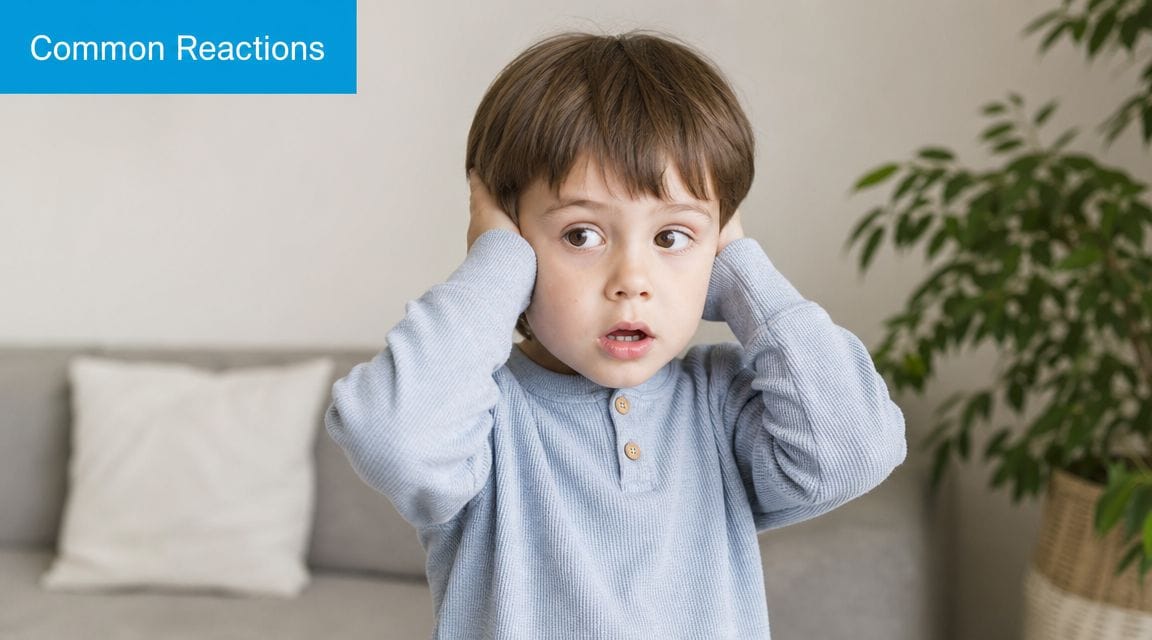
Sometimes the sound really is too much
A blender can be jarring. So can a hand dryer in a public restroom, a barking dog, a siren, or a vacuum turning on without warning. In those moments, ear covering is often just a normal protective response.
Young children also have less control over their environment than adults do. They can't step away from a noise as easily, and they may not have the words to say, "That hurts my ears," or "That sound scared me." Their body reacts first.
A few common everyday situations include:
- Sudden noise: A balloon pops, a motorcycle revs, or a toilet auto-flushes nearby.
- Crowded spaces: Restaurants, assemblies, and family gatherings can layer many sounds together.
- Playful experimenting: Some children explore sound by covering and uncovering their ears to hear how the world changes.
Temporary body discomfort can look sensory
Sometimes the issue isn't processing. It's the ears themselves.
A child with a cold, congestion, or ear irritation may touch or cover their ears because the sensation is uncomfortable. Pressure changes, muffled hearing, or soreness can all make a child react in ways that look similar to sensory distress at first glance.
This is one reason context matters so much. If your child only covers their ears when sick, after swimming, or during clearly loud events, that points you in a different direction than a child who does it frequently in many ordinary settings.
Ear covering becomes more meaningful when it is repeated, situation-linked, and part of a broader pattern, not when it happens once in an obviously noisy moment.
If you're unsure, start by asking a basic question: Does this seem occasional and predictable, or frequent and hard to explain? That simple distinction helps many parents decide whether to keep casually watching or begin more structured tracking.
The Link Between Ear Covering and Sensory Hypersensitivity
For many autistic children, ear covering makes sense when you understand auditory hypersensitivity. The easiest way to think about it is this: the brain's volume dial may seem turned up too high. Sounds that feel manageable to one child can feel sharp, chaotic, or even painful to another.
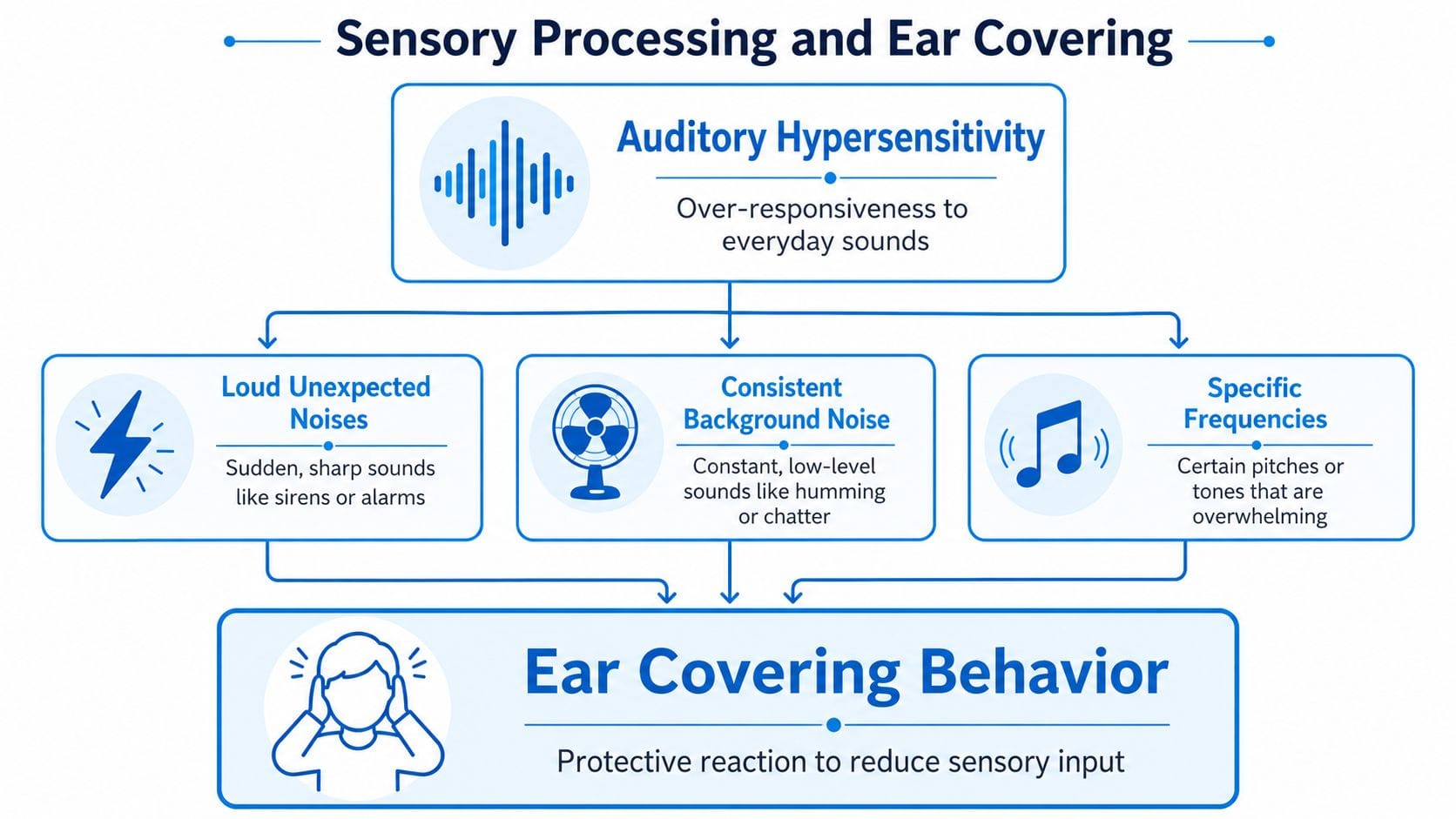
What auditory hypersensitivity can feel like
A child might react not just to loud noises, but to certain kinds of sounds:
- Unexpected sounds: alarms, hand dryers, chairs scraping
- Ongoing background sound: classroom chatter, fans, cafeteria noise
- Particular tones or pitches: noises that seem minor to other people but feel unbearable to them
In that situation, covering the ears isn't random. It's a fast, protective attempt to reduce input. Some children also leave the room, cry, freeze, stim more, or shut down.
If you're trying to identify sound patterns at home or in school, this guide on how to identify sensory triggers in autism can help you think more clearly about what to watch for.
Why this matters in autism
Covering ears can be a sign of autism because it often reflects auditory hypersensitivity. In 2013, the DSM-5 formally recognized under- or over-reactivity to sensory input as a diagnostic feature of autism, and Spark for Autism explains that a scientific review found about 50% to 70% of autistic people are hypersensitive to everyday sounds at some point in their lives.
That doesn't mean ear covering is diagnostic by itself. It isn't. Many children without autism cover their ears when something is too loud, too sudden, or too stressful.
What makes the signal stronger is repetition and context. If a child covers their ears across different settings, reacts to ordinary sounds, and also shows things like reduced eye contact, language delay, repetitive movements, or broader sensory avoidance, the behavior becomes more important.
When ear covering is tied to sensory overload, the goal isn't to stop the behavior first. The goal is to understand what the child is trying to protect themselves from.
That change in perspective helps parents respond with more compassion. Instead of seeing defiance or drama, you start to see communication. The hands over the ears may be saying, "This is too much for me."
Could It Be Something Besides Autism
Yes. Ear covering can have more than one explanation, and the same behavior can come from very different experiences inside the child.
One child covers their ears because the cafeteria feels painfully loud. Another does it because they are already tense and the noise pushes them over the edge. A third may be dealing with ear pressure from a cold, muffled hearing, or actual pain. From the outside, those moments can look almost identical. The job is not to guess fast. The job is to notice patterns carefully.
That is why observation helps more than a single yes or no answer. Parents often feel pressure to decide what ear covering "means" right away. A better approach is to treat each episode like a clue. Over time, clues can form a pattern that is much more useful to a pediatrician, audiologist, or developmental specialist.
Comparing reasons for ear covering
| Potential Cause | Typical Triggers | Associated Behaviors |
|---|---|---|
| Autism-related sensory over-responsivity | Ordinary household sounds, layered noise, sudden sound changes, noisy group settings | Repeats across settings, strong distress, need to escape, repetitive movements, social or communication differences also present |
| Anxiety or overwhelm | Crowds, anticipation, unfamiliar places, conflict, busy environments | Clinging, scanning the room, crying, freezing, avoidance, tension before the noise gets louder |
| Temporary medical issue | Colds, congestion, ear infection, pressure changes, muffled hearing | Ear tugging, irritability, sleep changes, fever, pain complaints, behavior improves as the illness passes |
| Typical reaction to loud noise | Sirens, blenders, fireworks, hand dryers, cheering | Brief ear covering, quick recovery, return to play once the sound stops |
What to observe before you jump to conclusions
A useful question is not only, "Does my child cover their ears?" It is, "Under what conditions does this happen, and what else happens with it?"
Start with timing. Does it happen during a few specific sounds, or across many ordinary parts of the day?
Then look at predictability. Some children manage a loud vacuum if they know it is coming, but panic at a sudden toilet flush in a public restroom. That difference matters because it can point toward sound sensitivity, anxiety, or both.
Medical clues matter too. If your child also has congestion, fever, recent illness, ear pulling, trouble hearing you, or seems off balance, it makes sense to call the pediatrician and rule out ear pain or hearing problems first.
The recovery period gives you more information. A child who covers their ears for two seconds when a blender turns on is showing a very different pattern from a child who cries, hides, refuses to re-enter the room, or stays dysregulated long after the sound ends.
If you are trying to sort this out at home, use a simple note-taking system. Write down the sound, place, time, what happened right before, how your child reacted, and how long it took to recover. That kind of log turns a worrying moment into usable information. If broader developmental questions are also on your mind, a DSM-5 autism checklist for parents can help you organize what you are seeing across communication, behavior, and sensory patterns.
A good comparison is a fever. A fever is real, but it does not tell you the whole diagnosis by itself. Ear covering works the same way. It is a meaningful sign, but it needs context before it points clearly in one direction or another.
If you are worried, think in layers. Check for health issues first. Notice emotional stress and setting next. Then look at whether ear covering appears alongside other developmental differences over time. That sequence helps you stay calm, practical, and accurate.
When to Pay Closer Attention
Ear covering matters more when it doesn't stand alone.
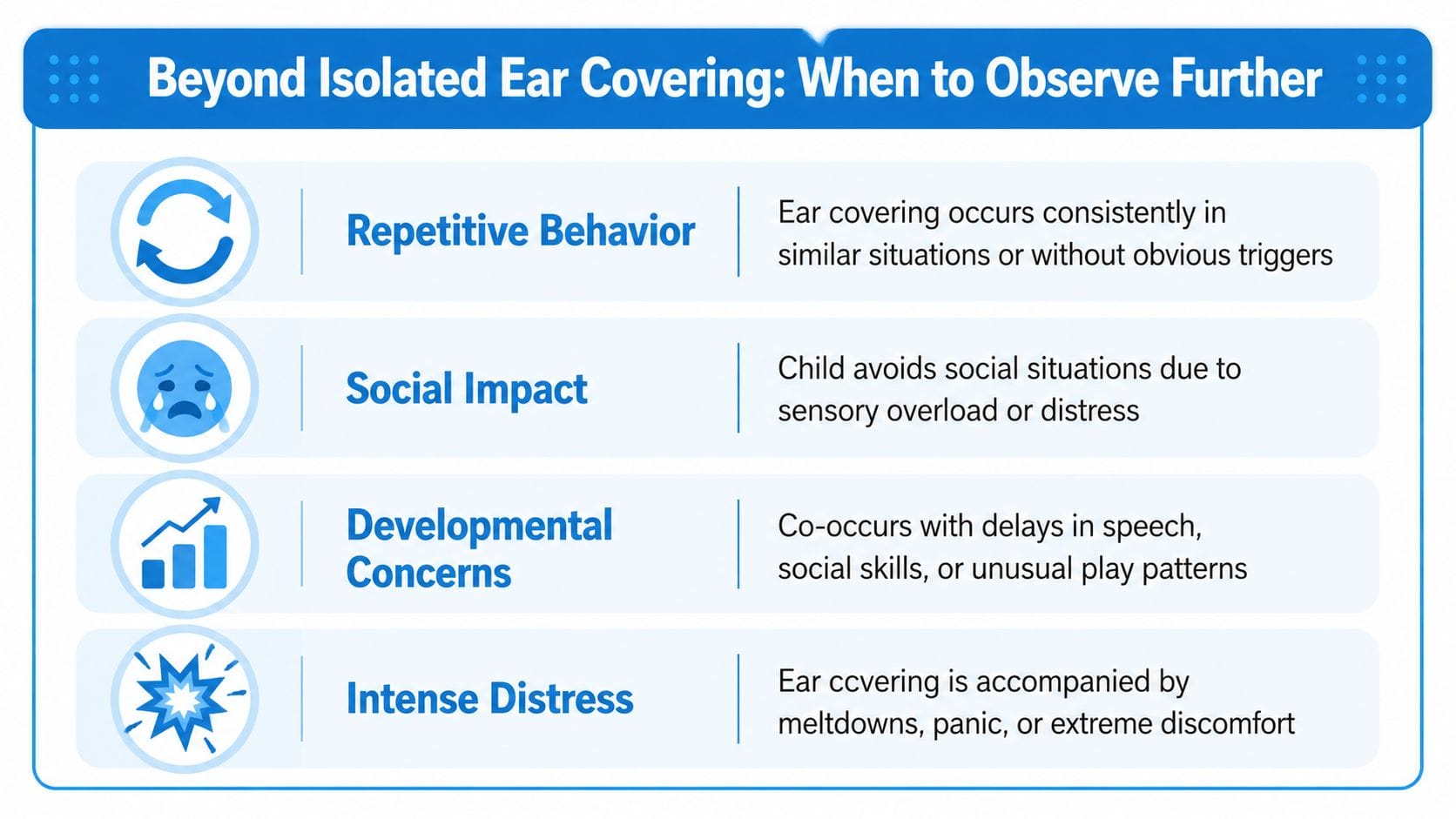
The behavior matters more when it forms a pattern
You'd want to look more closely if your child:
- Covers their ears often: not just during clearly loud events, but in ordinary daily routines
- Shows strong distress: fleeing, crying, freezing, meltdowns, or shutdown-like behavior
- Has other developmental concerns: language delay, reduced back-and-forth interaction, unusual play patterns, repetitive movements
- Avoids parts of daily life: school assemblies, bathrooms with hand dryers, family outings, birthday parties
The question isn't only is covering ears a sign of autism. A better question is whether the behavior is part of a consistent sensory and developmental profile.
A 2023 UK population study reported that young children with certain ear-related signs had increased likelihood of a later autism diagnosis or higher autism-trait scores, and impaired hearing during a cold had an adjusted odds ratio of 2.18 for autism. That doesn't mean ear behaviors cause autism. It means persistent ear-related and sensory-related patterns can be worth following up on.
For families wanting a broader view of what clinicians consider, this DSM-5 autism checklist for parents can help you organize your observations.
What professionals usually want to know
Professionals usually learn more from clusters than from isolated moments. They tend to ask:
- What sound triggered it?
- Did it happen in more than one place?
- How intense was the reaction?
- How long did recovery take?
- What other behaviors appeared at the same time?
A child who covers their ears during one loud event may need comfort. A child who does it frequently, across settings, and with other developmental concerns may need a fuller evaluation.
That's why your observations matter. Not because you're expected to diagnose, but because you can notice daily patterns nobody sees as often as you do.
How to Support Your Child and Find Answers
You hear the hand dryer start in a public restroom, and your child's hands fly to their ears before you can even react. In that moment, the goal is not to test them or talk them out of it. The goal is to reduce distress and notice what their body may be telling you.
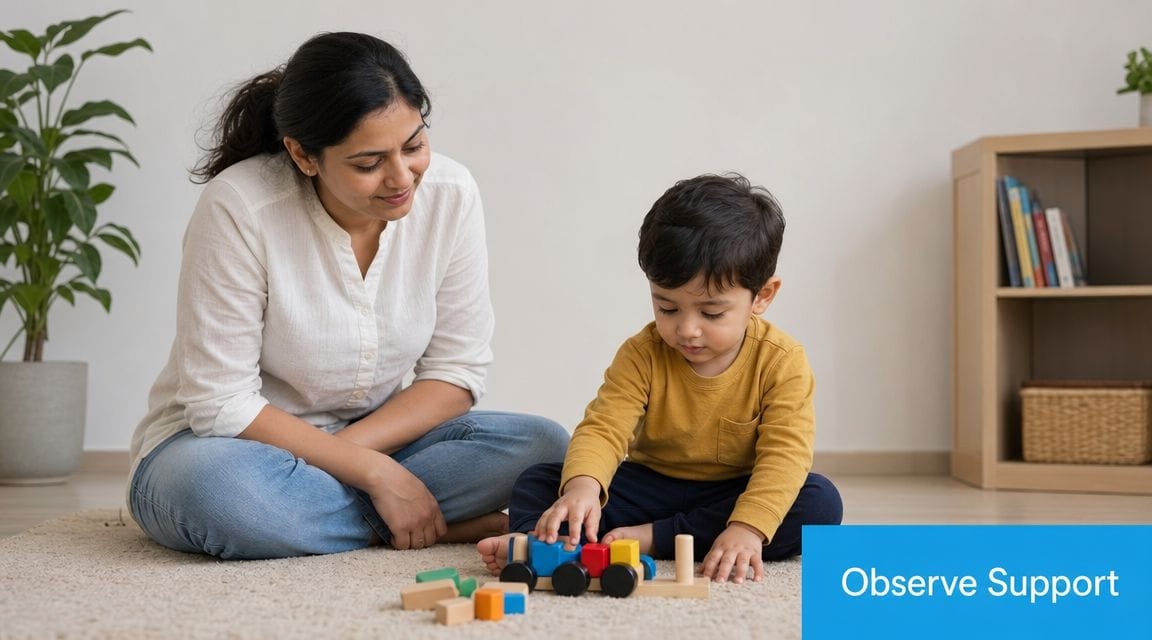
Start with comfort. Move to a quieter space if you can. Lower background noise at home. Let your child step away from crowded rooms, noisy appliances, or bathrooms with loud hand dryers when possible. If they tolerate them, headphones or ear defenders can help in specific settings, and this guide on how to choose noise-canceling headphones for autism walks through what to look for.
Then begin observing like a careful detective, not a worried judge.
A single note that says "covered ears at school" does not give a clinician much to work with. A pattern log does. Ear covering becomes more useful information when you record what happened right before it, how strong the reaction was, how long it lasted, and what helped your child recover. That shift matters. It turns a stressful moment into a clearer picture of your child's sensory profile.
What to log when ear covering happens
Write down details such as:
- Trigger: blender, cafeteria noise, sibling screaming, vacuum, hand dryer
- Setting: kitchen, car, classroom, grocery store, birthday party
- Timing: morning, late afternoon, during transitions, after poor sleep, when hungry
- Response: covered ears, cried, ran away, froze, yelled, repeated words, shut down
- Recovery: calmed in a minute, needed a quiet room, needed deep pressure, stayed upset afterward
A helpful way to picture this is a weather journal. One rainy afternoon does not define the climate. Repeated patterns across places, times, and triggers tell you much more.
Keep your notes simple enough that you will use them. A phone note, small notebook, or tracking app all work. The best system is the one you can keep up with for a few weeks.
You can also try small sensory supports at home and record whether they help. A calm-down kit, a favorite fidget, or other regulating items may make recovery easier. If you want ideas, Sensory Toys for Autism is a helpful starting point.
A short video can also help if you're trying to better recognize autism-related sensory signs in daily life.
Simple support ideas you can try now
Some parents worry they have only two choices: ignore it or panic. There is a steadier middle path. Support your child now, and collect enough detail to ask better questions later.
- Reduce avoidable noise: turn off extra TV, music, or loud appliances during harder parts of the day.
- Preview noisy places: tell your child what sounds they may hear before you enter.
- Offer a recovery plan: identify a quiet hallway, car, bedroom corner, or outside bench where they can regroup.
- Notice what helps: headphones, leaving early, holding a comfort item, or covering ears with your hands over theirs may work differently for different children.
- Share concrete notes: bring your log to your pediatrician, school team, audiologist, or developmental specialist.
If ear covering is frequent, intense, or shows up alongside speech, social, play, sleep, or behavior concerns, ask for professional guidance. You are not expected to diagnose your child. You are gathering patterns that help professionals see what daily life looks like.
If you'd like one place to track ear covering, meltdowns, shutdowns, sleep, routines, food patterns, and sensory triggers without relying on scattered notes, Guiding Growth can help. It gives parents a structured way to log what happened, what triggered it, how long it lasted, and what helped, so patterns become easier to spot and easier to share with clinicians, therapists, and caregivers.