Your child was fine in the parking lot. Then you walk into the grocery store and everything shifts. The lights are harsh. A cart squeaks nearby. Music is playing overhead. Someone brushes past too closely. Suddenly your child covers their ears, drops to the floor, or bolts toward the exit.
Most parents know this moment. What makes it so draining is the uncertainty. Was it the sound, the lights, the crowd, hunger, a transition, or all of it at once?
Managing sensory overload gets easier when you stop treating each episode like a mystery and start treating it like a pattern. That shift matters. It moves you away from self-blame and guesswork, and toward noticing what your child's nervous system is telling you.
Table of Contents
- Understanding Sensory Overload in Your Child
- Recognizing the Early Signs of Overload
- Immediate Steps for In-the-Moment De-escalation
- Building Proactive Routines and Sensory-Friendly Spaces
- Tracking Triggers to Create a Personalized Sensory Plan
- Communicating Needs and Collaborating with Your Team
Understanding Sensory Overload in Your Child
A lot of families get told, directly or indirectly, that their child is overreacting, misbehaving, or being difficult. That framing misses the point. Sensory overload is a nervous system event. It happens when incoming sensory information exceeds what the child can process in that moment.
That's why a child can seem fine one minute and completely overwhelmed the next. The problem isn't willpower. The system is overloaded.
This is also far more common than many parents are led to believe. Surveys of autistic children indicate that between 69% and 95% report facing sensory challenges, which makes sensory overload a near-universal experience in this population rather than an occasional issue (Advanced Autism). If your child struggles in noisy stores, crowded classrooms, or during abrupt transitions, that doesn't mean you've missed something obvious. It means their sensory needs need a plan.
Practical rule: Stop asking, “How do I get this behavior to stop?” and start asking, “What input became too much, too fast, or too unpredictably?”
For some children, overload shows up alongside repetitive movement or self-regulating behaviors that adults misread. If you've ever wondered whether a repeated action is communication, stress relief, or sensory regulation, this guide to stereotyped behavior definition can help you interpret what you're seeing with more accuracy.
Parents often need support for their own regulation too. During high-stress stretches, some families also benefit from outside reading like these free anxiety help articles, especially when the whole household is staying on edge waiting for the next difficult outing.
Recognizing the Early Signs of Overload
The most useful skill in managing sensory overload isn't calming a full meltdown. It's noticing the earlier signs that show your child is moving toward one. Those signals are often small at first. A child gets louder, more rigid, more silly, more clingy, less verbal, or suddenly starts seeking pressure and motion.
Some children are hypersensitive, which means they react strongly to input and try to escape it. Others are hyposensitive, which means they need more intense input and may seek it out. Many children show both, depending on the setting, time of day, and their stress level.
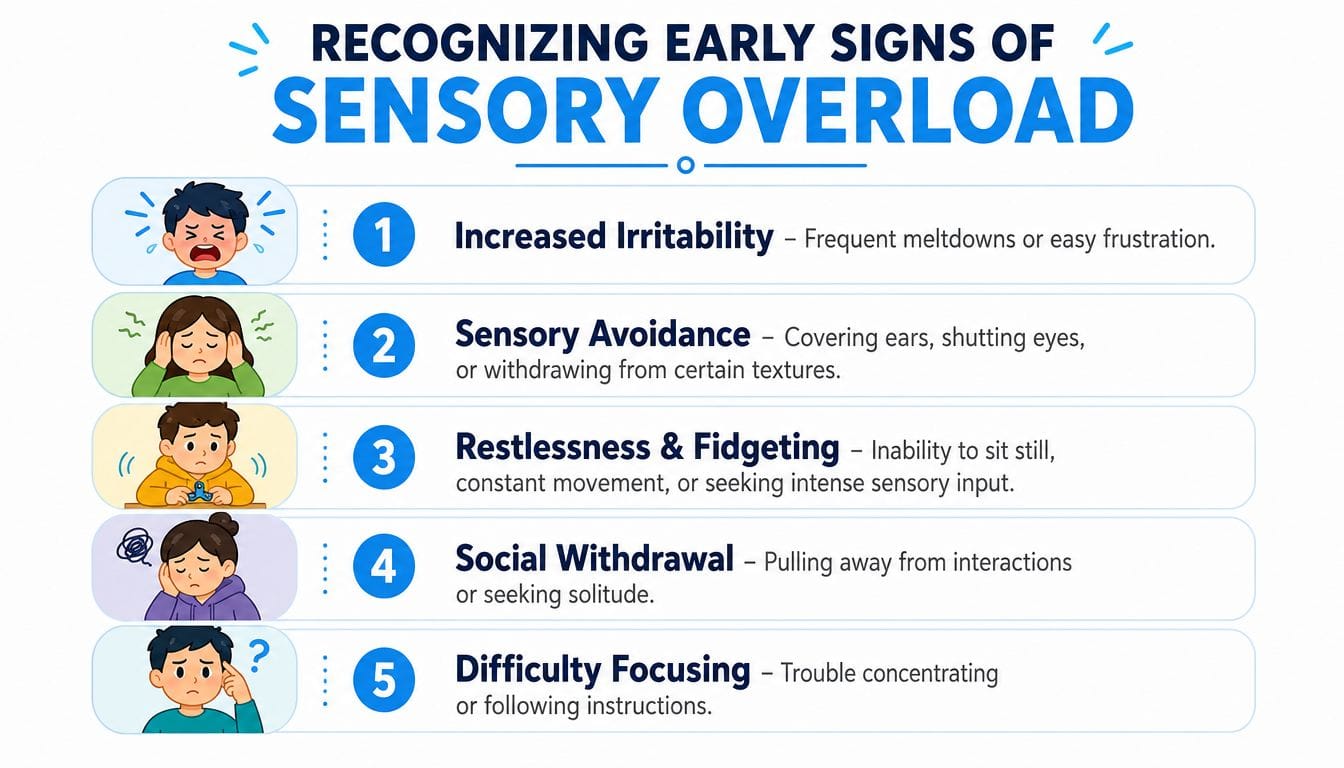
What overload often looks like before the breaking point
Look for changes, not just dramatic behaviors. The earliest clue is often a shift from your child's usual rhythm.
A child who is getting overloaded may:
- Withdraw from interaction and stop answering questions
- Increase stimming such as rocking, pacing, humming, or hand movements
- Become physically restless and start crashing, jumping, or running
- Cover ears or eyes or avoid touch, clothing, or food textures
- Lose focus quickly and seem unable to follow simple directions
Some children move toward overload by becoming quiet and shut down. Others move toward it by getting bigger, louder, and faster. Both patterns matter.
Common signs by sensory system
The table below helps parents separate over-responsiveness from under-responsiveness. That distinction changes what helps. A child who is trying to block input needs a different response than a child who is trying to get more of it.
| Sensory System | Signs of Hypersensitivity (Over-Responsive) | Signs of Hyposensitivity (Under-Responsive) |
|---|---|---|
| Sight | Squinting, avoiding bright rooms, distress under fluorescent lighting, looking away from visual clutter | Seeking screens, staring at spinning objects, watching lights closely, getting very close to visual input |
| Sound | Covering ears, distress with sudden noise, avoiding bathrooms, cafeterias, assemblies, or music | Not noticing name being called, making loud noises, turning volume up, seeking repetitive sound |
| Touch | Pulling away from touch, resisting certain fabrics, distress with tags, seams, grooming, or messy play | Crashing into people or furniture, rough play, seeking pressure, touching everything |
| Taste | Narrow food preferences, gagging on flavors or textures, refusing mixed foods | Seeking strong flavors, chewing non-food items, preferring very crunchy or intense foods |
| Smell | Reacting strongly to perfume, food smells, cleaning products, or crowded indoor spaces | Seeking strong scents, sniffing objects repeatedly, appearing unaware of unpleasant smells |
| Vestibular | Fear of swings, elevators, stairs, fast movement, or feet leaving the ground | Constant spinning, jumping, climbing, rocking, hanging upside down |
| Proprioceptive | Avoiding forceful play or seeming uneasy when body position changes | Seeking heavy work, squeezing into tight spaces, pushing, pulling, stomping, biting, or deep pressure |
What doesn't work is assuming every difficult behavior is defiance. A child who keeps dropping to the floor in a checkout line might be trying to get out of visual and auditory overload. A child who slams into couch cushions after school may be trying to organize a dysregulated body with more pressure and movement.
When parents start labeling the pattern correctly, intervention gets faster and calmer.
Immediate Steps for In-the-Moment De-escalation
When overload is already happening, your priorities narrow. Lower the input. Reduce demands. Help the nervous system find one thing it can organize around.
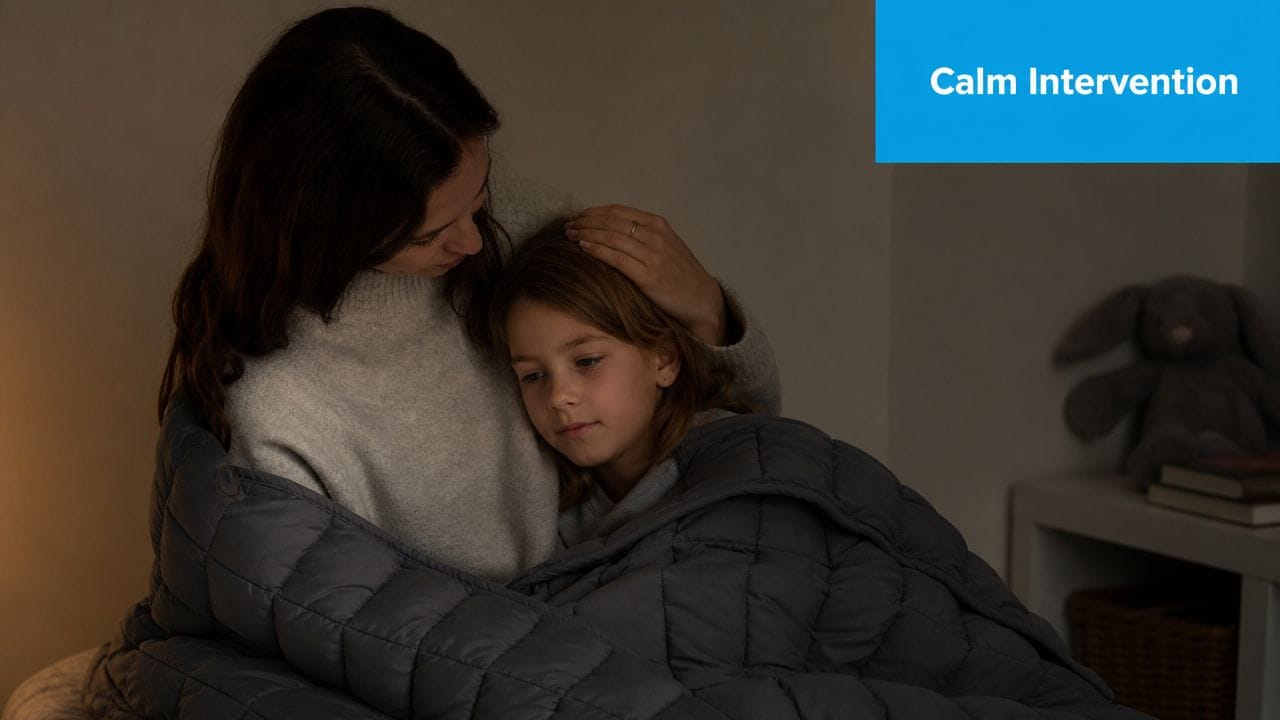
Reduce input first
Parents often start with words. That usually backfires. During overload, more talking can feel like more noise.
Try this sequence instead:
- Move to less input. Step outside, go to the car, use a hallway, bathroom, bedroom, or quiet corner.
- Lower sensory load. Dim lights if possible. Turn off music. Stop nonessential conversation.
- Cut demands. Drop eye contact requests, questions, and reasoning for the moment.
- Offer, don't force. Present tools like headphones, sunglasses, or a lap pad without insisting.
Concrete sensory aids can help because they target the channel that is overloaded. Noise-canceling headphones block sudden sounds. Sunglasses reduce glare and harsh lighting. Weighted blankets or lap pads provide deep pressure input that many children find organizing (Links ABA).
If your child is overwhelmed, explanation can wait. Relief comes first.
Families who want a broader framework for high-stress responses may also find these de-escalation techniques for medical staff useful to adapt at home, especially the parts that focus on tone, pacing, and reducing demands during a crisis.
Use short regulation tools
One useful breathing option is serial three breathing. It's a clinically recommended technique where the child inhales for three counts, holds for three counts, and exhales for three counts. Each full round takes exactly nine seconds (Cleveland Clinic).
That structure matters because it's short enough to use when a child can't tolerate a long script.
You can model it like this:
- Inhale for 1, 2, 3
- Hold for 1, 2, 3
- Exhale for 1, 2, 3
Another option is grounding. The 5-4-3-2-1 method can help some children if they're verbal and not too far gone. Ask them to notice five things they see, four they feel, three they hear, two they smell, and one they taste. If language is too much, simplify it. “Push your feet down. Hold your bear. Find one blue thing.”
For a deeper walkthrough of how to respond during escalation, this guide on de-escalation techniques for autism meltdowns gives families another practical reference point.
A short visual demonstration can also help if your child responds better to seeing than listening.
Build a safe space that actually gets used
A safe space only works if your child experiences it as relief, not punishment. Don't send them there only when things have already gone wrong. Use it during calm times too.
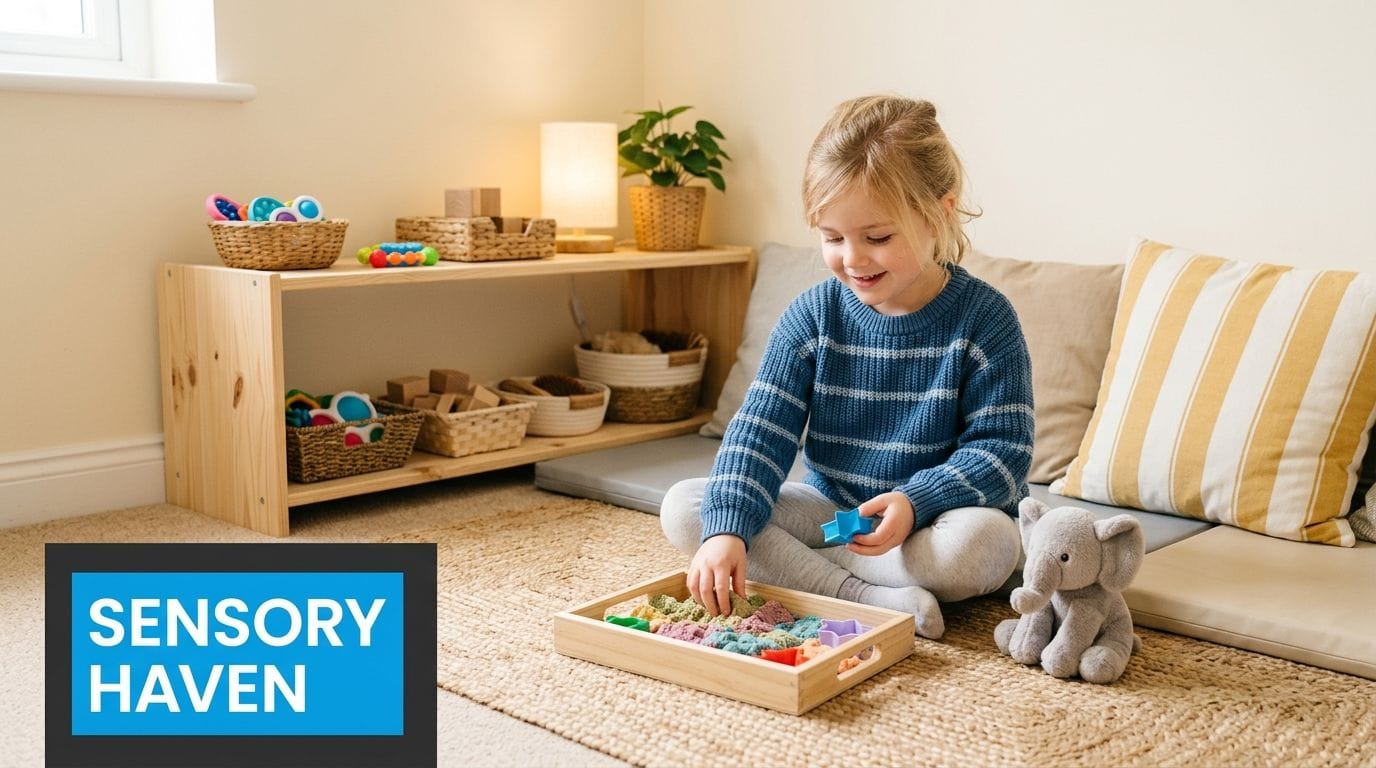
Useful items often include:
- Noise-canceling headphones for sudden or layered sounds
- Weighted blanket or lap pad for deep pressure
- Sunglasses or a hat for bright light
- A simple fidget for repetitive hand input
- A familiar comfort item such as a stuffed animal or preferred fabric
What doesn't work is creating a beautiful sensory corner that's never practiced, too far away, or filled with items your child doesn't like. The best safe spaces are boring in a good way. Predictable. Accessible. Easy to enter without negotiation.
Building Proactive Routines and Sensory-Friendly Spaces
Prevention is usually less dramatic than crisis response. It's built in small decisions made all day long. A child who holds it together through a noisy bus ride, bright classroom, itchy clothing, and a rushed errand may not melt down because of one last small thing. They may melt down because their system never got a chance to reset.
That's where sensory diets and scheduled calming breaks matter. Long-term prevention of sensory overload requires this kind of structure, including avoiding overloading activities back-to-back so stress doesn't keep stacking up (GriffinOT).
What prevention looks like in real life
A practical routine often alternates effort and recovery.
For example, a child might do better when the day includes:
- Heavy work before stillness such as carrying groceries, pushing a laundry basket, or wall pushes before homework
- A movement break before transitions like jumping, swinging, or animal walks before getting into the car
- A quiet landing after school with dim lights, familiar snacks, and no immediate questions
- A recovery window after errands instead of scheduling another demanding activity right away
A common mistake is packing the day with “good” activities that are all activating. Birthday party, then soccer, then a loud restaurant, then homework. Each event may be manageable on its own. Together, they can push a child past tolerance.
Short breaks protect the whole day. They are not wasted time.
How to set up your home for fewer overload moments
You don't need a therapy clinic in your living room. You need a home that asks less from your child's nervous system.
Start with an audit:
- Lighting: Swap harsh bulbs where you can. Use lamps, softer light, or dimmer settings in regular hangout areas.
- Noise: Notice humming appliances, TV in the background, overlapping devices, barking dogs, or sibling noise at transition times.
- Visual load: Clear one shelf, one table, one play zone. Too much visual input can be draining.
- Touch and clothing: Keep preferred fabrics easy to find. Don't make every morning a battle over seams, tags, or stiffness.
- Smell: If scents trigger your child, reducing perfume, air fresheners, or heavily fragranced laundry products can help. Families dealing with this issue often appreciate practical reading on managing fragrance sensitivity triggers.
Keep sensory tools where the problem happens, not stored in one perfect bin. A lap pad near the table. Headphones by the door. Chewelry where transitions usually unravel. Prevention works better when support is already within reach.
Tracking Triggers to Create a Personalized Sensory Plan
Generic advice has limits. “Use headphones” or “offer breaks” only helps if you know when, where, and why your child needs those supports. The work in managing sensory overload is pattern detection.
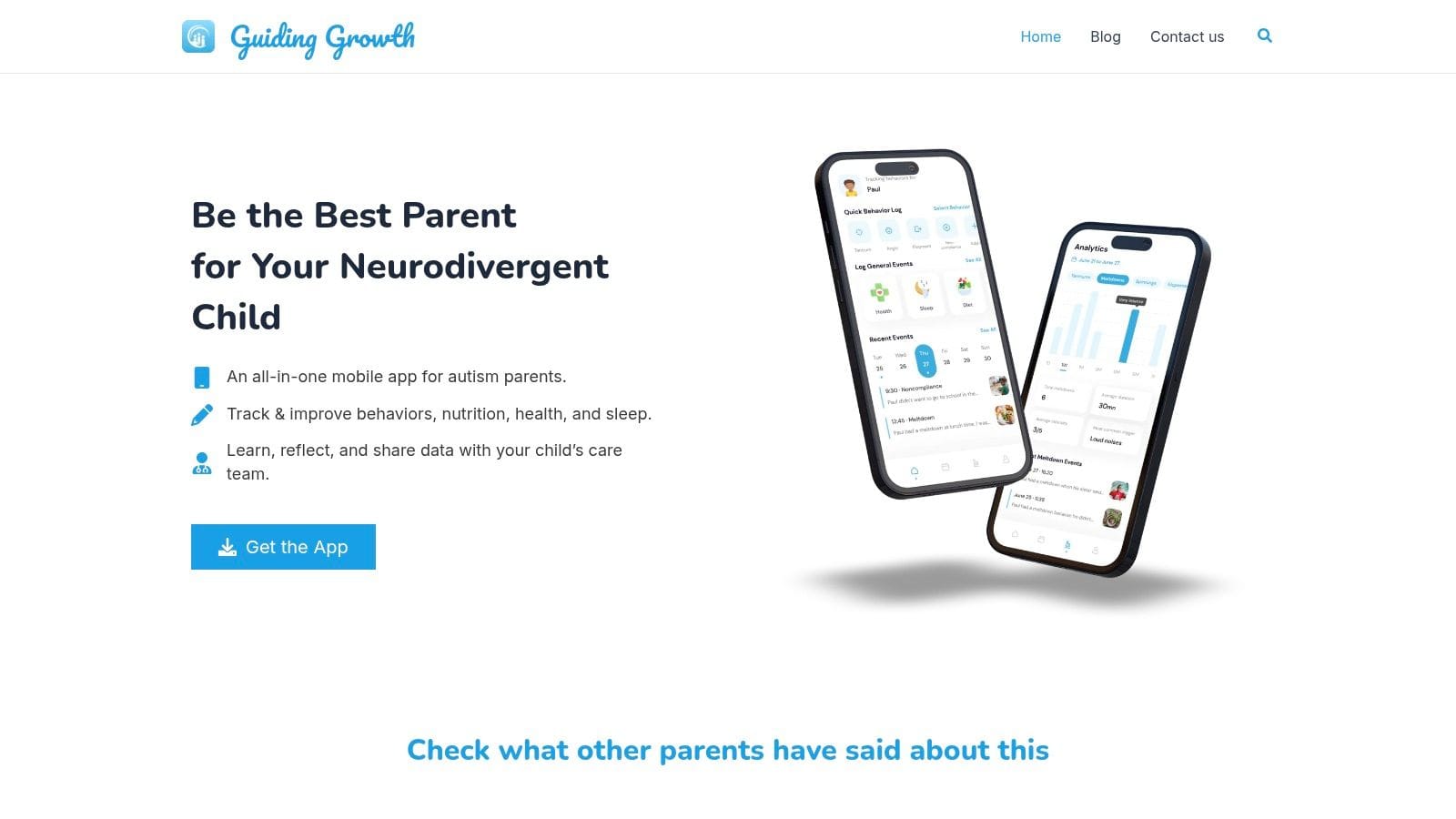
The nervous system experiences overload when it receives more information than it can process, creating a physiological threshold. That threshold is different for every child. One child can handle bright lights but not layered noise. Another can manage noise until hunger or fatigue lowers tolerance. Voice logging can help parents capture those moments quickly and identify the specific sensory thresholds involved. One example is Guiding Growth's behavior tracking app, which includes voice logging so parents can record triggers such as “fluorescent lights” without typing and review patterns over time (Dr. Priti Kothari).
Why memory is not enough
Parents remember the big moments. They often miss the buildup because daily life is crowded.
Most families can recall that a meltdown happened at the store. Fewer can remember all the variables that mattered. Was it fluorescent lighting, waiting in line, hunger, a change in routine, or the fact that two earlier transitions had already gone badly? Without some form of structured logging, everything blurs together.
That's why “I think crowds are hard” is less useful than “the hardest moments happen in stores with bright overhead lights, music, and a long wait at the register, especially after school.”
What to log after an overload moment
Keep it simple enough that you'll do it.
Useful entries usually include:
- Setting: grocery store, car, classroom pickup, birthday party
- Sensory conditions: bright lights, overlapping conversations, strong smell, scratchy clothes
- Body state: hungry, tired, sick, just woke up, coming off a stressful transition
- Early signs: covering ears, pacing, getting silly, refusing directions, going silent
- What you tried: headphones, break in the car, weighted lap pad, snack, pressure squeezes, breathing
- Outcome: settled quickly, needed longer recovery, strategy didn't help
A quick voice note is often better than promising yourself you'll write it down later. Later rarely happens on hard days.
Patterns become visible when you log the moment, not when you replay it from memory hours later.
How patterns turn into a plan
Once you have a few weeks of entries, the plan usually gets clearer.
You may find that your child does well in public places only before lunch. Or that noise is manageable until visual clutter is added. Or that movement breaks before transitions prevent more distress than any tool you offer after the fact.
At this point, families stop chasing every suggestion they read online. Instead of trying ten random strategies, they start making sharper decisions:
- If fluorescent light is the trigger, use sunglasses, shorten the trip, or choose another store.
- If waiting is the hardest part, use pickup, go at a quieter time, or build in movement before checkout.
- If after-school overload is predictable, remove demands during the first stretch at home.
- If one tool consistently helps, keep duplicates in the car, school bag, and home.
A personalized sensory plan is usually less complicated than parents expect. It just has to be built from real observations rather than hope.
Communicating Needs and Collaborating with Your Team
A child's sensory plan falls apart if it only lives in one parent's head. Teachers, grandparents, babysitters, therapists, and after-school staff need the same simple language and the same practical cues.
The most effective communication is concrete, brief, and non-defensive. Skip labels that invite debate. Lead with what the child experiences and what helps.
Simple scripts that lower defensiveness
Try language like this:
- For teachers: “Noah starts losing focus and covering his ears when the room gets loud. A short movement break before group time usually helps.”
- For grandparents: “She's not being picky about that shirt. The fabric really bothers her. If we switch it early, the whole visit goes better.”
- For babysitters: “If he gets quiet, hides, or starts pacing, lower the noise and don't ask a lot of questions.”
- For family events: “We'll come, but we may need a quiet room and a short exit plan if he gets overloaded.”
These scripts work because they focus on support, not blame.
When to bring in professional support
Parents should consider occupational therapy support when overload regularly interferes with school, sleep, eating, community outings, dressing, or family routines. An occupational therapist with sensory experience can help sort out whether your child is mainly avoiding input, seeking it, or shifting between both.
Bring examples, not general impressions. “He struggles in stores” is a start. “He covers his ears under fluorescent lights, crashes into furniture after school, and melts down most during noisy transitions” gives a clinician much more to work with.
The same goes for school meetings. A simple record of what happened before, during, and after hard moments makes collaboration more productive. It keeps everyone focused on patterns, accommodations, and what reduces distress.
If you're tired of relying on memory and scattered notes, Guiding Growth gives families one place to log behaviors, triggers, routines, and outcomes so sensory patterns become easier to spot and easier to share with the people supporting your child.