You've just heard two opposite things about ABA therapy. One person says it helped their child communicate and handle routines, another says it felt rigid, stressful, or even harmful. That kind of conflict leaves many parents stuck in the middle, trying to figure out what matters for their child.
The hardest part is that both the support and the criticism can sound convincing. The most useful question is not whether ABA is universally good or bad, but whether a specific program is helping your child build useful skills without sacrificing comfort, autonomy, or trust. That's the lens this guide uses, so you can look past slogans and make a decision grounded in your child's real needs.
Table of Contents
- Introduction Making Sense of the ABA Debate
- What Is Applied Behavior Analysis?
- The Potential Benefits of ABA Therapy
- The Criticisms and Risks of ABA Therapy
- Navigating Modern ABA What to Look For
- How to Evaluate and Monitor an ABA Program
- Alternatives and Complements to ABA Therapy
- Frequently Asked Questions About ABA
Introduction Making Sense of the ABA Debate
A parent can walk into a clinic feeling hopeful, leave with a stack of recommendations, then go home and find a completely different story online. One family describes ABA therapy as the first thing that helped their child ask for help. Another describes it as exhausting, compliance-heavy, and emotionally costly. Both accounts can be sincere, which is why this topic often feels more personal than clinical.
The clearest way through the confusion is to separate what ABA is designed to do from how it is sometimes practiced. Applied behavior analysis has a long research history in autism care, and reviews have found positive or beneficial effects for targeted outcomes, especially skill building in areas like communication and socialization, while also showing limits in broader autism symptoms and generalization beyond the treatment setting PMC review of ABA evidence. That mix matters, because it suggests ABA can be useful for specific goals without being a universal answer.
At the same time, the concerns are not abstract. A large U.S. study published in 2025 reported higher mental health hospitalization odds and incidence among autistic youth who received ABA compared with similar youth who did not, and earlier criticism has pointed to possible PTSD-related harms in some contexts PubMed summary of ABA concerns. Families deserve room to hold both ideas at once, benefit for some children, harm for some children, and very different results depending on the program.
The goal here is to give you a decision-making framework, not a yes-or-no verdict. If you understand the basics, know what good practice looks like, and track the outcomes that matter to your child, you're in a much stronger position to choose wisely.
What Is Applied Behavior Analysis?
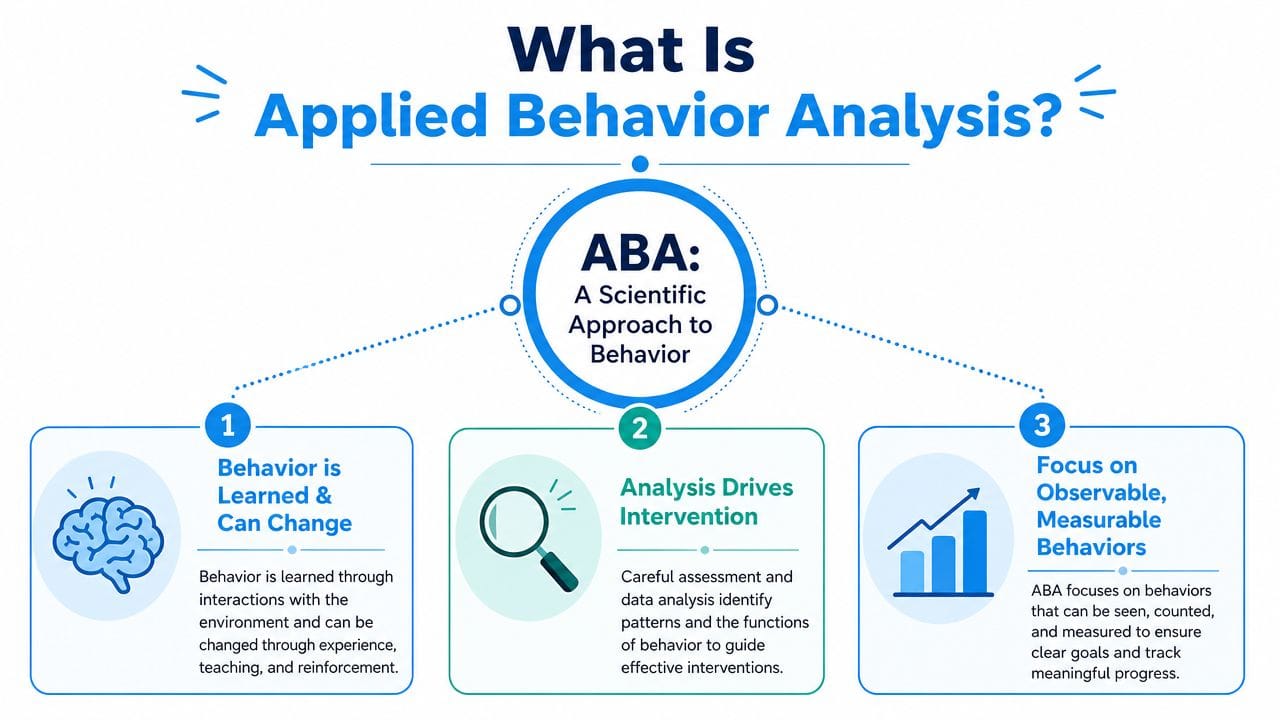
Applied Behavior Analysis, or ABA, is a structured way of understanding behavior by looking at what happens before a behavior, what the behavior is, and what happens after it. In plain language, it asks, “What is the child communicating or learning through this action, and what response will help next time?” That is why ABA is often used for communication, safety, and daily routines.
A simple example helps. If tying shoes feels impossible all at once, you break it into small steps, practice one step at a time, and reinforce progress along the way. ABA works the same way with many skills, it turns a complex task into teachable pieces so the child can succeed more often and with less frustration. A functional behavior analysis example can make that process easier to picture because it shows how a behavior is examined in context before a plan is built.
Why the history matters
The modern debate did not appear out of nowhere. A landmark 1987 study by O. Ivar Lovaas reported that 47% of children who received intensive ABA achieved “normal functioning,” compared with 2% in the control group, and that result helped shape ABA's reputation for decades historical Lovaas claim. Many families still hear echoes of that promise today.
Practical rule: when a therapy sounds like it can “fix” autism itself, pause. The strongest evidence is for teaching specific skills, not erasing autism.
That history also helps explain why the field feels so emotionally loaded. Some people see ABA as a practical teaching system. Others see a legacy of training children to look compliant rather than well. Both responses come from real experiences, which is why it is smarter to evaluate the program in front of you than to rely on the label alone.
Modern ABA is not one rigid method. It can range from highly structured sessions to more naturalistic, play-based work. The difference between those approaches can be enormous in practice, especially for children who are sensitive to pressure, repetition, or unfamiliar adults.
The Potential Benefits of ABA Therapy
Parents often start here with a practical question. What can ABA help a child do in daily life? The strongest case for ABA is that it can help children learn specific, functional skills.
Reviews of the research have found beneficial effects across several outcome measures for children with autism spectrum disorder, especially in areas like socialization, communication, and expressive language ABA evidence review. That does not mean every child responds the same way, but it does show where the evidence is most consistent. A careful evaluation should focus on those real-world changes, not on broad promises that are too vague to measure.
For parents, that usually means watching for concrete gains rather than relying on a general sense that therapy is “going well.” A child may learn to request a snack instead of melting down, follow a bedtime routine with less protest, or join a peer activity with more support. Those changes matter because they can lower daily stress and make routines more workable for both the child and the family.
Where ABA tends to be strongest
The research history suggests ABA is most credible as a targeted teaching approach, not as a broad cure. Earlier reviews found clearer gains in socialization, communication, and expressive language, while the evidence was not strong enough to claim clear improvement in broad autism symptoms, receptive language, adaptive behavior, daily living skills, IQ, or cognition ABA evidence review. That distinction matters because it helps parents set expectations around skills they can observe.
A child who learns to ask for a break, use a picture card, or tolerate a grooming routine has gained a practical skill. That is different from claiming the therapy changed who the child is. It also gives parents a better way to judge whether the program is helping, because the focus stays on function and quality of life.
The best ABA goals are specific enough to observe in daily life. If you can't describe what will look different at home, school, or in the community, the goal may be too vague.
Used well, ABA can also support parent consistency. When caregivers, therapists, and teachers respond in similar ways, children often get clearer signals about what to expect. That kind of alignment can reduce confusion and make new routines easier to maintain.
Some families also use ABA to reduce pressure in moments that are hard for a child, not just to increase task completion. If you want a closer look at one common technique, this explanation of escape extinction in ABA can help parents understand why it is used and why some families approach it cautiously.
The most useful benefit is not faster obedience. It is more independence, more communication, or less distress. If a program is helping, the child should be gaining tools that still matter outside the therapy room.
The Criticisms and Risks of ABA Therapy
A child can leave ABA with useful skills and still feel pressured in ways that are hard to see from the outside. That is why the debate around ABA often centers on more than outcomes, it also centers on how those outcomes are achieved. For many families, the hardest question is whether the program is helping a child grow or training the child to look compliant.
One concern is that some programs have historically put compliance over well-being. In practice, that can mean too much pressure to sit still, make eye contact, or stop natural behaviors that help a child self-regulate. For autistic adults who experienced those approaches, the memories can be painful because the therapy may have rewarded hiding discomfort rather than understanding it.
Masking is part of that picture. A child may learn to force eye contact, suppress stimming, or copy expected responses to avoid correction, even when the behavior is not helping them feel safe. The result can be a child who appears calm and cooperative while carrying stress. Families who are trying to avoid that pattern may want to read about preventing care duty breaches and use it as a reminder that emotional safety belongs in the conversation too.
A large U.S. study published in 2025 found autistic youth who received ABA had higher odds and a higher incidence rate of mental health hospitalization than similar youth who did not receive ABA PubMed summary of ABA concerns. Earlier criticism also pointed to higher PTSD criteria in one study and to reports of no change or worsening in a large military family sample PubMed summary of ABA concerns. Those findings do not show that every program is harmful, but they do make it harder to ignore the question of whether a child feels safer, more regulated, and more understood over time.
What to watch for
Some concerns show up in the details of daily therapy. A child may become prompt dependent, meaning they wait for a cue before acting instead of learning flexible independence. Repetitive drills can also wear a child down if the tasks do not fit their interests, energy, or readiness.
Parents often notice the difference most clearly in how a program responds to resistance. If a child is pushed through demands without enough attention to distress, the therapy can start to feel like a performance test instead of a learning process. That is especially true when a technique such as escape extinction in ABA is used without careful explanation, because the same method that may reduce avoidance can also increase pressure if it is handled without enough sensitivity to the child's signals.
Goals that try to eliminate harmless stimming remain especially controversial. If a movement is safe and helps a child regulate, the better question is what the behavior is doing for the child and whether there is a safer or more respectful alternative. That is where parents can keep the focus on function, comfort, and autonomy instead of treating every visible difference as a problem to fix.
There is also a limit to what the broader evidence can promise. Reviews have noted that the evidence does not support the idea that ABA produces the same lasting result for every child ABA critique and limitations. Some analyses also note uncertainty about which parts of the approach drive benefit and whether gains carry over outside the therapy setting ABA critique and limitations.
A practical way to judge the risk is to ask what the therapy is changing in daily life. Is the child gaining communication, comfort, and usable independence, or only becoming easier for adults to manage? That question helps parents build a clearer evaluation framework, because the goal is not just fewer challenging moments, it is a better life for the child who is living through them.
Navigating Modern ABA What to Look For
Older ABA models often looked rigid from the outside. A modern, child-respecting program should feel different. The child should not be pushed through a script just because it is convenient for the adult in the room.

Green flags and red flags
Good programs often start with the child's real life. They focus on communication, daily routines, and safety skills that matter at home, in school, and in the community. They also pay attention to assent, which means the child's discomfort and refusal are taken seriously instead of treated as something to override.
A useful standard is whether the program can explain its methods in plain language. If a provider can describe why a goal matters, how success is measured, and how they adapt when a child resists, that's a better sign than polished marketing language. If they cannot explain the plan clearly, that's worth questioning.
Here's a quick contrast parents can use during consultations:
- Child-led goals: The child is learning skills that improve daily life.
- Compliance-heavy goals: The child is rewarded mainly for doing what adults ask, even when the goal has little functional value.
- Natural environments: Skills are practiced during meals, play, or routines.
- Artificial drills only: Skills stay trapped at the table and never show up anywhere else.
- Respect for refusal: The therapist pauses, adjusts, or rethinks the goal.
- Ignoring refusal: The therapist keeps going because the plan matters more than the child's signal.
The language around duty of care can also help families frame their questions. A plain explanation of preventing care duty breaches is useful because it reminds you that ethical care includes both skill building and harm reduction.
Why parent involvement matters
A modern program should not disappear behind the therapy door. Parents need to know what the child is practicing, why it matters, and how to tell whether it's helping. When caregivers are included, the child is more likely to experience consistent expectations without feeling like every adult is running a different experiment.
Later in the process, ask whether the therapist is willing to revise goals that are causing stress. That one question often reveals whether the program is individualized or just efficiently managed. Rigid ABA can look neat on paper, but child-centered care usually looks more flexible in real life.
How to Evaluate and Monitor an ABA Program
If you want to know whether ABA is helping, track what changes in your child's actual day, not just what the provider says is improving. The most useful outcomes are often the ones families can see and feel, like less distress during transitions, more spontaneous communication, or a smoother bedtime routine.
Start by writing goals in plain English. Instead of “increase compliance,” use something like “asks for a break during homework” or “puts on shoes with one prompt instead of repeated reminders.” That wording matters because it tells you what progress should look like in real life.
What to log
A simple tracking system should capture what happened before, what the behavior looked like, and what happened after. That helps you see patterns instead of guessing. It also helps separate true skill gains from a child just getting better at enduring discomfort.
Use the internal notes link for a practical example of how session records can be organized: ABA session notes structure and examples. When notes are clear, it becomes easier to see whether the program is building skills or just repeating the same strategy.
You can monitor a few categories without turning your home into a data lab:
- Trigger context: What was happening right before the behavior?
- Child response: Did your child ask, avoid, freeze, cry, or comply?
- Recovery time: How long did it take your child to settle?
- Generalization: Did the skill show up outside therapy, such as at home or school?
- Emotional load: Did the child seem calmer, the same, or more depleted afterward?
Best question to ask after each week: did my child gain a useful skill, or did adults just get fewer signs of resistance?
Structured logging can help. Families often need a way to capture meltdowns, shutdowns, demand avoidance, echolalia, hand flapping, sleep patterns, and routine changes in one place so they can compare context over time. That kind of record gives you a better basis for talking with therapists, teachers, and doctors.
Ask providers these questions before and during treatment. What behavior does this goal improve? How do you know the skill is generalizing? What happens if my child resists? What does success look like in daily life, not just in session? If the answers stay vague, the program may not be as individualized as it should be.
Alternatives and Complements to ABA Therapy
ABA is only one part of support planning. Many children need a mix of approaches because communication, sensory processing, emotional regulation, and daily living skills are not the same thing. A broader plan can be more humane and often more practical.
Speech and language therapy can support expressive language, comprehension, and alternative communication. Occupational therapy can help with sensory needs, motor planning, and routines like dressing, feeding, or handwriting. Developmental approaches such as DIR/Floortime focus more on relationships, shared attention, and emotional growth than on drilling isolated skills.
Sensory supports also matter in daily life. Some families find it useful to look at Playz sensory toys for autism as part of a home environment that helps the child regulate and engage more comfortably. Tools like that don't replace therapy, but they can support it by making regulation easier.
What matters most is fit. A child who is overwhelmed by demands may benefit from relationship-based work, sensory accommodations, or speech support before intensive behavior programming makes sense. Another child may need ABA for a narrow functional goal, then OT or SLP for broader support.
The best plans usually combine services around the child, not the other way around. That means the child's needs lead, the therapies follow, and the adults stay honest about what is helping.
Frequently Asked Questions About ABA
Is old ABA the same as modern ABA?
No. Historical ABA was often more rigid and compliance-focused, while many modern programs use play, natural settings, and child-led goals. The label alone doesn't tell you whether a program is respectful, so you still need to ask about methods and goals.
What if my child seems unhappy in therapy?
Treat that as meaningful data, not a small issue. Ask what part of the program is causing stress, whether the goal is necessary, and whether the therapist can change the approach. A good provider should be able to adjust without acting defensive.
Can ABA be combined with other therapies?
Yes, and for many children it should be. ABA can be one piece of a plan that also includes speech therapy, OT, school support, and home routines. The key is making sure the therapies don't compete with each other or send mixed messages.
How do I know if the goals are worthwhile?
Look for goals that increase independence, communication, or comfort in daily life. If a goal mainly teaches your child to appear compliant, ask why it matters. A useful goal should make sense even if no therapist is watching.
What should I do if I'm unsure about continuing?
Pause and review the data, the child's mood, and the home carryover. If the program is not improving functioning or is creating distress, it's reasonable to ask for a change or seek a second opinion. Your child does not need to stay in a plan that no longer fits.
If you're sorting through ABA therapy pros and cons right now, you don't need perfect certainty, you need a clearer way to notice what's helping and what isn't. Guiding Growth can help you track behaviors, triggers, routines, and therapy notes in one place so you can spot patterns, share better information with your care team, and make decisions with more confidence.