If you're reading about ABA home therapy at the end of a long day, you're probably not looking for theory. You're looking for something that helps tomorrow morning go better than today did. Maybe transitions are rough, maybe communication breaks down fast, or maybe you keep wondering whether what you're doing at home is helping.
That feeling is common. Parents are asked to juggle therapist recommendations, school input, family routines, and their child's real emotional capacity in the same hour. Good home-based support doesn't come from turning your house into a clinic. It comes from understanding what your child is communicating, choosing goals that matter, and building a respectful structure you can maintain.
Table of Contents
- Understanding Modern ABA for Home Settings
- Setting Meaningful and Respectful Goals
- Creating a Positive Session Structure at Home
- Using Reinforcement That Empowers Your Child
- Tracking Progress to See What Really Works
- Collaborating With Professionals for Long-Term Success
- Frequently Asked Questions About ABA At Home
Understanding Modern ABA for Home Settings
Feeling overwhelmed doesn't mean you're failing. It usually means you're trying to support your child with too many moving parts and not enough clear guidance. ABA home therapy works best when parents see it as a toolkit, not a rigid script.
At home, the core framework is often ABC, which means Antecedent, Behavior, Consequence. In plain language, that means asking three simple questions. What happened right before the behavior? What did the behavior look like? What happened right after?
What ABA looks like in daily life
A home example is more useful than a textbook definition. Your child sees the toothbrush come out, turns away, drops to the floor, and cries. The toothbrush appearing is the antecedent. Dropping and crying are the behavior. If brushing stops, that pause is part of the consequence.
That doesn't mean the child is being difficult. It means the situation is giving you information. Maybe the task feels too sudden, too sensory-heavy, too hard, or too disconnected from any support.
A modern ABA approach at home asks:
- What is the child communicating: escape, discomfort, confusion, fatigue, or a need for predictability
- What skill would help instead: requesting a break, using a visual, tolerating one step, or choosing toothpaste
- How can the environment change: slower pacing, clearer warnings, shorter demands, or better timing
Practical rule: If a strategy increases distress and reduces trust, it isn't a good home strategy, even if it looks technically correct on paper.
Why assent matters at home
Tension arises for many parents. Traditional ABA language has often centered on reducing behaviors and increasing compliance. Families today are asking a better question. How do we teach useful skills without overriding a child's autonomy?
That concern is real. A key underserved issue in ABA home therapy is the tension between traditional goals and a neurodiversity-affirming, assent-based model. A 2024 peer-reviewed study found that caregiver agency and belief in treatment are among the top barriers to accessing ABA, with many families feeling alienated by rigid, non-collaborative approaches.
Assent-based care means you still teach. You still set limits. But you also respect communication that says, "not like this," "not right now," or "I need help first." Refusal isn't always a problem to extinguish. Sometimes it's a signal that your teaching plan needs adjustment.
At home, that often means:
- Offering choices: two activities, two materials, or two ways to participate
- Watching body language: moving away, covering ears, freezing, or pushing materials aside
- Adjusting demands: shortening tasks, changing timing, or adding support before trying again
Home should feel safe first. Learning lasts longer when the child experiences support, predictability, and dignity during the process.
Setting Meaningful and Respectful Goals
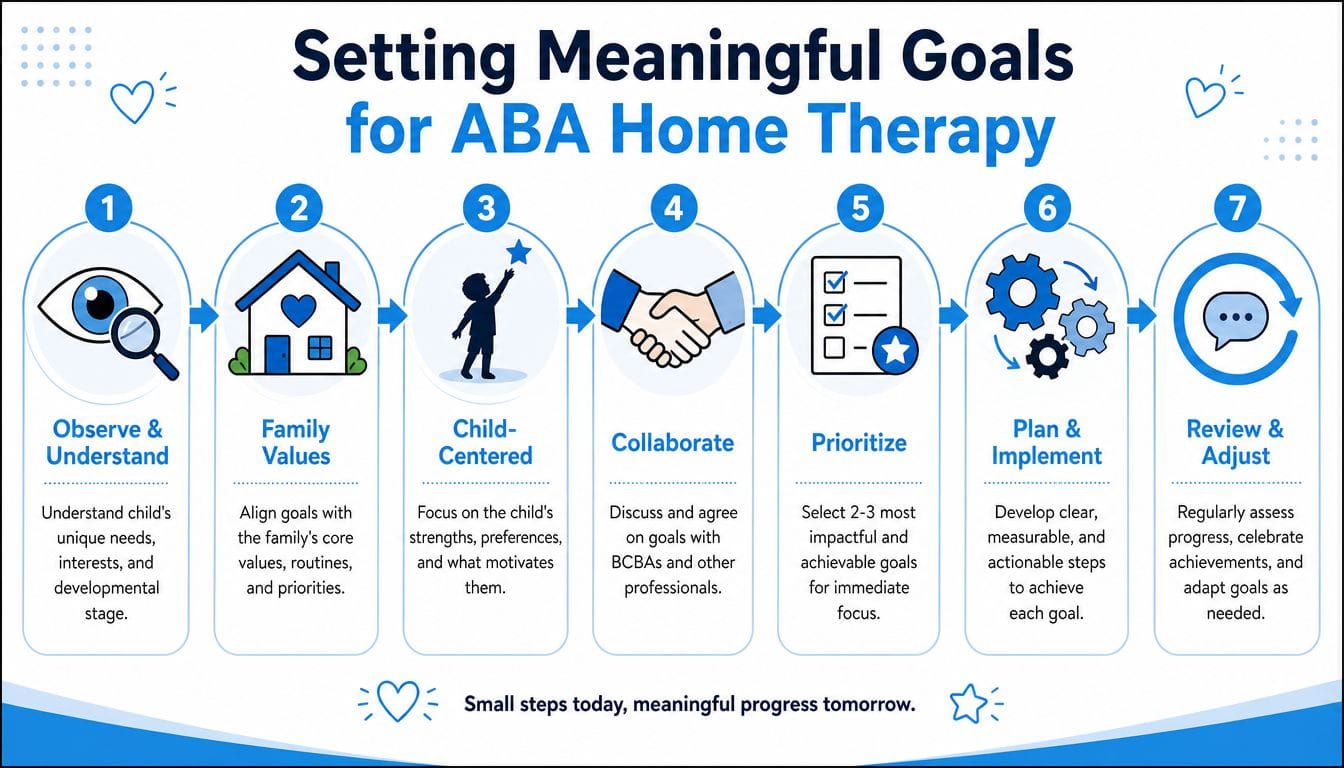
Many families start with broad hopes like "better communication" or "fewer meltdowns." Those goals make sense, but they aren't workable until you turn them into something observable. Good goals are specific enough that two adults watching the same moment would agree on whether the skill happened.
Start with function, not compliance
A respectful goal improves your child's daily life. It doesn't exist just because an adult wants smoother behavior. If a child is non-speaking, "use communication" is too vague. A stronger goal might be "reaches toward a preferred item and uses a gesture, picture, device, or vocalization to request it during snack."
Notice what's different. The goal is tied to a real need. It allows multiple forms of communication. It doesn't force one style if another works.
One practical way to choose goals is to screen them through these questions:
- Does this skill increase autonomy
- Does it reduce frustration
- Does it matter in everyday routines
- Can we teach it in small steps
If the answer is no to most of those, the goal probably needs revision.
A collaborative process matters here. Active family involvement and customized intervention are key success determinants in ABA, while inconsistent schedules and delayed intervention are named as common pitfalls. One source also states that these factors collectively account for why only 45% of therapies result in long-term success per US Surgeon General reports, as summarized by KNR Therapy's review of ABA treatment success rates.
For parents who want a practical example of how to define behavior clearly before building goals, this functional behavior analysis example is a useful reference point.
Build a baseline before you teach
Before you start prompting a new skill, find out what your child already does. That's the baseline. Without it, you can't tell whether a strategy is helping or whether progress just feels random.
Use a simple baseline table like this for a few days:
| Routine | Current skill | Support needed | What seems hard |
|---|---|---|---|
| Snack | Reaches for crackers | Full adult interpretation | No clear request signal |
| Bath | Walks to bathroom with warning | Verbal prompt and hand gesture | Difficulty stopping play |
| Bedtime | Tolerates one book | Parent sits next to child | Becomes dysregulated during toothbrushing |
A strong goal is usually one step beyond the baseline, not ten. If your child throws the spoon when frustrated, the next target may be handing over the spoon, pointing to help, or pushing away the bowl. That's more realistic than expecting calm verbal explanation right away.
Small goals create momentum. Momentum creates trust. Trust makes harder teaching possible later.
Creating a Positive Session Structure at Home
A lot of parents hear "session" and picture a table, flashcards, and a child trying to get up every thirty seconds. Home support usually works better when teaching lives inside routine. Breakfast, dressing, play, cleanup, bath, and bedtime all give you opportunities to teach communication, flexibility, waiting, and independence.
A calmer morning with built-in teaching moments
Take a typical rushed morning. A parent says, "Get dressed." The child ignores it. The parent repeats louder. Breakfast is late, socks feel wrong, and everyone's stressed before school even starts.
Now change the structure. Clothes are laid out in order. A visual or spoken first-then cue is ready. Breakfast choices are limited to two options. The parent teaches one tiny communication target during the routine, such as pointing to yogurt or handing over a cup for help. The child still needs support, but the routine is more predictable and less loaded.
That predictability matters. Research indicates that approximately 90% of children engaged in intensive ABA therapy receiving at least 25 hours per week make considerable gains in communication and social skills compared to control groups, according to Aluma Care's summary of ABA success rates. At home, the lesson isn't that every parent must create a clinic schedule. It's that consistency and enough meaningful practice matter.
What helps and what usually backfires
Natural Environment Teaching often looks simple from the outside, but small adjustments make a big difference.
Helpful patterns include:
- Short teaching moments: one to three minutes is often enough before returning to play or routine
- Clear transitions: warnings, visuals, countdowns, or a consistent phrase before changing activities
- Prepared environments: preferred items visible but not all available at once, so communication has a reason to happen
What tends to backfire:
- Long demand chains: asking for too many things in a row without a break
- Unclear starts and stops: the child doesn't know when the task begins or how it ends
- Adult-led overload: every interaction becomes a teaching trial, so the child starts avoiding the adult instead of engaging
A useful home session often doesn't look like therapy. It looks like a parent shaping one meaningful skill inside a routine that already has to happen.
You don't need an hour block to do this well. You need repeatable moments, manageable expectations, and enough structure that your child can predict what comes next.
Using Reinforcement That Empowers Your Child
Reinforcement gets misunderstood because people confuse it with bargaining. Bribery happens before a behavior to stop a crisis in the moment. Reinforcement is what happens after a skill or attempt, so the child learns, "That worked. I can do that again."
Reinforcement is information, not bribery
When a child uses a gesture to ask for bubbles and immediately gets bubbles, the lesson isn't just "I got a toy." The deeper lesson is "my communication had power." That's a meaningful learning experience.
The best reinforcement does three things:
- It fits the child: not what adults assume should matter
- It comes quickly: so the connection is easy to understand
- It honors effort: especially when the skill is brand new
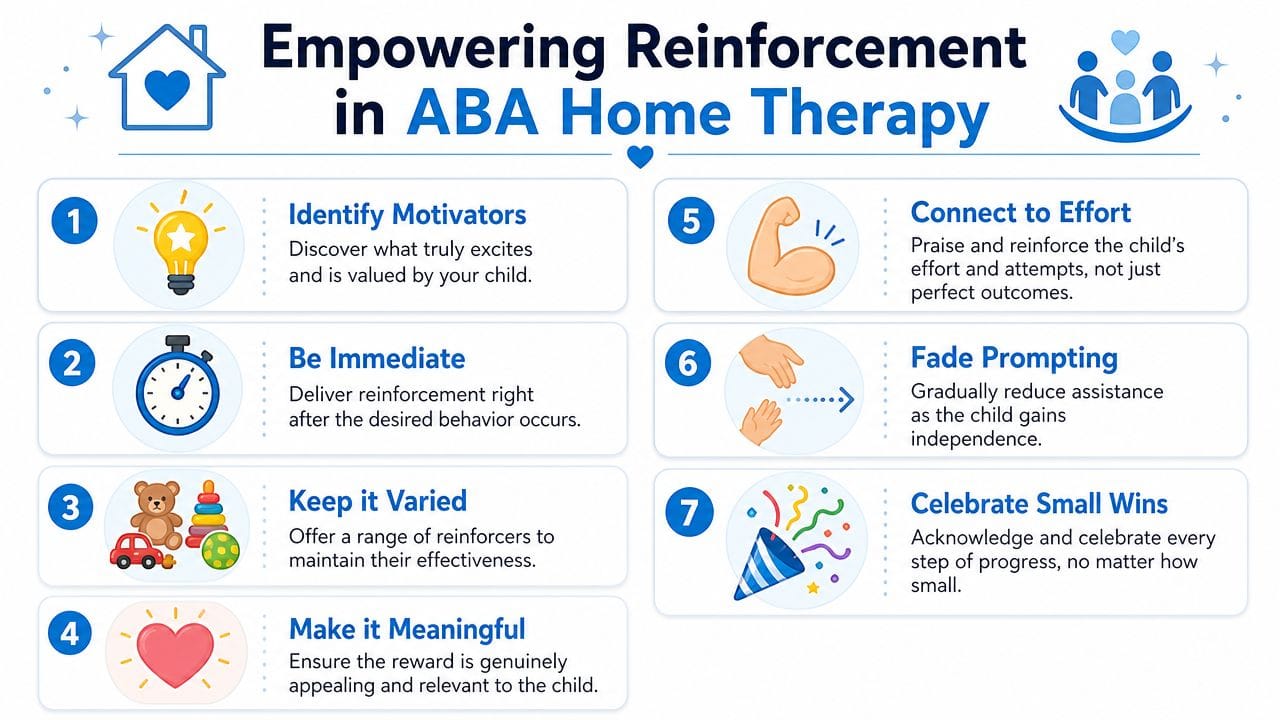
If your child loves spinning tops, being chased, opening snack containers, hearing a silly sound, or turning the light switch on with help, those can all be reinforcers. Reinforcement doesn't have to be candy or screen time. Social attention, sensory experiences, movement, mastery, and choice can all work.
A reinforcement menu works better than one favorite reward
One reward loses power fast if you use it for everything. A better approach is a small menu. Keep a few options across categories and rotate them.
| Type | Example | Best used for |
|---|---|---|
| Social | clapping, labeled praise, high five | easy wins and connection |
| Activity-based | swing, bubbles, chase, water play | harder tasks and movement seekers |
| Tangible | sticker, snack bite, favorite object | quick teaching moments |
| Sensory | deep pressure, music clip, fidget | regulation-linked tasks |
A few practical rules help reinforcement stay effective:
- Pair praise with the skill: "You pointed to juice" is stronger than generic "good job"
- Reward approximations early: if the end goal is a full request, start by reinforcing the first useful attempt
- Fade prompts gradually: the more independent the response becomes, the more durable the skill is
"I want more" can be said with a look, a gesture, a picture, a device, or a word. Reinforce communication, not just one preferred format.
Done well, reinforcement builds competence. The child experiences success, not just adult approval.
Tracking Progress to See What Really Works
Parents often get told to "take data," but that advice falls flat when you're also making dinner, answering school emails, and trying to prevent a sibling conflict. The issue isn't motivation. It's that most home systems are too clunky to survive real life.
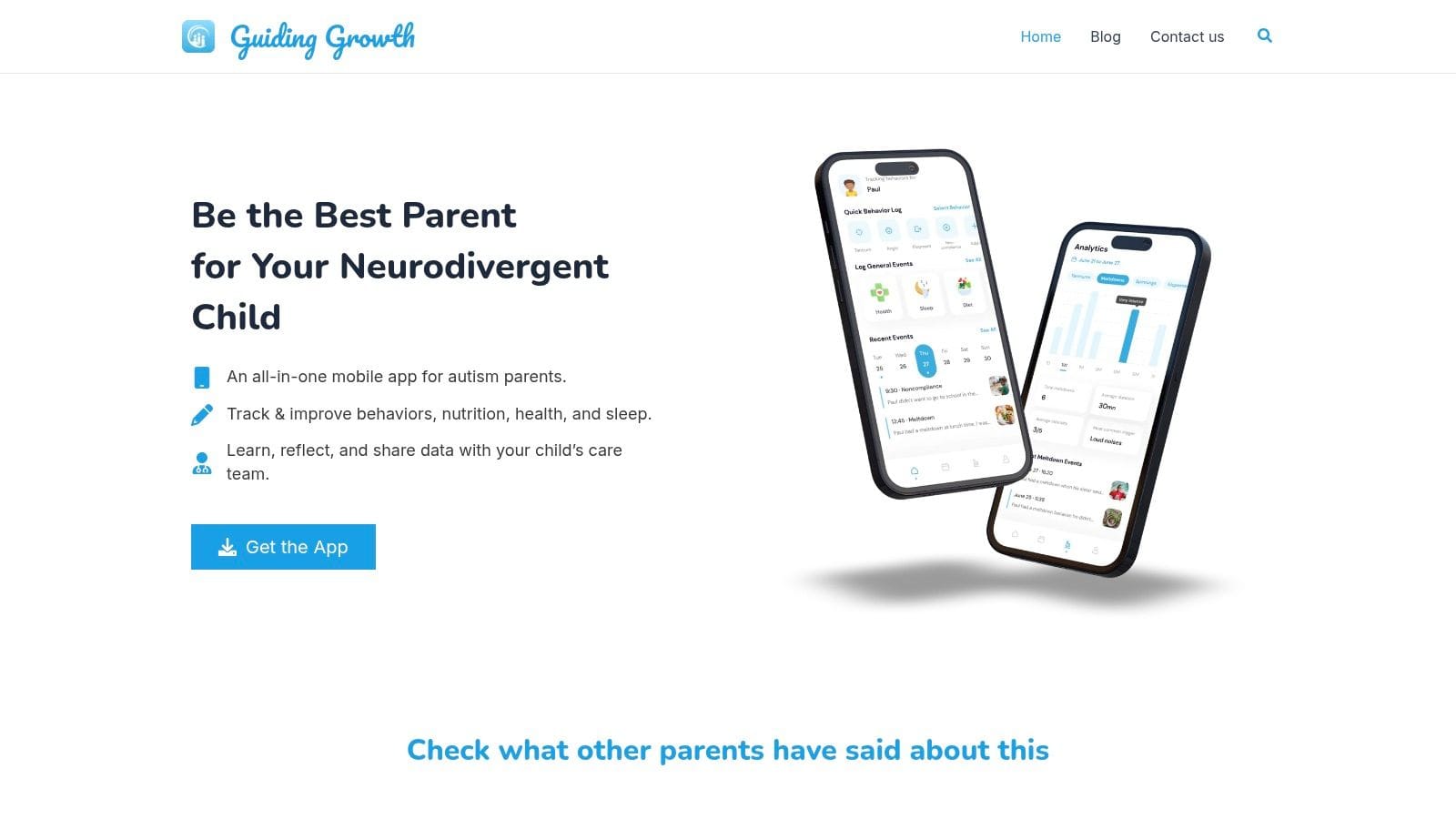
A common unanswered question in ABA home therapy is, "How can I measure real progress when sessions are unstructured?" Many resources skip clear frameworks for tracking behavioral trends and contextual triggers, and AI-assisted behavior logging is still rarely integrated into these guides. That's exactly why scattered notes tend to fail parents when they most need clarity.
What to track in real life
You don't need to log everything. Track the few variables most likely to change your decisions. That usually includes the behavior itself, what happened before it, what happened after it, and relevant context.
Useful categories include:
- Behavior frequency: how often meltdowns, shutdowns, aggression, elopement attempts, or echolalia happen
- Duration or intensity: whether the episode was brief, prolonged, mild, or severe
- Triggers: denied access, transitions, noise, hunger, fatigue, task difficulty, social demand
- Context: sleep quality, diet changes, medication timing, illness, schedule disruptions
- Replacement skills: requests for break, help, more, all done, choice-making, waiting
This is where a dedicated tool matters. A structured behavior tracking app is more useful than random phone notes because it keeps the same fields every time. That consistency helps you compare days instead of guessing from memory.
How patterns become useful decisions
The point of data isn't to create charts for someone else. It's to answer questions like these:
- Does toothbrushing go better when there is a warning and a choice of toothbrush
- Are meltdowns more likely on poor-sleep mornings
- Is "noncompliance" demand avoidance after too many back-to-back adult directions
- Does a replacement communication skill reduce distress over time
A 2020 meta-analysis found that ABA shows significant effects in socialization, communication, and expressive language, and that behavioral changes may emerge only after two to three weeks, with some changes taking months to become permanent, as summarized by ACES ABA's review of ABA effectiveness. That timeline matters because families often quit a good strategy too early or stick with a poor one too long.
This walkthrough gives a good sense of what structured tracking can look like in practice:
When you can see patterns, the conversation changes. Instead of saying, "It feels like things are worse," you can say, "The hard days cluster around short sleep and rushed transitions, and requests for help are increasing during snack and bath." That's actionable.
Collaborating With Professionals for Long-Term Success
Parents often feel like they're translating between worlds. One therapist says one thing, school reports another, and home tells a third story. Long-term progress usually improves when everyone works from shared goals and the same practical definitions.
Know each person's role
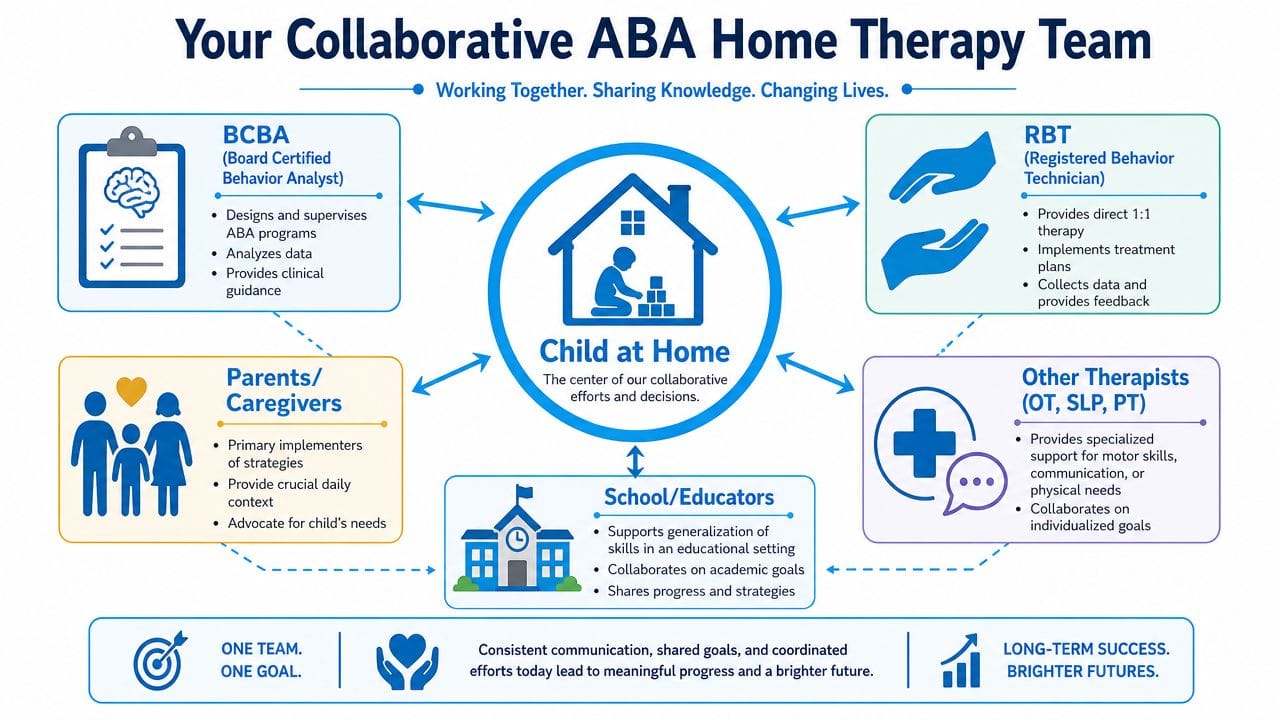
A strong team doesn't mean everyone does the same job. It means each person contributes something specific.
- Parents and caregivers: notice patterns across the whole day, identify what matters most, and protect the child's dignity and consent
- BCBAs: design programs, analyze trends, adjust teaching procedures, and train others to implement consistently
- RBTs: run direct sessions, collect data, and report what happened in real conditions
- Other therapists and educators: support communication, sensory access, motor skills, and school generalization
Your role isn't secondary. You're the only person seeing the child across mornings, meals, illness, recovery, transitions, and weekends. That context matters more than many parents realize.
A long-view mindset helps. Children who remain in ABA services for 12 months or longer, often around 24 months, show greater adaptive behavior gains, and approximately 66% of children referred for ABA show significant improvement, according to Beyond Infinity ABA's review of ABA outcomes.
Bring better information to every meeting
Most care-team meetings get more productive when parents show up with three things:
A short list of current priorities
For example, smoother bedtime, safer transitions in parking lots, and a functional way to request help.A few concrete examples
Not "he always struggles with demands," but "when three directions are given quickly before breakfast, he drops, cries, and pushes materials."Recent notes and patterns
Good ABA session notes make this easier because they keep language consistent across home and provider discussions.
Bring observations, not just conclusions. "She covered her ears before leaving the room" is more useful than "she was refusing."
Ask direct questions when you're unsure a plan fits your child:
- Is this goal functional for home life
- How are we honoring assent during this task
- What should we do if the child signals no
- What data would show this strategy is working
The best collaboration feels less like receiving orders and more like building a plan together.
Frequently Asked Questions About ABA At Home
How many skills should I work on at once
Fewer than most parents think. Start with two or three priorities that affect daily life. Too many targets dilute practice and create stress for everyone.
What if my child refuses a home activity
Pause and look at the context before assuming the child is avoiding learning. Refusal can signal confusion, sensory overload, fatigue, lack of control, or that the task was introduced too fast. Respecting assent doesn't mean giving up on teaching. It means adjusting the way you teach.
Does home therapy have to look formal
No. Some children do benefit from short structured teaching periods, but many skills are best taught during ordinary routines. Requesting help at snack, tolerating a transition to bath, or choosing between shirts are all valid teaching opportunities.
How do I know a goal is respectful
Ask whether the goal increases autonomy, safety, comfort, communication, or participation. If the main benefit goes to the adults and not the child, rethink it.
What if progress feels slow
Slow doesn't always mean ineffective. Look for small markers that come before bigger changes, like shorter recovery time, fewer prompts needed, more attempts to communicate, or better tolerance for part of a routine. Progress in home-based work is often uneven before it becomes more stable.
Should I copy exactly what the therapist does
Not blindly. Strategies need to fit your home, your routines, and your child's real regulation needs. Good ABA home therapy is consistent with the treatment plan, but it also adapts to the actual environment where your child lives.
If you want a simpler way to track behavior, routines, and therapy progress without juggling scattered notes, Guiding Growth gives parents one place to log meltdowns, shutdowns, echolalia, sleep, diet, appointments, and session details. Its voice logging and shareable insights can make home support more organized, more collaborative, and much easier to sustain.