Your child has a cupcake at a birthday party, a juice box on the ride home, and a few pieces of candy before dinner. Then the evening falls apart. They get silly and frantic, then tearful, then completely overwhelmed. You're left wondering whether you just witnessed a sugar rush, a sensory overload, or both.
If that sounds familiar, you're not overreacting. Many parents notice a pattern between sweet foods and harder behavior days, especially when routines are already stretched by school events, holidays, or family gatherings. The problem is that online advice tends to swing between two extremes. Either sugar is blamed for autism itself, which isn't supported by science, or parents are told it's no big deal at all, which doesn't match what many families see in daily life.
The more useful truth sits in the middle. Sugar doesn't cause autism. But for some autistic children, it can affect mood, self-regulation, energy, and sensory coping in ways that feel very real at home. And in many cases, the answer isn't merely “take all sugar away.” A child may be using sweetness, crunch, fizz, or predictable texture as a regulation tool.
Table of Contents
- Navigating the Post-Sugar Rollercoaster
- The Great Sugar Debate Myths vs Scientific Facts
- How Sugar Impacts Behavior and Sensory Needs
- Is It a Craving or a Sensory Coping Strategy
- Practical Dietary Strategies and Sensory Swaps
- Track Patterns to Find Your Child's Triggers
- When to Partner with a Professional
Navigating the Post-Sugar Rollercoaster
A lot of parents describe the same sequence. The treat itself seems harmless. The first shift is often extra energy or louder play. Then the child gets less flexible, more impulsive, or much more reactive to noise and demands. Later comes the crash, which can look like irritability, tears, refusal, or a full meltdown.
That pattern matters. It doesn't automatically mean sugar is the only cause, but it does mean your observations are useful. Children don't eat sweets in a vacuum. They often have them in busy, social, overstimulating settings where routines are off and sleep may already be shaky.
Why the pattern feels so confusing
Parents are often trying to sort out several overlapping factors at once:
- The food itself may affect energy and regulation.
- The setting might include noise, excitement, bright lights, and transitions.
- The expectation shift can be hard. One treat can turn into negotiations for more.
- The aftermath may show up later, when everyone assumes the event is already over.
That's why a simple “sugar is bad” answer usually doesn't help much.
Practical rule: Trust the pattern you're seeing, but don't assume a single food explains every hard moment.
When families start looking closely, they often find that certain forms of sugar are tougher than others. A frosted dessert after a balanced meal may go differently than a sweetened drink on an empty stomach. One child may get dysregulated after soda, while another mainly struggles when candy is paired with a chaotic environment.
This is also where careful tracking becomes helpful. A simple behavior tracking app for autism can help parents notice whether the behavior shift follows specific foods, certain times of day, or high-stimulation settings. That kind of pattern recognition is much more useful than guessing after a rough night.
The Great Sugar Debate Myths vs Scientific Facts
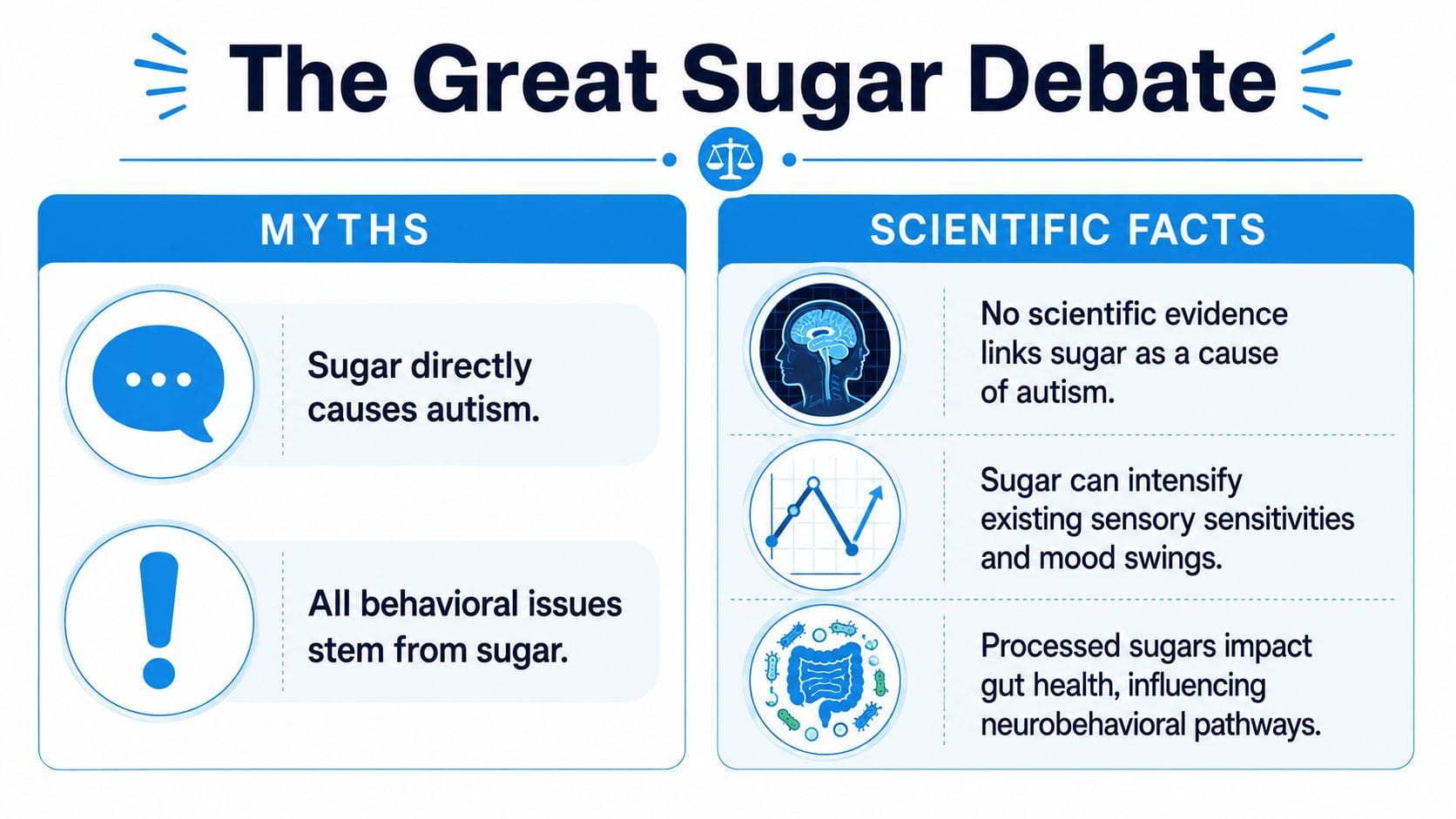
A parent may notice a clear pattern after cupcakes or juice and still wonder, “Did sugar play a role in my child's autism?” That question deserves a straight answer. Eating sugar after birth has not been shown to cause autism. Major public health and medical organizations describe autism as a neurodevelopmental condition with multifactorial causes, not something created by a child eating sweets, as outlined by the National Institute of Environmental Health Sciences overview of autism.
What science does and does not support
A different question has stronger scientific backing. Maternal metabolic health during pregnancy, including high blood sugar, has been associated with higher autism risk in children in a 2024 Kaiser Permanente study discussed in Neuropsychopharmacology Reports. That is about prenatal metabolism, not a school-age child eating cookies, candy, or sweet yogurt.
That distinction matters because families often hear two oversimplified messages. One says sugar has nothing to do with anything. The other says sugar is the cause of autism. Neither is accurate.
A more clinically useful summary looks like this:
- Current evidence does not support the claim that postnatal sugar intake causes autism.
- Prenatal metabolic factors, including blood sugar regulation during pregnancy, may affect autism risk.
- Sweet foods and drinks can still affect behavior, energy, and regulation in some autistic children.
Sugar and Autism Myth vs Fact
| Myth | Fact |
|---|---|
| Sugar directly causes autism | Current evidence does not show that eating sugar after birth causes autism, according to the National Institute of Environmental Health Sciences overview of autism. |
| If a child melts down after sweets, sugar is the only reason | A hard reaction usually reflects several factors at once, including sensory load, fatigue, hunger, routine disruption, and the food itself. |
| If sugar affects behavior, removing all sugar is the best plan | Sudden restriction often creates more conflict, especially if sweet foods are being used for predictability, oral sensory input, or quick calming. |
| All sugar-related concerns are myths | Some research does link higher sugary drink intake with more emotional and behavior challenges in autistic children, even though sugar does not cause autism. |
In practice, I encourage parents to ask a more useful question. “What is this sweet food doing for my child right now?” Sometimes the answer is taste and fun. Sometimes it is fast energy. Sometimes it is sensory regulation, especially when a child seeks strong flavor, chew, or a familiar reward during stress.
That is why a sugar discussion should never stop at “just take it away.” If sugar is filling a sensory or coping role, removal without a replacement can increase distress. The better approach is to separate the myth from the underlying issue, then respond to the need the food was meeting.
How Sugar Impacts Behavior and Sensory Needs
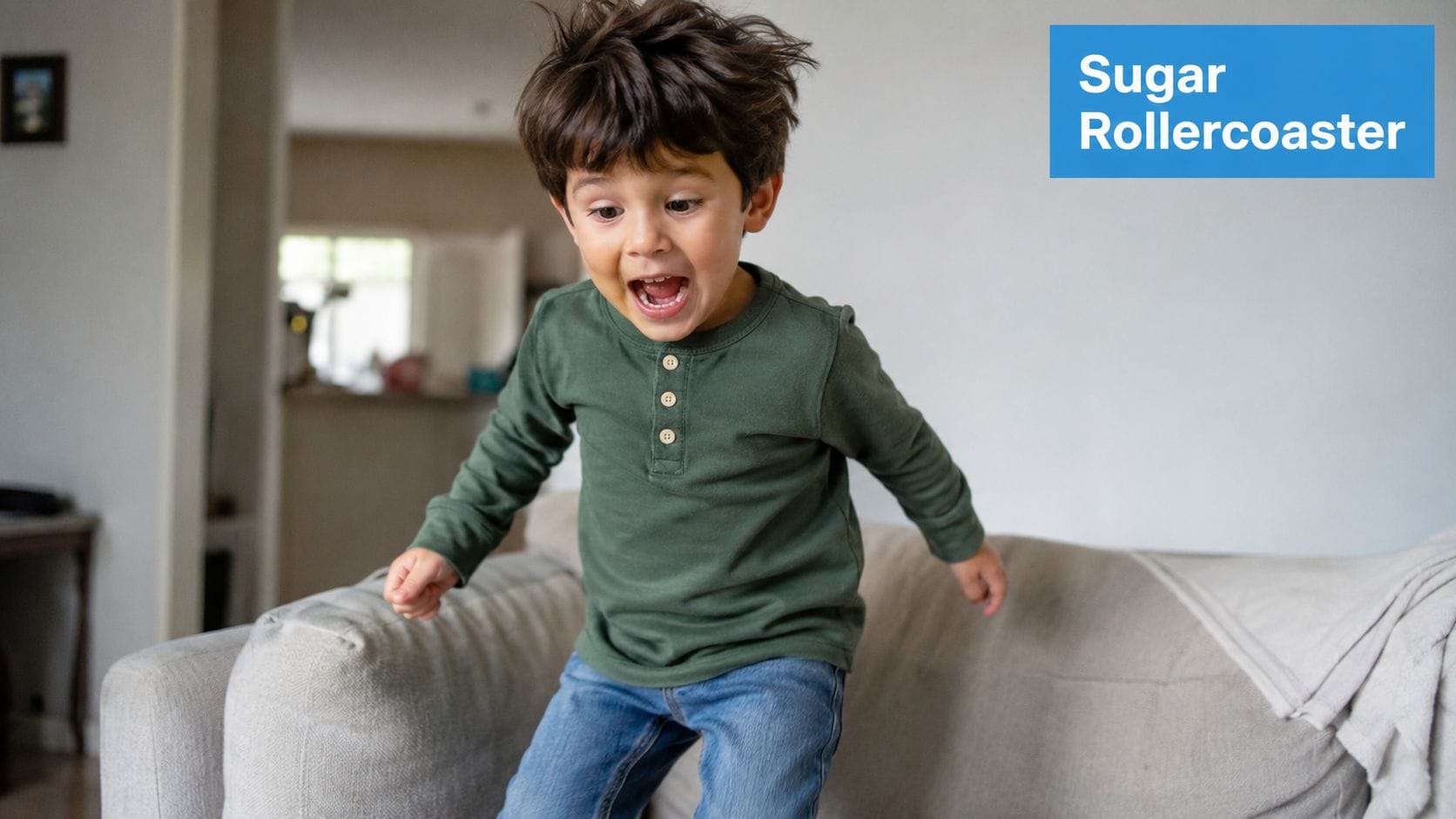
When parents talk about a “sugar rush,” they're usually describing a very recognizable sequence. Energy rises fast. Attention gets scattered. Tolerance for frustration shrinks. Then the drop hits, and the child may seem tired, moody, or overwhelmed.
What the sugar rollercoaster can look like
A useful way to think about autism and sugar is the rollercoaster effect. High-sugar foods can lead to a rapid rise in blood glucose, followed by a drop. In some children, that swing shows up as:
- Fast energy changes that look like hyperactivity or agitation
- Reduced flexibility during transitions or denied requests
- Mood shifts such as irritability, sadness, or sudden anger
- Lower frustration tolerance for noise, waiting, or demands
Clinical research has found a statistically significant direct association between more frequent sugar-sweetened beverage intake and greater emotional problems, including hyperactivity and conduct issues, in children with ASD. That same research links high intake with neurotransmitter disruption and rapid blood glucose fluctuations that can contribute to behavioral dysregulation, as reported in this study on sugar-sweetened beverages and emotional symptoms in ASD.
This doesn't mean every sweet food will trigger a meltdown. It means some children have systems that respond more sharply to these swings.
Why drinks can hit differently
Many families notice that liquid sugar causes more trouble than dessert eaten with a meal. That makes sense clinically. Sweet drinks are quick to consume, easy to repeat, and often paired with stimulating settings like parties, restaurants, or car rides between activities.
Later in the day, the child may look “off” without anyone connecting it to the drink they had earlier.
A short visual overview can help make that pattern easier to recognize:
Another piece that often gets missed is gut discomfort. Some children seem more dysregulated after sugary intake because they're physically uncomfortable, not because they are solely “wired.” If a child is already working hard to regulate sensory input, physical discomfort can push them past their coping capacity much faster.
Is It a Craving or a Sensory Coping Strategy
When adults see a child repeatedly seeking candy, sweet drinks, frosting, or certain snack foods, the first label is often “addiction” or “bad habit.” That label can be misleading. In many autistic children, sugar-seeking behavior may be doing a job.
What sweet foods may be doing for your child
A 2021 study highlighted in this sensory-focused review found that autistic children may consume more sugar specifically to avoid bitter tastes, connecting intake to sensory avoidance, not just simple preference. That matters because it changes the intervention.
The child may be seeking:
- Predictable taste when other foods feel too sharp, bitter, or variable
- Strong oral input through crunch, chew, fizz, or sticky textures
- Quick calming during stress, boredom, or overload
- A reliable food when unfamiliar foods feel unsafe
If you remove sugar without replacing the sensory function it served, behavior often gets worse before it gets better. The child hasn't just lost a snack. They've lost a regulation tool.
Many children aren't chasing sweetness alone. They're chasing predictability, oral input, or relief from unpleasant tastes.
Start with the need, not the rule
At this point, parents become investigators rather than enforcers. Ask different questions:
- Does your child want sweet foods more when tired?
- Is the preferred item always cold, crunchy, chewy, or fizzy?
- Do sweet foods show up before difficult tasks or after overwhelming ones?
- Does the child reject vegetables mainly because of bitterness?
If you're trying to regain control over sugar urges, broad craving advice can be useful, but autistic children often need one extra layer. You have to identify the sensory or emotional function of the food, not just the ingredient list.
Once that function becomes clear, support gets much more effective. You stop fighting the child and start replacing the tool.
Practical Dietary Strategies and Sensory Swaps
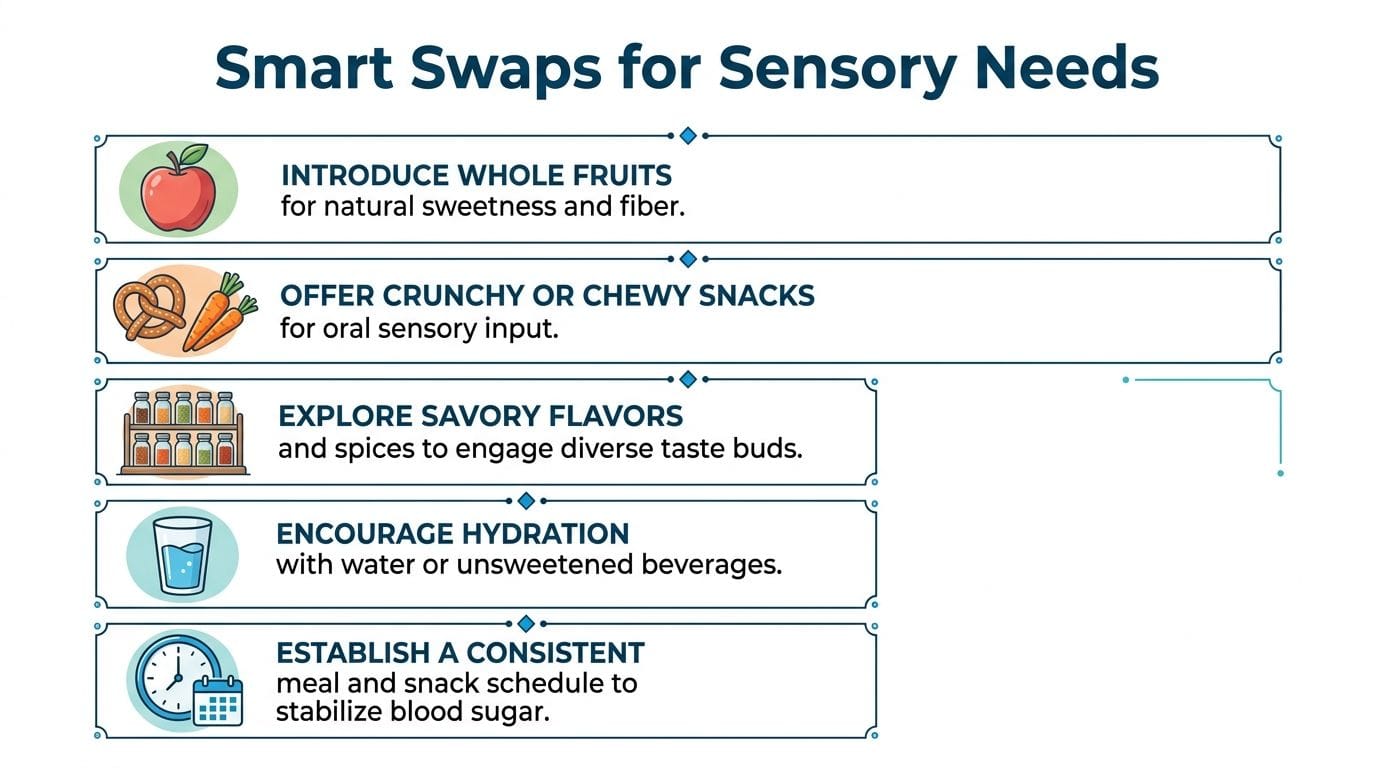
Parents usually get told to “offer healthier options,” but that advice is too vague to work in real life. The better approach is to match the sensory experience of the preferred sugary food as closely as possible.
Build swaps around sensation
Observational reports suggest that excessive sugar intake may worsen existing behavioral symptoms in neurodivergent children through gastrointestinal distress and altered gut flora that can drive cravings. That same discussion points to neurotransmitter disruption as one reason reducing sugar can be a practical part of symptom management, as outlined in this overview of sugar, gut effects, and behavior in autism.
Try matching what the child gets from the food, not just what you want them to eat:
- If they seek crunch: offer apple slices, toasted bagel chips, roasted chickpeas, or crunchy sweet potato rounds.
- If they seek chew: try dried fruit with no added sugar, chewy whole-grain bars the child already tolerates, or bagels cut into predictable shapes.
- If they seek cold sweetness: use frozen berries, smoothie pops, or plain yogurt blended with fruit.
- If they seek a drink ritual: shift from soda or juice to flavored sparkling water if tolerated, diluted juice, or a preferred cup with ice and a straw.
A child who relies on oral input may also benefit from non-food sensory supports. Some families find that structured options like sensory chew tools for autistic children reduce the drive to constantly seek sticky or chewy sweets.
Make changes slowly enough to work
The hardest mistake is moving too fast. Sudden restriction often increases anxiety, bargaining, food refusal, and meltdowns.
Use a slower pattern instead:
- Keep one preferred sweet food predictable rather than making it random.
- Pair, don't replace at first. Serve a preferred item alongside a sensory-similar option.
- Change one variable at a time. Texture first, then flavor, then brand, then amount.
- Use meal timing to your advantage. Regular meals and snacks can reduce the urgent chase for quick energy.
Clinical reminder: The best swap is the one your child can actually accept, not the one that looks healthiest on paper.
If your family includes older adults or you help coordinate meals across generations, broad nutrition planning can also help caregivers think more clearly about consistency and food routines. A practical example is this caregiver's guide to senior nutrition, which shows how personalized meal planning works when health needs and daily routines both matter.
Track Patterns to Find Your Child's Triggers
Parents are often told to “watch for triggers,” but memory is unreliable when days are full. By bedtime, it's easy to forget whether the meltdown happened after the sports drink, the skipped snack, the noisy errand, or the poor night of sleep.
What to track
Parents and clinicians report that high-sugar foods can trigger meltdowns, mood swings, and hyperactivity through rapid blood glucose spikes and drops. The same discussion notes that diet tracking can help families log high-sugar meals and compare them with the timing of behavioral events, as described in this guide to foods that may affect autism-related behavior.
The most useful logs include more than food alone:
- What was eaten or drunk and roughly when
- The setting, such as school event, restaurant, car ride, or home
- Sleep quality the night before
- Behavior changes like pacing, crying, impulsivity, aggression, or shutdown
- Recovery time, including what helped
Patterns are often cumulative. A sweet drink on a calm day may go fine. The same drink after poor sleep and a loud classroom party may not.
What patterns usually matter most
Look for repeat links, not single incidents. A useful pattern might sound like this: sweetened drinks after school on therapy days lead to more conflict at dinner, or frosting-heavy desserts are tolerated at lunch but not late in the evening.
Families who want to sort that out systematically often benefit from learning how to identify food sensitivities in autistic children. The key is to notice whether the same food-behavior sequence repeats often enough to guide a change.
When a pattern becomes visible, the next step gets simpler. You can reduce one trigger, add one support, and observe again. That's far more effective than banning ten foods at once and hoping for the best.
When to Partner with a Professional
A common moment I hear from parents sounds like this: “We cut back on sweets, and now everything is harder.” That matters. If sugar has been doing a job for your child, especially a sensory regulation job, removing it without replacing that function can lead to more distress, not less.
Professional support makes sense when the question is no longer “Should we allow sugar?” and becomes “What need is this meeting, and what can safely take its place?” That shift usually helps families make progress without turning meals into daily battles.
Signs it is time for added support
Reach out for help if sweet foods are carrying too much of the regulation load, or if food patterns are starting to affect health, family routines, or your child's ability to cope through the day.
Consider getting added support if:
- Food variety keeps shrinking, especially if entire textures or food groups are disappearing
- Sweet foods or drinks are crowding out meals, and you are concerned about growth, nutrition, or energy
- Meltdowns often happen around eating or after eating, and the trigger is unclear
- Reducing sugar leads to a sharp loss of coping, such as more panic, aggression, refusal, or shutdown
- Constipation, reflux, abdominal pain, or sleep problems seem to be part of the picture
- You have tried slow changes and sensory swaps, but the pattern stays stuck
A pediatrician can look for medical contributors such as constipation, reflux, medication effects, sleep disruption, or blood sugar-related issues. A registered dietitian can help you protect nutrition while reducing reliance on high-sugar foods and drinks. An occupational therapist can assess the sensory side of the pattern, including oral sensory seeking, predictability, and whether sweetness is acting as a fast calming input.
Some children benefit from a team approach. That is often the most practical option when eating, behavior, sleep, and sensory regulation are all tangled together.
Clinical guidance can also keep well-meaning changes from backfiring. The American Academy of Pediatrics guidance on healthy beverage intake for young children is a useful reference for limits and substitutions, but autistic children often need a more individualized plan than a general handout provides. If a child uses sweet drinks to stay regulated in noisy, demanding parts of the day, the goal is not just removal. The goal is to build other regulation tools first.
Parents do not have to figure this out alone. The best plans usually combine careful observation, realistic food changes, and sensory supports that respect what the child is trying to communicate.