You're halfway through a grocery run when you notice the familiar pattern: your child is chewing the cuff of a sweatshirt, worrying the seam until threads begin to loosen. At home, it may look like licking sleeves, biting a pen cap, crunching ice, or mouthing toys long after toddlerhood. These behaviors often appear during transitions, waiting-room pauses, crowded outings, or the quiet stretch after school.
Autism oral stimulation isn't automatically a bad habit that needs to be stopped. For many autistic children, the mouth is a fast, reliable way to regulate an overwhelmed or under-alert nervous system. The practical task is to understand what the behavior may be doing, reduce avoidable risks, and offer safer input without taking away a coping tool abruptly.
A broad review of oromotor skills found that 81% of included studies reported a significant oromotor abnormality connected with speech production, nonspeech oromotor skills, or feeding in its review of autism research. That finding doesn't mean every autistic child needs oral therapy. It does show why chewing, mouthing, feeding, and communication deserve careful observation rather than shame.
Table of Contents
- What Oral Stimulation Looks Like in Everyday Life
- How the Sensory System Drives Oral Seeking
- Common Oral Behaviors and What They May Signal
- Safety and Dental Considerations Parents Should Know
- Choosing the Right Oral Support for Your Child
- Building an Oral-Sensory Routine That Actually Sticks
- Tracking Progress and Knowing When to Ask for Help
What Oral Stimulation Looks Like in Everyday Life
A parent may first notice oral stimulation during a difficult moment. Their child has left school tired, the house feels noisy, and a shirt collar goes straight into the mouth. When the parent gently removes it, the child reaches for a toy, then a finger, then the edge of a blanket. Nothing about the sequence looks random. The child is searching for a sensation that helps their body settle.
At other times, the behavior is easy to miss because it blends into ordinary routines. A child may lick their sleeve while watching television, chew a pencil during desk work, suck a thumb during a car ride, or bite the handle of a toy while waiting for dinner. The same child might seek crunchy foods in the afternoon but refuse mixed textures at the table. Context matters as much as the behavior itself.
Research on repetitive behavior helps explain why families see such patterns so often. One meta-analytic review reported a median stereotypy prevalence of 61% overall, with autism showing the highest reported prevalence at 88% across specific diagnoses in that review of stereotypy across developmental disabilities. In preschool oral-health research cited in the same source, oral habits appeared in 87.3% of the autism group, while bruxism appeared in 54.7%, object biting in 44.7%, and mouth breathing in 26.7%.
The behavior is communication
Those figures don't predict what your child will do. They place oral habits in a broader clinical picture. A child who chews during a supermarket visit may be coping with noise, lights, movement, and waiting. A child who mouths toys after school may be seeking steady pressure after holding themselves together through a demanding day.
A wet collar isn't evidence that you've failed as a parent. It's information about what your child's nervous system may be asking for.
Start by noticing when, where, and after what event the behavior appears. The aim isn't to eliminate every mouth-based movement. It's to identify unsafe objects, preserve useful regulation, and create options that work at home, in school, and in public.
How the Sensory System Drives Oral Seeking
A child chews a shirt collar during a noisy outing, then refuses a soft banana at home. The two responses may look contradictory, yet both can reflect how the child's nervous system handles different sensations. Oral input can help some children increase alertness, reduce overload, or maintain a steady rhythm when the surrounding environment feels unpredictable.
The lips, tongue, cheeks, jaw, and teeth provide dense tactile information. Jaw movement also supplies proprioceptive feedback, which carries information about pressure, force, and movement. Chewing, sucking, biting, licking, and blowing give the mouth a direct, repeatable way to adjust the amount and quality of input. For a child overwhelmed by lights, sounds, movement, or touch, this familiar feedback may be easier to organize than background sensations.
Seeking and avoiding can coexist
Sensory seeking involves actively pursuing strong or repeated input, such as a firm chew, a crunchy snack, or a resistant straw. Sensory avoidance may appear as rejecting certain textures, gagging when food touches the tongue, pulling away from face touch, or resisting toothbrushing.
One child can show both patterns because sensory qualities are not interchangeable. They may chew a shirt intensely but refuse a soft banana, crave ice but avoid toothpaste, or accept a textured teether during play while becoming distressed when a dentist touches the mouth. Seeking pressure does not mean every oral sensation feels comfortable.
Occupational therapists often interpret these responses within broader sensory-processing frameworks, including Ayres Sensory Integration. These frameworks examine how the brain receives, organizes, and responds to sensory information. Building an autism sensory profile can help you document which textures, pressures, settings, and routines your child tolerates or seeks. That record turns a confusing behavior into a clearer pattern without reducing the child to a label.
A review in its analysis of oral sensory-motor interventions describes oral sensory-motor disturbance, incomplete motor planning, and poor oral neuromuscular coordination as factors that may contribute to speech and feeding difficulties. It also discusses oral stimulation as a possible way to meet sensory-seeking needs or reduce oral sensory overload, either independently or alongside speech therapy. These ideas describe possible contributors, not a diagnosis for every child.
Start by tracking three details:
- Observe the function. Does chewing appear before a transition, during concentration, or after sensory overload?
- Offer a safer match. If pressure seems helpful, replace a fraying sleeve with an appropriate, supervised chew tool.
- Keep the response neutral. Redirect without scolding, bargaining, or making the child feel watched.
Tracking is the part many guides skip. A few consistent notes can show whether a strategy changes the behavior, and in which setting. Meeting a functional need with safer input often works better than punishment or suppression, because the child gains another reliable way to regulate.
Common Oral Behaviors and What They May Signal
The same behavior can serve different purposes for different children. Use the patterns below as starting hypotheses, not diagnoses. Observe what changes when you alter the texture, resistance, timing, or setting.
Read the behavior before choosing the tool
Chewing non-food items often supplies deep pressure to the jaw and a repetitive rhythm. A child who chews sweatshirt cuffs during a noisy errand may be seeking strong proprioceptive input. A first response could be offering a supervised, durable chew tool before entering the store, then checking whether the sleeve-chewing decreases.
Bruxism, or teeth grinding, may provide pressure and rhythm during concentration, stress, or sleep. A child might grind while assembling a puzzle or wake with jaw fatigue. Because persistent grinding can affect teeth and the jaw, arrange dental input rather than treating a chew tool as a complete solution.
Mouthing hands, toys, or objects can reflect tactile seeking or reduced awareness of touch around the mouth. A child may repeatedly mouth toy pieces while waiting for a caregiver because the mouth supplies more noticeable feedback than the surrounding environment. A larger, age-appropriate oral tool, offered before waiting periods, may provide a safer alternative.
Seeking crunchy, chewy, or sour foods may reflect a preference for intense oral input. A child who asks for crunchy snacks whenever homework begins might benefit from a planned food option, provided the food is safe for their chewing and swallowing abilities and fits their dietary needs.
Pica, eating non-food substances, needs separate attention. Sensory seeking may play a role, but nutritional, medical, developmental, and environmental factors can also matter. Persistent pica warrants professional evaluation rather than simple substitution.
| Behavior | Likely Sensory Function | First Response to Try |
|---|---|---|
| Chewing sleeves, pencils, or toys | Deep jaw pressure and rhythmic proprioceptive input | Offer a supervised chew tool before predictable trigger times |
| Grinding teeth | Pressure seeking or self-soothing during focus or sleep | Arrange a dental assessment and record when grinding occurs |
| Mouthing hands or objects | Tactile seeking or reduced oral awareness | Provide a safe, appropriately sized oral alternative |
| Requesting crunchy or sour foods | Preference for strong oral input | Plan a suitable snack and observe its effect on regulation |
| Eating non-food substances | Possible sensory, nutritional, or developmental need | Contact a qualified clinician promptly for assessment |
Mouth-based behavior can also overlap with structural or dental concerns. If feeding, speech, tongue movement, or oral comfort seem unusual, this resource on tongue tie from Dental Professionals of Fair Lawn may help you prepare questions for a pediatric dental appointment. The point isn't to assign every behavior to one cause. It's to avoid assuming that all chewing is purely sensory.
Safety and Dental Considerations Parents Should Know
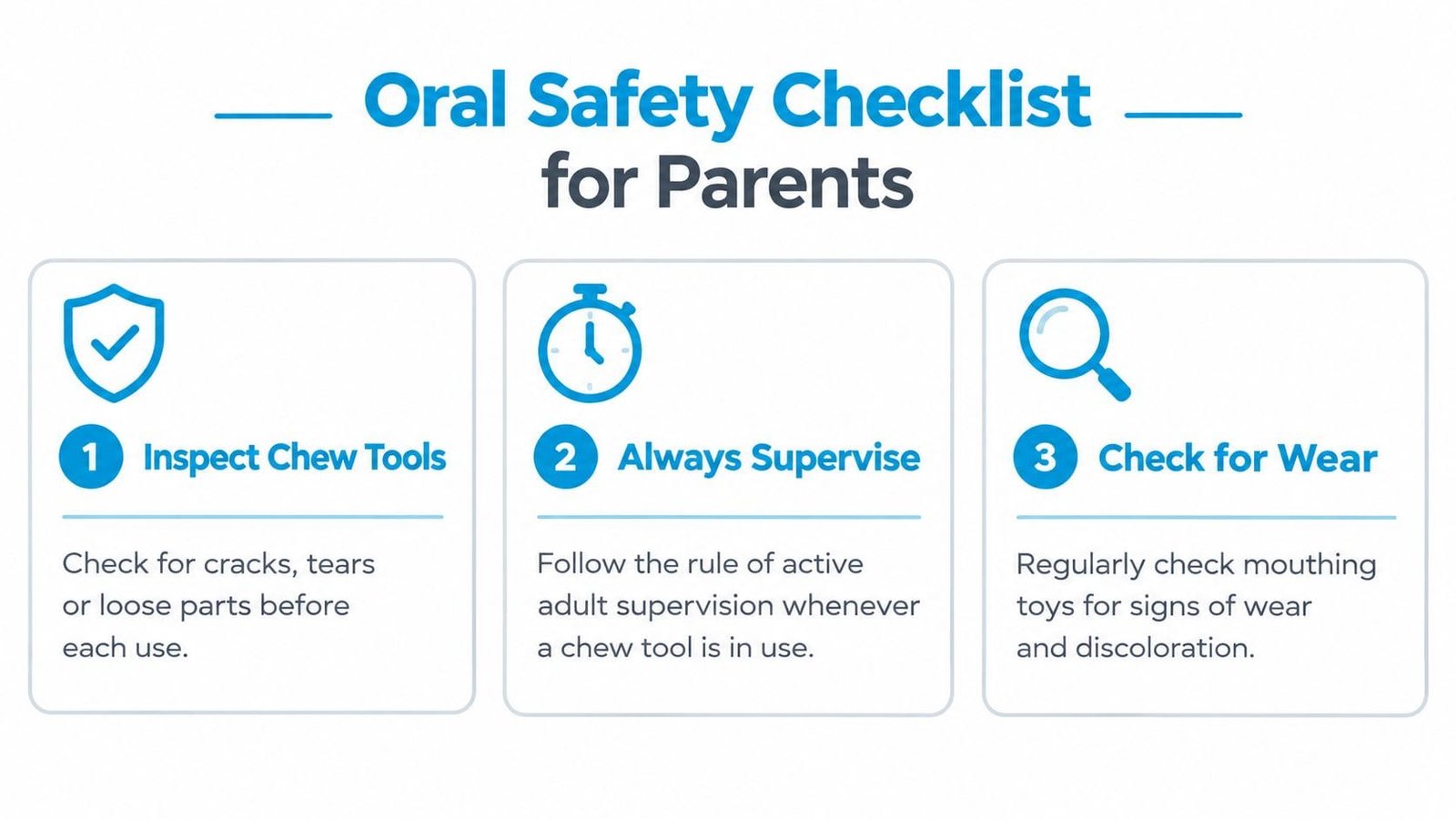
Safety comes before strategy. A replacement only helps if it's appropriate for the child's chewing strength, motor skills, health needs, and supervision level.
Use a quick safety scan
- Inspect before use: Look for cracks, tears, loose parts, discoloration, or changes in texture. Replace a frayed chew tube immediately.
- Supervise actively: Stay close enough to respond whenever a chew tool is in use, especially if the child bites forcefully or breaks objects.
- Avoid detachable hazards: Don't use cords, rubber bands, small beads, or accessories that can separate and enter the mouth.
- Check every familiar object: Toys, pencil grips, clothing seams, and silicone items can wear down even when they once seemed safe.
- Watch the gums and teeth: Report gum recession, bleeding, tooth sensitivity, jaw fatigue, visible wear, or dental pain.
- Review food safety: Crunchy foods and ice require consideration of chewing ability, swallowing, dental health, and individual medical advice.
Chronic bruxism and hard-object chewing can contribute to enamel wear, jaw discomfort, and bite changes. A dentist familiar with sensory-based habits can help distinguish ordinary wear from a concern that needs treatment. Families preparing for a first visit may find this guide to the first dental appointment from Inspire Dental Group useful, particularly when a child has difficulty tolerating unfamiliar routines.
Saliva and appearance can create social stress, too. A discreet tool, absorbent sleeve, spare shirt, or private classroom plan may reduce embarrassment without telling the child their regulation is unacceptable. Explain the arrangement to teachers in practical language: “When chewing starts, offer the approved tool and keep small objects out of reach.”
For tooth grinding, this guide to teeth grinding and autism can help families organize observations before speaking with a dentist. Safer alternatives don't erase the need for oral input. They redirect it while adults continue watching for medical and dental risks.
Choosing the Right Oral Support for Your Child
Choose the support by function, not by appearance. A child seeking firm jaw pressure may reject a thin, soft necklace. A child who wants varied tactile feedback may dislike a smooth, rigid tool. Introducing options during calm periods gives your child a better chance to communicate a preference.
Compare the main options
Chew tools suit children who repeatedly chew clothing, pencils, or toys. Smooth surfaces may be easier for children who avoid texture. Knobby or ridged designs may appeal to texture-seekers, while thicker and firmer stems may provide more satisfying resistance for children who seek strong jaw input. Match the tool to the child's chewing intensity, inspect it frequently, and supervise use.
Straws and oral-motor tools can make input portable and activity-based. A thin smoothie straw offers less resistance than a thicker straw. Bubble blowing adds breath control and playful pacing. A honey-bear-style cup can provide resistance, but oral-motor tools should be selected with professional guidance when swallowing or coordination is a concern.
Food-based input works well when the child can safely manage the food. Crunchy snacks may provide alerting feedback, while a cold ice chip or sour strip can offer a brief, intense sensation. Food shouldn't become the only regulation strategy, and caregivers should account for choking risk, allergies, dental health, and feeding skills.
Professional oral-motor therapy deserves priority when speech clarity, swallowing, persistent drooling, pocketing food, or poor oral coordination appear alongside seeking. An occupational therapist or speech-language pathologist can assess whether the child needs sensory input, motor practice, feeding support, or a combination.
| Support Type | Best For | Examples | Watch For |
|---|---|---|---|
| Chew tools | Repeated chewing on clothing or objects | Smooth chew, textured teether, thicker chew stem | Wear, breakage, excessive force, unsupervised use |
| Straws and oral-motor tools | Children who enjoy sucking, blowing, or resistance | Smoothie straw, bubbles, honey-bear-style cup | Coughing, fatigue, poor coordination, swallowing concerns |
| Food-based input | Children who safely manage varied textures | Crunchy snack, cold ice chip, sour strip | Choking risk, dental concerns, restricted reliance on food |
| Professional therapy | Speech, feeding, drooling, or coordination concerns | OT sensory assessment, speech-language evaluation | Delaying assessment while relying only on tools |
A child may need different supports in different settings. A discreet chew can work during desk work, while food input may fit a planned snack and blowing may work during play. Rotating appropriate options can keep the routine responsive, but don't change everything at once. If you're comparing products and strategies, this guide to sensory chew toys for autism offers a starting point for thinking about texture, durability, and use context.
Building an Oral-Sensory Routine That Actually Sticks
Oral input works more predictably when it appears before the hard moment instead of only after distress begins. Build a routine around transitions your child already experiences, then observe whether preparation changes the behavior.
A practical day
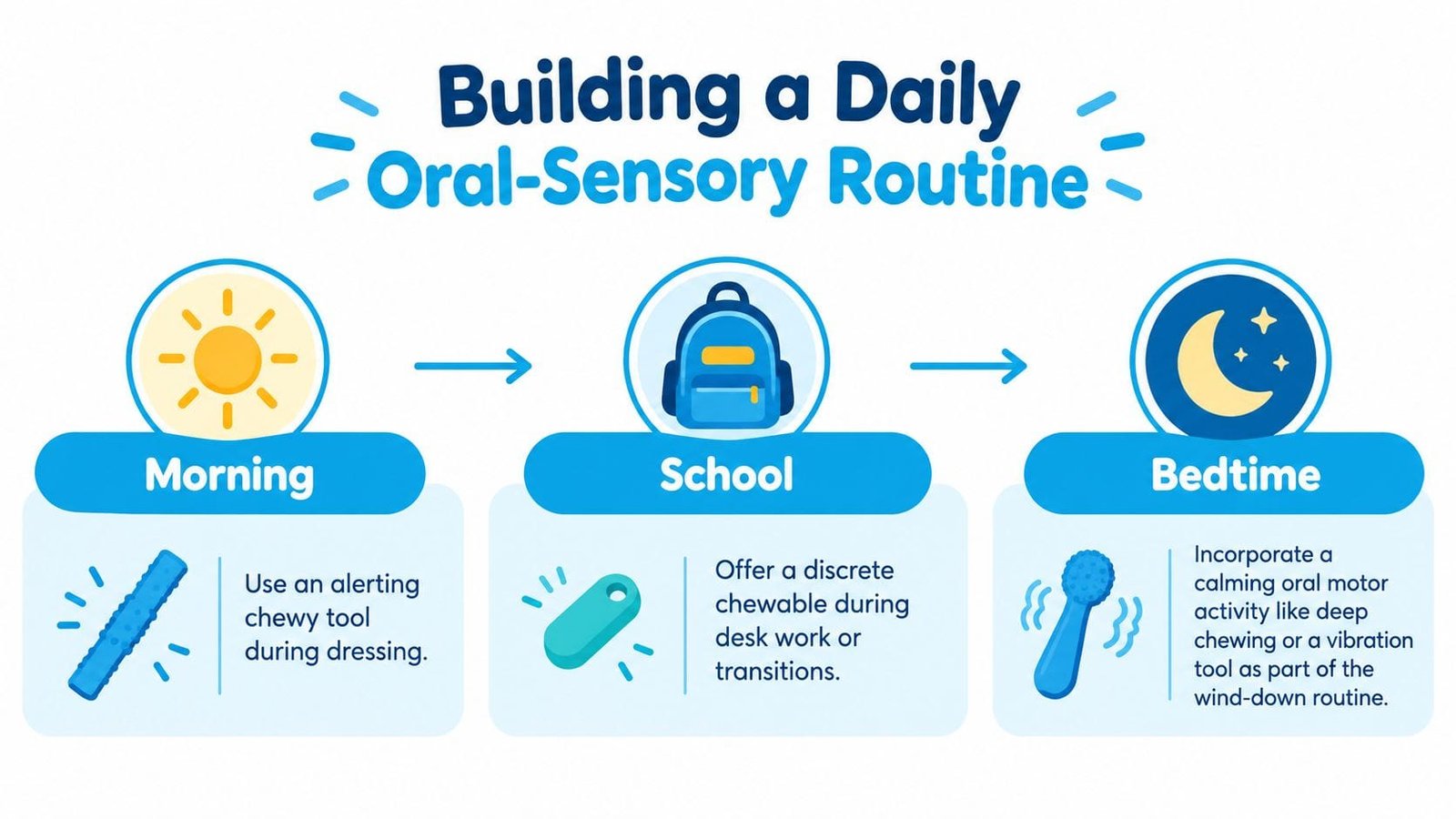
Morning: Offer an alerting chewy during dressing if clothing changes are a chewing trigger. At breakfast, try a thick smoothie straw when your child enjoys resistance and can drink safely.
School: Pack a rotation of two approved chew tools and a suitable crunchy snack in the lunch kit. Give the teacher a brief note identifying the replacement, when to offer it, and what to do if it becomes damaged. Keep school rules and hygiene requirements in the plan.
After school: A cold ice chip or sour strip may provide a short reset before homework, if your child can safely manage it and a health professional hasn't advised against it. The aim is a predictable transition, not a reward for distress.
Bedtime: Dim lighting, a familiar chewy, and a warm milk alternative through a weighted sippy-style straw may support a slower wind-down. Brushing with a textured toothbrush can add predictable oral input, though brushing should remain gentle and medically appropriate.
Keep the routine simple enough that another caregiver can follow it. If oral care is difficult, separate sensory support from cleaning expectations. Families considering oral hygiene options can review information about water flosser versus string floss for children, then discuss the choice with a dental professional.
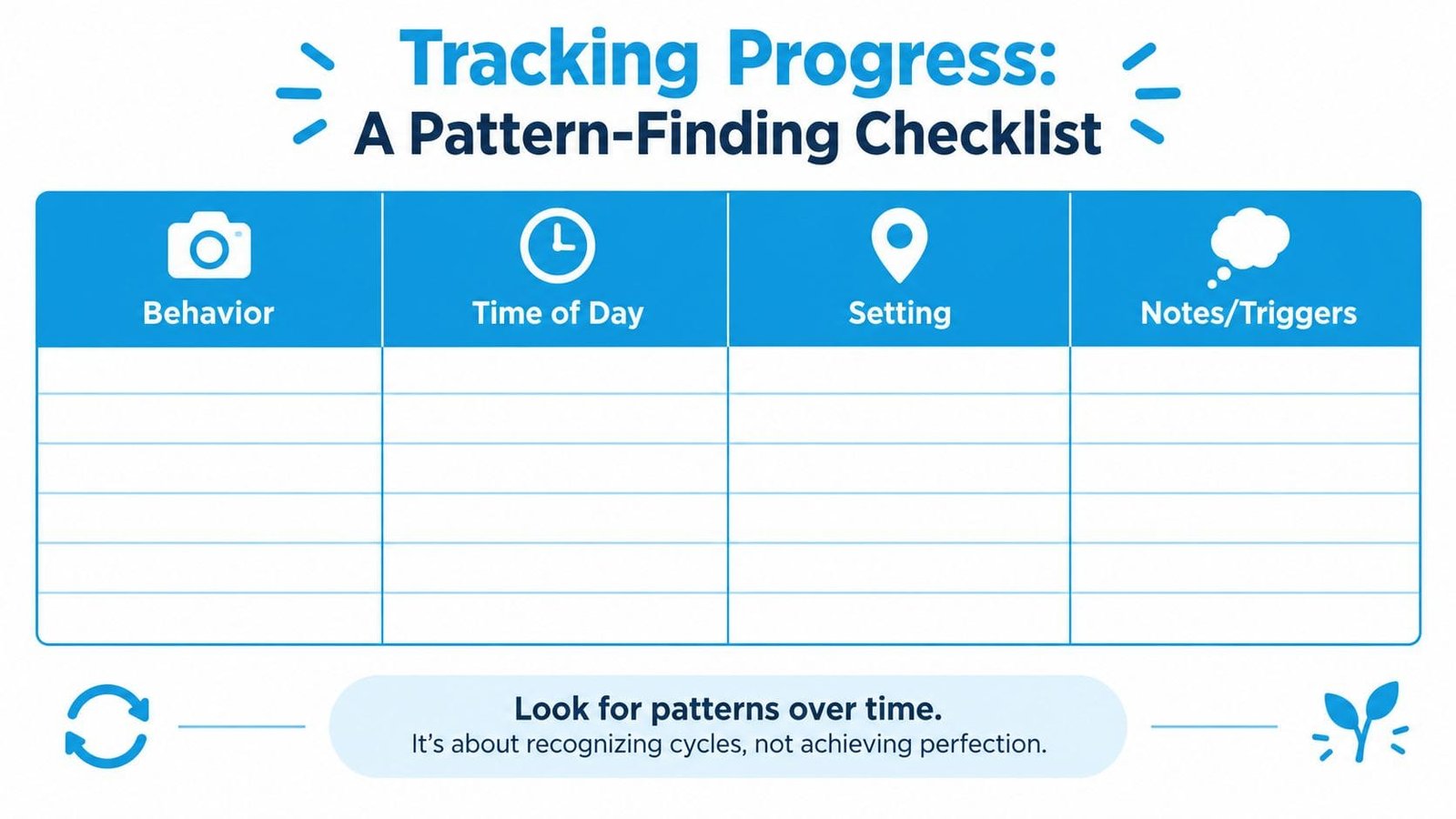
A tracking app can capture the details paper notes often miss. Guiding Growth records behaviors, contextual triggers, routines, sleep, diet, appointments, and care-team observations, so parents can compare oral seeking with the rest of the day rather than viewing it in isolation. Record frequency, intensity, setting, and what happened immediately before and after the behavior, then adjust one part of the routine at a time.
Tracking Progress and Knowing When to Ask for Help
Progress doesn't mean your child never mouths, chews, or grinds again. It means you understand the pattern well enough to make the behavior safer, reduce disruption, and support regulation with less guesswork.
For two to four weeks, record the behavior, time of day, setting, what came before it, and what happened after you offered support. A notebook, spreadsheet, or sensory-tracking app works. Even five daily entries can help reveal whether seeking clusters around transitions, fatigue, homework, crowded spaces, or particular foods.
Seek professional input when risk rises
- Persistent pica: Your child repeatedly eats non-food substances or searches for them.
- Choking or swallowing concerns: Mouthing leads to choking episodes, coughing, gagging, or difficulty managing food.
- Dental changes: You notice tooth damage, gum problems, jaw pain, or significant grinding.
- Body or sleep changes: Weight changes, disrupted sleep, or signs of pain appear.
- Participation limits: Oral behaviors prevent school attendance, eating, communication, or social participation.
An occupational therapist can begin with a sensory profile assessment. A dentist can evaluate bruxism-related wear and oral structures. A speech-language pathologist can assess oral-motor coordination, speech, feeding, and swallowing. Asking for help early isn't a setback. Small, consistent observations give the care team a clearer path than a single stressful appointment can.
Guiding Growth gives parents a place to log oral seeking alongside triggers, routines, sleep, diet, appointments, and caregiver observations, with voice logging available when typing isn't practical. Visit Guiding Growth to turn scattered daily observations into patterns you can discuss with your child's therapists, dentist, teachers, and family.