You're in the middle of a busy day, and your child has already had a rough stretch. Maybe there was a meltdown before breakfast, a hard transition at school drop-off, and a night of broken sleep, but now you're staring at a clinician who asks, “When did this start, and what seems to set it off?” The details are there somewhere, just not in a form that helps you explain them clearly.
That's where a child development tracker becomes more than a record. For parents of neurodivergent children, it can be a calm, structured place to capture what happened, what came before it, and what helped afterward. The result isn't a scorecard. It's a clearer picture of your child's day-to-day experience, which makes support feel less like guesswork and more like care.
Table of Contents
- Moving Beyond Scattered Notes and Faded Memories
- Why Tracking Is So Effective for Neurodivergent Kids
- What to Record Beyond Basic Milestones
- How to Create a Practical Tracking Workflow
- Turning Data into Actionable Insights
- Choosing the Right Digital Child Development Tracker
- Start Your Journey of Understanding Today
Moving Beyond Scattered Notes and Faded Memories
A parent often starts with fragments. A note on a phone lock screen. A sticky note on the fridge. A memory of a difficult afternoon that feels important, but fuzzy by the time the appointment arrives. In the moment, those pieces feel like enough. Later, they're too easy to lose.
A child development tracker gathers those fragments into something usable. Instead of trying to remember every meltdown, shutdown, sensory reaction, or sleep disruption, you can see patterns as they build. That matters because, for children who are autistic, neurodivergent, or older than age 5, standard milestone checklists like the CDC's, which covers only 2 months to 5 years, are often insufficient. Families need longitudinal logging of meltdowns, sensory triggers, sleep, and diet to understand complex patterns, which fills a real gap in traditional tracking tools (CDC milestone matter guidance).
Why the usual checklist can feel too small
Milestones still matter, but they don't tell the whole story. A child may meet an expected developmental marker and still struggle daily with transitions, noise, food textures, or communication breakdowns. That's why many parents need a fuller log, not just a checklist.
Practical rule: If a behavior shows up often enough to affect school, home routines, or therapy sessions, it deserves a place in your tracker.
For some families, it helps to think of tracking as a private, ongoing observation journal. If you want a thoughtful background resource on how early patterns are studied over time, early child development research insights can be a useful reference point. The key idea is simple, though, your child's development is richer than a pass-fail list.
Why Tracking Is So Effective for Neurodivergent Kids
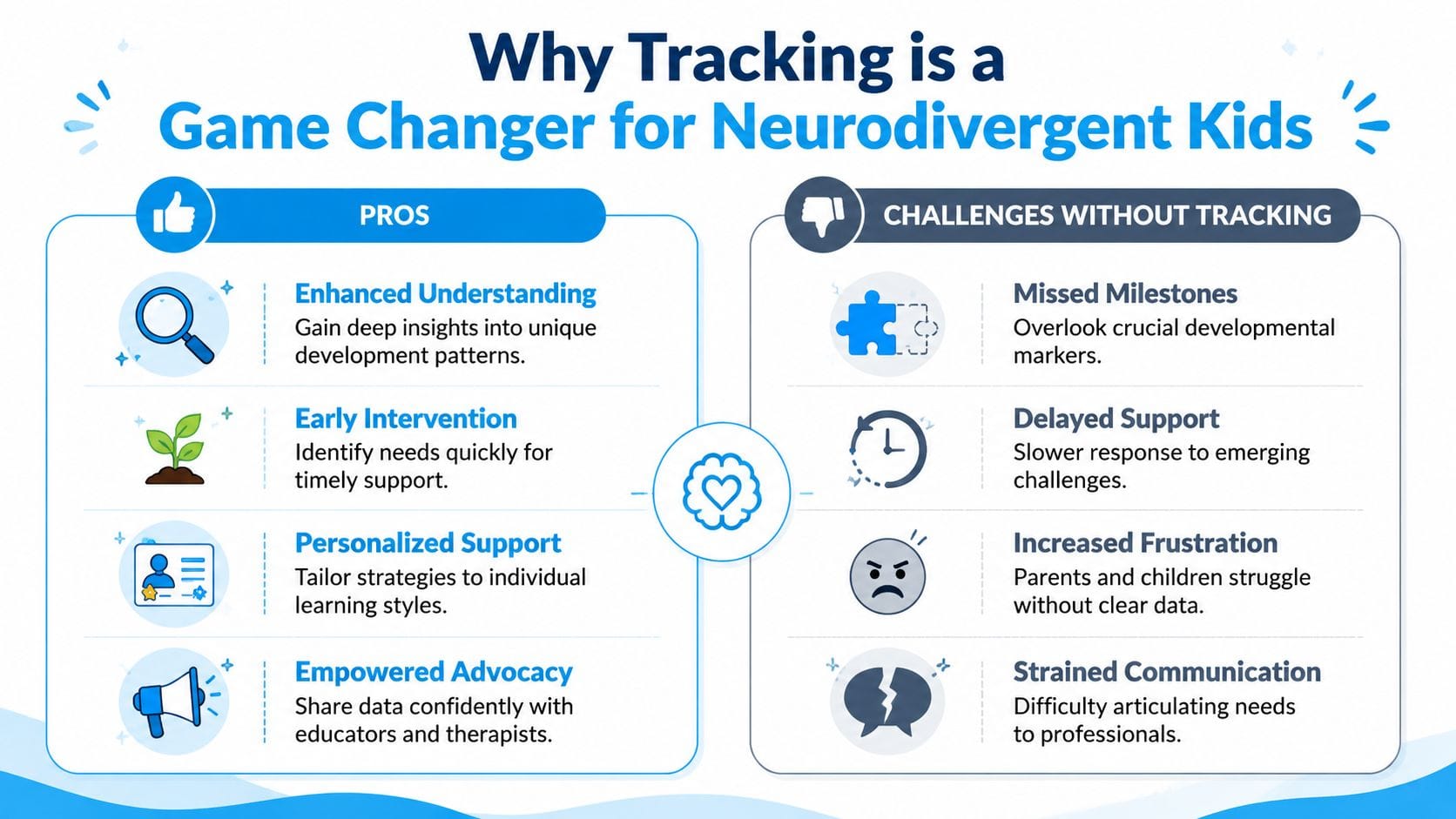
A parent may leave the house feeling unsure about what happened all week, then realize the details surface as soon as the notes are in one place. That highlights the benefit of tracking. It reduces the pressure to rely on stressed-out memory and gives you something concrete to bring to therapy visits, school meetings, or medical appointments. The record becomes even more useful when it captures patterns over time, since one study in the JAMA Network Open study found that logged milestone patterns could predict ASD with an accuracy of AUC 0.83, outperforming some standard screening tools.
Tracking supports advocacy, not just observation
A good log does more than list what happened. It helps you explain what your child needed in that moment, which changes how conversations with therapists and educators begin. Instead of feeling like you have to defend your concern, you can point to repeated patterns and specific situations.
A tracker can also lower family stress in a practical way. If a difficult evening lines up with poor sleep, a crowded room, or a sudden change in routine, the behavior feels less mysterious. The challenge is still real, but the pattern gives you a clearer starting point for response. For background on how development is usually described in broad terms, child development basics can help frame why a fuller record is often needed.
A shared record makes collaboration easier
Care usually works best as a team effort. Parents notice what happens at home, teachers see classroom patterns, therapists observe responses during sessions, and pediatricians bring a medical lens. A tracker helps those views line up around the same facts instead of scattered impressions.
Here's a simple way to see the difference:
- For parents: less second-guessing and fewer forgotten details.
- For therapists: clearer context for behavior plans and session goals.
- For educators: a better view of triggers, supports, and transitions.
- For clinicians: structured observations that can inform screening and follow-up.
The CDC recommends developmental screening at 9, 18, and 30 months, plus autism screening at 18 and 24 months or whenever a parent or provider has a concern. A tracker gives those visits a stronger foundation, because your observations are already organized when it is time to talk. It also fits well with routines such as infant sleep routines, where small day-to-day details can reveal bigger patterns.
When a child's support team sees the same patterns, they can make smaller, faster adjustments instead of waiting for bigger problems.
What to Record Beyond Basic Milestones
A useful tracker starts with development, but it shouldn't stop there. For neurodivergent children, the most helpful details are often the ones that show what happened before and after a moment of stress. That includes behavior, context, communication, sleep, food, and care coordination.
| Tracking Domain | Examples of What to Log |
|---|---|
| Behavior | Meltdowns, shutdowns, stimming, echolalia, demand avoidance, recovery time |
| Context and Triggers | Noise, lights, transitions, social demands, changes in routine, crowded spaces |
| Communication | Words used, gestures, AAC use, response to prompts, frustration points |
| Diet and Nutrition | Preferred foods, textures, new foods, refusals, possible sensitivities |
| Sleep Patterns | Bedtime, wake time, night waking, settling routines, restlessness |
| Care Coordination | Medications, therapy sessions, school notes, doctor visits, follow-up questions |
An effective tracker should be built on a validated developmental framework, mapping data to domains like communication, motor skills, cognition, and social-emotional skills. That allows a child's functioning to be compared across time using structured metrics like Emerging, Expected, or Exceeding, rather than relying on ad-hoc checklists (framework guidance).
Start with what changes support decisions
Not every detail belongs in a log. Focus on the information that would help you make a better choice next time. If a child becomes dysregulated after long car rides, record the trip length, the time of day, and what happened afterward. If communication drops during transitions, note what type of transition it was and how much warning your child had.
For families who want a model for age-based sleep habits, infant sleep routines can be helpful background when you're deciding how to document patterns at home. And if you're still clarifying what developmental categories mean in the first place, the overview at what is child development can give you plain-language context.
How to Create a Practical Tracking Workflow
The best tracker is the one you use. A notebook can work if you like writing by hand and don't mind flipping back through pages. A spreadsheet can be useful if you enjoy sorting data, but it usually takes more effort to keep up with in-the-moment changes.
Simple methods have strengths, and limits
A paper notebook is easy to start, but it's hard to search later. A spreadsheet is more organized, but many parents don't have time to type everything after a long day. A dedicated app solves the biggest problem, which is speed. If you can log a note in seconds, you're more likely to keep tracking when life gets messy.
Good tracking is not about perfection. It's about catching enough detail, often enough, to reveal a pattern.
That matters for sleep too. If bedtime struggles, night waking, or morning exhaustion show up often, a tool that helps you monitor sleep patterns can support more consistent observation without adding much work.
Build a routine you can repeat
A practical workflow usually looks like this:
- Pick one moment to log each day. Many families choose after school, before bed, or right after therapy.
- Record only the essentials. Behavior, trigger, response, and outcome are often enough to start.
- Keep the format consistent. Repeated categories make patterns easier to spot later.
- Review weekly, not constantly. A short review helps you notice trends without getting overwhelmed.
- Share what matters. Save time by preparing notes that can be brought to appointments or shared with caregivers.
A specialized digital tracker is especially helpful when multiple adults need access to the same information. A clean app can reduce the back-and-forth that happens when one parent writes notes in one place and another keeps therapy updates somewhere else. For families coordinating services, the right place to organize session notes can make the process feel far less scattered, and a resource like ABA session notes can help you think about what those records should include.
Turning Data into Actionable Insights
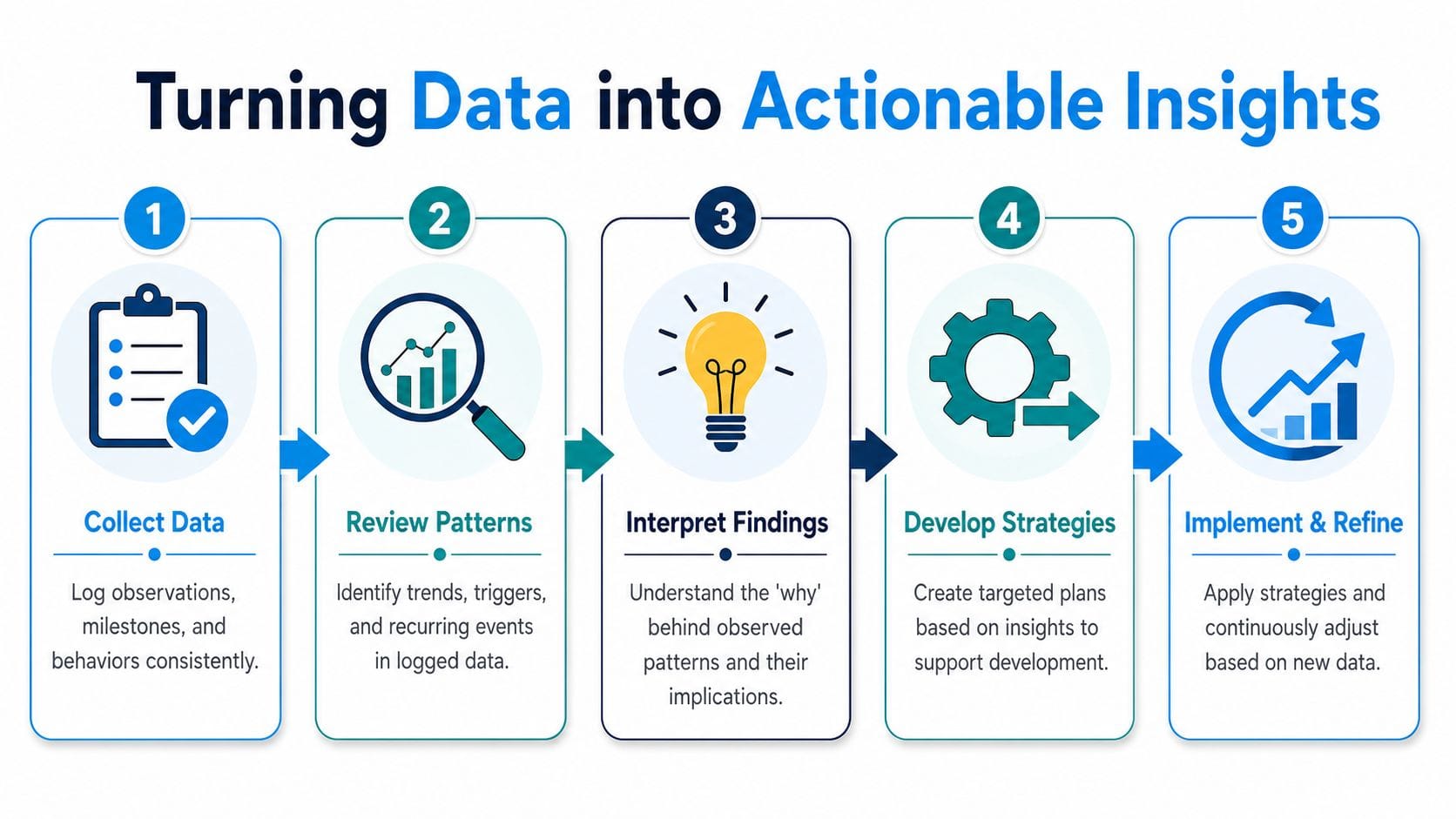
Data only helps when it leads to better decisions. A list of isolated events can feel overwhelming, but repeated notes can uncover a pattern that was hard to see in the moment. A child who seems “randomly upset” may be reacting to noisy rooms, late meals, poor sleep, or stressful transitions.
Look for repeat connections, not one-off events
Start by scanning for things that happen before a hard moment. Did the behavior follow a change in routine? A full schedule? A food refusal? A late bedtime? Once you notice the same pairing more than once, you can test a practical response instead of guessing.
The CDC's autism surveillance data estimated ASD in about 1 in 31 children aged 8 years in the 2022 ADDM sample, equal to 32.2 per 1,000 children across 16 U.S. sites (CDC autism data). That makes structured observation more important, because many children need support that reflects their individual pattern, not a memory-based summary from a single visit.
Turn logs into a summary that professionals can use
A strong summary does three things. It names the concern, shows the pattern, and lists what has already been tried. That makes it easier for a pediatrician, therapist, or teacher to respond quickly.
For example, a parent might bring a note that says, “Three hard afternoons after skipped snacks, shorter naps, and noisy pickup times.” That's much more useful than saying, “He's been off lately.” It gives the team something concrete to work with.
The same approach helps with home routines. If sleep worsens after a late dinner, or if communication drops when a child is hungry or overstimulated, the tracker becomes a practical decision tool. Over time, that steady record can show whether a support strategy is helping, which is often more valuable than one dramatic day of progress.
Choosing the Right Digital Child Development Tracker
A strong app should make tracking easier, not heavier. For a parent watching the same pattern show up after noisy afternoons, skipped snacks, or a change in routine, the goal is simple. You need one place to record what happened, so you are not piecing the story together from half-remembered text messages, sticky notes, and bedtime thoughts.
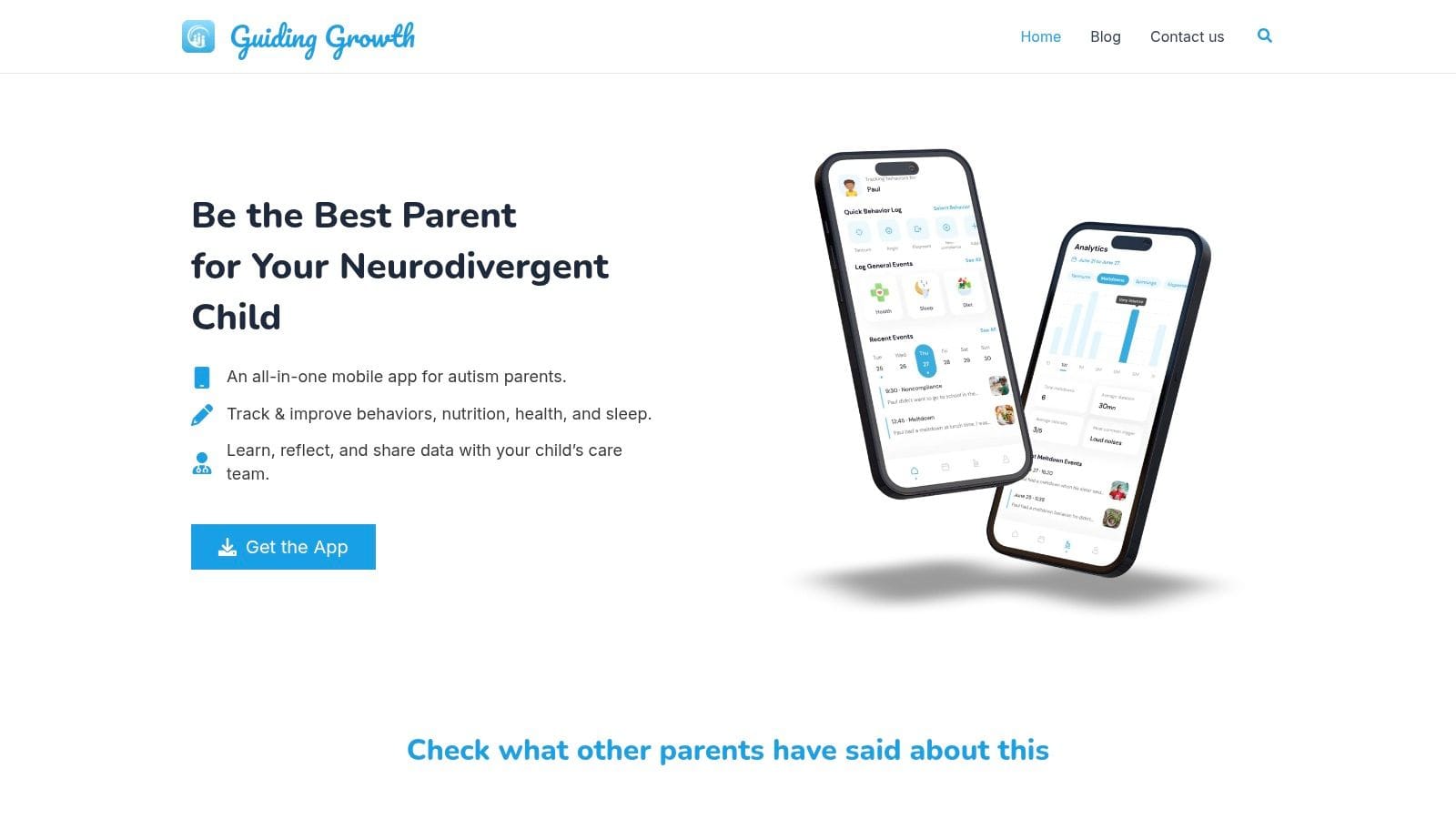
A good child development tracker should let you share updates with caregivers, therapists, and other professionals without rewriting the same note three times. It should also turn your records into visuals, because charts and trend lines often make patterns easier to spot than a page of paragraphs. For families supporting neurodivergent children, that matters even more, since the most useful information is often the pattern around a behavior, not the behavior alone.
A simple feature checklist
Use this as a practical filter when comparing tools:
- Collaborative sharing: Can you send updates to family members, therapists, or teachers without extra formatting?
- Quick entry: Can you log a behavior in the moment, including by voice?
- Visual summaries: Does the app show trends in a way that's easy to explain at appointments?
- All-in-one organization: Can it hold behaviors, appointments, medications, and routines together?
- Privacy and security: Does it treat family information with care?
Those features matter because developmental screening gives families regular checkpoints, and digital tools can extend that process between visits. A tracker that captures concerns, routines, and behavior patterns helps you arrive at appointments with something clearer than a vague memory. It gives your child's provider a record that can support conversation, especially when the questions are about triggers, changes in environment, or how a day unfolded.
The best app is the one built for real-life use
A lot of tools can store notes. Fewer tools make logging fast enough for daily life. That is where voice logging becomes especially useful, because many parents do not have time to stop and type after every school pickup, therapy session, or bedtime struggle.
If you want a tracker built around those needs, the behavior tracking app is a good place to compare what a focused digital solution can look like. The right app should make the work lighter, not add another task to your night.
Start Your Journey of Understanding Today
A child development tracker is not about judging your child against a narrow standard. It's about understanding their patterns well enough to support them with more confidence and less stress. When you track behaviors, triggers, sleep, communication, and routines, you turn scattered moments into a clearer story.
That story helps in ordinary life and in high-stakes conversations. It supports advocacy. It strengthens collaboration. Most of all, it gives you a steadier way to notice what your child needs, even when the day feels messy.
If you've been trying to keep all the details in your head, you don't have to keep doing that alone. Start with one place to log what you see, build a routine that fits your family, and choose tools that make the process easier to sustain.
A CTA for Guiding Growth.