You hand off the morning meds, rush through school drop-off, and later get a text from another caregiver asking, “Did he get the blue tablet already?” That single question is where a lot of medication mistakes begin.
For families caring for neurodivergent children, medication tracking usually isn't hard because nobody cares. It's hard because routines change, one child may have sensory refusal one day and cooperate the next, and more than one adult often handles the same plan. Sticky notes, memory, and group texts break down fast. A medication log for caregivers works when it acts like a shared record of what happened, why it happened, and what needs follow-up.
Table of Contents
- Why Every Caregiver Needs a Shared Medication Log
- What to Include in a Complete Medication Log
- How to Build and Maintain Your Daily Logging Routine
- Tracking Changes Side Effects and Difficult Doses
- Best Practices for Accuracy Sharing and Safety
- Simplify Medication Tracking With Guiding Growth
Why Every Caregiver Needs a Shared Medication Log
A medication log becomes essential the moment more than one person is involved. Parent, grandparent, school nurse, respite worker, therapist, babysitter. If each person keeps their own notes, you don't have a system. You have fragments.
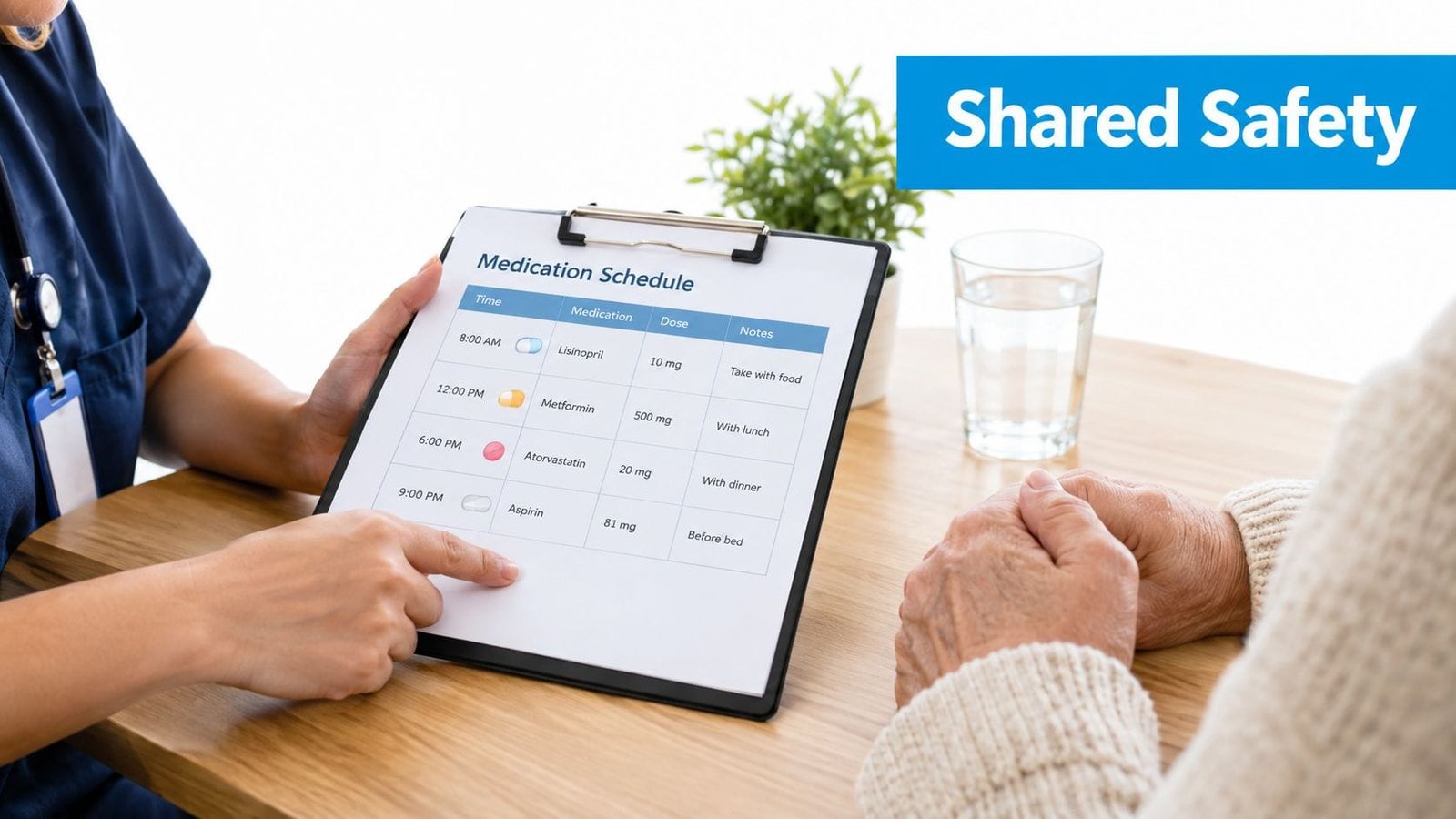
Recent evidence shows how common home medication mistakes are. A 2024 study of informal caregivers reported 9,236 medication errors over one year, averaging 13.5 errors per caregiver annually, and more than half of caregivers said they had made at least one error in the past year. The same study found that 73.1% of adults receiving care experienced a medication error annually, and 5% of those errors caused serious consequences (Frontiers in Medicine).
The real problem is coordination
Most families don't need another printable sheet. They need one place where every caregiver can answer the same questions:
- Was it given: not just scheduled, but administered
- When it happened: the time, not the intended time
- Who handled it: so handoffs stay accountable
- What went wrong: refusal, spill, partial dose, gagging, late pickup, running out
- What changed: new dose, stopped medicine, side effect, next follow-up
That matters even more in households with neurodivergent children. A missed dose may not come from forgetfulness at all. It may come from taste sensitivity, a disrupted transition, anxiety before school, or a substitute caregiver who doesn't know the child's routine.
Practical rule: If two adults can give the same medicine, both adults need access to the same live record.
A shared log reduces guessing
Pediatric safety guidance recommends one shared medicine list that families can give to every caregiver, bring to health visits, and use with charts, calendars, or alerts. The same guidance says to track each dose, watch how much medicine remains, and monitor expiration dates so families don't get caught without a refill or use medication past its safe period (St. Jude medicine safety guidance).
A good shared system also makes provider communication easier. Instead of saying, “He seems off on this medication,” you can show the exact timing, missed doses, behavior shifts, and refusal patterns. That's the difference between vague concern and usable clinical information.
For families who need multiple people in the loop, a shared digital hub can help keep medication records alongside other care updates. An information sharing platform for caregivers and families is often easier to maintain than scattered notebooks and text threads.
What to Include in a Complete Medication Log
At 7:10 a.m., one caregiver gives the morning dose late because the child refused it at first. At 8:05 a.m., another adult sees an empty cup, assumes the medicine was taken, and texts school that everything is on schedule. By noon, nobody remembers whether the full dose went in, how much was spat out, or whether the delay lined up with the behavior changes that started after lunch.
That is why a medication log needs to do more than list prescriptions. It has to show the current plan, what happened at each dose, and enough context for the next caregiver, school nurse, or prescriber to make a safe decision.
Guidance for medication records in care settings supports recording the person's full name, date of birth, weight when relevant, known allergies, and each medicine's name, strength, form, dose, frequency, route, and special instructions. The same records should capture what was given, the date and time, and who administered it. Variable doses need the actual amount given. Omitted doses need a documented reason. Controlled drugs need entry in both the medication record and a separate controlled-drug register (good practice guidance on MAR charts).
Core fields to capture every time
Use the same fields for every medicine and every handoff. Consistency prevents the small wording differences that create duplicate doses, missed doses, and confused follow-up calls.
| Category | Fields to Capture | Why It Matters |
|---|---|---|
| Person details | Full name, date of birth, weight when relevant, allergies | Prevents mix-ups and supports safer dosing |
| Medication identity | Medication name, strength, form, generic name where possible | Reduces confusion between similar products |
| Directions | Dose, frequency, route, timing, special instructions | Shows the intended regimen clearly |
| Administration record | Date, scheduled time, actual time given, actual amount given, who gave it | Creates accountability and shows what happened in real life |
| Exceptions | Refused, omitted, partially taken, spilled, vomited, delayed | Explains why the plan and the dose record do not match |
| Context and follow-up | Reason for change, side effects, behavior around dose, next test or visit, refill note | Helps the log function as a care coordination tool |
Record the plan and the exception
A useful log has two layers.
The first is the standing medication profile. This is the current list of medicines with the instructions each caregiver is supposed to follow. Include name, strength, form, dose, route, schedule, prescribing clinician if helpful, and any administration instructions such as with food, shake well, do not crush, or school authorization needed.
The second is the event record. Many caregiver logs fall short. Record the scheduled time, the actual time, the actual amount taken, and the caregiver name or initials. Then add the detail that explains the dose if anything went off-script: refused after two attempts, accepted mixed in yogurt, spit out about half, delayed due to bus pickup, vomited within 10 minutes, or held per clinician instruction.
Those short notes matter. In complex pediatric routines, the difference between "missed" and "refused after sensory distress" changes what the next caregiver should try and what the prescriber needs to know.
Standardize wording so multiple adults can use the log safely
Use plain, repeatable wording. "Sertraline 25 mg tablet, 1 tablet by mouth at 8:00 AM" is safer than nicknames, pill color, or shorthand that only one adult understands.
Generic names help reduce confusion, especially when pharmacy packaging changes. Actual times matter more than rough labels like "morning meds." Clear status labels matter too. Pick one set and keep it stable, such as taken, partial, refused, omitted, delayed, or vomited after dose.
If you also sort doses into compartments, storage needs to match the log. Families often pair the record with practical organizers such as this dosette boxes medication UK guide when several caregivers handle different parts of the day.
A template that works in real homes
A good caregiver log should fit on paper and still translate cleanly to a phone or shared app. The structure below is usually enough:
Master list
- Name, date of birth, allergies, weight if relevant
- Current medicines with strength, form, dose, route, and schedule
- Special instructions, storage notes, refill details, and start or stop dates
Daily dose record
- Date and scheduled time
- Actual time given
- Actual amount taken
- Status
- Caregiver name or initials
- Brief note on refusal, delay, side effect, or anything the next adult needs to know
Start and stop dates deserve special attention. So does change tracking. If a clinician adjusts the dose, do not overwrite the old one without noting when the change started. A live log should show what changed, when it changed, and who updated it. That is what lets families connect a new side effect, sleep problem, or school-day crash to the right medication change instead of guessing later.
If you want a format that can stay consistent across caregivers, a dedicated medication log book for caregivers can keep those fields in one place instead of scattered across notebooks, portal screenshots, and text messages.
How to Build and Maintain Your Daily Logging Routine
At 7:10 a.m., one adult gives the morning dose late because the child fought the texture. At 7:40, another adult sees no note, assumes it was missed, and reaches for the bottle. That is how duplicate doses happen in ordinary homes.
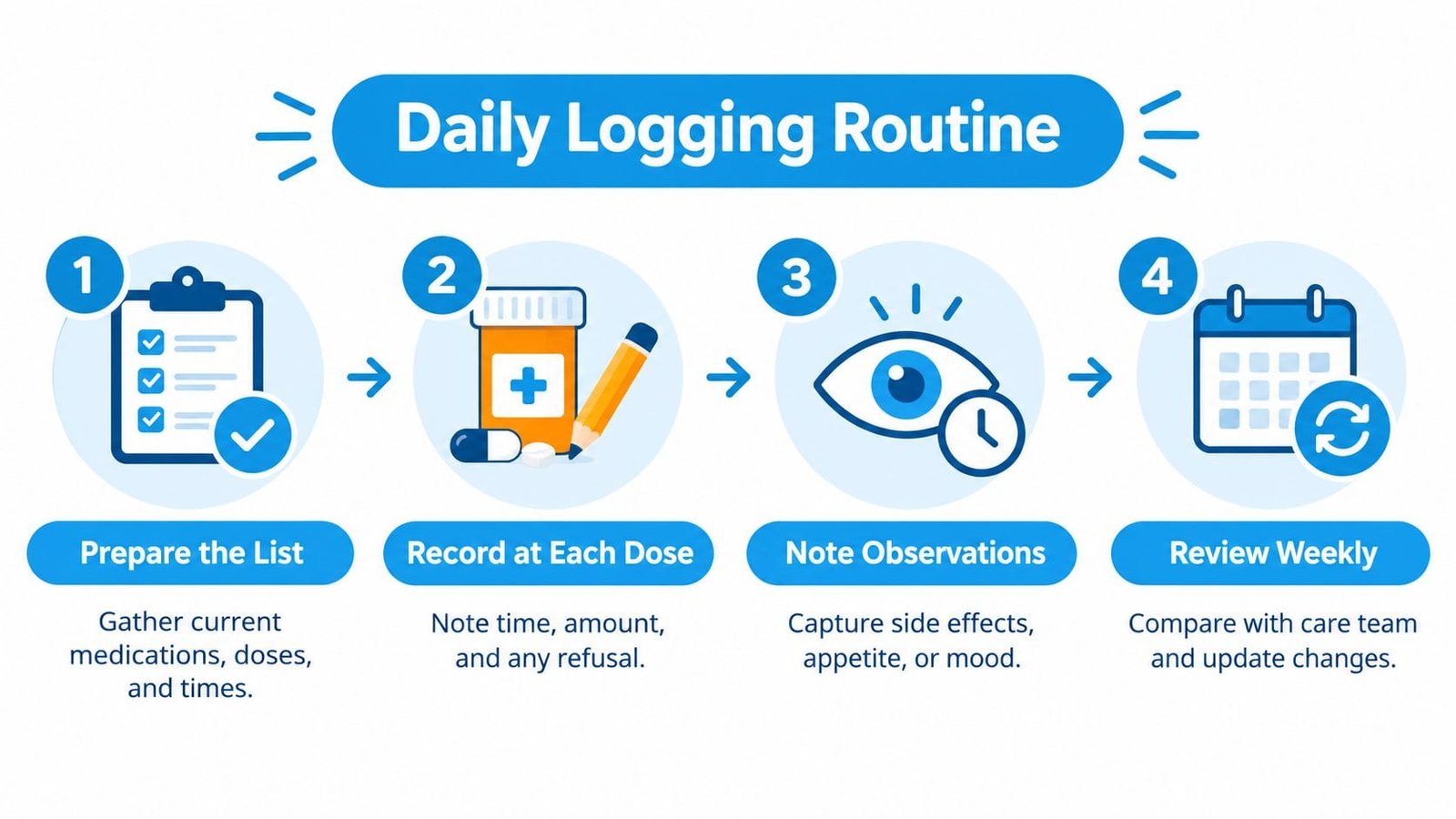
A daily routine has one job: show every caregiver what was scheduled, what happened, and what the next person needs to do. The log should work as a live handoff tool, not a notebook you fill in later from memory.
Start the routine before the first dose is due. Build your working list from the caregiver's report plus at least one other source, such as the prescription label, discharge papers, pharmacy printout, portal instructions, or school medication form. Then compare those sources and settle discrepancies before anyone gives medication. In practice, that means creating the best medication history you can, checking it against the current plan, and updating the shared record as soon as something changes.
Start with one active record
Families get into trouble when there are three "current" lists in circulation. The bottle says one thing. The portal shows another. The grandparent helping after school has an older paper sheet.
Use one active log and make it the reference point for every handoff. On paper, that might be a binder clipped to the same kitchen cabinet every day. Digitally, it should be a shared record that the adults handling meds can open quickly without hunting through text threads.
Errors usually show up:
- An outdated dose is still posted on the fridge
- One caregiver documents a PRN as if it were scheduled
- School or respite staff are still following older instructions
- A specialist changed timing, but the home routine never changed with it
Chart right after each administration attempt
Do not wait until bedtime to fill in the day.
Record the dose attempt as soon as it happens, even if the medication was refused or only partly taken. Home medication records are safer when each entry captures the scheduled time, the time, the medication, the amount taken, and who handled it. If the child spat out half, held it in their mouth, vomited soon after, or accepted it only with food, log that too. Those details prevent repeat dosing and give the next caregiver context.
A simple line can do a lot of work:
- 8:05 AM: methylphenidate liquid, partial dose taken, delayed by 20 minutes, resisted first attempt, accepted mixed with small amount of juice, logged by Dad
- 12:30 PM: school dose given by nurse, full dose taken
- 7:40 PM: melatonin, uncertain amount taken after chewing and spit-out, monitor bedtime and do not repeat without checking prescriber instructions
That level of detail matters in real life. If one caregiver writes only "given," nobody else knows whether the dose was late, incomplete, or difficult.
Build the routine around handoffs, not ideal times
Medication plans on paper often assume a calm day and one consistent adult. Real care rarely looks like that. Bus pickup, therapy, split households, respite workers, and exhausted evenings all affect whether a routine holds.
Set reminders at the points where responsibility changes hands. Morning parent to school. School to after-school caregiver. Evening caregiver to bedtime caregiver. A shared tool such as a medication reminder app for caregivers can help when several adults cover different parts of the day, especially if the reminder leads straight into the same place where the dose gets documented.
Keep the routine realistic:
- Put the log where medication is prepared
- Tie alarms to the window when the dose can happen
- Add a quick supply check once or twice a week
- Review the active log against bottles and current instructions on a set day
Record outcomes, not just completion
The strongest routines track more than whether a dose was offered. They capture the result and the context. That is what helps a parent, nurse, or prescriber tell the difference between "medication failed" and "medication was rarely taken as intended because mornings were a battle."
I have found that one short note can prevent a lot of confusion later. "Refused due to taste." "Took only with applesauce." "Late because slept through alarm." "Held in mouth and spit out after 5 minutes." Those patterns are easy to miss when each caregiver only remembers their own shift. A shared log makes the pattern visible fast enough to adjust the plan before errors pile up.
Tracking Changes Side Effects and Difficult Doses
Most medication logs break down when the regimen stops being simple. That's exactly when the log matters most.
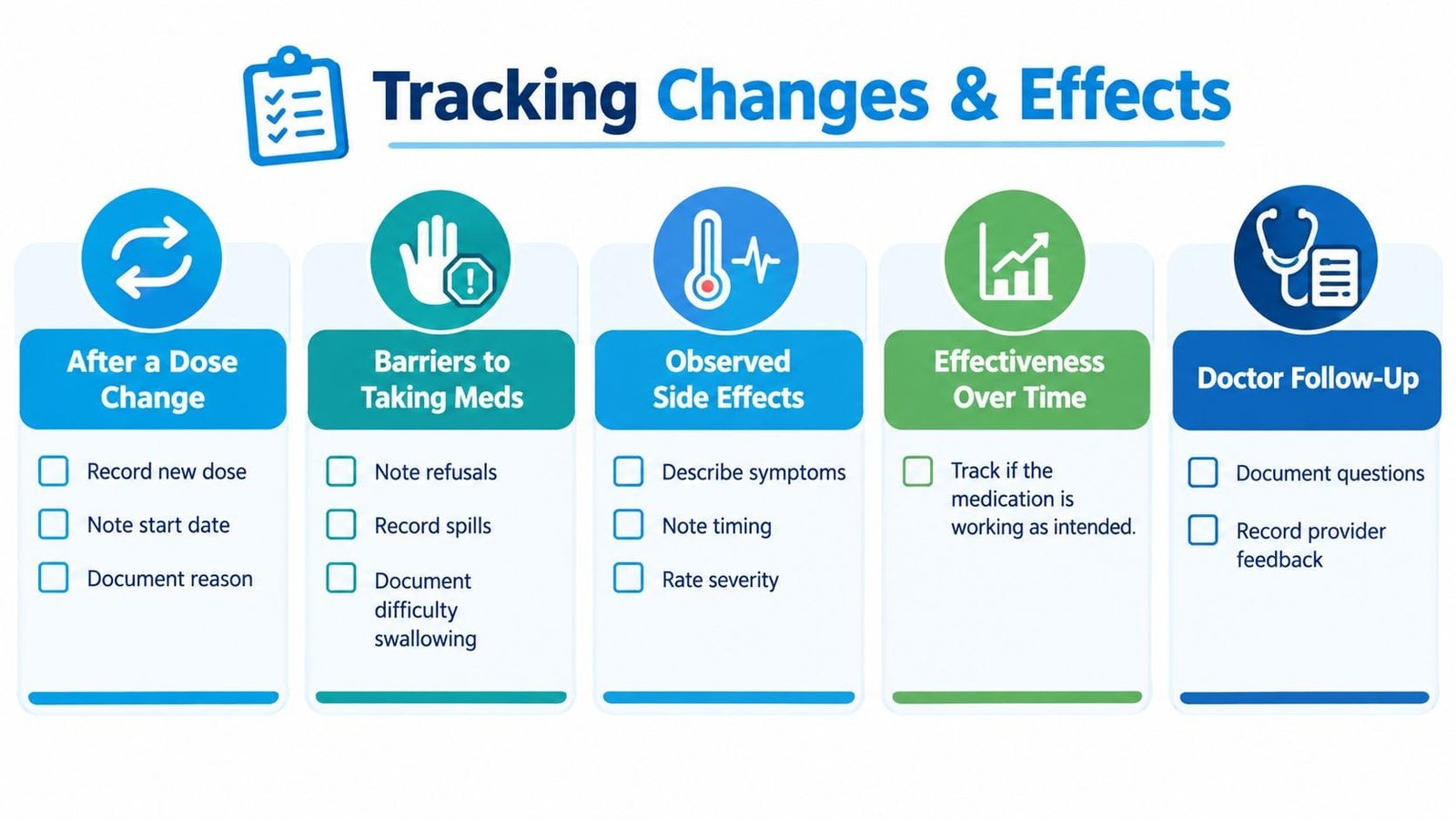
A strong log doesn't only record what was given. It records what changed, why it changed, how the child responded, and what follow-up is due. Guidance for caregivers consistently recommends recording when medicines are added, stopped, or changed, why the change happened, and when the next test or visit is due. That matters because caregivers are often asked to manage complex regimens with limited training, and one source notes that most caregivers received little or no medication-related training, with only 15% reporting training from a pharmacist (RGPO caregiver medication handbook).
What to add after any change
When a medicine changes, add more than the new dose line.
Capture:
- What changed: added, stopped, increased, decreased, timing changed, form changed
- Why it changed: side effects, no benefit, new diagnosis, swallowing issue, school schedule, sleep disruption
- When it starts: exact start date and intended schedule
- What to watch: appetite, sleep, mood, bowel pattern, tics, anxiety, focus, sedation
- Next checkpoint: lab work, refill date, follow-up visit, teacher feedback, therapist observations
These notes prevent a common caregiver problem. Everyone remembers that something changed, but nobody remembers when, why, or what the clinician wanted monitored.
Refusal is data, not just noncompliance
Generic advice often misses the lived reality of neurodivergent care. A child may refuse because the liquid tastes different, the capsule feels scratchy, breakfast ran late, the new routine feels unsafe, or a different adult gave the dose.
Caregiver-facing guidance increasingly emphasizes logging missed doses, unusual reactions, and which caregiver recorded the entry, because real-world adherence barriers are often about coordination and tolerability, not simple forgetfulness. Logging refusal context can expose when the medication plan itself doesn't fit daily life (caregiver reminder guidance on adherence barriers).
If the same medicine is refused every Sunday night, that's a pattern. If it happens only with one formulation or one caregiver, that's a different pattern. Your notes should make that visible.
Why observation fields matter
In a randomized clinical trial of 198 caregivers of hospitalized children, a health-literacy-informed package that included a pictogram-based instruction sheet, liquid dosing demonstration, and teach-back or show-back led to significantly fewer caregiver medication errors and better medication knowledge than standard counseling. Related evidence summarized in the same source supports pairing logs with dosing tools and repeat verification, not passive note-taking alone (JAMA Network Open trial summary).
That has a practical takeaway for everyday logs. The highest-value notes often include:
- Timestamp and actual dose
- Formulation used: tablet, liquid, crushed, dissolved, patch
- Missed or late status
- Observed effect: sleepy, calmer, more irritable, stomach upset
- Cross-check against the current reconciled list
If you're preparing for a call or appointment and need help thinking through what to bring forward, this guide on communicating with clinicians is useful because it emphasizes clear symptom and medication reporting rather than vague summaries.
Best Practices for Accuracy Sharing and Safety
A medication log only helps if everyone trusts it. Once caregivers start keeping separate versions, accuracy slips and arguments begin.
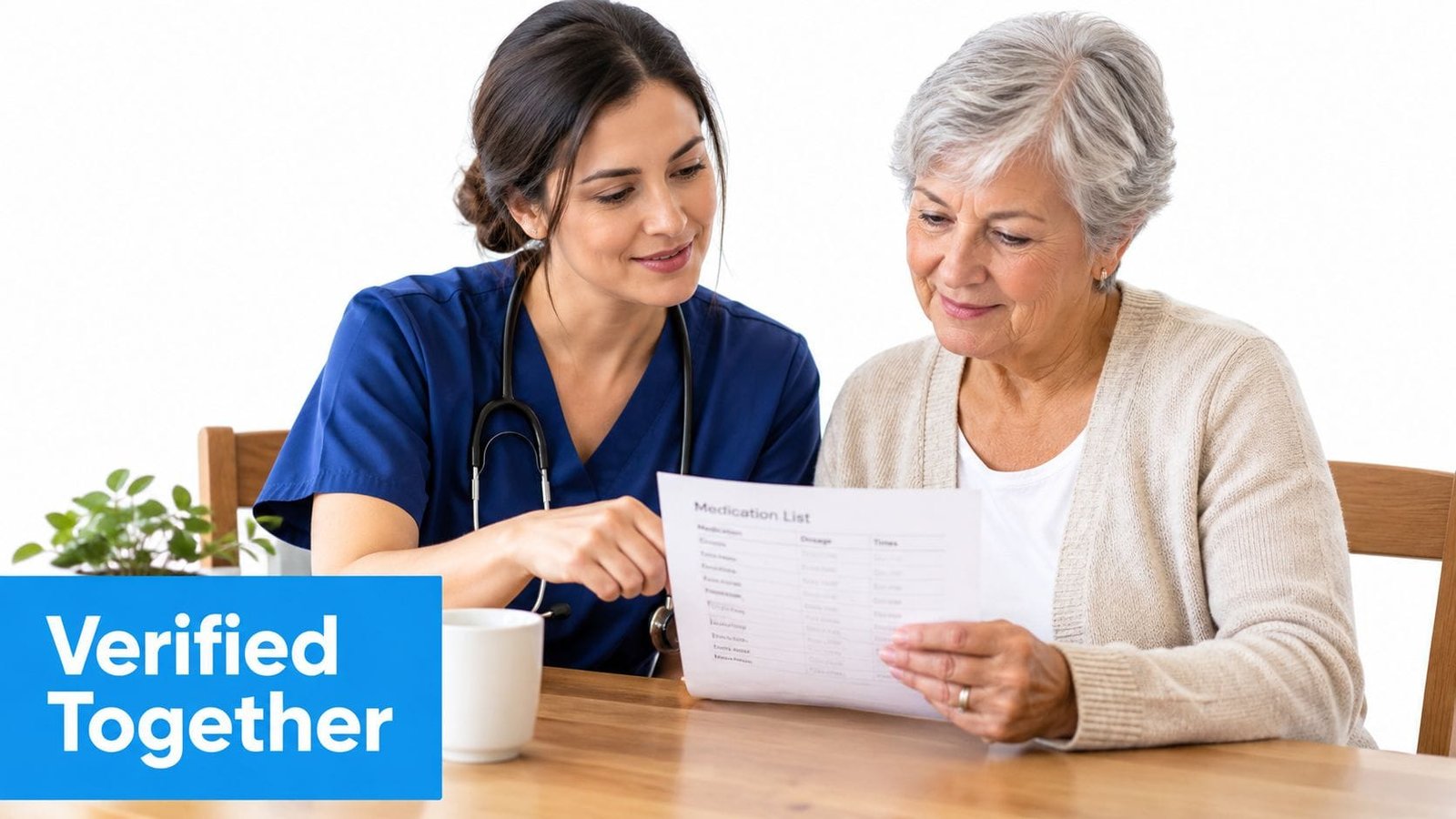
A systematic review of domiciliary caregiving found caregiver medication administration error rates ranging from 1.9% to 33% of medications administered. In the same review, 7.8% of carers reported giving an insufficient dose, 6.6% an overdose, and 5.4% the wrong medicine. It also noted that 1.7% of medication errors and 22% of near misses occurred at the administration stage, which is exactly why a visible, structured log matters before and during handoff (systematic review on caregiver medication errors).
One record for everyone
The safest setup is simple. Keep one current record, make sure the adults who administer medication can access it, and update it right after use.
That shared record should travel across settings:
- At home: parents, grandparents, respite staff
- At school: nurse, trained support staff, after-school program
- In appointments: pediatrician, psychiatry, pharmacy, therapy teams
Bring the current list to visits. If one provider changes a dose, update the shared record before the next administration. Don't leave a portal message sitting in one parent's phone while another caregiver follows yesterday's printout.
Build in verification points
A safe system needs checkpoints, not just data entry.
Useful verification habits include:
- Compare new prescriptions to the current list before the first dose
- Resolve unclear instructions early instead of guessing
- Watch refill timing so medicines don't run out unexpectedly
- Check expiration dates during routine supply reviews
- Note permissions and authorizations for school or delegated administration where required
- Limit unnecessary copies so older versions don't keep circulating
This short explainer is worth sharing with new caregivers before they start documenting medication events:
Protect privacy without creating friction
Families sometimes overcorrect on privacy and make the log hard to use. The goal is controlled access, not secrecy that causes mistakes.
Use initials or role-based access where appropriate, especially if school staff or outside caregivers are involved. Keep printed logs in a predictable place, not spread across kitchen counters and backpacks. If you use a digital tool, make sure the right people can view updates without everyone editing separate copies.
Simplify Medication Tracking With Guiding Growth
Families rarely struggle because they don't understand that medication matters. They struggle because information gets split across bottles, calendars, appointment notes, text messages, and memory. The more caregivers involved, the faster that fragmentation creates risk.
A workable medication log for caregivers does four things well. It keeps one reconciled list, records each administration event in real time, tracks changes and reactions over time, and gives every relevant caregiver the same current version. That's what turns a checklist into a coordination tool.
Why digital tracking often holds up better
Paper still works for some households. But once you're coordinating home, school, therapy, specialist appointments, and backup caregivers, digital records are often easier to maintain consistently.
Guiding Growth fits that reality because it lets families keep medications, appointments, therapy notes, and daily observations in one place, with sharing built in for co-parents and other caregivers. For parents of neurodivergent children, that matters because medication effects don't happen in isolation. They often show up alongside sleep shifts, appetite changes, behavior patterns, and routine disruptions.
Less scattered logging, better follow-through
The biggest benefit isn't convenience for its own sake. It's having enough context to make better decisions.
If a child starts refusing an evening medication, a shared app-based record can help you see whether that lines up with a formulation change, a bedtime routine problem, a new side effect, or a caregiver handoff issue. Quick voice logging can also help on chaotic days when nobody has time to type a detailed note immediately. And when you need help organizing what you've observed, Alma AI can support parents in thinking through patterns and questions to raise with the care team.
A medication log shouldn't add more admin to your day than the problem is worth. It should reduce the amount of rechecking, second-guessing, and repeated explanation your family does every week.
If you're ready to stop juggling pill bottles, screenshots, and half-finished notes, Guiding Growth gives you one place to log medications, share updates with other caregivers, and connect those entries to the daily realities that affect dosing success. It was built for families managing complex neurodivergent care, so your medication record can live alongside routines, behavior notes, appointments, and reminders instead of getting lost in another app or binder.